Understanding Osteoradionecrosis of the Jaw: A Complete Patient Guide

Osteoradionecrosis of the jaw happens when irradiated jawbone loses its normal ability to repair itself. Common signs include mouth pain, exposed bone, bad breath, swelling, loose teeth, and slow healing after dental work.
Key Takeaways
- Osteoradionecrosis of the jaw happens when irradiated jawbone loses its normal ability to repair itself.
- Common signs include mouth pain, exposed bone, bad breath, swelling, loose teeth, and slow healing after dental work.
- Risk is higher after head and neck radiation, especially with higher doses, poor oral health, smoking, or tooth extraction in the treated area.
- Diagnosis usually involves a dental and medical exam, imaging, and review of past cancer treatment.
- Treatment ranges from mouth care and medicines to surgery in more advanced cases.
- Preventive dental care before and after radiation can reduce the chance of serious jaw problems.
Osteoradionecrosis of the jaw is a delayed complication of radiation therapy in which part of the jawbone becomes damaged and does not heal normally. It most often affects people treated for head and neck cancers, and early assessment can help relieve symptoms, protect the jaw, and guide the most suitable treatment.
What osteoradionecrosis of the jaw means
Osteoradionecrosis of the jaw is a condition in which jawbone that has been exposed to radiation therapy becomes injured and fails to heal in the usual way. In simple terms, the bone no longer receives the same healthy blood supply and repair capacity it had before treatment. Over time, this can lead to pain, exposed bone inside the mouth, infection, or difficulty with eating and speaking.
This condition is most closely linked to radiation therapy for cancers of the head and neck. It does not happen to everyone who receives radiation, and when it does occur, severity can vary widely. Some people have a small area of exposed bone with mild discomfort, while others develop more persistent symptoms that need specialized care.
A helpful way to understand osteoradionecrosis of the jaw is to think of it as a healing problem rather than only a bone problem. Radiation can affect the bone, nearby gums, small blood vessels, and soft tissues together. Because of this, treatment often involves more than one specialist, such as oral and maxillofacial surgeons, dentists, radiation oncologists, and ENT or head and neck teams.
How it develops after radiation therapy
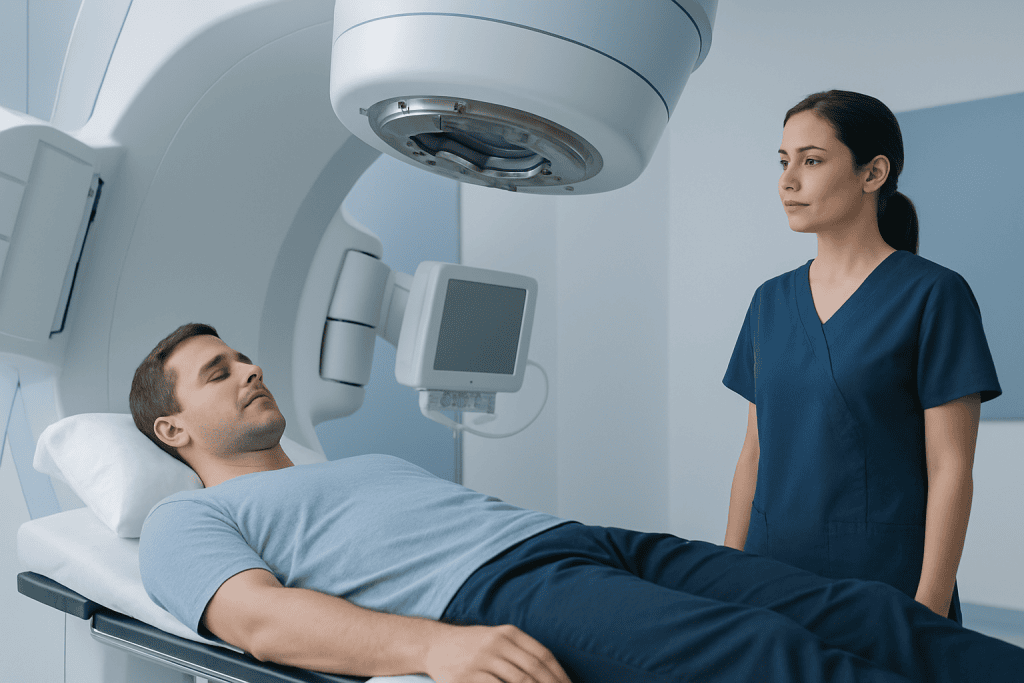
Radiation therapy is designed to damage cancer cells, but it can also affect nearby healthy tissues. In the jaw, radiation may reduce blood flow, cause scarring, and limit the bone’s ability to renew itself. Months or even years later, the bone may struggle to recover from everyday minor trauma, pressure from dentures, or dental procedures such as tooth extraction.
The lower jaw, also called the mandible, is affected more often than the upper jaw. One reason is that the mandible generally has a more limited blood supply than the maxilla. Areas that received higher radiation doses are also at greater risk, particularly if they were close to the original tumor site.
Osteoradionecrosis is not always triggered by a single event. In some people, it appears after dental work or irritation from a sharp tooth edge. In others, it develops without a clear trigger. This delayed and sometimes unpredictable pattern is one reason regular follow-up after head and neck cancer treatment is so important.
Symptoms and possible complications
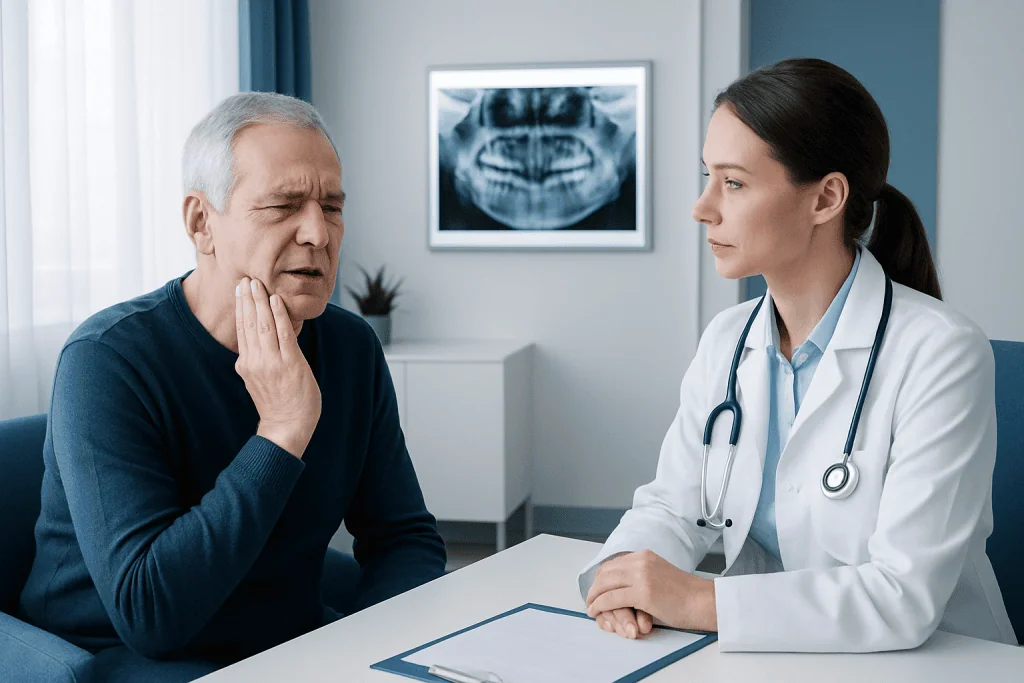
Symptoms of osteoradionecrosis of the jaw can begin gradually. A person may first notice soreness in the mouth, tenderness over the jaw, or a rough area where bone seems visible through the gum. Some people have bad breath, an unpleasant taste, swelling, or drainage from the gums. Others notice that an extraction site or mouth sore is not healing as expected.
As the condition progresses, pain may become more noticeable. Chewing can be uncomfortable, and the jaw may feel stiff or difficult to open fully. Teeth near the affected area may loosen. If infection develops, there may be redness, pus, fever, or increasing swelling. In more advanced cases, a fracture of weakened jawbone can occur, although this is less common.
Because symptoms overlap with infection, dental disease, and even cancer recurrence, self-diagnosis is not reliable. Any persistent exposed bone, mouth pain, or delayed healing after radiation should be assessed by a qualified clinician. People who have had head and neck cancer treatment may also be monitored for related problems such as oral cancer or changes involving the upper airway and throat after treatment for throat cancer.
- Exposed bone inside the mouth
- Pain or tenderness in the jaw
- Swelling of the gums or face
- Bad breath or foul taste
- Loose teeth
- Difficulty chewing, speaking, or opening the mouth
- Slow healing after dental work
Causes and risk factors
The main cause of osteoradionecrosis of the jaw is previous radiation therapy involving the jaw region. The chance of developing it is influenced by radiation dose, the exact area treated, and how much jawbone was included in the treatment field. Modern radiation planning has helped reduce risk, but it has not removed it entirely.
Several additional factors can make osteoradionecrosis more likely. Poor dental health, gum disease, untreated tooth decay, smoking, heavy alcohol use, dry mouth after radiation, and ill-fitting dentures can all increase stress on already vulnerable tissues. Trauma to the bone, especially tooth extraction or invasive dental procedures after radiation, is a well-recognized trigger.
General health also matters. People with poor nutrition, diabetes, reduced immunity, or ongoing infection may heal more slowly. Some cancer treatments used alongside radiation can affect tissue recovery too. A detailed review of cancer history, dental health, medications, and lifestyle factors helps doctors estimate risk and choose the safest approach to care.
How doctors diagnose it
Diagnosis begins with a careful history and examination. The clinician will ask about prior radiation therapy, the type and location of cancer, timing of symptoms, recent dental work, and any history of infection or trauma in the mouth. During the exam, they look for exposed bone, swelling, drainage, loose teeth, fistulas, or tenderness over the jaw.
Imaging is often used to understand how much bone is involved. Depending on the situation, this may include dental X-rays, panoramic imaging, CT scans, or MRI. Imaging helps assess bone loss, infection, fractures, and whether deeper parts of the jaw are affected. Sometimes doctors also arrange tests to rule out a return of cancer or another jaw disorder.
The diagnosis is usually made by combining the person’s treatment history, exam findings, and imaging results. Because osteoradionecrosis can resemble other problems, multidisciplinary assessment is often helpful. In some cases, evaluation may involve specialists in oral and maxillofacial surgery together with dentists, oncologists, and head and neck teams.
Treatment options and what recovery may involve
Treatment depends on the size of the affected area, the presence of infection, the degree of pain, and whether the jaw remains stable. Early or limited cases may respond to conservative care. This can include careful mouth hygiene, saline or antiseptic rinses, pain relief, treatment of infection when present, smoothing of irritating sharp bone edges, and close monitoring. The aim is to reduce symptoms and support the best possible healing environment.
Doctors may also recommend nutritional support and steps to reduce trauma inside the mouth. Denture adjustment, stopping smoking, and managing dry mouth can all be important. Some patients are considered for additional therapies based on the clinical picture and local practice, but these decisions are individualized and should be made with specialists familiar with radiation-related jaw injury.
If the disease is more advanced, if pain is persistent, or if the jawbone is unstable, surgery may be necessary. Surgical options can range from removing small areas of dead bone to more extensive reconstruction in severe cases. In selected patients, management may involve coordinated care with cancer surgery and reconstructive specialists, and some may also benefit from input from a head and neck cancer treatment team because swallowing, speech, and tissue health often need attention together.
Recovery can take time, and expectations should be realistic. The goal is often to control pain, prevent infection, preserve function, and improve quality of life rather than achieve immediate healing. Follow-up visits help doctors check whether symptoms are settling and whether the jaw is becoming more stable over time.
Prevention and self-care after head and neck radiation
Prevention starts before radiation therapy whenever possible. A dental assessment before treatment can identify teeth that may need attention and reduce the risk of future problems. Treating decay, managing gum disease, and planning long-term mouth care before radiation can make a meaningful difference later.
After radiation, daily oral care becomes especially important. Gentle brushing with a soft toothbrush, cleaning between teeth when advised, regular dental follow-up, and managing dry mouth can help protect both teeth and gums. Dentures should fit well and be reviewed if they cause rubbing or pressure spots.
People who have had radiation to the jaw should tell any dentist or surgeon about that history before extractions, implants, or other invasive dental procedures are planned. In many cases, doctors will try to avoid trauma to the irradiated jaw or use a carefully coordinated plan if treatment is necessary. Good nutrition, avoiding tobacco, and limiting alcohol may also support better tissue health and healing.
When to seek medical care
Medical or dental review is important if a person who has had head and neck radiation develops mouth pain, exposed jawbone, swelling, drainage, a non-healing sore, or loose teeth. Prompt assessment is also wise after dental work if healing seems slower than expected. These symptoms do not always mean osteoradionecrosis, but they should not be ignored.
Urgent care is needed if there is rapidly increasing facial swelling, fever, difficulty swallowing, trouble breathing, severe pain, or sudden inability to open the mouth. These may point to infection or another complication that needs timely treatment. A clinician can also check for other causes, including dental infection or recurrence of the original cancer.
For people seeking coordinated evaluation, Acibadem International’s multidisciplinary specialists and JCI-accredited hospitals diagnose and treat complex jaw and head-and-neck conditions for international patients. The most appropriate care plan depends on the person’s symptoms, prior radiation treatment, and overall health.
Frequently asked questions
Is osteoradionecrosis of the jaw cancer?
No. Osteoradionecrosis of the jaw is not a cancer. It is a complication of radiation therapy in which the jawbone is damaged and heals poorly, although doctors may still need to rule out cancer recurrence if symptoms are unclear.
How long after radiation can osteoradionecrosis happen?
It can appear months or even years after radiation therapy. Some people develop symptoms after dental work or trauma to the mouth, while others notice problems without any obvious trigger.
Can osteoradionecrosis heal on its own?
Small or mild areas may improve with careful mouth care and close follow-up, but the condition should always be assessed by a clinician. Because healing is often reduced in irradiated bone, untreated symptoms can persist or worsen.
Who is most at risk of developing osteoradionecrosis of the jaw?
People who received radiation therapy to the head and neck, especially involving the lower jaw, are at the highest risk. Additional factors include poor oral health, smoking, dry mouth, ill-fitting dentures, and tooth extraction in the treated area.
Can teeth be removed after radiation therapy to the jaw?
Sometimes yes, but the decision needs careful planning. Dentists and surgeons usually weigh the risks and may look for alternatives first, because extractions in irradiated bone can increase the chance of osteoradionecrosis.
What kind of doctor treats osteoradionecrosis of the jaw?
Treatment is often led by an oral and maxillofacial surgeon, dentist, or head and neck specialist with experience in radiation-related complications. Many patients benefit from multidisciplinary care that also includes oncology, radiology, pain management, and nutrition support.
References
- National Cancer Institute
- American Association of Oral and Maxillofacial Surgeons
- American Society of Clinical Oncology
- National Institute of Dental and Craniofacial Research
- National Comprehensive Cancer Network
This article is for general information only and is not a substitute for professional medical advice. Please consult a qualified doctor about your individual situation.
Explore treatments in Turkey — costs, top hospitals & a free quote
JCI-accredited · board-certified surgeons · reply within 24h
Add us as a Preferred Source to see more of our trusted health content across Google Search, AI Overviews and Discover.