Forehead Reduction Surgery: Candidacy, Procedure Steps, and Recovery Timeline

Forehead reduction surgery lowers the hairline by advancing the scalp, not by changing the underlying forehead bone. Good candidates usually have a stable hairline, adequate scalp laxity, and realistic expectations about scars and results.
Key Takeaways
- Forehead reduction surgery lowers the hairline by advancing the scalp, not by changing the underlying forehead bone.
- Good candidates usually have a stable hairline, adequate scalp laxity, and realistic expectations about scars and results.
- Most people can return to light daily activities within days, while swelling, numbness, and scar maturation improve over weeks to months.
- Potential risks include visible scarring, hair loss along the incision, numbness, asymmetry, and dissatisfaction with the cosmetic result.
- A consultation with a qualified plastic surgeon is important to assess scalp mobility, hair pattern, and whether another option may be more suitable.
Forehead reduction surgery is a cosmetic procedure that lowers a high hairline by removing a strip of forehead skin and advancing the scalp. It can create a shorter forehead and more balanced facial proportions in carefully selected candidates, with recovery usually measured in weeks rather than months.
Overview: What Forehead Reduction Surgery Does
Forehead reduction surgery, also called hairline lowering or hairline advancement surgery, is a cosmetic operation designed to shorten the visible height of the forehead. It works by moving the scalp and hairline forward after a small strip of skin is removed from the upper forehead. The goal is to improve facial balance for people who feel their forehead appears disproportionately high.
This procedure is different from treatments that add hair density. It does not primarily treat hair thinning or regrow hair in bald areas. Instead, it changes the position of the hairline itself. In some cases, a surgeon may discuss combining it with other approaches, such as hair transplant treatment, if the hairline needs further refinement or if there is concern about hair density.
Results are usually visible right away because the hairline is physically advanced during surgery. However, the final appearance takes time as swelling settles, the incision heals, and the scar matures. A person considering the procedure benefits from understanding both the aesthetic goals and the practical recovery process before making a decision.
Who May Be a Good Candidate

Good candidates for forehead reduction surgery are usually adults in good general health who are bothered by a naturally high hairline or a large-appearing forehead. The most important physical requirement is adequate scalp laxity, which means the scalp can be moved forward enough to lower the hairline safely without excessive tension. A plastic surgeon evaluates this during consultation.
Hairline stability matters as well. People with active or progressive hair loss may not be ideal candidates because the scar could become more visible if the hairline recedes over time. This is one reason the surgeon may ask about family history of thinning hair, past shedding, and scalp conditions. If there are signs of ongoing hair loss, the person may first need evaluation for hair loss.
Ideal candidates also tend to have realistic expectations. Forehead reduction can improve proportion, but it cannot guarantee perfect symmetry or erase every concern about facial appearance. Some individuals are better suited to alternatives such as hair transplantation, brow procedures, or simply observation if their concerns are mild.
People may not be suitable candidates if they have very tight scalp tissue, significant thinning at the frontal hairline, a history of poor wound healing, or medical conditions that increase surgical risk. Smoking can also affect healing and may need to be stopped before and after surgery according to the surgeon’s advice.
How the Procedure Works: Step by Step
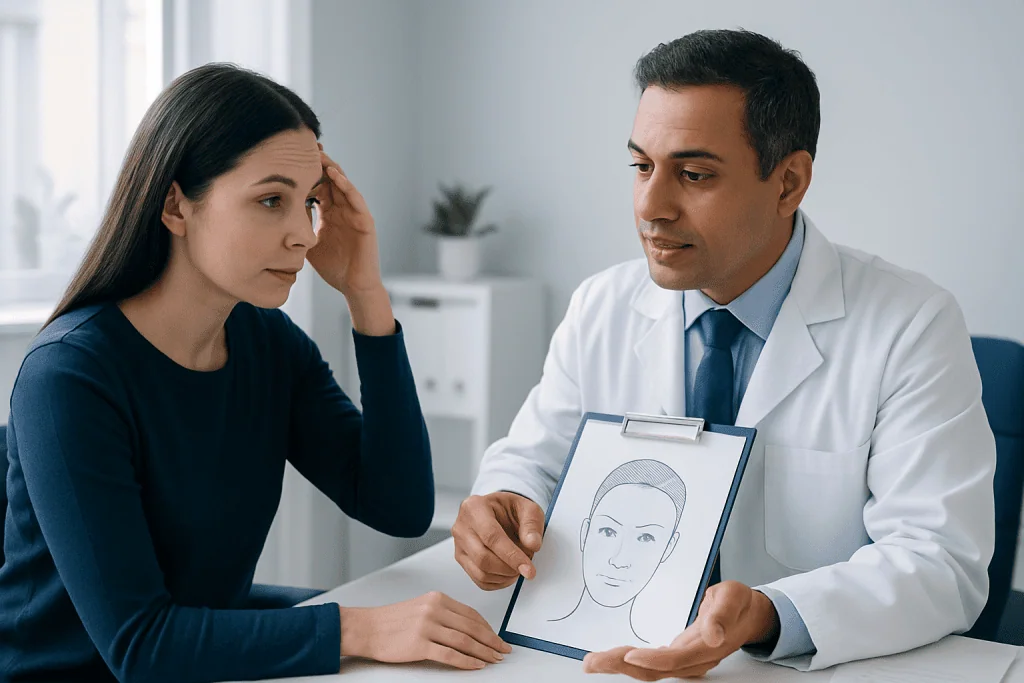
Forehead reduction surgery is typically performed in an operating room under anesthesia selected by the surgical team. Before the procedure begins, the surgeon marks the planned new hairline and incision pattern. This planning stage is important because it aims to create a natural contour that fits the person’s facial shape, existing hairline, and hairstyle preferences.
During surgery, the surgeon makes an incision along or just within the hairline in a way that helps camouflage the scar. A measured strip of forehead skin is removed, and the scalp is carefully loosened to allow it to move forward. The amount of advancement depends on scalp mobility and the surgeon’s judgment about safe closure.
Once the scalp is advanced, the surgeon closes the incision with sutures or staples and may use techniques to help hair grow through or near the scar so it is less noticeable over time. In selected cases, forehead reduction may be combined with another facial procedure, but many people have it as a standalone operation. For patients exploring options with a plastic surgeon, this procedure may be discussed within broader plastic surgery planning.
The operation does not reduce the forehead by shaving bone or altering the skull in routine cases. Its effect comes from repositioning soft tissues and the hair-bearing scalp. Because of this, consultation and preoperative assessment focus strongly on scalp movement, hair pattern, and incision design.
Benefits, Limits, and Cosmetic Goals
The main benefit of forehead reduction surgery is an immediate lowering of the hairline. Many people choose it because it can create a more balanced relationship between the forehead, brows, eyes, and other facial features in a single procedure. Unlike hair transplantation, which can require growth over months, forehead reduction changes the hairline position at the time of surgery.
Another possible advantage is that the moved hairline is made of the person’s own natural hair-bearing scalp. This can provide a dense frontal hairline in people who already have good hair density. For some, this makes the result look more direct and noticeable than treatments focused only on adding individual hairs.
At the same time, the procedure has limits. It cannot reliably address significant baldness, diffuse thinning, or unstable frontal hair loss on its own. It also creates a surgical scar, even when the surgeon uses careful techniques to conceal it. The final degree of forehead shortening depends on anatomy, especially scalp laxity.
Some people also ask whether forehead reduction can help headaches, skin problems, or brow heaviness. While appearance-related concerns may improve, the surgery is not a treatment for neurological or skin disorders. If symptoms such as persistent scalp irritation or unusual facial pain are present, they deserve separate medical evaluation rather than assuming cosmetic surgery will solve them.
Recovery Timeline: What to Expect After Surgery
Recovery after forehead reduction surgery usually happens in stages. In the first few days, mild to moderate swelling, tightness, bruising, and numbness near the incision are common. The forehead and scalp may feel firm or less sensitive at first. The surgeon typically provides instructions about wound care, sleeping with the head elevated, and avoiding pressure on the area.
Many people can return to non-strenuous daily activities within several days, depending on comfort and the nature of their work. Sutures or staples are often removed within about one to two weeks, although exact timing varies. During this early phase, the hairline may look slightly uneven because of swelling, and the scar may appear pink or more visible before it gradually settles.
Over the following weeks, swelling usually improves and the incision continues to heal. Exercise, heavy lifting, and activities that raise blood pressure to the face may need to be limited for a period recommended by the surgeon. Numbness can persist longer than visible swelling and often improves gradually over weeks to months.
Longer-term healing includes scar maturation, which may take several months. Hair around the incision may temporarily shed in some people before growing back. If scar appearance remains a concern after healing, a surgeon may discuss options such as scar management, revision, or complementary treatments. Patients needing coordinated evaluation and aftercare may seek guidance through aesthetic and plastic surgery services.
Risks, Side Effects, and How Doctors Assess Safety
Like any operation, forehead reduction surgery carries risks. Common temporary effects include swelling, bruising, discomfort, tightness, itching, and numbness of the forehead or scalp. These often improve with time, but recovery differs from person to person.
More specific risks include visible scarring, a widened scar, asymmetry, temporary or permanent changes in sensation, and hair loss along the incision line. Infection, bleeding, delayed wound healing, and dissatisfaction with the final cosmetic result are also possible. In some cases, a second procedure may be considered to refine the outcome.
Safety assessment begins before surgery. The surgeon reviews medical history, medications, smoking status, allergies, prior facial procedures, and any tendency toward poor scarring. Examination of the scalp, forehead skin, brow position, and hairline shape helps determine whether the expected benefit is realistic and whether another approach may be safer or more effective.
Because hairline stability affects long-term results, some people benefit from evaluation if there is concern about scalp disease or patterned thinning. If symptoms such as scaling, inflammation, or patchy shedding are present, they may need attention before cosmetic surgery proceeds.
Preparation, Self-care, and When to Seek Medical Care
Preparation usually includes a detailed consultation, review of medications and supplements, and a discussion of smoking cessation if relevant. Patients are commonly advised to avoid certain medicines or products that may increase bleeding risk, but these decisions should always follow the surgeon’s specific instructions. Arranging help for the first day or two after surgery can also make recovery smoother.
At home, careful aftercare supports healing. Keeping the incision clean and dry as instructed, protecting the area from sun exposure, and avoiding hairstyles or hats that rub the incision may help reduce irritation. It is also helpful to be patient with temporary swelling, numbness, and scar visibility, because these often improve gradually rather than all at once.
Medical care should be sought promptly if there is severe pain that is worsening rather than improving, significant bleeding, fever, spreading redness, drainage with a bad odor, or sudden swelling that seems unusual. A patient should also contact the surgical team if the incision opens, if one side becomes much more swollen than the other, or if there are new symptoms such as shortness of breath or chest pain.
Near the end of the decision-making process, it is reasonable to ask where the procedure will be performed, who will provide follow-up, and what support is available if concerns arise after returning home. Acibadem International’s multidisciplinary specialists and JCI-accredited hospitals evaluate and treat international patients seeking procedures related to facial balance and hairline concerns.
Frequently asked questions
Is forehead reduction surgery permanent?
The lowering effect is generally long lasting because the hairline is physically advanced during surgery. However, future hair loss or age-related changes in the scalp and facial tissues can affect how the result looks over time.
How much can the hairline be lowered?
The amount varies from person to person and depends mainly on scalp laxity, hairline shape, and safe wound closure. A surgeon can estimate a likely range during examination, but not everyone is able to achieve the same degree of lowering.
Will forehead reduction surgery leave a scar?
Yes, the procedure creates a scar along the hairline, although surgeons usually place and design it to be less noticeable. Scar appearance often improves over time, but in some people it may remain visible or require additional management.
How is forehead reduction different from a hair transplant?
Forehead reduction lowers the existing hairline by moving the scalp forward, so the change is immediate. A hair transplant moves hair follicles into selected areas and is often used to improve density or refine shape, with growth appearing gradually over months.
Is the recovery painful?
Most people describe discomfort as manageable rather than severe, with tightness, tenderness, and numbness being common early sensations. The surgeon usually recommends general pain-control and wound-care measures appropriate for the individual case.
Can someone with thinning hair have forehead reduction surgery?
Possibly, but it depends on the pattern and stability of the thinning. If the frontal hairline is weak or likely to continue receding, the scar may become more visible, so a surgeon may suggest another option or additional hair restoration planning.
References
- American Society of Plastic Surgeons
- American Board of Cosmetic Surgery
- MedlinePlus
- National Institutes of Health
- U.S. Food and Drug Administration
This article is for general information only and is not a substitute for professional medical advice. Please consult a qualified doctor about your individual situation.
Hair transplant in Turkey — costs, graft counts & a free assessment
JCI-accredited · board-certified surgeons · reply within 24h
Add us as a Preferred Source to see more of our trusted health content across Google Search, AI Overviews and Discover.