Sports Drink Hangover: What Patients Need to Know

A sports drink hangover usually refers to hangover-like symptoms after excess sports drink intake, not alcohol withdrawal. Common triggers include high sugar intake, excess sodium, caffeine-containing products, and inadequate plain water.
Key Takeaways
- A sports drink hangover usually refers to hangover-like symptoms after excess sports drink intake, not alcohol withdrawal.
- Common triggers include high sugar intake, excess sodium, caffeine-containing products, and inadequate plain water.
- Most mild cases improve with rest, water, balanced food, and avoiding additional sugary or caffeinated drinks.
- Persistent vomiting, confusion, chest pain, severe weakness, or signs of significant dehydration need medical assessment.
- Sports drinks are most useful during prolonged, intense exercise or heavy sweating, not as an everyday beverage for most people.
A sports drink hangover is not a formal medical diagnosis, but it is a useful way to describe headache, nausea, bloating, shakiness, or fatigue that can happen after drinking too many sports drinks or using them in the wrong setting. In many cases, symptoms relate to excess sugar, sodium, caffeine in some formulations, or not drinking enough plain water alongside physical activity, heat exposure, or alcohol.
Overview: What a sports drink hangover means
A sports drink hangover usually means a person feels unwell after drinking one or more sports drinks, especially in large amounts or outside of prolonged exercise. Typical complaints include headache, nausea, bloating, thirst, shakiness, stomach upset, and tiredness. The term is informal, but the symptoms are real and often reflect how the body responds to concentrated sugar, sodium, caffeine in some products, or an imbalance between fluid loss and fluid replacement.
Sports drinks are designed to replace water and electrolytes lost through sweat during sustained physical activity. They can be appropriate in certain situations, such as endurance exercise, intense training in heat, or prolonged sweating from sports. Problems are more likely when they are used casually, consumed quickly in large volumes, combined with energy drinks or alcohol, or chosen without noticing ingredients such as added sugars and stimulants.
For many people, a sports drink hangover is not dangerous and improves within hours with hydration, light food, and rest. Still, similar symptoms can also occur with true dehydration, heat exhaustion, migraine, stomach infection, low blood sugar, or a more serious fluid and electrolyte problem. If symptoms are severe, prolonged, or unusual, a doctor can help determine the cause.
Symptoms and how they may feel

People often describe a sports drink hangover as feeling “off” after consuming too much of a sports beverage. Symptoms vary from person to person and depend on what was consumed, how active the person was, and whether there was heat exposure, alcohol, or an underlying medical condition.
Common symptoms may include:
- Headache or head pressure
- Nausea or an unsettled stomach
- Bloating or abdominal discomfort
- Thirst or dry mouth
- Fatigue or low energy
- Shakiness or jitteriness
- Lightheadedness
- Loose stools in some people
- Feeling puffy after high sodium intake
If the product contains caffeine, symptoms may also include restlessness, a racing heartbeat, trouble sleeping, or feeling anxious. If a person drank the sports drink after heavy exercise but still did not replace enough water, symptoms may resemble dehydration rather than a reaction to the drink itself.
Children and older adults may be more sensitive to fluid and electrolyte shifts. People with diabetes, kidney disease, high blood pressure, heart disease, or certain digestive conditions may also notice stronger effects from drinks high in sugar or sodium.
Why it happens: sugar, sodium, caffeine, and context
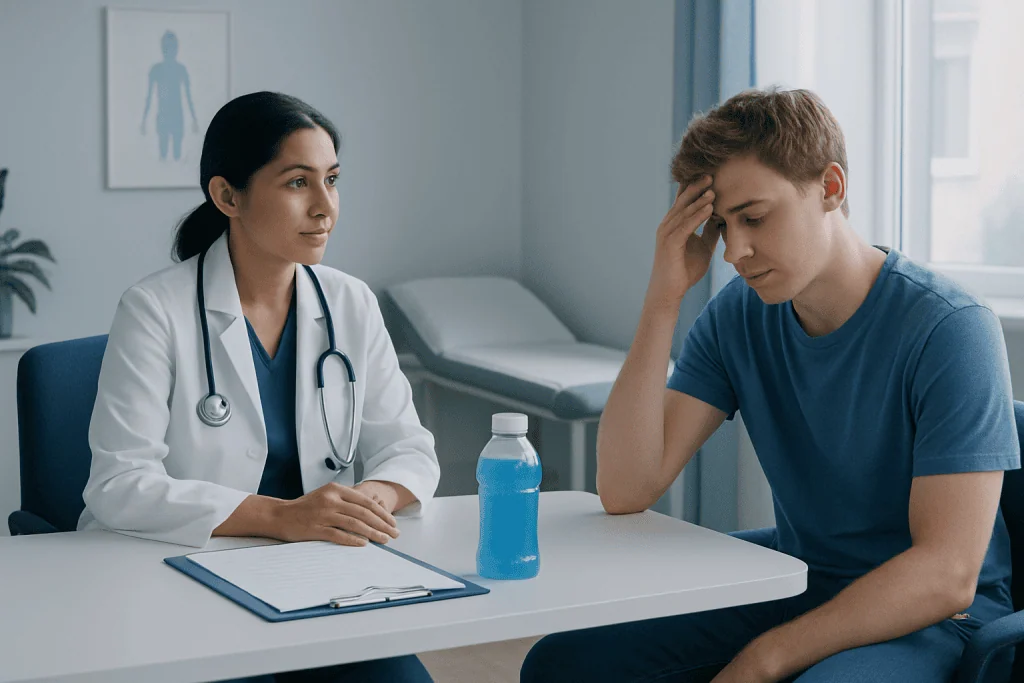
The most common reason for a sports drink hangover is mismatch: the drink does not match the body’s actual needs. A person may consume a beverage meant for prolonged sweating while sitting at a desk, driving, or doing light activity. In that setting, the body may not need extra sodium or carbohydrate, and excess intake can lead to stomach upset, thirst, and a general washed-out feeling.
High sugar content can contribute in several ways. Very sweet drinks may irritate the stomach or draw water into the gut, which can cause nausea, cramping, or diarrhea in some people. They can also lead to a short-lived rise in blood sugar followed by a dip that feels like fatigue, shakiness, or “crashing,” especially if the person has not eaten a balanced meal.
Sodium is helpful during prolonged sweating, but too much may increase thirst and make a person feel bloated or puffy. Some people also consume multiple electrolyte products at once, such as powders, sports drinks, gels, and salty snacks, which increases the total sodium load. If not balanced with appropriate fluid intake, this can worsen symptoms.
Some drinks marketed for exercise also contain caffeine or are confused with energy drinks. Caffeine can cause palpitations, tremor, anxiety, headache, and poor sleep, all of which can make the next day feel like a hangover. Drinking sports beverages together with alcohol may further complicate hydration and mask how much fluid the body actually needs.
Who is more likely to experience it
Anyone can feel unwell after overusing sports drinks, but some situations make it more likely. The risk rises when a person drinks them quickly, uses several bottles in a short period, or chooses highly concentrated products without reading the label. Symptoms may also be more noticeable in people who are sensitive to caffeine or who have a history of gastrointestinal upset.
Higher-risk situations include:
- Using sports drinks during low-intensity or no exercise
- Drinking them instead of plain water throughout the day
- Combining them with alcohol, caffeine, or supplements
- Exercising in hot weather without a hydration plan
- Having vomiting or diarrhea and trying to self-treat with very sugary drinks
- Living with diabetes, kidney disease, heart disease, or uncontrolled blood pressure
Children may be given sports drinks for convenience, but many do not need them for routine play. Their smaller body size can make them more vulnerable to excess sugar intake or stomach upset. Endurance athletes also need to be careful, because symptoms may come from either too little replacement or overcorrection with fluids and electrolytes.
In some cases, a sports drink hangover can overlap with early heat-related illness. If symptoms began during or after exertion in heat, assessment for heat exhaustion may be more important than focusing on the drink alone.
How doctors think about diagnosis
There is no single test for a sports drink hangover, because it is not a formal disease label. Diagnosis is mainly based on the person’s symptoms, what and how much they drank, recent exercise, heat exposure, alcohol use, medicines, and any existing health conditions. Mild cases often do not require testing.
A clinician may ask when symptoms started, whether the drink contained caffeine, how much plain water was consumed, and whether there was sweating, vomiting, diarrhea, or reduced urination. They may also ask about diabetes, kidney problems, migraine, or blood pressure issues, since these conditions can change how the body handles fluids and electrolytes.
If symptoms are moderate or severe, doctors may check blood pressure, heart rate, body temperature, and hydration status. In selected cases, laboratory tests may be used to look at electrolytes, kidney function, or blood glucose. This is especially relevant if symptoms are persistent, if the person looks dehydrated, or if there is concern for a true electrolyte imbalance.
When symptoms do not fit a simple dietary cause, the doctor may evaluate other possibilities such as viral illness, side effects of stimulants, severe dehydration, or heart rhythm symptoms. Depending on the situation, supportive care such as intravenous fluids may be considered in a supervised medical setting rather than trying to correct symptoms at home.
Treatment and relief at home
Most mild sports drink hangover symptoms improve with simple supportive care. The first step is usually to stop drinking the sports beverage and switch to small, steady amounts of plain water unless a doctor has advised fluid restriction. Resting in a cool environment can also help, especially if symptoms followed exercise or heat exposure.
Eating a light, balanced meal or snack may reduce shakiness and help the body recover from a sugar spike and crash. Bland foods can be easier if nausea is present. It is usually best to avoid more sugary drinks, alcohol, or extra caffeine until symptoms have settled.
Helpful self-care steps include:
- Sip water slowly rather than drinking very large amounts at once
- Choose simple foods such as toast, rice, bananas, soup, or yogurt if tolerated
- Rest and avoid intense exercise for the rest of the day
- Read labels before using another sports or electrolyte product
- Monitor urination, thirst, and whether symptoms are improving over several hours
If a person is unable to keep fluids down, has ongoing diarrhea, or becomes increasingly weak or confused, home care may not be enough. In those situations, medical treatment may include assessment for fluid and electrolyte therapy and monitoring of the underlying cause.
Prevention and smart use of sports drinks
The best way to prevent a sports drink hangover is to use sports drinks selectively rather than routinely. For many people doing everyday activities or shorter, lower-intensity exercise, plain water is enough. Sports drinks are generally more appropriate during prolonged, vigorous exercise, especially in heat or when sweating is heavy.
Reading the label matters. Products vary widely in sugar, sodium, serving size, and caffeine content. Some are intended for endurance use, while others are closer to soft drinks or stimulant beverages. A person may accidentally consume multiple servings if they assume one bottle equals one serving.
Practical prevention tips include:
- Use water for routine hydration unless a clinician or sports professional recommends otherwise
- Reserve sports drinks for longer or more intense activity with significant sweat loss
- Avoid combining sports drinks with energy drinks, pre-workouts, or alcohol
- Drink to a sensible plan during exercise rather than overdrinking
- Check whether the product contains caffeine or very high sugar levels
People with diabetes, kidney disease, heart disease, or high blood pressure should be especially cautious and may benefit from individualized advice. If symptoms happen repeatedly despite moderate use, medical evaluation can help identify another explanation. Near the end of the care journey, some patients choose centers such as Acibadem International, where multidisciplinary specialists and JCI-accredited hospitals evaluate hydration, metabolic, and exercise-related concerns for international patients.
When to seek medical care
A short-lived sports drink hangover usually improves with hydration, light food, and rest. However, a person should seek medical advice if symptoms are intense, return frequently, or do not improve within several hours. This is particularly important for children, older adults, pregnant people, and anyone with chronic kidney, heart, or endocrine conditions.
Urgent medical care is appropriate if there is confusion, fainting, chest pain, severe shortness of breath, a very fast or irregular heartbeat, seizures, or signs of significant dehydration such as very little urine, extreme weakness, or inability to keep fluids down. These symptoms may point to a more serious condition than a simple reaction to a drink.
Medical review is also sensible if the person has repeated vomiting, severe diarrhea, worsening headache, symptoms after heavy heat exposure, or blood sugar concerns. In some cases, doctors may use blood tests, heart monitoring, or a general medical check-up to rule out other causes and guide safe recovery.
Frequently asked questions
Is a sports drink hangover a real medical condition?
It is not a formal medical diagnosis, but it is a common way to describe feeling unwell after drinking too many sports drinks. The symptoms can be real and may relate to excess sugar, sodium, caffeine, or poor overall hydration.
Can sports drinks cause headaches?
Yes, some people can develop headaches after sports drinks. Possible reasons include dehydration, excess sugar, caffeine in some products, or a rapid shift in fluid balance after exercise.
How long does a sports drink hangover last?
Mild symptoms often improve within a few hours after rest, water, and light food. If symptoms last longer, become worse, or include vomiting, confusion, or palpitations, a doctor should assess the situation.
Are sports drinks better than water?
Not usually for everyday hydration. Water is enough for many people, while sports drinks are more useful during prolonged, intense exercise or heavy sweating when both fluid and electrolytes are being lost.
Can a sports drink hangover happen without exercise?
Yes. In fact, symptoms may be more likely when sports drinks are consumed without a real need for extra sugar or sodium, such as during sedentary activities or as an all-day beverage.
Should children drink sports drinks regularly?
In most cases, no. Children usually do not need sports drinks for routine play or daily hydration, and too much sugar may contribute to stomach upset and excess calorie intake.
What is the safest first step if someone feels sick after a sports drink?
Stop the sports drink, rest, and sip plain water slowly if tolerated. If symptoms are severe, if the person cannot keep fluids down, or if there are warning signs such as confusion or chest pain, prompt medical care is important.
References
- World Health Organization
- Centers for Disease Control and Prevention
- American Academy of Pediatrics
- American College of Sports Medicine
- National Institute of Diabetes and Digestive and Kidney Diseases
This article is for general information only and is not a substitute for professional medical advice. Please consult a qualified doctor about your individual situation.
Persistent digestive symptoms? Get evaluated in Turkey
JCI-accredited · board-certified surgeons · reply within 24h
Add us as a Preferred Source to see more of our trusted health content across Google Search, AI Overviews and Discover.
Check your numbers in seconds
BMI, calories, due date, blood pressure and 30+ more clinical calculators — free, instant, doctor-reviewed ranges.

More from the Health Library

Bedsores Pressure Ulcers Pictures and Early Skin Changes

Chantix: A Complete Medical Overview

Erythrophobia — Explained by Medical Evidence, Not Myths

Patent Ductus Arteriosus: An Evidence-Based Guide for Patients

Black Eye: A Complete Medical Overview