Cephalopelvic Disproportion: What Patients Need to Know

Cephalopelvic disproportion does not always mean the pelvis is abnormal; baby size, position, and labor progress all matter. A diagnosis is often made during labor when the cervix stops dilating or the baby does not descend despite adequate contractions.
Key Takeaways
- Cephalopelvic disproportion does not always mean the pelvis is abnormal; baby size, position, and labor progress all matter.
- A diagnosis is often made during labor when the cervix stops dilating or the baby does not descend despite adequate contractions.
- Treatment depends on the situation and may include continued monitoring, labor support measures, or cesarean delivery.
- Previous CPD does not guarantee it will happen in every future pregnancy.
- Prompt medical assessment is important if labor is prolonged, contractions are strong without progress, or there are concerns about the baby’s well-being.
Cephalopelvic disproportion is a term used when a baby may be too large, the pelvis may be too small or shaped in a limiting way, or the baby may be positioned so vaginal birth is difficult or unsafe. In practice, it is often suspected when labor does not progress as expected and is confirmed through careful assessment during pregnancy or labor.
Overview
Cephalopelvic disproportion, often shortened to CPD, refers to a mismatch between the baby and the mother’s pelvis that may prevent a safe vaginal birth. The mismatch can happen because the baby is relatively large, the pelvis is relatively small or shaped in a way that makes passage difficult, or the baby is in a position that increases the effective size of the presenting part.
For many patients, the most important point is that CPD is not usually diagnosed by one measurement alone. Pregnancy and labor are dynamic. A baby who seems large on ultrasound may still be born vaginally, while a baby of average size may have difficulty passing through the pelvis if labor is not effective or the baby’s head is not well positioned.
Because of this, clinicians often think of CPD as a practical labor diagnosis rather than a fixed label. The question is whether labor is progressing safely for both mother and baby. If it is not, the care team looks for reasons such as fetal size, position, contraction pattern, or pelvic factors and then recommends the safest next step.
How Cephalopelvic Disproportion Presents
CPD does not cause symptoms in the same way an infection or chronic illness does. Instead, it is usually suspected from what happens during labor. The most common pattern is labor that does not progress as expected, even when contractions are regular and strong enough.
In some cases, the cervix dilates slowly or stops dilating. In others, the cervix reaches full dilation but the baby does not descend through the birth canal. A prolonged labor may be tiring and distressing, but the diagnosis depends on clinical findings rather than how painful labor feels.
Signs that may lead the obstetric team to consider CPD include:
- Slow or arrested cervical dilation
- Lack of descent of the baby’s head
- Baby’s head remaining high in the pelvis despite good contractions
- Prolonged second stage of labor
- Evidence that the baby may not be tolerating labor well
These patterns can also occur for reasons other than CPD, such as weak contractions, an unfavorable fetal position, exhaustion, or effects of certain medications. That is why careful monitoring and reassessment are essential before making management decisions.
Why It Happens: Causes and Risk Factors
Cephalopelvic disproportion can develop from one factor or several working together. A larger baby is one common reason. This may be related to genetics, maternal diabetes, excessive pregnancy weight gain, or going well past the due date. However, estimated fetal weight is not exact, and many larger babies are still born vaginally.
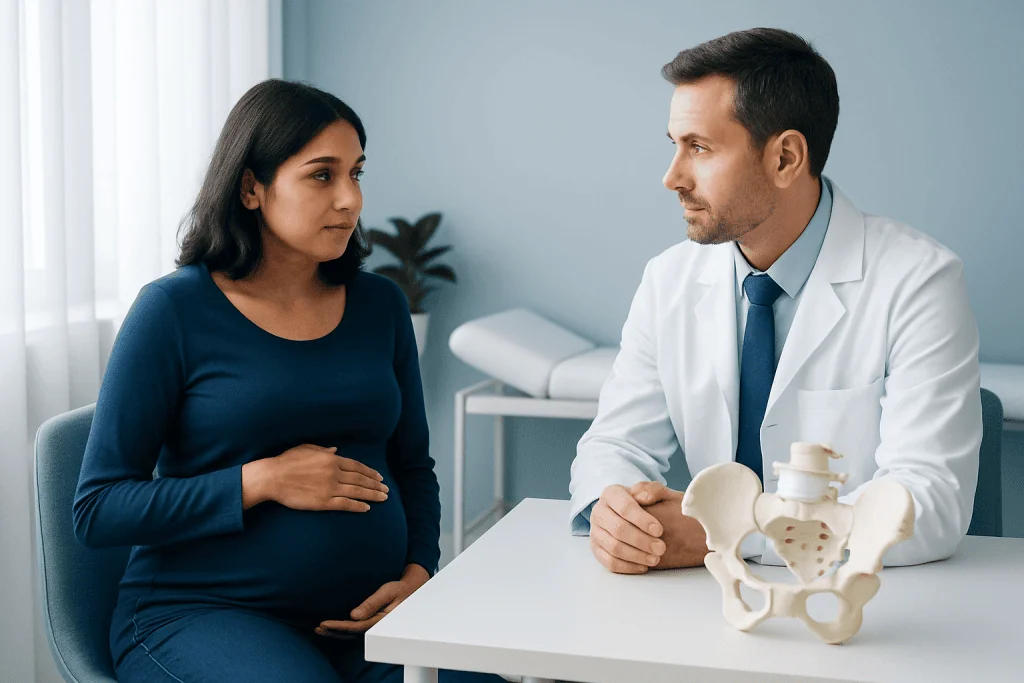
Pelvic anatomy can also play a role. Some patients naturally have a smaller pelvis or a pelvic shape that provides less room for the baby to rotate and descend. Prior pelvic injury or certain skeletal conditions may contribute in a minority of cases, but many people with CPD have no known pelvic problem before labor begins.
The baby’s position matters greatly. A baby facing upward, with the head tilted in a less favorable way, or presenting by a larger part of the head may have more difficulty fitting through the pelvis. This is one reason CPD may overlap with other labor issues such as breech presentation or malposition.
Risk may be higher with a history of difficult labor, a previous cesarean for suspected CPD, maternal diabetes, post-term pregnancy, or suspected fetal macrosomia. Still, risk factors are only clues. They help guide monitoring, but they do not confirm that vaginal birth will be impossible.
How Doctors Diagnose It
Diagnosis starts with a full obstetric assessment. During pregnancy, the clinician reviews the patient’s medical history, prior births, estimated fetal size, and any conditions that may affect labor. Imaging and pelvic examination can provide useful information, but they do not always predict whether CPD will occur.
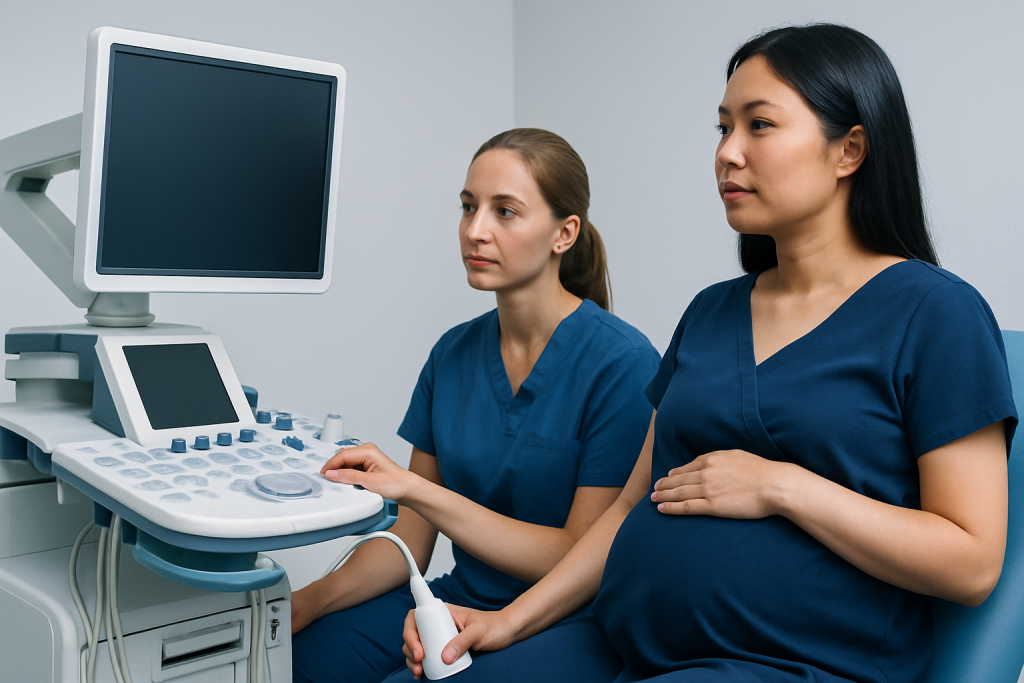
Ultrasound may estimate the baby’s growth and position, but even good ultrasound has a margin of error for fetal weight. Pelvic exams help the team understand dilation, effacement, station, and whether the baby’s head is engaging. In some cases, doctors may discuss concerns alongside other pregnancy factors such as high-risk pregnancy considerations.
Most often, CPD becomes clearer during labor. The care team looks at contraction strength and frequency, changes in cervical dilation over time, descent of the baby, and signs of maternal or fetal stress. If contractions are inadequate, labor support or induction methods may be considered before concluding that the baby cannot pass through the pelvis.
The diagnosis is therefore based on the overall picture: adequate contractions, enough time, and still no safe progress. This helps distinguish true disproportion from labor that is simply slow but still normal.
Treatment and Birth Planning
Treatment depends on when CPD is suspected and how labor is progressing. If concerns arise before labor, the obstetrician may discuss birth planning in advance, including the possibility of a planned cesarean. This is more likely if the baby appears very large, there was severe prior labor obstruction, or other pregnancy complications are present.
When CPD is suspected during labor, the first step is often to confirm that contractions are effective and that there is enough time for progress. Repositioning, hydration, pain relief, and close monitoring may help. If labor is being induced or augmented, this is done under careful supervision. Depending on the clinical situation, some patients may already be receiving labor and delivery care in a setting equipped for rapid obstetric decisions.
If the cervix does not continue to dilate or the baby does not descend despite adequate contractions, cesarean delivery is commonly recommended. A cesarean may also be advised sooner if there are signs that the baby is in distress or if continuing labor poses risk to the mother. In certain carefully selected situations, assisted vaginal birth may be considered, but this is not appropriate when there is clear disproportion.
For patients who need surgery, cesarean section can be an effective and safe way to complete the birth. After delivery, the doctor may review whether CPD was likely due to fetal size, position, temporary labor factors, or a more persistent anatomical issue, which can help guide planning for future pregnancies.
What It Means for Future Pregnancies
Having CPD in one pregnancy does not automatically mean it will happen again. Future outcomes depend on why it occurred the first time. If the issue was mainly a large baby or an unfavorable fetal position, a later pregnancy may progress differently.
Doctors usually review the prior birth record in detail. Helpful information includes the baby’s weight, the stage of labor when progress stopped, the baby’s position, and whether contractions were adequate. This review can help determine whether a trial of labor in a future pregnancy may be reasonable or whether repeat cesarean is likely to be safer.
Some patients who previously had a cesarean for suspected CPD may still be candidates for a carefully monitored vaginal birth after cesarean, depending on the reason for the earlier surgery and their overall health. Others may be advised to plan another cesarean. These decisions are individual and should be made with an obstetric specialist.
Prevention, Self-care, and When to Seek Medical Care
There is no guaranteed way to prevent cephalopelvic disproportion because many of its causes are not controllable. Still, good prenatal care can lower risk from modifiable factors and improve planning. This includes screening for diabetes, monitoring fetal growth, discussing weight gain goals, and identifying unusual fetal positions or other pregnancy complications early.
During late pregnancy, patients can help by attending regular checkups, following advice for any medical conditions, and making a birth plan with an experienced maternity team. If labor begins, it is important to go to the hospital or birth unit according to the obstetrician’s instructions, especially if there is a history of difficult labor, prior cesarean, or concern about a large baby.
Medical care should be sought promptly for labor that seems unusually prolonged, strong contractions without progress, vaginal bleeding, decreased fetal movement, severe abdominal pain, fever, or fluid leakage with concerns about the baby’s well-being. Emergency evaluation is also important if there are signs of fetal distress or if the patient feels something is not right during labor.
Near the end of the care journey, some patients may seek multidisciplinary assessment at centers experienced in complex obstetrics. Acibadem International’s specialists in women’s health, working in JCI-accredited hospitals, diagnose and treat pregnancy and birth conditions for international patients, including situations that may require pregnancy follow-up and delivery support.
Frequently asked questions
Is cephalopelvic disproportion always known before labor starts?
No. CPD is often suspected only after labor begins and progress is slower than expected. Measurements during pregnancy can suggest risk, but they cannot always predict whether vaginal birth will be possible.
Can ultrasound confirm cephalopelvic disproportion?
Not by itself. Ultrasound can estimate the baby's size and show position, but fetal weight estimates are not exact. Doctors usually combine ultrasound findings with pelvic exam results and the actual course of labor.
Does cephalopelvic disproportion always mean a cesarean delivery is needed?
Not always at the start, but confirmed CPD often leads to cesarean delivery if labor is not progressing safely. Before making that decision, the care team may assess contraction strength, fetal position, and whether labor support measures could help.
If a patient had CPD once, will it happen in every pregnancy?
No. The chance depends on the reason it happened previously, such as fetal size, position, or labor pattern. A future pregnancy may have a different baby size and a different labor course.
What is the difference between CPD and a large baby?
A large baby can increase the chance of CPD, but the two terms are not the same. CPD refers to a problem with fit and labor progress, while a baby can be large and still be born vaginally without difficulty.
Can cephalopelvic disproportion harm the baby or mother?
If labor becomes obstructed or very prolonged, risks can increase for both mother and baby. That is why close monitoring during labor is important, so the team can recommend timely treatment if progress stops or the baby shows signs of distress.
References
- American College of Obstetricians and Gynecologists
- World Health Organization
- National Institute for Health and Care Excellence
- Royal College of Obstetricians and Gynaecologists
This article is for general information only and is not a substitute for professional medical advice. Please consult a qualified doctor about your individual situation.
Explore treatments in Turkey — costs, top hospitals & a free quote
JCI-accredited · board-certified surgeons · reply within 24h
Add us as a Preferred Source to see more of our trusted health content across Google Search, AI Overviews and Discover.
Check your numbers in seconds
BMI, calories, due date, blood pressure and 30+ more clinical calculators — free, instant, doctor-reviewed ranges.

More from the Health Library

Labral Tear: A Complete Medical Overview

Phenylalanine — Explained by Medical Evidence, Not Myths

Forteo Injection: What Patients Need to Know

Ipmn Pancreas: An Evidence-Based Guide for Patients

Bumps on Back of Neck: A Complete Medical Overview