Spirometer Testsieger: What Patients Need to Know
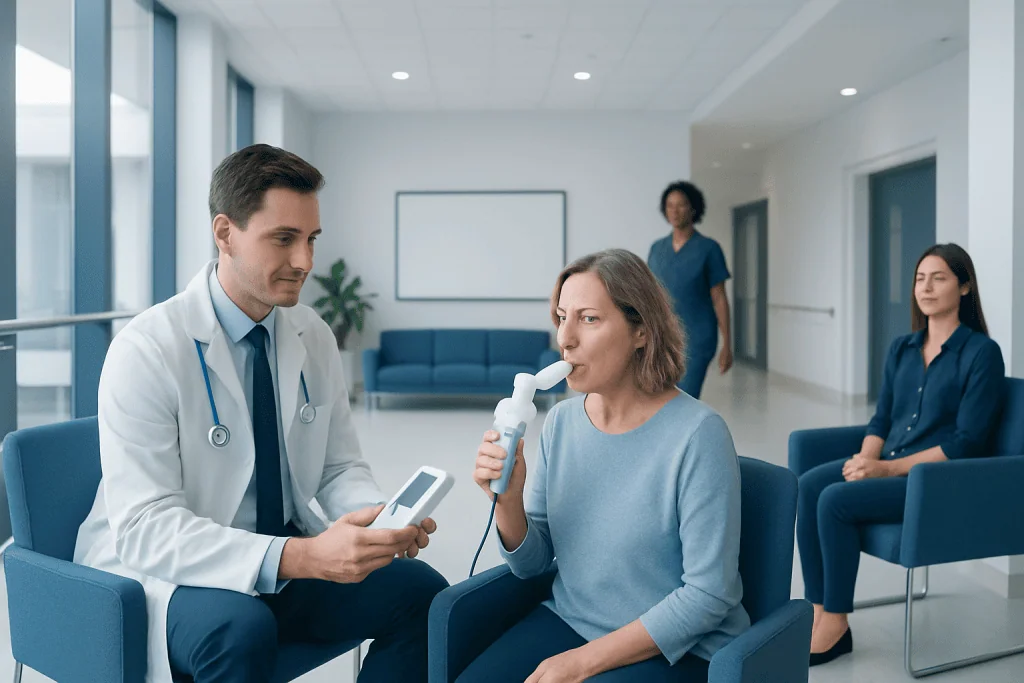
A spirometer tests how well the lungs move air in and out and can support monitoring of asthma, COPD, and other respiratory conditions. The best spirometer for one person may not be the best for another; device purpose, accuracy, and ease of use matter more than popularity alone.
Key Takeaways
- A spirometer tests how well the lungs move air in and out and can support monitoring of asthma, COPD, and other respiratory conditions.
- The best spirometer for one person may not be the best for another; device purpose, accuracy, and ease of use matter more than popularity alone.
- Home spirometry can be useful, but it does not replace medical diagnosis or professional lung function testing.
- Technique strongly affects results, so correct instruction and consistent testing are essential.
- Breathlessness, chest pain, blue lips, or rapidly worsening symptoms need prompt medical attention.
Spirometer testsieger usually refers to the “best” spirometer, but for patients, the best choice is the one that is accurate, easy to use, and appropriate for the reason it is being used. Understanding what a spirometer measures, how to use it correctly, and when medical evaluation is needed can help patients get more meaningful results.
What “Spirometer Testsieger” Means for Patients
When people search for spirometer testsieger, they are usually looking for the best spirometer to buy or use. In practical terms, the best spirometer is not simply the one with the most features; it is the one that gives dependable readings, suits the patient’s needs, and can be used correctly and consistently.
A spirometer is a device that measures breathing performance. Depending on the type, it may help monitor how much air a person can exhale, how quickly they can blow air out, or how lung function changes over time. Some are designed for home use, while others are part of formal lung function testing in a clinic or hospital.
For patients, choosing a spirometer should start with the reason for using it. Someone with asthma may need home monitoring to track changes and discuss them with a doctor, while another person may only need a professional breathing test to investigate symptoms. Device reviews can be helpful, but they should not replace medical guidance about which measurements are actually needed.
What a Spirometer Measures
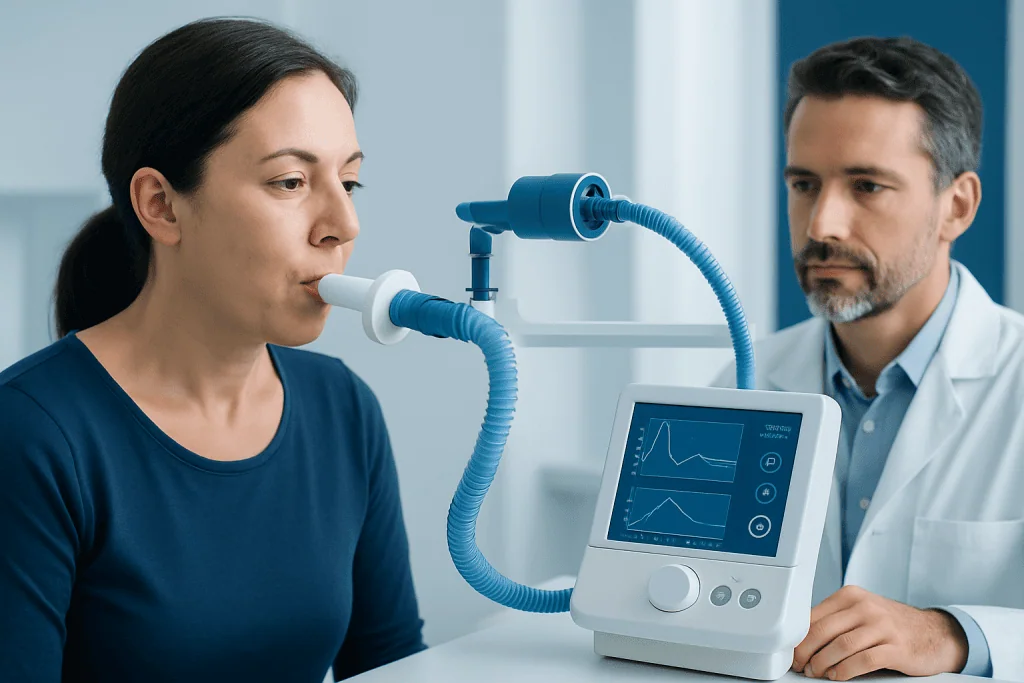
A spirometer is used to assess airflow and lung capacity. In a clinical setting, spirometry commonly measures how much air a person can forcefully breathe out and how fast that air leaves the lungs. These results can help doctors understand whether there is airway narrowing, reduced lung volume, or another pattern that needs further evaluation.
Common measurements include forced vital capacity (FVC), which is the total amount of air exhaled after a deep breath, and forced expiratory volume in one second (FEV1), which shows how much air can be exhaled in the first second. These values are especially useful in conditions that affect airflow, such as asthma and COPD.
Some patients also confuse spirometers with peak flow meters. A peak flow meter measures the fastest speed of exhalation and is often used in asthma self-monitoring, while a spirometer provides a broader picture of lung function. Both can be useful, but they are not interchangeable in every situation.
- Clinic spirometry: More detailed, supervised, and used for diagnosis or follow-up.
- Home spirometry: Useful for monitoring trends when recommended by a doctor.
- Peak flow monitoring: Simpler airflow tracking, often used in asthma action plans.
Who May Benefit From Spirometry
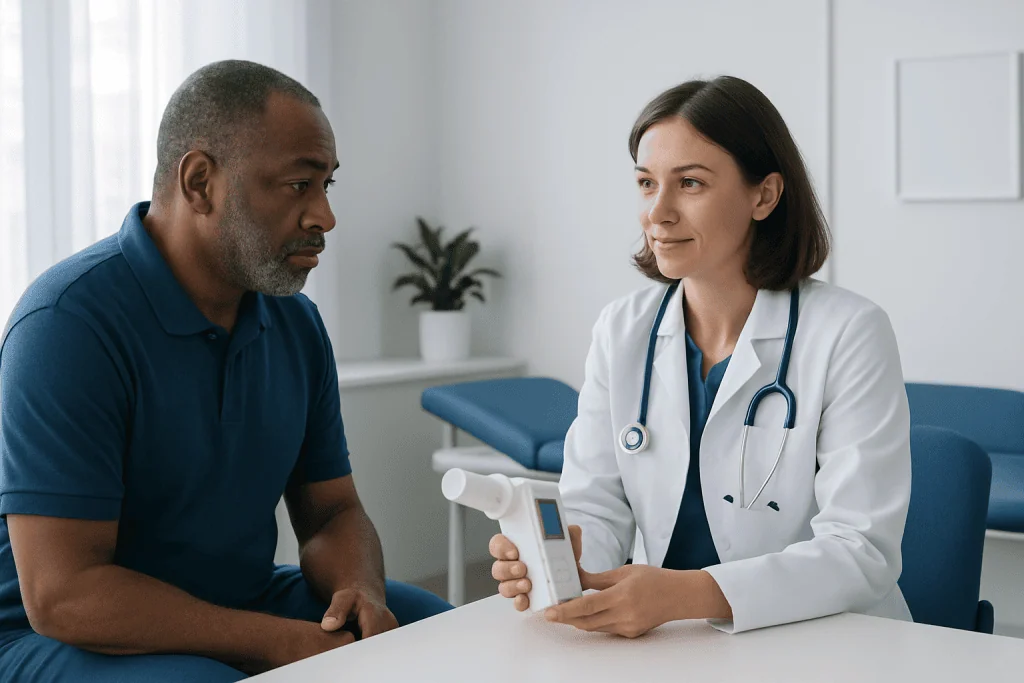
Spirometry can help patients who have ongoing breathing symptoms or known lung disease. It is commonly used when a person has shortness of breath, wheezing, chronic cough, chest tightness, or reduced exercise tolerance. It may also be part of follow-up after treatment changes or respiratory illness.
People with asthma or chronic obstructive lung disease often benefit from regular assessment because symptoms do not always reflect what is happening in the airways. In some cases, spirometry can show a decline in lung function before the person feels a major change. This can help guide treatment discussions, including whether bronchoscopy or other investigations are needed in selected cases.
Spirometry may also be considered before certain operations, after occupational exposures, or during evaluation of smoking-related lung damage. However, it is not a stand-alone test for every respiratory complaint. Doctors may combine it with a physical examination, oxygen measurement, imaging, allergy evaluation, or advanced pulmonary testing depending on the situation.
How to Judge the Best Spirometer
For patients comparing devices, the most important question is whether the spirometer is suitable for medical monitoring rather than general wellness use alone. A device should provide clear instructions, stable repeat measurements, and results that can be shared with a clinician if needed. Simplicity matters because difficult devices are less likely to be used correctly.
Features that may help include a readable display, age-appropriate use, data storage, and app or report functions. Some patients benefit from visual coaching or prompts that help them inhale deeply and blow out for long enough. For children, older adults, or people with coordination problems, ease of handling may be more important than advanced digital extras.
Patients should also consider hygiene and maintenance. Mouthpieces may be single-use or reusable depending on the model, and cleaning instructions should be followed carefully. If a device is intended for long-term monitoring, battery life, replacement parts, and calibration guidance may also be relevant.
- Look for clear instructions and consistent readings.
- Choose a device appropriate for the person’s age and condition.
- Prefer models that allow result tracking over time.
- Ask a doctor whether home spirometry is actually useful in that case.
How to Use a Spirometer Correctly
Even a very good device can give misleading results if the technique is poor. The usual method involves sitting or standing upright, sealing the lips tightly around the mouthpiece, taking the deepest breath possible, and then blowing out as hard and as long as instructed. Many devices require several attempts because repeatability is important.
Common mistakes include not breathing in fully before the test, coughing during exhalation, stopping too early, or letting air leak around the mouthpiece. These errors can make readings appear lower than they really are. Following the same routine each time helps make results more meaningful.
For home monitoring, patients should record the time, symptoms, and any relevant triggers such as exercise, allergens, or respiratory infections. Readings are most useful when interpreted as a trend rather than as a single isolated number. A doctor may explain personal target values and what kind of change should prompt medical review.
If formal assessment is needed, supervised testing in a respiratory laboratory may include before-and-after measurements using inhaled medication. This can help show whether airflow obstruction improves with treatment and may guide care such as asthma treatment or additional evaluation.
What Results Can and Cannot Tell You
Spirometry can provide valuable information, but it has limits. It can suggest patterns consistent with airway obstruction or reduced lung volume, and it can help track whether lung function is stable, improving, or worsening. It is often one part of the puzzle rather than a final answer on its own.
A low reading does not automatically mean a serious illness, and a normal reading does not exclude every cause of breathing symptoms. Technique, effort, temporary illness, and even poor device handling can affect the result. For that reason, spirometry should be interpreted in context, especially when symptoms are new or unexplained.
When doctors suspect a more complex problem, they may recommend chest imaging, allergy assessment, diffusion testing, exercise testing, or other specialist investigations. In selected cases, treatment planning may also involve broader chest diseases treatment by a multidisciplinary team. The main goal is to match test findings with the person’s symptoms, examination, and medical history.
Safety, Self-Care, and When to Seek Medical Care
Using a home spirometer is generally safe for most people, but it should not replace professional care. Patients should use it as instructed by their clinician, continue prescribed medications, and avoid changing treatment solely based on one reading unless they have been given a clear action plan. Device readings are a tool for monitoring, not a diagnosis by themselves.
General self-care for lung health includes avoiding smoking and secondhand smoke, taking medicines as prescribed, staying physically active as tolerated, and keeping vaccinations up to date when recommended. People with asthma or COPD may also benefit from learning inhaler technique, identifying triggers, and following a written symptom plan.
When to seek medical care: a doctor should be consulted if breathing symptoms are new, persistent, or interfering with daily life, even if home readings seem acceptable. Urgent care is needed for severe shortness of breath, chest pain, fainting, blue lips or fingertips, confusion, or rapidly worsening wheezing or cough.
For patients who need expert evaluation, Acibadem International’s multidisciplinary specialists and JCI-accredited hospitals diagnose and treat respiratory conditions for international patients. Depending on the findings, care may include evaluation for COPD treatment or other targeted respiratory management.
Frequently asked questions
What does spirometer testsieger mean?
The term usually means the “best spirometer,” often in product comparisons or consumer reviews. For patients, the best choice depends on why the device is needed, how accurate and easy it is to use, and whether a doctor recommends home monitoring.
Is a home spirometer as accurate as a hospital lung function test?
Home spirometers can be useful for tracking trends, but they are not the same as supervised clinical spirometry. Hospital or clinic testing is typically more standardized and is better for diagnosis and formal interpretation.
Can a spirometer diagnose asthma or COPD on its own?
No. Spirometry can support the diagnosis of asthma or COPD, but a doctor also considers symptoms, medical history, examination findings, and sometimes additional tests. The results need professional interpretation.
How often should a person use a home spirometer?
That depends on the reason for monitoring and the doctor’s advice. Some people use it daily for a period of time, while others use it only during symptom changes or follow-up. Regular use should follow a clear plan so the readings are meaningful.
What can make spirometer readings inaccurate?
Poor technique is a common cause, such as not taking a full breath in, not blowing out hard enough, or stopping too early. Coughing, air leaks around the mouthpiece, and inconsistent effort can also affect the results.
Should a person buy a spirometer without seeing a doctor first?
A person can buy one, but it is usually better to discuss symptoms and the reason for monitoring with a doctor first. This helps ensure the right type of device is chosen and that the results will be used in a safe, helpful way.
References
- American Thoracic Society
- European Respiratory Society
- National Heart, Lung, and Blood Institute
- Centers for Disease Control and Prevention
- World Health Organization
This article is for general information only and is not a substitute for professional medical advice. Please consult a qualified doctor about your individual situation.
Explore treatments in Turkey — costs, top hospitals & a free quote
JCI-accredited · board-certified surgeons · reply within 24h
Add us as a Preferred Source to see more of our trusted health content across Google Search, AI Overviews and Discover.

More from the Health Library

Hard Lump Under Skin: A Complete Medical Overview

Diltiazem — Explained by Medical Evidence, Not Myths

Si Joint Dysfunction — Explained by Medical Evidence, Not Myths
Oct Macula: What Patients Need to Know

Electrolyte: Symptoms, Causes, and Treatment — Complete Patient Guide