High Thyroid Levels: What Your Results Mean and When to Act

“High thyroid levels” may refer to high free T4, high T3, or a low TSH pattern that points to thyroid overactivity. Normal ranges vary by laboratory, age, pregnancy status, medications, and whether total or free hormone levels were measured.
Key Takeaways
- “High thyroid levels” may refer to high free T4, high T3, or a low TSH pattern that points to thyroid overactivity.
- Normal ranges vary by laboratory, age, pregnancy status, medications, and whether total or free hormone levels were measured.
- A single abnormal result does not always confirm disease; repeat testing and the full pattern of results often matter.
- Common causes include Graves’ disease, thyroid nodules, thyroiditis, and taking too much thyroid hormone medicine.
- Symptoms can include palpitations, weight loss, tremor, heat intolerance, anxiety, and changes in menstrual cycles.
- Urgent care is needed for severe chest pain, shortness of breath, confusion, fainting, or a very fast irregular heartbeat.
High thyroid levels usually suggest that the body is being exposed to more thyroid hormone than it needs, most often from an overactive thyroid or thyroid medication that is too strong. The result is medically meaningful when it falls outside the lab’s reference range and fits the person’s symptoms, age, health status, and repeat testing.
What high thyroid levels usually mean
High thyroid levels most often mean the body has more thyroid hormone activity than it needs. In practice, this may show up as a high free T4, a high T3, or a low thyroid-stimulating hormone (TSH) that signals the pituitary gland is trying to slow the thyroid down. Doctors interpret these results together rather than relying on one number alone.
The headline number comes first: each lab provides a reference range for TSH, free T4, free T3, and sometimes total T4 or total T3. A result above or below that range is a signal to look more closely, but it is not a diagnosis by itself. The same value may carry different meaning depending on symptoms, pregnancy, recent illness, age, and medications.
Context matters because thyroid tests are sensitive to body changes. For example, pregnancy can alter binding proteins and change total hormone levels, older adults may have subtler symptoms, and some medicines can shift test values without true thyroid disease. For this reason, a clinically meaningful abnormality is one that remains outside the expected range when interpreted in the person’s real-life setting.
Which thyroid test is high and why that matters
People often say “high thyroid levels,” but several different tests may be involved. TSH measures the signal from the pituitary gland to the thyroid. Free T4 and free T3 measure the active hormones available to tissues. Total T4 and total T3 include hormone that is attached to proteins in the blood, so these can be influenced by pregnancy, estrogen, liver disease, or other factors.
The most typical pattern of an overactive thyroid is low TSH with high free T4, high T3, or both. Sometimes T3 rises first, producing a pattern called T3 thyrotoxicosis, where TSH is low but free T4 is still normal. In other situations, TSH is low while free T4 and T3 remain within range; this can suggest subclinical hyperthyroidism, which may still matter if symptoms, bone health, or heart rhythm are concerns.
Variation by age and context is important. Older adults may have less obvious symptoms even with significant hormone excess. During pregnancy, interpretation follows pregnancy-specific reference ranges when available. A medically meaningful deviation is one that is consistent on repeat testing, explains symptoms, or carries risk for complications such as atrial fibrillation or bone loss.
Symptoms that can happen with high thyroid hormone levels

High thyroid hormone levels can speed up many body systems. Common symptoms include a racing heart, shakiness, feeling unusually warm, sweating, nervousness, irritability, difficulty sleeping, and unintentional weight loss despite a normal or increased appetite. Some people also notice more frequent bowel movements, muscle weakness, thinning hair, or fatigue.
Not everyone has the same experience. Younger adults may feel restless or anxious, while older adults may mainly notice palpitations, tiredness, shortness of breath, or weight loss. Menstrual cycles may become lighter or less regular, and fertility can be affected. In children and teenagers, mood changes, school difficulties, or faster growth can sometimes be clues.
Physical findings may include a fine tremor, warm skin, a visibly enlarged thyroid, or eye changes in autoimmune thyroid disease. If the underlying problem is goiter, the neck may look fuller or feel tight. Because symptoms overlap with anxiety, menopause, heart conditions, and side effects from medication, testing helps show whether the thyroid is truly involved.
Common causes and risk factors
The most common cause of persistent high thyroid hormone activity is Graves’ disease, an autoimmune condition in which antibodies stimulate the thyroid to make too much hormone. Toxic thyroid nodules or a multinodular goiter can also produce excess hormone independently. These conditions are more likely to be medically significant when they cause sustained low TSH and elevated T4 or T3 on repeat testing.
Another important cause is thyroiditis, which is inflammation of the thyroid. In thyroiditis, stored hormone leaks into the bloodstream, causing temporary high levels that may later swing toward low levels before recovery. This pattern can happen after a viral illness, after pregnancy, or as part of autoimmune thyroid disease. Because treatment differs from Graves’ disease or toxic nodules, doctors often look at timing, symptoms, antibodies, and imaging before making a plan.
High thyroid levels can also result from taking too much thyroid hormone medication, whether by accident or because a prescribed dose is no longer appropriate. Less common causes include certain medications, excess iodine exposure, and rare pituitary-related problems. A family history of thyroid disease, personal autoimmune disease, smoking, female sex, and recent pregnancy can increase risk in some settings. Depending on the suspected cause, further evaluation may also look for thyroid cancer if there is a concerning nodule, although most cases of high thyroid hormone are not caused by cancer.
How doctors interpret and confirm abnormal results
Diagnosis starts with the result pattern, not just one number. If high thyroid levels are suspected, doctors usually review TSH together with free T4 and sometimes T3. They also ask about symptoms, supplements, recent illness, pregnancy, and medicines such as thyroid hormone, amiodarone, steroids, or biotin-containing products that can interfere with some blood tests.
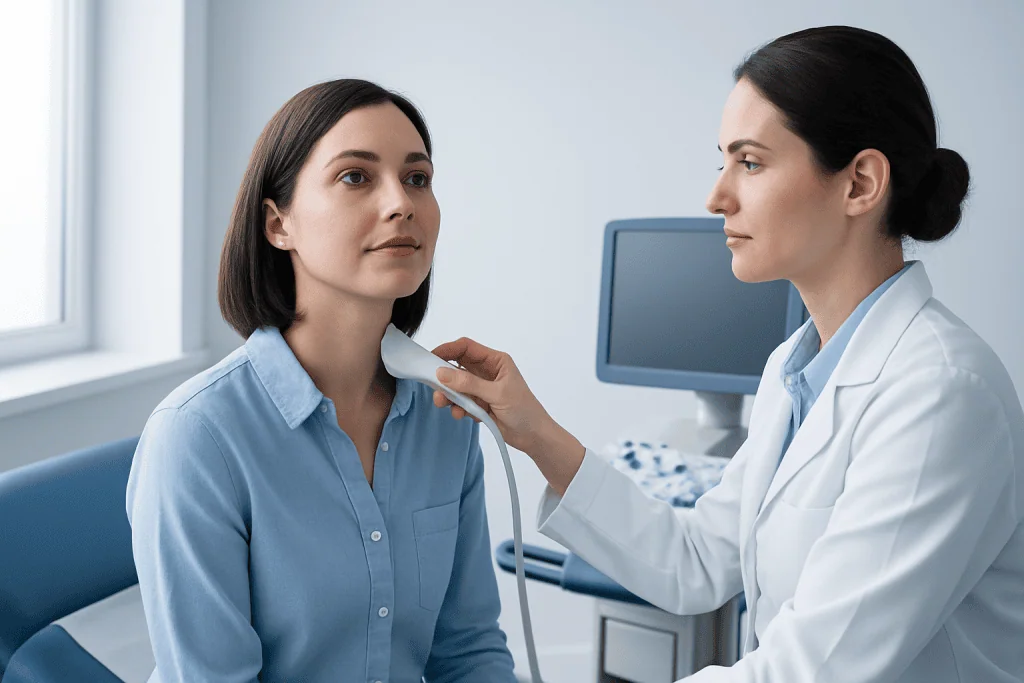
Repeat blood work is often useful, especially when the abnormality is mild or unexpected. Additional tests may include thyroid antibodies to look for Graves’ disease or autoimmune inflammation. When the thyroid feels enlarged or lumpy, thyroid ultrasound can help assess nodules and gland structure. In selected cases, a thyroid biopsy may be needed for a suspicious nodule, though biopsy does not diagnose hormone overactivity itself.
Imaging may also help identify whether the gland is diffusely overactive or whether one or more nodules are producing hormone. Doctors pay particular attention to whether the deviation is mild and temporary or sustained and clinically important. Results are considered more meaningful when they match symptoms, remain abnormal over time, or pose specific health risks.
Treatment options and follow-up
Treatment depends on the cause, severity, age, and overall health of the patient. Temporary symptom relief may come from medicines that slow a fast heart rate and reduce tremor. The underlying thyroid problem may be treated with antithyroid medication, radioactive iodine, or surgery, depending on the diagnosis and individual factors. If the issue is too much thyroid replacement medicine, the dose may simply need adjustment.
For some people, especially those with thyroiditis, treatment focuses on monitoring and symptom control because hormone leakage may settle on its own. Others need definitive treatment if they have ongoing hormone excess, a large goiter, troublesome symptoms, heart rhythm concerns, or nodules that cause overproduction. Surgical care can be appropriate in selected cases, including people with compressive symptoms or certain nodules, and thyroidectomy may be discussed when medically suitable.
Follow-up blood tests are a key part of care because thyroid levels can change over time, especially after starting treatment. Clinicians aim not only to bring numbers into range but also to improve symptoms and reduce long-term risks to the heart and bones. Near the end of the care pathway, patients who need specialist evaluation may be seen by endocrinology, radiology, and surgical teams; Acibadem International’s multidisciplinary specialists in JCI-accredited hospitals also diagnose and treat thyroid conditions for international patients.
When to seek medical care
Medical review is appropriate if a thyroid test comes back abnormal, especially when symptoms are present. People should arrange a routine appointment if they notice a fast heartbeat, weight loss without trying, persistent tremor, heat intolerance, menstrual changes, neck swelling, or ongoing anxiety-like symptoms that feel new or unexplained. Even mild abnormalities deserve follow-up because repeat testing may clarify whether the change is temporary or persistent.
More urgent care is needed for severe chest pain, fainting, shortness of breath, confusion, marked weakness, or a very fast or irregular heartbeat. These symptoms do not always mean the thyroid is the cause, but they should not be ignored. Pregnant patients, older adults, and those with known heart disease should seek prompt advice because the threshold for treatment and monitoring may be different.
Until a clinician reviews the results, it is best not to start or stop thyroid medicines without guidance. Patients should also mention supplements, over-the-counter products, and recent imaging contrast exposure, since these can affect interpretation. Keeping a copy of the lab report can help the doctor compare the exact values with the laboratory reference range.
Frequently asked questions
Does high thyroid levels mean hyperthyroidism?
Often, yes, but not always. True hyperthyroidism usually means low TSH with high free T4, high T3, or both. Sometimes temporary thyroiditis, medication effects, or test interference can create a similar pattern, so the full context matters.
What is considered a high thyroid level?
A high thyroid level is any thyroid hormone result that falls above the laboratory’s reference range, such as free T4 or T3. However, the meaning depends on which test is abnormal, how far it is from the range, and whether TSH is low at the same time.
Can stress cause high thyroid levels?
Stress can worsen symptoms that resemble thyroid overactivity, such as palpitations or anxiety, but it usually does not directly cause persistent high thyroid hormone production. If symptoms suggest a thyroid problem, blood tests are the best way to check.
Can high thyroid levels go back to normal on their own?
Sometimes they can, especially if the cause is thyroiditis or a short-term illness affecting test results. Persistent causes such as Graves’ disease or toxic nodules usually need medical follow-up and often treatment.
Why is my TSH low but T4 normal?
This can happen in subclinical hyperthyroidism, when the thyroid is slightly overactive but hormone levels are still within range. It can also occur temporarily with illness, medication effects, or early thyroid disease, so doctors may repeat the test after a period of time.
Should thyroid tests be repeated if one result is abnormal?
Repeat testing is common and often helpful, especially when the abnormality is mild or unexpected. A second test can show whether the change is temporary, progressing, or stable and can guide whether further evaluation is needed.
References
- American Thyroid Association
- National Institute of Diabetes and Digestive and Kidney Diseases
- MedlinePlus
- Mayo Clinic
- Endocrine Society
This article is for general information only and is not a substitute for professional medical advice. Please consult a qualified doctor about your individual situation.
Explore treatments in Turkey — costs, top hospitals & a free quote
JCI-accredited · board-certified surgeons · reply within 24h
Add us as a Preferred Source to see more of our trusted health content across Google Search, AI Overviews and Discover.