Face Roller: A Complete Medical Overview

A face roller may provide short-term de-puffing and a cooling, relaxing sensation. Results are usually temporary and are not the same as medical or surgical treatment.
Key Takeaways
- A face roller may provide short-term de-puffing and a cooling, relaxing sensation.
- Results are usually temporary and are not the same as medical or surgical treatment.
- Gentle technique and good hygiene matter to avoid skin irritation or contamination.
- People with active rashes, broken skin, infection, or significant facial pain should avoid use until medically assessed.
- Persistent swelling, redness, lumps, or asymmetry should be evaluated by a doctor.
A face roller is a handheld skincare tool used to massage the face. It may briefly reduce puffiness, feel soothing, and help spread skincare products, but it does not produce lasting lifting, slim the face, or replace medical treatment.
Overview: what a face roller can and cannot do
A face roller is a small handheld tool, often made with stone or metal, designed to glide over the skin with light pressure. Many people use it as part of a skincare routine to massage the face, reduce morning puffiness, or apply serums and moisturizers more evenly. When chilled, it can also provide a cooling sensation that feels calming.
From a medical perspective, the main effects of a face roller are mechanical massage and temporary movement of surface fluid. This may make the face look a little less puffy for a short time, especially around the eyes or jawline. However, a face roller does not change facial structure, remove deep wrinkles, or treat underlying skin disease.
It is also important to separate wellness claims from evidence. While facial massage can feel pleasant and may support relaxation, there is limited high-quality evidence that a face roller delivers long-term anti-aging results. For that reason, it is best seen as a comfort or self-care tool rather than a medical device.
How a face roller works
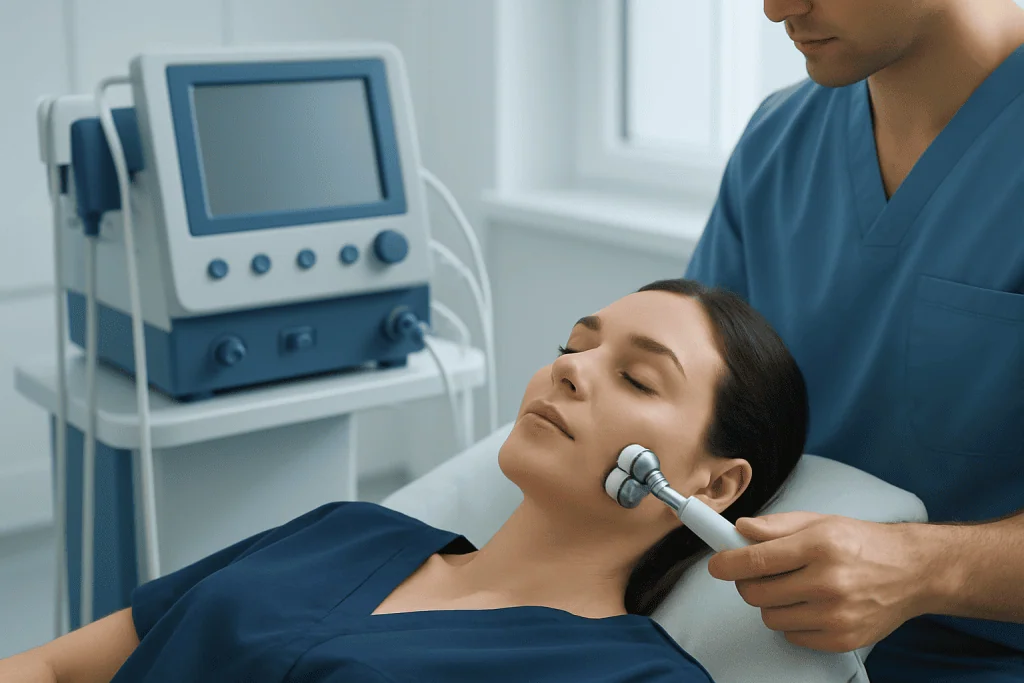
The rolling action creates gentle pressure over the skin and soft tissues. This can temporarily encourage movement of superficial fluid and may help reduce the appearance of mild swelling. The effect is often most noticeable first thing in the morning, when fluid retention in the face is more common.
Some users also find that a face roller helps spread skincare products in a thin, even layer. This can improve the sensory experience of a routine, although it does not necessarily mean the product works better. Cooling the roller in the refrigerator may enhance comfort, especially after exercise or a warm shower, but it should not be frozen to the point that it feels painfully cold on the skin.
Face rollers are different from treatments that act deeper in the skin. They do not stimulate the same degree of collagen remodeling seen with certain dermatologic procedures, and they do not correct issues such as significant laxity, scars, or structural asymmetry.
Possible benefits and realistic expectations

Used gently, a face roller may offer a few simple benefits. It can provide a brief reduction in puffiness, a cooling effect, and a massage-like sensation that some people associate with relaxation. For individuals who enjoy ritualized self-care, that consistency may also support stress reduction and body awareness.
Realistic expectations are essential. A face roller may make skin look fresher for a short period, but any lifting or sculpting effect is temporary. It will not permanently slim the face, erase wrinkles, or treat medical causes of swelling, redness, acne, or pigmentation.
If someone is concerned about persistent puffiness, chronic flushing, acne, or visible broken capillaries, the issue may be related to a skin or medical condition rather than routine fluid retention. In those cases, proper assessment by a dermatologist or physician is more useful than relying on cosmetic tools alone. For example, ongoing facial redness can sometimes relate to rosacea, which often needs targeted care.
- Most likely benefit: temporary de-puffing
- Possible added benefit: soothing, cooling comfort
- Less certain benefit: improved enjoyment of skincare routine
- Unrealistic claim: permanent face slimming or lifting
Risks, side effects, and who should be cautious
Face rollers are generally low risk when used carefully on healthy skin, but they are not risk-free. Pressing too hard can irritate the skin, worsen redness, or cause discomfort, especially in people with sensitive skin. Shared or poorly cleaned rollers may also spread bacteria, oils, or product residue.
People should avoid using a face roller over broken skin, active cold sores, infected pimples, sunburn, recent facial procedures, or painful rashes. Rolling over inflamed areas may increase irritation and delay healing. Caution is also sensible for those with eczema, severe acne, or a known skin barrier problem.
If the face is swollen for unclear reasons, a roller should not be used to “push it away.” Swelling can have many causes, including allergy, infection, dental disease, sinus problems, salivary gland issues, or inflammatory skin conditions. Persistent symptoms deserve evaluation, particularly if there is tenderness, warmth, fever, or one-sided swelling.
People recovering from facial surgery or cosmetic procedures should follow their clinician’s instructions before using massage tools. In some settings, guided massage is helpful, but timing and technique matter. Medical professionals may instead recommend tailored care such as dermatology assessment or other procedure-specific aftercare.
How to use a face roller safely
Safe use starts with clean skin and a clean tool. The roller should be washed according to the manufacturer’s instructions, usually with mild soap and water, then dried well. A light moisturizer or serum can reduce friction so the roller glides smoothly rather than tugging at the skin.
Technique should be gentle. Short, light strokes are usually enough, moving outward or upward across the face without pressing hard. The under-eye area is delicate, so only minimal pressure should be used there. A session does not need to be long; a few minutes is often sufficient.
Consistency is more important than force. If the skin becomes red, sore, or more sensitive afterward, the pressure is likely too strong or the tool is being used too often. People should stop using it if discomfort continues and seek advice if the skin reaction does not settle.
- Clean the roller before and after use
- Use light pressure only
- Avoid broken, infected, or highly inflamed skin
- Do not share the tool with others
- Stop if rolling causes pain or worsening redness
When a face roller is not enough: medical evaluation and treatment options
Facial puffiness or skin changes are sometimes signs of an underlying issue rather than a cosmetic concern. Medical evaluation may be helpful if symptoms are persistent, worsening, or associated with pain, rash, nasal symptoms, dental problems, or changes in vision. A doctor may ask about timing, triggers, skincare products, allergies, medications, and general health.
Assessment can include a skin examination and, when relevant, evaluation of the ears, nose, throat, teeth, or sinuses. This matters because pressure, swelling, or tenderness in the cheeks or around the eyes can occasionally reflect sinusitis or another non-cosmetic cause. Treatment depends on the diagnosis and may involve skin care changes, prescription medicine, allergy management, or referral to a specialist.
For people seeking more noticeable changes in skin texture, laxity, or contour, a clinician may discuss evidence-based options rather than relying on home tools. Depending on the concern, these may include specialist dermatology care, medical aesthetics procedures, or evaluation by plastic surgery teams when structural concerns are involved. The right option depends on skin type, age, goals, and overall health.
Near the end of the care pathway, some international patients choose centers that combine dermatology, aesthetics, and surgical expertise. Acibadem International’s multidisciplinary specialists and JCI-accredited hospitals diagnose and treat a wide range of skin and facial concerns for international patients.
When to seek medical care
A face roller should not be used as a substitute for medical evaluation when symptoms suggest disease. Prompt medical advice is important if there is sudden facial swelling, swelling after a new medication or food, trouble breathing, severe pain, fever, or rapidly spreading redness. These features can signal an allergic reaction, infection, or another urgent problem.
Non-urgent medical review is also sensible when facial puffiness keeps returning, only affects one side, or comes with sinus pressure, tooth pain, rash, acne flare, or eye irritation. A clinician can help identify whether the cause is skincare-related, inflammatory, infectious, hormonal, or structural.
People should also seek advice if they notice a new lump, persistent skin thickening, frequent flushing, or changes that do not improve with simple self-care. Early assessment often makes management more straightforward and may prevent unnecessary irritation from trial-and-error home treatments.
Frequently asked questions
Does a face roller really work?
A face roller can work in a limited, short-term way by reducing mild puffiness and providing a soothing massage effect. It does not create permanent lifting, slimming, or wrinkle removal. Most benefits are temporary and cosmetic rather than medical.
Can a face roller improve lymphatic drainage?
Gentle facial massage may help move surface fluid temporarily, which is why some people look less puffy after use. However, this is not the same as medically supervised lymphatic therapy, and evidence for major long-term effects is limited. It should not be used to manage unexplained or significant swelling.
Is it safe to use a face roller every day?
For many people with healthy skin, light daily use is reasonable if the tool is kept clean and pressure is gentle. If the skin becomes red, sore, or irritated, it is better to reduce frequency or stop. People with sensitive or inflamed skin may need to avoid it.
Should a face roller be cold?
A cool roller can feel more soothing and may make temporary de-puffing more noticeable. It does not need to be extremely cold, and it should not cause pain or numbness. Refrigeration is usually enough if a cooling effect is desired.
Can a face roller help acne?
A face roller is not a treatment for acne. In some cases, rubbing inflamed breakouts can worsen irritation or spread bacteria if the tool is not cleaned properly. Anyone with ongoing acne may benefit more from a dermatologist’s advice.
What skin conditions mean a face roller should be avoided?
It is best avoided on broken skin, active infections, sunburn, painful rashes, cold sores, or very inflamed acne. People with eczema, rosacea, or very sensitive skin should use extra caution because friction may worsen symptoms. If there is doubt, a doctor or dermatologist can advise whether it is appropriate.
References
- American Academy of Dermatology
- National Health Service
- Mayo Clinic
- Cleveland Clinic
This article is for general information only and is not a substitute for professional medical advice. Please consult a qualified doctor about your individual situation.
Explore treatments in Turkey — costs, top hospitals & a free quote
JCI-accredited · board-certified surgeons · reply within 24h
Add us as a Preferred Source to see more of our trusted health content across Google Search, AI Overviews and Discover.