Fracture Blisters — Explained by Medical Evidence, Not Myths

Fracture blisters develop near some broken bones because injury and swelling disrupt the skin layers. They are most common over areas where the skin is thin, such as the ankle, foot, wrist, elbow, and lower leg.
Key Takeaways
- Fracture blisters develop near some broken bones because injury and swelling disrupt the skin layers.
- They are most common over areas where the skin is thin, such as the ankle, foot, wrist, elbow, and lower leg.
- The blisters should not be popped at home, as broken skin can increase the risk of infection and delay healing.
- Treatment focuses on stabilizing the fracture, protecting the skin, controlling swelling, and planning safe timing for any procedure.
- Urgent medical care is needed after a suspected fracture, especially if pain, swelling, numbness, skin color changes, or open wounds are present.
Fracture blisters are fluid-filled skin blisters that may appear near a broken bone, most often when swelling is significant and the skin is under stress. They are not simply a minor skin problem; they can affect timing of treatment, wound care, and recovery, so prompt medical evaluation is important.
Overview: what fracture blisters are and why they matter
Fracture blisters are blisters that form on the skin near a broken bone, usually within hours to a few days after the injury. They develop because the force of the injury and the swelling that follows can separate the skin layers, allowing fluid to collect. In other words, they are a sign that both the bone and the overlying soft tissues have been stressed.
These blisters matter because they are more than a surface skin issue. They can make it harder to apply casts, splints, or dressings comfortably, and they may influence when surgery can be performed safely. If the skin is badly irritated or broken, doctors may wait until the soft tissues improve before making an incision.
Fracture blisters can contain clear fluid or blood. Clear blisters often involve more superficial skin separation, while blood-filled blisters may reflect deeper skin injury. Both types need careful handling, and neither should be treated casually at home.
Although many people think a blister after an injury is just friction or bruising, fracture blisters are different. They occur in the setting of a true underlying fracture and deserve evaluation by a qualified clinician, often in orthopedic care settings such as orthopedic assessment and treatment.
Common symptoms and where they usually appear
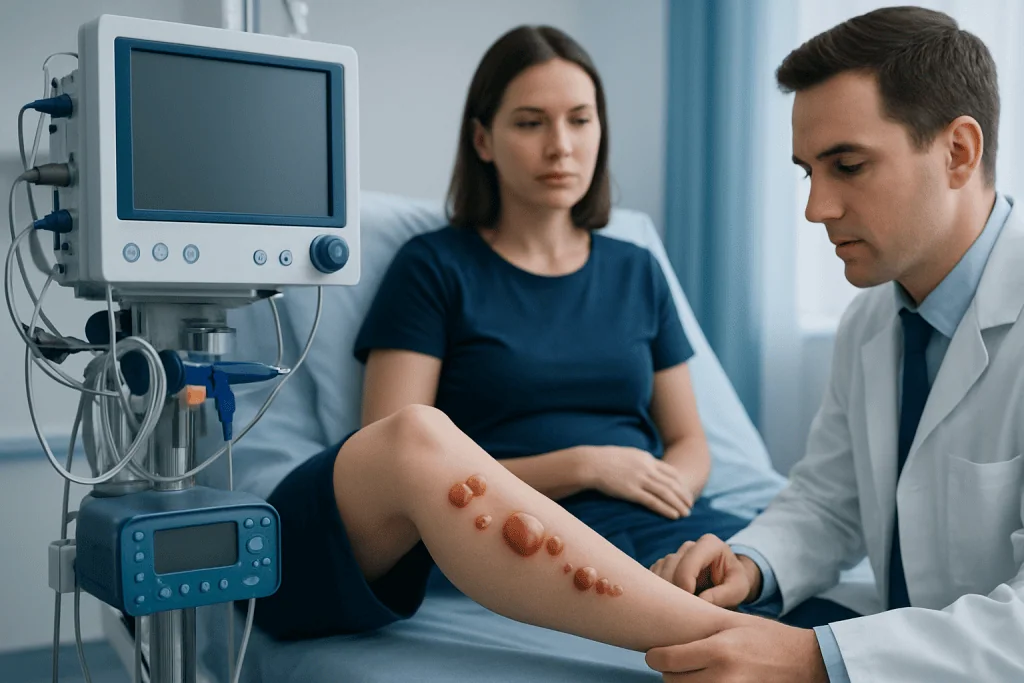
The main feature is one or more tense, fluid-filled blisters on swollen skin near the fracture site. The surrounding area is often painful, tender, and visibly swollen. The blister may be clear, yellowish, or dark red if blood is present inside it.
Fracture blisters are more likely to appear where the skin is thin and lies directly over bone with little cushioning tissue. Common locations include the ankle, foot, lower leg, wrist, elbow, and sometimes the hand. They may appear after injuries such as ankle fractures or tibial fractures, especially when swelling builds quickly.
Other symptoms usually relate to the fracture itself rather than the blister alone. A person may have sharp pain, difficulty bearing weight, bruising, deformity, reduced range of motion, or pain with movement. In some cases, numbness, tingling, or increasing tightness can suggest pressure on nerves or blood vessels and should be assessed urgently.
- Fluid-filled or blood-filled blisters near a broken bone
- Marked swelling and tenderness
- Bruising or skin discoloration
- Difficulty moving the injured area or putting weight on it
- Visible deformity or severe pain after trauma
Why fracture blisters happen: causes and risk factors

Fracture blisters are caused by a combination of mechanical injury and swelling. When a bone breaks, nearby soft tissues are also injured. Fluid then leaks into the tissues as part of the body’s inflammatory response. If pressure rises enough, the layers of skin can separate and form a blister.
Not every fracture causes blisters. They are more often seen with high-energy injuries, fractures that cause significant swelling, and fractures close to the skin surface. Delays in immobilization, dependent positioning of the limb, or major soft-tissue trauma can also contribute.
Certain individual factors may raise the risk because they affect circulation, skin integrity, or healing. These can include diabetes, peripheral vascular disease, smoking, advanced age, and conditions associated with fragile skin. However, fracture blisters can still occur in otherwise healthy people after a serious injury.
The type and location of the break also matter. Injuries involving the ankle, heel, or shin are often discussed because the skin in these areas has less soft tissue protection. Related bone injuries may include ankle fracture or tibia fracture, where swelling can be prominent and skin care becomes especially important.
How doctors diagnose fracture blisters
Diagnosis usually begins with a medical history and physical examination. The doctor looks at the skin, checks swelling, assesses pain, and examines circulation and nerve function in the injured limb. Questions often focus on how the injury happened, when swelling began, and whether the blisters appeared before or after any splint or bandage was applied.
Imaging is used to confirm the fracture and understand its pattern. Standard X-rays are often the first step. In some injuries, a CT scan may be useful to define complex fractures and help guide treatment planning, especially if surgery is being considered.
Doctors also examine the blisters themselves. Intact clear or blood-filled blisters can often be recognized by appearance alone. The larger clinical concern is not usually identifying the blister, but evaluating what it signals about soft-tissue injury and whether the skin is healthy enough for casting, incision, or other treatment.
Other skin conditions can sometimes resemble fracture blisters, including friction blisters, burns, allergic contact reactions, or blisters from tight dressings. The presence of an underlying fracture, the location, and the timing after injury usually help distinguish fracture blisters from these other causes.
Treatment options and why skin protection is central
Treatment is aimed at both the fracture and the skin. The injured bone usually needs stabilization with a splint, brace, cast, or sometimes surgery, while the overlying skin must be protected to lower the risk of breakdown or infection. Doctors commonly elevate the injured limb, reduce swelling, and use dressings that keep the blister area clean and supported.
In general, fracture blisters should not be popped at home. An intact blister acts as a natural protective cover. If a blister opens on its own, it should be kept clean and covered, and the area should be re-evaluated by a clinician. Decisions about whether to leave a blister intact, drain it, or manage it with a specific dressing vary by the blister type, skin condition, and treatment plan.
If surgery is needed for the fracture, the timing may depend on the soft tissues. In some cases, orthopedic surgeons wait until swelling improves or the skin condition is safer for an incision. This is one reason fracture blister management may seem slower than patients expect: the goal is to treat the bone without causing avoidable skin complications. Some patients may also need physical therapy and rehabilitation later in recovery to regain strength and movement.
Follow-up care is important because the skin can change quickly in the first days after injury. If there is concern for severe swelling, compartment syndrome, wound problems, or a complex break, patients may need more specialized care such as trauma and emergency care or fracture management in hospital. Toward the end of the care pathway, some patients benefit from ongoing orthopedic rehabilitation to support safe return to activity.
What patients can do: self-care, prevention, and recovery support
After a suspected fracture, the safest self-care is simple and supportive: avoid putting weight on the injured area unless advised otherwise, keep the limb elevated if possible, and follow instructions for splint or brace use. Swelling control is especially important because excessive swelling contributes to blister formation and may worsen pain.
Patients should avoid bursting blisters, applying harsh antiseptics, or placing adhesive materials directly over fragile skin unless instructed by a clinician. Tight wraps can make swelling worse if they impair circulation. Any increasing pain, numbness, color change, or unusual tightness under a cast or splint should be reported promptly.
Not all fracture blisters can be prevented, because the injury itself may be the main cause. Still, early immobilization, prompt assessment, elevation, and careful handling of the injured limb may reduce additional soft-tissue stress. Good general health measures, such as not smoking and managing chronic conditions, may also support skin and bone healing.
Recovery depends more on the fracture severity and soft-tissue condition than on the blister alone. The blister often heals over time with appropriate protection, but the overall timeline may be longer if swelling is severe or if surgery must be delayed. Clear communication with the treating team helps patients understand each step of healing.
When to seek medical care
Anyone who may have a broken bone should seek medical care promptly, even if the blister seems to be the most visible problem. A blister near an injured limb can be a clue that the underlying fracture and soft-tissue injury are significant. Early evaluation helps protect the skin, confirm the fracture, and guide safe treatment.
Urgent assessment is especially important if there is severe pain, obvious deformity, inability to bear weight, numbness, tingling, coldness, pale or blue skin, or rapidly increasing swelling. These findings can suggest complications affecting blood flow, nerves, or pressure within the limb.
Immediate care is also needed if a blister has burst and the skin looks contaminated, if there is fever or spreading redness, or if bone may have pierced the skin. Open fractures and possible infection require prompt treatment. If symptoms worsen after a cast or splint is applied, the patient should not wait for a routine follow-up.
For international patients who need coordinated fracture and soft-tissue care, Acibadem International’s multidisciplinary specialists in JCI-accredited hospitals diagnose and treat these injuries with attention to both bone healing and skin protection.
Frequently asked questions
Are fracture blisters serious?
They can be clinically important because they indicate significant soft-tissue stress around a fracture. The blister itself may heal, but it can affect casting, wound care, and the timing of surgery, so medical evaluation is recommended.
Should a fracture blister be popped?
In general, no. Popping a fracture blister at home can expose deeper skin layers, increase infection risk, and complicate treatment. A doctor should decide how the blister is best managed.
How long do fracture blisters take to heal?
Healing time varies depending on the blister type, skin condition, and the severity of the fracture. Some improve over days to a couple of weeks, but overall recovery depends on both the skin and the underlying bone injury.
Can fracture blisters happen without a broken bone?
Blisters can happen for many reasons, including friction, burns, or skin reactions, but a true fracture blister is associated with a broken bone and surrounding tissue injury. If blistering appears after trauma, it is important to rule out a fracture.
Do fracture blisters mean surgery will be delayed?
Sometimes, yes. If the skin is too swollen or fragile, surgeons may wait until the soft tissues are in better condition before operating, because this can lower the risk of wound complications.
What is the difference between a clear blister and a blood-filled fracture blister?
A clear blister usually reflects more superficial skin separation, while a blood-filled blister may indicate deeper injury to the skin layers. Both require careful medical management, and the blood-filled type may signal more severe soft-tissue damage.
References
- American Academy of Orthopaedic Surgeons
- American Academy of Dermatology
- National Health Service
- MedlinePlus
- American College of Surgeons
This article is for general information only and is not a substitute for professional medical advice. Please consult a qualified doctor about your individual situation.
Joint and spine care in Turkey — expert assessment & treatment
JCI-accredited · board-certified surgeons · reply within 24h
Add us as a Preferred Source to see more of our trusted health content across Google Search, AI Overviews and Discover.