Infection Suture: Symptoms, Causes, and Treatment Options

An infection suture usually causes increasing redness, tenderness, swelling, warmth, or pus around stitches. Some mild irritation from stitches is common, but worsening symptoms after the first few days may suggest infection.
Key Takeaways
- An infection suture usually causes increasing redness, tenderness, swelling, warmth, or pus around stitches.
- Some mild irritation from stitches is common, but worsening symptoms after the first few days may suggest infection.
- Treatment depends on severity and may include wound cleaning, dressings, antibiotics, or removal of some stitches.
- Good wound care, hand hygiene, and following post-procedure instructions help lower the risk of infection.
- Fever, spreading redness, severe pain, or a wound that opens needs prompt medical attention.
Infection suture refers to infection around stitches or the nearby healing wound. It can cause redness, warmth, swelling, pain, and discharge, and it should be assessed promptly so the right treatment can begin and healing can continue safely.
What Is an Infection Suture?
An infection suture is an infection that develops in or around stitches placed to close a wound after surgery, injury repair, or another procedure. In practical terms, this usually means bacteria have entered the healing skin or deeper tissues near the suture line, leading to inflammation and delayed healing. The problem may involve the stitch entry points, the full incision, or tissue underneath the wound.
Not every red or itchy stitch is infected. Some discomfort, mild swelling, a pulling sensation, or light pinkness can happen as part of normal healing, especially in the first few days. The key difference is that infection tends to worsen rather than steadily improve. Redness may spread, pain may increase, and drainage may become cloudy, yellow, green, or foul-smelling.
Suture-related infection can occur after many different procedures, from a small skin repair to a larger operation. Most cases are treatable, especially when recognized early. A clinician can help distinguish a simple skin reaction from a true wound infection and decide whether local care, antibiotics, or another intervention is needed.
Common Symptoms and Early Warning Signs
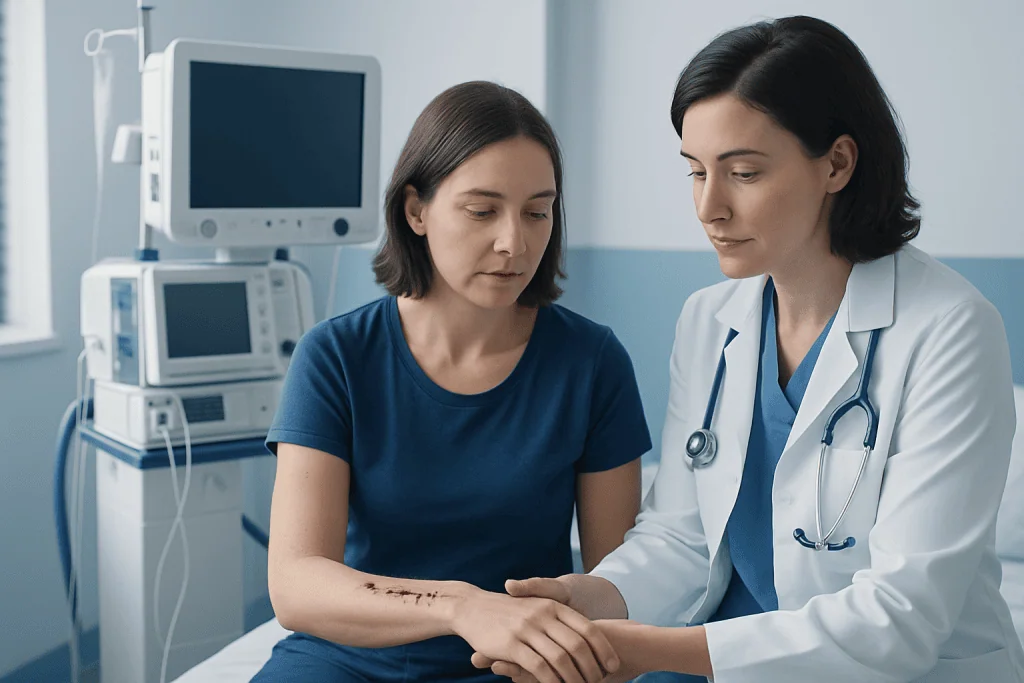
The symptoms of infection suture often begin around the stitch line. A person may notice increasing redness, warmth, swelling, tenderness, or throbbing pain. The area may feel firmer than before, and the wound may become more sensitive instead of less sensitive as healing goes on.
Drainage is another common sign. A small amount of clear or slightly blood-tinged fluid can be normal early in healing, but thick, cloudy, yellow, green, or foul-smelling discharge is more concerning. Crusting around the stitches, skin breakdown, or the wound edges starting to separate can also suggest a problem.
More significant infection may affect the whole body. Fever, chills, fatigue, or feeling generally unwell can occur, especially if the infection is spreading. In some cases, the redness extends outward in a wider area, or red streaking appears along the skin. These signs should not be ignored.
- Increasing redness that spreads beyond the stitch line
- Worsening pain after initial improvement
- Swelling or warmth around the wound
- Pus or bad-smelling drainage
- Wound opening or delayed healing
- Fever or feeling unwell
Why Sutures Become Infected

Most suture infections happen when bacteria enter the wound before, during, or after closure. Skin normally carries bacteria, and even with careful cleaning, a wound can sometimes become contaminated. The risk may be higher if the original injury was dirty, if there was tissue damage, or if the wound was exposed to moisture, friction, or unclean hands during healing.
Some infections are linked to local factors at the incision itself. Tight sutures, poor blood supply, trapped fluid under the wound, dead tissue, or a collection of blood can make it easier for bacteria to grow. Occasionally, the body reacts to the suture material and creates inflammation that resembles infection. Because these problems can look similar, medical assessment is important when symptoms are not clear.
Certain health conditions can also raise risk. Diabetes, smoking, obesity, poor nutrition, older age, immune suppression, and some long or complex surgeries may slow healing and make infection more likely. People with a history of repeated skin infections or chronic inflammatory skin disease may also need closer follow-up. In some cases, wound infection may overlap with broader problems such as wound infection or deeper soft-tissue infection.
How Doctors Evaluate an Infected Suture
Diagnosis usually starts with a physical examination. A doctor looks at the color of the skin, the amount and type of drainage, whether the wound edges are closed, and whether there is tenderness, heat, swelling, or a pocket of fluid underneath. The timing of symptoms is also helpful. Pain and redness that worsen after the first few days can be more suggestive of infection than of normal healing.
In many cases, the appearance of the wound gives enough information to guide treatment. If drainage is present, a sample may be collected for culture to identify the bacteria and help select the most appropriate antibiotic. Blood tests are not always needed, but they may be used if the infection seems more severe or if the person has fever or signs of deeper involvement.
Imaging is sometimes helpful when infection may extend below the skin or when an abscess is suspected. Ultrasound or other scans can help show fluid collections or tissue involvement. After surgery, the care team may also assess whether the stitches themselves are contributing to irritation or whether the problem is part of a larger surgical site infection.
Treatment Options for Infection Suture
Treatment depends on how deep the infection is and how much of the wound is involved. Mild, localized cases may improve with careful cleaning, dressing changes, and close monitoring. A clinician may advise keeping the area clean and dry, avoiding friction, and watching for progression over the next one to two days.
When a bacterial infection is more likely, antibiotics may be prescribed. Some people need only oral antibiotics, while others with more severe infection may need intravenous treatment. If pus has collected under the skin, the wound may need to be opened slightly to allow drainage. In some cases, part of the suture material is removed if it is trapping infection or causing a strong tissue reaction.
If the wound is not healing well, specialized wound management may help. This can include regular dressing care, debridement of unhealthy tissue, or support from teams experienced in wound care and dressing. For deeper or persistent cases after an operation, evaluation by a surgical team may be necessary, including review of the original closure and possible general surgery follow-up.
It is generally not a good idea to squeeze, pick at, or remove stitches at home unless a clinician has given clear instructions. Self-treatment can worsen contamination and delay proper care. Medical assessment helps make sure the wound is managed safely and that deeper infection is not missed.
Prevention and Self-care During Healing
Preventing infection starts with careful wound care from the first day. Hands should be washed before touching the dressing or the skin around the stitches. Dressings should be changed exactly as instructed, and the wound should not be soaked in baths, pools, or hot tubs until the clinical team says it is safe. Showering may be allowed earlier for some wounds, but this varies by procedure and location.
Clothing and daily habits also matter. Loose, clean clothing can reduce rubbing, sweating, and irritation. The wound should be protected from dirt and direct trauma. If a doctor has advised limited activity, that guidance should be followed, since excessive stretching or strain can pull on the stitches and create small openings where bacteria can enter.
General health supports healing too. Good nutrition, adequate fluids, not smoking, and controlling long-term conditions such as diabetes can lower infection risk. People recovering from larger procedures may benefit from structured aftercare and, when appropriate, support such as postoperative rehabilitation to return to normal activity safely without overloading the healing wound.
When to Seek Medical Care
Medical care should be sought promptly if the area around stitches becomes increasingly red, swollen, painful, or warm, especially if symptoms are getting worse instead of better. Pus, bad odor, new bleeding, or the wound edges separating are also reasons to contact a doctor. These changes do not always mean a serious problem, but they should be checked.
Urgent assessment is important if fever develops, redness spreads quickly, red streaks appear on the skin, or the person feels faint or unwell. People with diabetes, reduced immunity, poor circulation, or recent major surgery should have a lower threshold for seeking care because infection may progress more easily in these settings.
For international patients or those needing coordinated follow-up, a multidisciplinary evaluation can be helpful. Acibadem International’s specialists and JCI-accredited hospitals diagnose and treat wound and stitch-related infections for international patients, especially when surgical review, infection management, and aftercare need to be planned together.
Frequently asked questions
How can someone tell if stitches are infected or just healing?
Normal healing often causes mild soreness, light pinkness, and slight swelling that gradually improve. Infection is more likely when redness spreads, pain increases, the area feels hot, or there is cloudy or foul-smelling drainage. If the wound looks worse instead of better, a doctor should assess it.
Can an infection suture go away on its own?
A very mild irritation may settle with proper wound care, but a true infection should not be assumed to resolve without medical advice. Untreated infection can delay healing or spread deeper into the tissue. It is safer to have worsening symptoms reviewed early.
Do infected stitches always need antibiotics?
Not always. Some minor superficial problems may improve with cleaning, dressing changes, and close monitoring, especially if they are due to irritation rather than infection. However, many confirmed bacterial infections do need antibiotics, and some also require drainage or stitch removal.
Should stitches be removed if they are infected?
Sometimes, but not in every case. A clinician may remove some or all stitches if they are trapping pus, causing strong local reaction, or preventing drainage. Because removing stitches too early can reopen the wound, this decision should be made by a medical professional.
What should be avoided when caring for a possible suture infection?
It is best to avoid picking at scabs, squeezing the wound, using unapproved creams, or removing stitches at home. The area should also be protected from soaking, dirt, and unnecessary friction unless a doctor has advised otherwise. Good hand hygiene is especially important.
Are some people more likely to develop an infection suture?
Yes. Risk can be higher in people with diabetes, smoking history, obesity, poor circulation, immune suppression, poor nutrition, or a contaminated wound. Larger operations and wounds under tension may also be more prone to infection.
References
- World Health Organization
- Centers for Disease Control and Prevention
- National Health Service
- MedlinePlus
- Mayo Clinic
This article is for general information only and is not a substitute for professional medical advice. Please consult a qualified doctor about your individual situation.
Explore treatments in Turkey — costs, top hospitals & a free quote
JCI-accredited · board-certified surgeons · reply within 24h
Add us as a Preferred Source to see more of our trusted health content across Google Search, AI Overviews and Discover.