Plasma Exchange: What Patients Need to Know

Plasma exchange filters out plasma and replaces it with donor plasma or another replacement fluid. It is most often used for conditions linked to harmful antibodies, abnormal proteins, or certain blood disorders.
Key Takeaways
- Plasma exchange filters out plasma and replaces it with donor plasma or another replacement fluid.
- It is most often used for conditions linked to harmful antibodies, abnormal proteins, or certain blood disorders.
- The procedure is usually done over several sessions and is carefully monitored by a specialist team.
- Common short-term side effects include tiredness, lightheadedness, or temporary changes in blood pressure.
- Plasma exchange treats part of the disease process but does not cure every underlying condition.
Plasma exchange is a medical treatment that removes the liquid part of the blood and replaces it with a substitute to help clear harmful antibodies or proteins. It is used for selected neurological, autoimmune, and blood-related conditions, usually as part of a broader treatment plan.
Overview: what plasma exchange does
Plasma exchange, also called plasmapheresis in many clinical settings, is a procedure that separates plasma from the rest of the blood, removes that plasma, and replaces it with another fluid. Plasma is the liquid portion of blood that carries proteins, antibodies, clotting factors, and other substances. In some illnesses, harmful antibodies or abnormal proteins circulate in the plasma and contribute to symptoms.
The goal of plasma exchange is to lower the amount of these harmful substances in the bloodstream. This can reduce inflammation, improve organ or nerve function, or stabilize a person while other treatments begin to work. It is not the same as a blood transfusion, although replacement fluid may sometimes include donor plasma.
Doctors use plasma exchange for selected conditions rather than as a routine treatment. It is often part of a larger care plan that may also include medicines such as corticosteroids, immunotherapy, or other supportive treatments. In many cases, the procedure is used when symptoms are severe, progressing quickly, or not responding well enough to standard therapy.
When plasma exchange may be recommended
Plasma exchange is used in several branches of medicine, especially neurology, immunology, and hematology. It may be recommended when a disease is driven by antibodies or other plasma components that can be removed from circulation. The exact decision depends on the diagnosis, symptom severity, and how urgent treatment is.
Neurological conditions are among the best-known reasons for plasma exchange. It may be considered for some people with myasthenia gravis, Guillain-Barré syndrome, or certain inflammatory disorders affecting the nerves or brain. In blood-related conditions, it may be used for thrombotic thrombocytopenic purpura and some disorders involving abnormal proteins.
Plasma exchange can also help in selected kidney or autoimmune diseases where antibodies are causing damage. In practice, doctors usually combine it with treatment directed at the underlying illness. For example, someone with an autoimmune condition may also need immunotherapy or other medicines to limit further antibody production after the procedure.
- Neurological autoimmune disorders
- Certain blood disorders
- Some kidney or systemic autoimmune diseases
- Urgent situations where symptoms are worsening quickly
How the procedure works

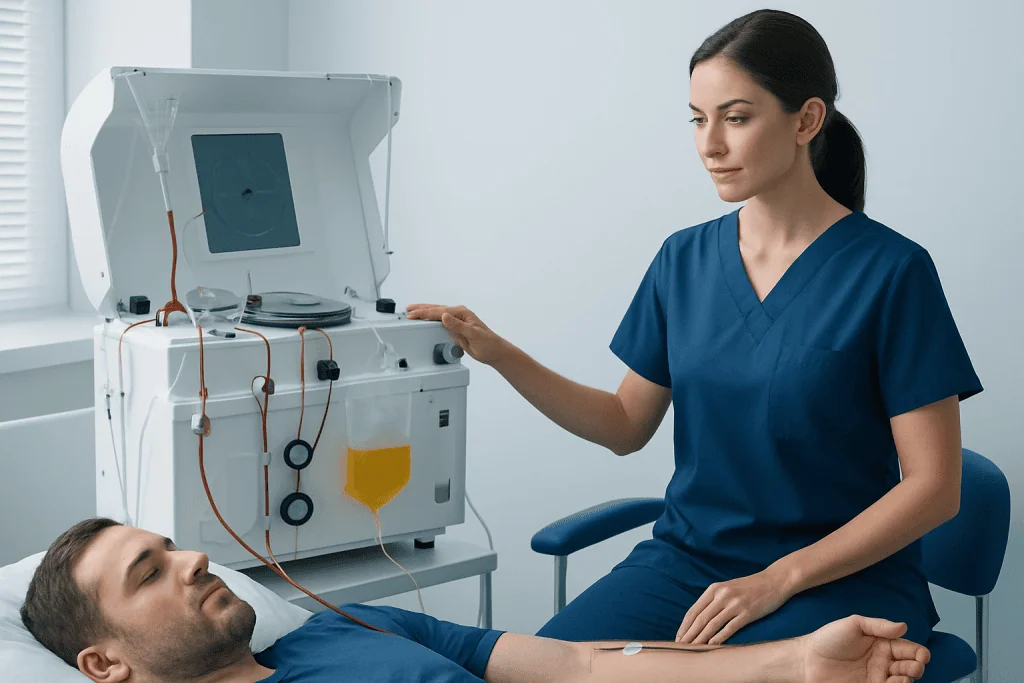
During plasma exchange, blood is removed through a vein and passed through a machine that separates plasma from blood cells. The blood cells are then returned to the body along with a replacement fluid. Depending on the condition being treated, the replacement fluid may be albumin, donor plasma, or a combination chosen by the medical team.
Some people can have the procedure through a large vein in the arm, while others need a temporary central venous catheter if repeated sessions are planned or vein access is limited. The treatment is usually performed in a hospital or specialized infusion unit by trained staff. A session often lasts a few hours, and many people need several sessions over days or weeks.
The number of treatments varies widely. Doctors consider the underlying disease, body size, blood test results, and response to therapy when planning the schedule. In conditions with severe or rapidly changing symptoms, plasma exchange may be started promptly and adjusted as the person improves or as other treatments begin to take effect.
What patients can expect before, during, and after treatment
Before treatment, the care team reviews the diagnosis, current medicines, blood pressure, and blood test results. Patients may have tests to check blood counts, electrolytes, clotting, and protein levels. The team also explains the benefits, possible risks, and whether replacement fluid will include plasma or albumin.
During the procedure, patients usually sit or lie comfortably while the machine continuously removes and returns blood. Staff monitor pulse, blood pressure, temperature, and symptoms throughout the session. Most people remain awake and can speak, rest, read, or listen to music while treatment is taking place.
Afterward, some people feel tired, cold, or mildly lightheaded for a short time. The medical team may repeat blood tests and review whether symptoms are improving. Follow-up care is important because plasma exchange removes harmful substances temporarily, but the body may continue producing them unless the underlying condition is treated. Depending on the diagnosis, related care may involve neurology evaluation or hematology care as part of a multidisciplinary plan.
Benefits, limitations, and possible side effects
The main benefit of plasma exchange is that it can work relatively quickly in the right clinical situation. For some patients, it helps ease weakness, improve nerve function, reduce complications, or create time for other therapies to start working. This can be especially important in illnesses that progress over days or where organ function is at risk.
At the same time, plasma exchange has limitations. It does not treat every cause of disease, and it is not appropriate for every autoimmune or inflammatory condition. In many cases, it is a supportive or bridging treatment rather than a complete long-term solution.
Possible side effects and complications can include low blood pressure, dizziness, nausea, tingling, temporary changes in calcium levels, bruising, bleeding risk, allergic reactions, or catheter-related problems such as infection. Serious complications are less common but can occur, which is why the procedure is done with close monitoring. Patients should always tell the team about new symptoms during or after treatment.
Recovery, self-care, and living with the underlying condition
Recovery after plasma exchange is usually straightforward, but it depends on why the treatment was needed in the first place. Some people notice symptom relief soon after a few sessions, while others improve more gradually. Rest, hydration, and attending all follow-up visits can help support recovery.
Because plasma exchange is often only one part of treatment, ongoing disease management matters just as much as the procedure itself. This may include medicines, physical rehabilitation, repeat blood tests, and specialist follow-up. Patients should ask their doctor which symptoms should improve quickly and which may take more time.
It is also important to review medicines and activity restrictions after treatment, especially if a central line was used or if clotting factors were affected. If fatigue, weakness, or dizziness continues, patients should update their care team rather than assuming it is a normal part of recovery. Near the end of the care journey, some international patients may choose centers such as Acibadem International, where multidisciplinary specialists in JCI-accredited hospitals diagnose and treat conditions that may require plasma exchange.
When to seek medical care
Anyone considering plasma exchange should speak with a qualified doctor to understand whether it is appropriate for their diagnosis. The need for treatment is usually determined by a specialist based on symptoms, blood tests, imaging, and the expected course of the underlying disease. Plasma exchange should not be self-requested without medical evaluation because the risks and benefits vary greatly from one condition to another.
Patients receiving plasma exchange should seek prompt medical advice if they develop chest pain, shortness of breath, fainting, significant bleeding, fever, worsening weakness, confusion, or redness and pain around a catheter site. These symptoms do not always mean a serious complication, but they need timely assessment. Urgent care is especially important if symptoms are rapidly changing or if the person already has a severe neurological or blood disorder.
Ongoing follow-up is also important even when the procedure goes smoothly. Doctors may need to adjust the treatment schedule, monitor blood counts and proteins, or add therapy for the underlying condition. Early communication with the care team can help prevent avoidable complications and support safer recovery.
Frequently asked questions
Is plasma exchange the same as dialysis?
No. Dialysis mainly removes waste products and excess fluid when the kidneys are not working well, while plasma exchange removes and replaces plasma to reduce harmful antibodies or proteins. The machines and treatment goals are different, although both involve filtering blood outside the body.
How many plasma exchange sessions are usually needed?
The number of sessions depends on the condition being treated and how the person responds. Some patients need only a few treatments over several days, while others need a longer course. The specialist team decides the schedule based on symptoms and test results.
Does plasma exchange cure autoimmune disease?
Usually not by itself. Plasma exchange can remove harmful antibodies from circulation, but it may not stop the body from making new ones. That is why doctors often combine it with other treatments aimed at the underlying disease.
Is plasma exchange painful?
Most people do not describe the procedure itself as painful, although placing a needle or catheter can be uncomfortable. During treatment, some patients feel cold, tired, or lightheaded. The care team monitors symptoms closely and can help manage discomfort.
What are the most common risks of plasma exchange?
Common short-term issues include low blood pressure, dizziness, nausea, tingling, and temporary fatigue. There can also be bleeding, allergic reactions, or catheter-related complications in some cases. Doctors monitor closely to reduce these risks and respond quickly if problems arise.
Can someone go home the same day after plasma exchange?
Many patients can go home the same day if the treatment is planned, stable, and done in an outpatient setting. Others may stay in the hospital because of the underlying illness, the need for repeated sessions, or close monitoring. The decision depends more on the patient’s overall condition than on the procedure alone.
References
- National Institute of Neurological Disorders and Stroke
- National Heart, Lung, and Blood Institute
- American Society for Apheresis
- Mayo Clinic
- Cleveland Clinic
This article is for general information only and is not a substitute for professional medical advice. Please consult a qualified doctor about your individual situation.
Explore treatments in Turkey — costs, top hospitals & a free quote
JCI-accredited · board-certified surgeons · reply within 24h
Add us as a Preferred Source to see more of our trusted health content across Google Search, AI Overviews and Discover.
Check your numbers in seconds
BMI, calories, due date, blood pressure and 30+ more clinical calculators — free, instant, doctor-reviewed ranges.