Gout vs Turf Toe: Key Differences and How Doctors Tell Them Apart
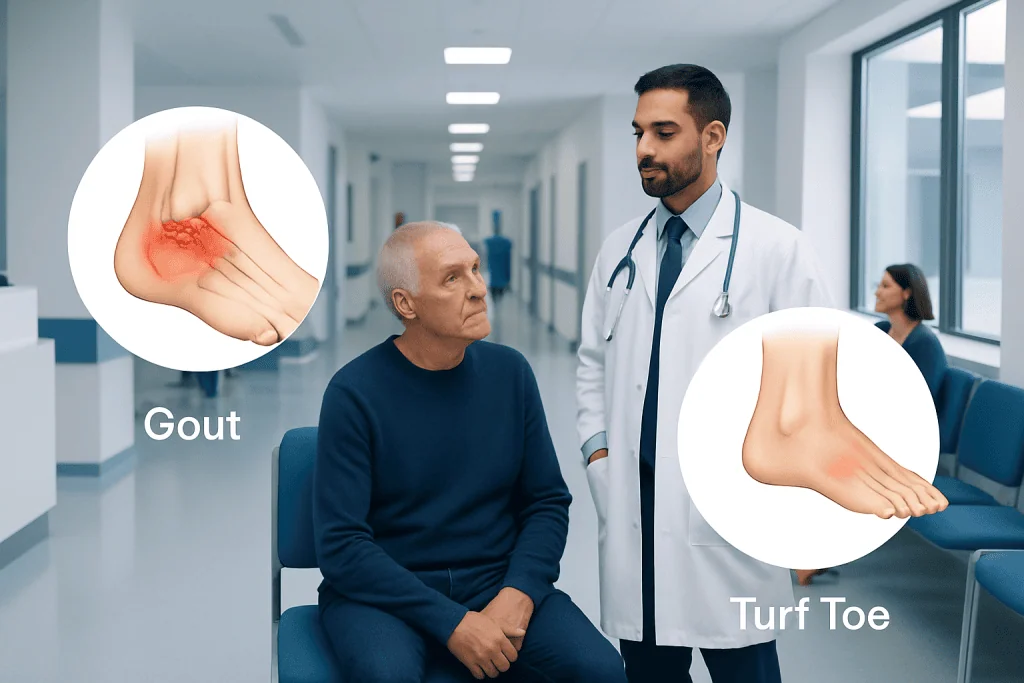
Gout is caused by urate crystal deposits in a joint; turf toe is usually caused by bending the big toe upward beyond its normal range. A gout flare may begin suddenly, often overnight, without a clear injury, while turf toe commonly follows a sports injury or forceful push-off.
Key Takeaways
- Gout is caused by urate crystal deposits in a joint; turf toe is usually caused by bending the big toe upward beyond its normal range.
- A gout flare may begin suddenly, often overnight, without a clear injury, while turf toe commonly follows a sports injury or forceful push-off.
- Doctors use the history, physical examination, imaging, blood tests, and sometimes joint-fluid testing to distinguish the conditions.
- Early assessment is important because infection, fracture, and other joint conditions can resemble gout or turf toe.
- Rest and protection may help turf toe, while gout management may include anti-inflammatory treatment and long-term urate-lowering care when appropriate.
Gout and turf toe can both cause sudden pain, swelling, and difficulty moving the big toe, but they have different causes and treatments. Gout is an inflammatory arthritis caused by urate crystals, whereas turf toe is a sprain affecting tissues around the base of the big toe.
Gout vs Turf Toe: A Side-by-Side Comparison
Gout and turf toe both commonly affect the first metatarsophalangeal joint, which is the joint at the base of the big toe. Because this joint is important for walking and pushing off from the ground, either condition can make wearing shoes, standing, and walking uncomfortable. The key difference is that gout is a type of inflammatory arthritis, while turf toe is a soft-tissue injury.
| Feature | Gout | Turf toe |
|---|---|---|
| Underlying cause | Urates form crystals that trigger intense joint inflammation. | Sprain or injury to the ligaments, capsule, or supporting tissues beneath the big-toe joint. |
| Typical onset | Often sudden, sometimes overnight, and may occur without an injury. | Usually follows forceful upward bending of the toe, repeated push-off, or a direct sports injury. |
| Common symptoms | Severe pain, warmth, swelling, redness, and marked tenderness. | Pain at the base of the toe, swelling, bruising, and pain when bending or pushing off. |
| Common triggers | Changes in urate levels, dehydration, alcohol, certain foods, illness, surgery, or some medicines. | Playing on artificial turf, sprinting, jumping, wearing flexible footwear, or landing with the toe bent upward. |
| How it is confirmed | Clinical assessment; joint-fluid testing can identify urate crystals. | Physical examination and imaging when needed to assess soft tissues or rule out fracture. |
| Main treatment focus | Settling inflammation and, when indicated, lowering urate levels over time. | Protecting the joint, reducing strain, rehabilitation, and gradual return to activity. |
Symptoms alone do not always provide a definite answer. For example, a turf toe injury may be red and swollen, while gout can be painful after physical activity simply because pressure on an inflamed joint makes walking difficult. A clinician considers the pattern of symptoms, the person’s health history, and examination findings before recommending treatment.
What Gout and Turf Toe Are
Gout is a form of inflammatory arthritis associated with high levels of urate in the body. Urate is produced when the body breaks down purines, substances found naturally in cells and in some foods and drinks. When urate levels remain elevated, needle-shaped monosodium urate crystals can form in and around joints. The immune system reacts to these crystals, causing a painful gout flare.
The big-toe joint is a classic location for gout, although gout can also affect the ankle, knee, wrist, elbow, or other joints. A first episode can occur in adulthood, and attacks may become more frequent or involve additional joints if urate remains high. More information about this inflammatory condition is available in gout information.
Turf toe is not limited to athletes, despite its name. It describes a sprain of the plantar structures underneath the first metatarsophalangeal joint, including the joint capsule, ligaments, and small supporting bones called sesamoids. It may happen after one injury or develop gradually through repeated stress on the joint.
In a typical turf toe mechanism, the forefoot stays planted while the heel rises and the big toe is forced upward. This can occur during football, dance, running, martial arts, or a stumble. Severity ranges from a mild stretch injury to a more substantial tear, instability, or injury involving the sesamoid bones.
Clues That Help a Clinician Tell Them Apart
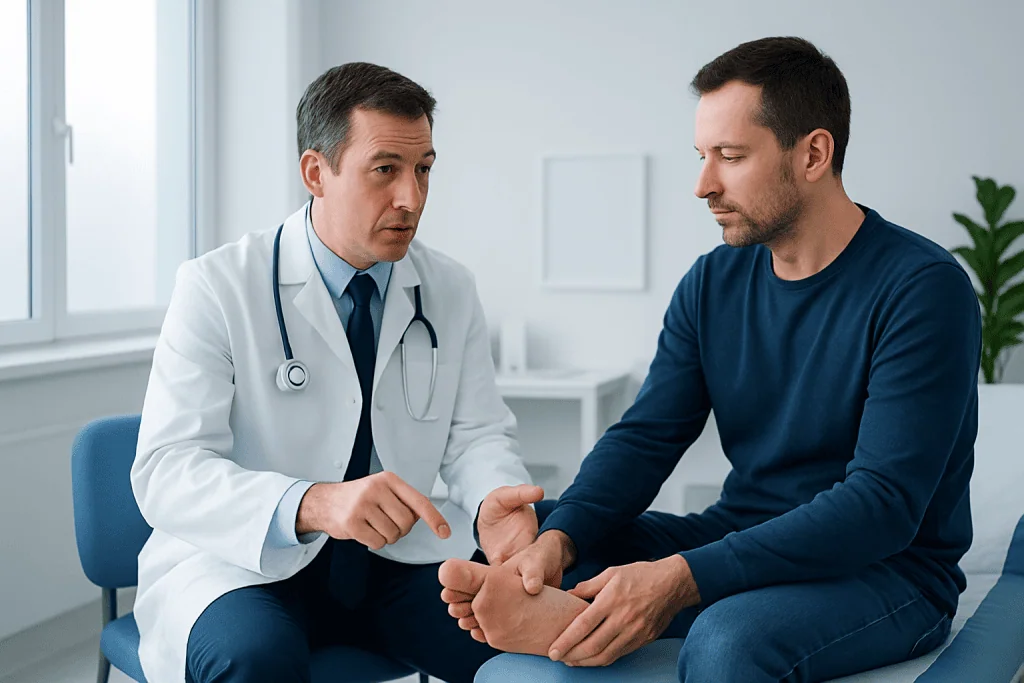
A clinician usually begins by asking how and when the pain started. Sudden, severe pain that wakes a person at night or begins without trauma can point toward gout. A previous gout attack, kidney disease, a family history of gout, use of certain diuretics, or a history of high urate may also be relevant. However, not everyone with high urate develops gout, and a normal urate blood test during a flare does not exclude it.
A clear injury story is more suggestive of turf toe. The person may recall pushing off, jumping, being tackled, or falling with the toe bent upward. Pain is often most noticeable on the underside of the big-toe joint and becomes worse when the toe is extended, when walking barefoot, or when trying to push off during running.
On examination, gout may cause pronounced warmth, diffuse swelling, shiny redness, and extreme sensitivity to touch. Turf toe often causes localized tenderness at the joint capsule or beneath the joint, bruising, reduced motion due to pain, and discomfort when the clinician gently moves the toe upward. In more serious turf toe injuries, the joint may feel unstable.
These distinctions are helpful but not absolute. Infection in a joint, cellulitis, a fracture, osteoarthritis, sesamoid injury, and other inflammatory arthritis conditions may cause similar symptoms. For that reason, a new episode of a hot, swollen, very painful joint should be assessed rather than self-diagnosed.
Tests Doctors May Use
When gout is suspected and the diagnosis is uncertain, the most definitive test is aspiration of joint fluid. A clinician uses a sterile needle to remove a small sample of fluid from the joint. The laboratory examines it under a microscope for urate crystals and can also test for bacteria, which is especially important when joint infection is a possibility.
Blood tests may measure urate and check kidney function or markers of inflammation. These results are interpreted carefully: urate can fall temporarily during an acute gout flare, so one result does not always establish or rule out gout. In selected cases, ultrasound or dual-energy CT can help identify crystal deposits.
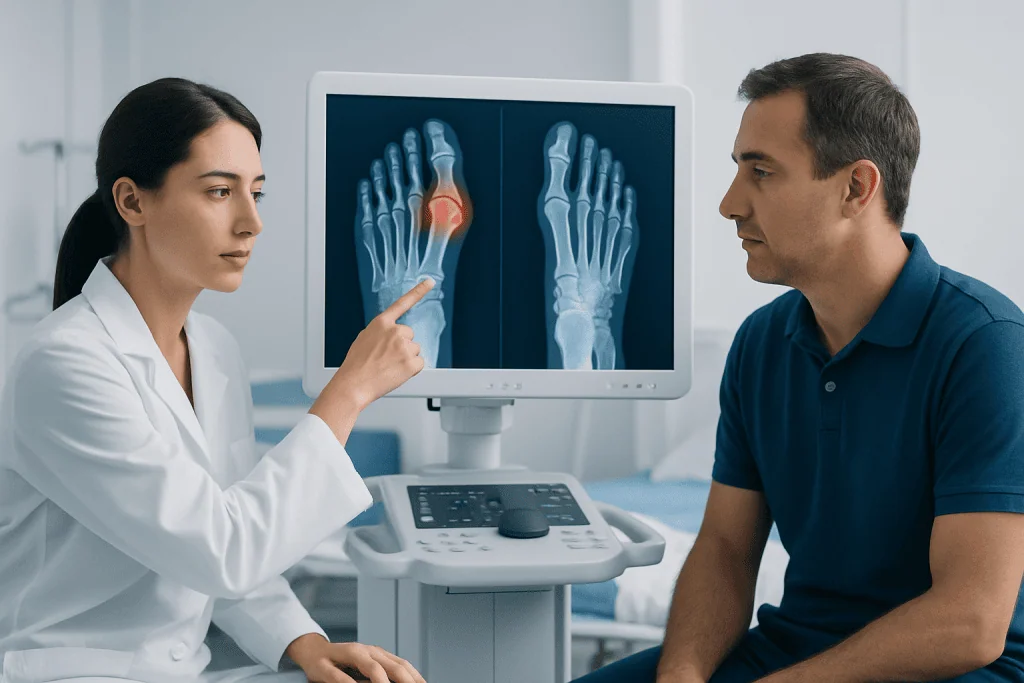
For suspected turf toe, plain X-rays may be used to rule out a fracture, assess the sesamoid bones, or identify a small piece of bone pulled by an injured ligament. X-rays do not show all ligament and cartilage injuries. Ultrasound or MRI may be considered when symptoms are persistent, the injury seems severe, or surgery is being considered.
Testing is tailored to the individual rather than performed routinely in every case. The goal is to confirm the likely cause of symptoms, identify injuries that need protection, and avoid overlooking urgent conditions such as septic arthritis.
What to Do for Gout
During an acute gout flare, the priority is to reduce inflammation and pain safely. A doctor may recommend prescription or non-prescription anti-inflammatory treatment based on the person’s medical history, kidney function, other medicines, and risk of side effects. Resting the joint, raising the foot, applying a cool pack wrapped in cloth for short periods, and choosing loose footwear may also improve comfort.
It is best not to begin or stop medicines without medical guidance. Some commonly used anti-inflammatory medicines are not suitable for everyone, particularly people with kidney disease, stomach ulcers, bleeding risk, heart disease, or certain medication interactions. A clinician can advise on the safest approach.
For people with recurrent flares, tophi, kidney stones related to urate, or certain other risk factors, long-term urate-lowering treatment may be recommended. This approach aims to dissolve existing crystal deposits gradually and prevent future attacks. It is generally different from short-term treatment used to calm an acute flare.
Lifestyle measures can support medical care. Maintaining hydration, moderating alcohol intake, reaching or maintaining a healthy weight gradually, and limiting foods or drinks that consistently trigger attacks may help some people. Dietary changes alone may not lower urate sufficiently for every person, so follow-up care remains important.
What to Do for Turf Toe
Initial care for a mild turf toe injury often includes reducing activities that bend the toe upward, using ice wrapped in a cloth, elevating the foot, and wearing a stiff-soled shoe or other protective support advised by a clinician. These measures can limit painful motion while the injured tissues recover. Pain relief options should be discussed with a healthcare professional when there are medical conditions or medication concerns.
A clinician may recommend taping, a walking boot, or an orthotic insert with a rigid plate, depending on the severity of the injury. These supports should be fitted and used as advised, since the aim is to protect the joint without unnecessarily weakening the foot through prolonged immobilization.
Rehabilitation commonly focuses on restoring comfortable range of motion, strength, balance, and a normal walking pattern. Return to running, jumping, or field sports should be gradual and based on symptoms and function. Returning too early can prolong pain and may contribute to chronic stiffness or joint problems.
Severe injuries, including a complete tear, unstable joint, displaced sesamoid fracture, or symptoms that do not improve with appropriate non-surgical treatment, may need specialist assessment. Surgery is uncommon but can be considered for selected structural injuries. Orthopedic evaluation and physical therapy and rehabilitation may help guide recovery.
Preventing Repeat Problems and Protecting the Big Toe
Preventing gout flares begins with identifying personal risk factors and following an individualized care plan. Taking prescribed urate-lowering medicine consistently, attending monitoring appointments, staying well hydrated, and discussing medication changes with a doctor can be more effective than relying on food restrictions alone. Rapid weight-loss diets and dehydration can raise the risk of flares in some people.
To reduce the risk of turf toe, athletes and active people can choose footwear that provides appropriate forefoot support for their sport and surface. Warm-up routines, gradual training progression, and attention to fatigue may also reduce the likelihood of overload injuries. People who have previously had turf toe may benefit from taping or an insert during their return to sport if advised by a clinician.
Persistent big-toe pain should not simply be pushed through. Repeated stress on an injured joint can lead to longer recovery, altered walking mechanics, and pain in other parts of the foot or leg. A podiatrist, sports medicine clinician, orthopedic specialist, or physiotherapist can help identify the source of pain and plan safe activity modifications.
When to Seek Medical Care
Prompt medical assessment is advisable for a first episode of sudden, severe big-toe pain, particularly when the joint is hot, red, and swollen. Although gout is a common explanation, a joint infection can cause similar symptoms and requires urgent treatment. A clinician can determine whether testing is needed.
Urgent care is important if there is fever, chills, feeling generally unwell, rapidly spreading redness, an open wound, inability to bear weight, numbness, a visibly deformed toe, or severe pain after an injury. People with diabetes, reduced immunity, poor circulation, or kidney disease should seek advice early for a swollen or painful foot.
A medical appointment is also appropriate when presumed turf toe does not improve after a few days of protection, when pain continues to limit walking or sport, or when gout flares recur. Acibadem International’s multidisciplinary specialists and JCI-accredited hospitals assess joint, foot, and inflammatory conditions for international patients.
Frequently asked questions
Can gout feel like a toe sprain?
Yes. Both gout and a toe sprain can cause pain, swelling, and difficulty walking. Gout is more likely to produce sudden intense warmth and tenderness without a clear injury, while a sprain is more likely after the toe is bent or stressed during activity.
Is turf toe always caused by sports?
No. Turf toe is common in sports involving running, jumping, and quick changes in direction, but it can happen during any activity that forcefully bends the big toe upward. A stumble, fall, or repetitive strain may be enough to injure the joint structures.
Can a blood test diagnose gout?
A blood urate test can support the assessment, but it cannot diagnose gout on its own. Urate levels may be normal during an acute flare, and some people have high urate without developing gout. When needed, finding urate crystals in joint fluid provides stronger confirmation.
How long does turf toe take to heal?
Recovery depends on the severity of the injury. Mild sprains may improve over a few weeks, while more significant ligament or joint injuries can take substantially longer. A clinician can advise on return to activity based on pain, strength, movement, and joint stability.
Can gout and turf toe happen in the same toe?
They can affect the same big-toe joint at different times, and an injury may make a joint more noticeable or painful. However, they are different conditions with different underlying mechanisms. New or severe symptoms should be evaluated rather than assumed to be one condition or the other.
Should a person walk on a painful big toe?
Walking may be possible with a mild injury, but limping through significant pain can aggravate symptoms and alter normal movement. It is sensible to reduce painful activities and seek clinical advice if weight-bearing is difficult, pain is severe, or the joint is hot and swollen.
This article is for general information only and is not a substitute for professional medical advice. Please consult a qualified doctor about your individual situation.
Gout in Turkey — costs, top hospitals & a free quote
JCI-accredited · board-certified surgeons · reply within 24h
Add us as a Preferred Source to see more of our trusted health content across Google Search, AI Overviews and Discover.

More from the Health Library

How Come When Im Bloated. Coughing Makes Me Feel Lighter? A Doctor-Reviewed Answer

How to Get Fluid Out of Ear? Here Is What the Evidence Says

How Long Does Trazodone Last in Dogs? Causes, Explanations, and Next Steps

How to Increase Dopamine? Causes, Explanations, and Next Steps

How Long to Leave Hydrogen Peroxide in Ear? Causes, Explanations, and Next Steps