Cabbage vs Lettuce: Differences in Nutrition and Use

Cabbage is a cruciferous vegetable, while lettuce is a leafy green in the daisy family. Cabbage is usually firmer, denser and more strongly flavored; lettuce is generally softer, milder and higher in water.
Key Takeaways
- Cabbage is a cruciferous vegetable, while lettuce is a leafy green in the daisy family.
- Cabbage is usually firmer, denser and more strongly flavored; lettuce is generally softer, milder and higher in water.
- Both can support a balanced diet, but raw cabbage is more likely to cause gas or bloating in sensitive people.
- Food symptoms after either vegetable are more often related to digestion, preparation, contamination or another ingredient than to a true allergy.
- Urgent care is needed for breathing difficulty, facial swelling, fainting or rapidly spreading hives after eating any food.
Cabbage and lettuce can look similar, especially when they form round heads, but they are different vegetables with distinct botanical families, textures, nutrients and typical uses. A clinician does not usually need to identify the vegetable by appearance; they focus on a person’s food history, symptoms and possible digestive or allergic triggers.
Cabbage vs Lettuce: Side-by-Side Comparison
Cabbage vs lettuce is easiest to understand by looking at their structure and plant type. Cabbage is a cruciferous vegetable in the Brassica family, alongside broccoli, cauliflower and kale. Lettuce belongs to the Lactuca genus and is a leafy salad vegetable. Both may grow into compact heads, but cabbage leaves form a dense, layered ball, whereas lettuce leaves are usually more tender and watery.
- Texture: Cabbage is crisp, firm and substantial, even after cooking. Lettuce is more delicate and may wilt quickly with heat.
- Flavor: Cabbage has a mildly peppery or sulfur-like taste, particularly when cooked. Lettuce is usually mild, fresh and subtly sweet or bitter depending on the variety.
- Common varieties: Green, red and savoy cabbage are familiar cabbage types. Iceberg, romaine, butterhead and leaf lettuce are common lettuce types.
- Typical preparation: Cabbage is often cooked, fermented, braised or shredded into slaws. Lettuce is most often eaten raw in salads, wraps and sandwiches.
- Nutritional pattern: Both provide fiber and micronutrients. Cabbage generally offers more vitamin C and vitamin K per typical serving, while lettuce, especially darker varieties, can contribute folate, vitamin K and carotenoids.
Neither vegetable is inherently “better.” The most suitable choice depends on a person’s taste, digestive comfort, nutritional needs, medications and the way the food is prepared. Eating a range of vegetables is generally more useful than focusing on one item alone.
Why Cabbage and Lettuce Are Sometimes Confused

Round green cabbage and iceberg lettuce can be mistaken for one another at a glance. Both have overlapping pale-green leaves and can be sold as compact heads. Looking more closely, cabbage leaves tend to have thicker veins, a waxier surface and a tighter arrangement. Iceberg lettuce has a lighter, more watery crunch and leaves that separate more easily.
The distinction matters most in the kitchen and when reviewing symptoms after meals. A person may describe having eaten “salad” or “greens,” while the meal actually included several ingredients, such as cabbage, lettuce, onion, dressing, cheese, nuts or herbs. For symptom assessment, identifying all ingredients and how they were stored and prepared is usually more informative than distinguishing cabbage from lettuce alone.
Cooked cabbage is particularly different from lettuce. Heating softens cabbage but it retains body and may develop a stronger aroma. Most lettuce is not cooked for long because heat causes rapid wilting. Some sturdy types, such as romaine, may be grilled or briefly sautéed, but their flavor and texture remain distinct from cabbage.
How a Clinician Tells Them Apart in a Food-Symptom History
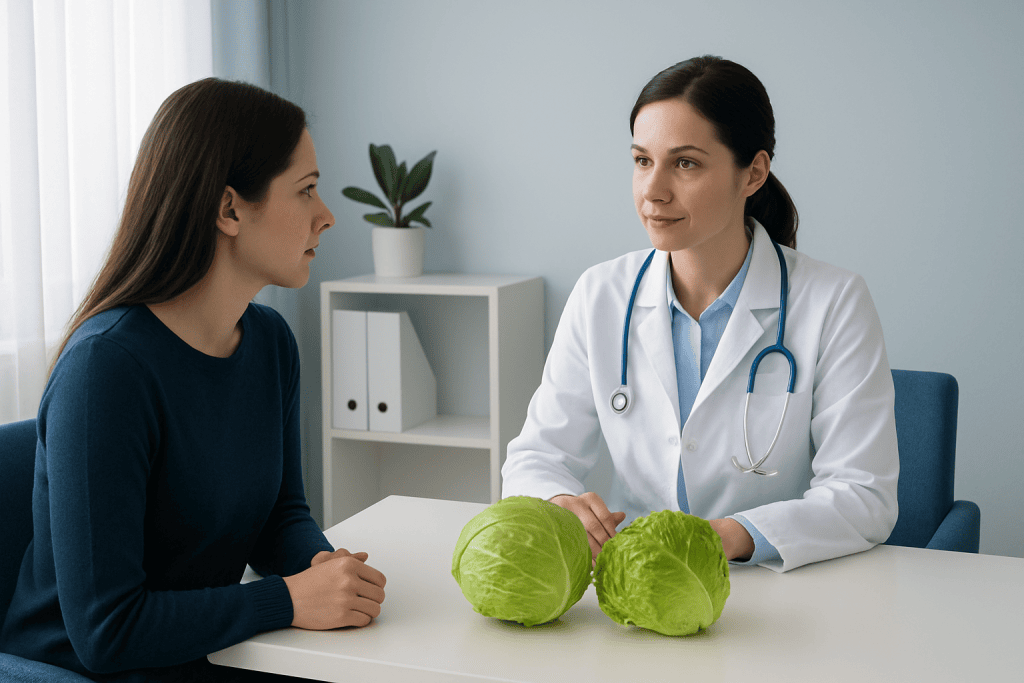
Doctors do not generally diagnose a medical condition by visually distinguishing cabbage from lettuce. Instead, they ask what was eaten, how much was consumed, when symptoms began, whether the food was raw or cooked, and whether the same reaction occurred on another occasion. They also ask about all foods, drinks, medications and supplements consumed around the same time.
Timing helps guide the assessment. Gas, abdominal fullness and cramps that develop gradually after a meal may suggest sensitivity to fermentable carbohydrates or a digestive condition rather than an allergy. Nausea, vomiting or diarrhea beginning after a questionable meal may raise concern for foodborne illness, especially if other people who shared the meal are unwell. Symptoms such as hives, lip or tongue swelling, wheezing, throat tightness or faintness soon after eating need prompt assessment for a possible allergic reaction.
Where appropriate, a clinician may recommend a food-and-symptom diary, temporary dietary adjustments supervised by a qualified professional, or allergy testing when the history suggests an immediate immune-mediated reaction. Testing should be interpreted alongside symptoms because a positive test alone does not always prove that a food is causing clinically meaningful reactions.
Digestive Effects of Cabbage and Lettuce
Cabbage can cause gas or bloating in some people because it contains fiber and fermentable carbohydrates that are broken down by gut bacteria. This is not harmful for most people, but it may be uncomfortable for those with a sensitive digestive system. Large portions of raw cabbage, coleslaw and fermented cabbage products may be more difficult for some people to tolerate.
Lettuce is often well tolerated because of its high water content and relatively mild flavor. However, any raw vegetable may cause discomfort in people with certain digestive conditions, particularly when eaten in large amounts. A person with ongoing bloating, abdominal pain, constipation or diarrhea should not assume that one vegetable is the sole cause; symptoms can have many explanations.
Practical adjustments may help. These include starting with smaller portions, chewing slowly, choosing cooked cabbage rather than raw cabbage, and observing whether symptoms occur consistently. People who have been advised to follow a specific diet for conditions such as irritable bowel syndrome should discuss individual food choices with their doctor or dietitian rather than making broad, long-term restrictions without guidance.
Nutrition, Medicines and Safe Preparation
Cabbage and lettuce can both fit into balanced eating patterns. Cabbage contributes fiber, vitamin C and vitamin K, while darker lettuces such as romaine and leaf lettuce can provide folate, vitamin K and carotenoid compounds. Red cabbage also contains natural plant pigments called anthocyanins. Nutrient content varies with the type, freshness, portion size and cooking method.
People taking warfarin or another vitamin K-sensitive anticoagulant should not necessarily avoid leafy vegetables or cabbage. Instead, they should aim for a consistent intake of vitamin K-containing foods and follow the advice of the clinician managing their medication. Sudden major changes in consumption may affect how some anticoagulant medicines work.
Food safety is important for both vegetables, especially when they are eaten raw. Hands, utensils and preparation surfaces should be clean. Outer damaged leaves can be removed, and produce should be rinsed under running water before eating or cutting. Refrigeration and avoiding cross-contamination with raw meat, poultry, seafood or eggs can reduce the risk of foodborne illness.
What to Do if Symptoms Follow Cabbage or Lettuce
For mild, isolated bloating after cabbage, it may be reasonable to reduce the portion next time, try cooked cabbage, and note whether the symptom recurs. For mild digestive symptoms after lettuce, consider whether the meal included rich dressings, spicy foods, dairy products, legumes or other possible triggers. Adequate fluids and a simple diet may be helpful while short-lived symptoms settle.
If symptoms repeatedly occur after the same food, keeping a detailed record can support a medical review. The record may include the food type, amount, preparation, other meal ingredients, timing of symptoms and any medicines taken. Avoiding many nutritious foods without professional guidance can make the diet unnecessarily restrictive and may obscure the true cause of symptoms.
For suspected food poisoning, rest, fluid replacement and monitoring are important. A clinician can advise on persistent or severe symptoms, as well as on higher-risk situations such as pregnancy, older age, immune suppression or significant chronic illness. Acibadem International’s multidisciplinary specialists and JCI-accredited hospitals can assess digestive and allergy-related concerns for international patients when individualized care is needed.
When to Seek Medical Care
Medical advice is appropriate for recurring abdominal pain, persistent bloating, ongoing diarrhea or constipation, unexplained weight loss, blood in the stool, fever, or symptoms that interfere with normal eating and daily activities. These symptoms may be unrelated to cabbage or lettuce and deserve a careful assessment rather than self-diagnosis.
Emergency care is needed after eating any food if there is difficulty breathing, wheezing, throat tightness, swelling of the lips, tongue or face, widespread hives, confusion, collapse or fainting. These can be signs of a severe allergic reaction. Anyone with severe dehydration, repeated vomiting, severe abdominal pain, or bloody diarrhea should also seek urgent medical care.
For most people, cabbage and lettuce are safe, nutritious foods. A clinician or registered dietitian can help identify practical options when digestive symptoms, food allergies, medication considerations or special dietary needs make food choices more complicated.
Frequently asked questions
Is cabbage healthier than lettuce?
Neither is universally healthier. Cabbage is typically higher in vitamin C and has a denser texture, while darker lettuces can provide valuable folate, vitamin K and carotenoids. Including both as part of a varied diet can offer different nutritional benefits.
Can cabbage and lettuce cause bloating?
Cabbage is more likely to cause gas or bloating because it contains fermentable carbohydrates and fiber. Lettuce can also cause discomfort in some people, particularly in large raw portions or in the context of an underlying digestive condition. Recurrent symptoms should be discussed with a healthcare professional.
Is iceberg lettuce actually cabbage?
No. Iceberg lettuce and cabbage may both form round heads, but they are different plants from different botanical families. Iceberg lettuce is generally lighter, more watery and more delicate than cabbage.
Can someone be allergic to cabbage or lettuce?
True allergy to either food is uncommon but possible. Symptoms that begin soon after eating, such as hives, swelling, wheezing or vomiting, need medical assessment. Breathing problems, throat tightness or fainting require emergency care.
Should people taking warfarin avoid cabbage and lettuce?
They usually do not need to avoid these vegetables completely. Because cabbage and many lettuces contain vitamin K, it is important to keep intake relatively consistent and follow the plan from the clinician managing anticoagulant treatment. Medication should never be adjusted without medical advice.
How can raw cabbage and lettuce be washed safely?
Wash hands first, remove damaged outer leaves, and rinse the vegetables under clean running water before cutting or eating them. Use clean utensils and surfaces, refrigerate promptly, and keep produce separate from raw meat, poultry, seafood and eggs. Washing does not make spoiled food safe, so items with an unusual smell, sliminess or visible decay should be discarded.
This article is for general information only and is not a substitute for professional medical advice. Please consult a qualified doctor about your individual situation.
Explore treatments in Turkey — costs, top hospitals & a free quote
JCI-accredited · board-certified surgeons · reply within 24h
Add us as a Preferred Source to see more of our trusted health content across Google Search, AI Overviews and Discover.

More from the Health Library

Can You Sleep with a Tampon in? Causes, Explanations, and Next Steps

Headache and Ice Pack: Common Causes, Related Conditions, and When to See a Doctor

Viral Virus Rash: Possible Causes and When to Seek Care

Mole vs Freckle: Key Differences and How Doctors Tell Them Apart

How to Remove a Splinter? Causes, Explanations, and Next Steps