

Full Mouth Reconstruction
Full mouth reconstruction combines restorative and cosmetic dental treatments to rebuild damaged, worn or missing teeth. It aims to improve chewing function, bite balance, oral comfort and smile appearance.
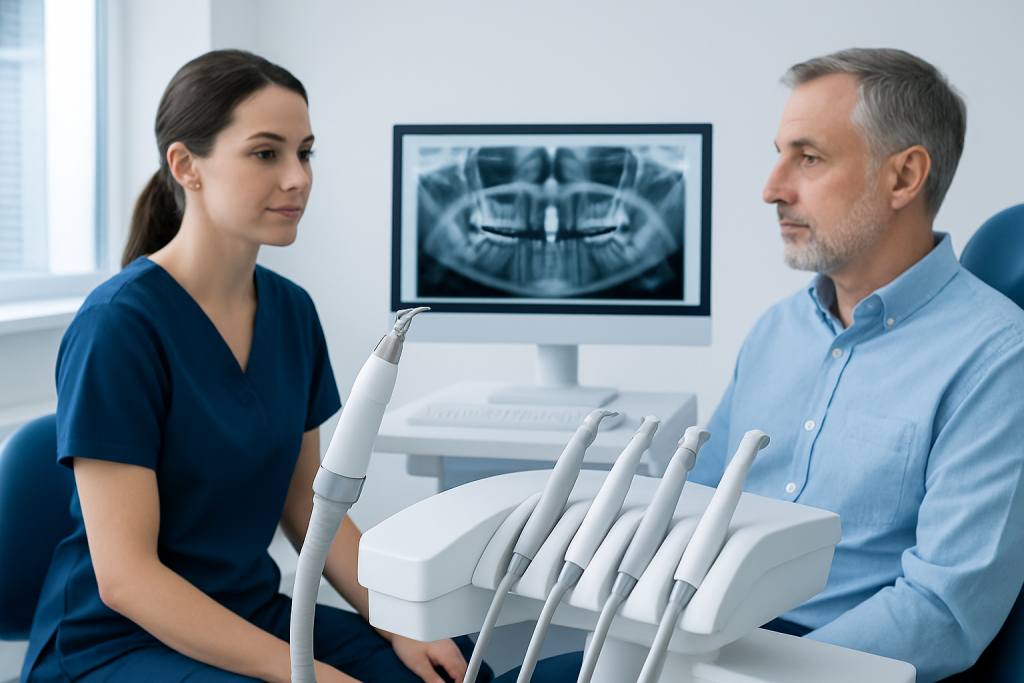
Quick answer
Full mouth reconstruction combines restorative and cosmetic dental treatments to rebuild damaged, worn or missing teeth. It aims to improve chewing function, bite balance, oral comfort and smile appearance.
Rebuilding Your Smile When Everyday Life Has Become Difficult
When several teeth are damaged, worn down, missing, painful, or no longer working together comfortably, the effects can extend far beyond appearance. Eating may become slow or uncomfortable. You may avoid certain foods, feel self-conscious when speaking or smiling, or notice recurring jaw tension, headaches, and changes in the way your teeth meet. For many people, the concern is not simply “How can I improve my smile?” but “How can I eat, speak, and feel normal again?”
Full mouth reconstruction is a carefully planned approach to restoring the health, function, and appearance of an entire mouth. Rather than treating each tooth as an isolated problem, the dental team evaluates how the teeth, gums, jaw joints, bite, facial proportions, and underlying bone work together. The objective is to create a stable, comfortable bite while rebuilding teeth that look natural and suit the individual patient.
The decision can feel significant, particularly when treatment may involve multiple appointments or a combination of procedures. International patients may also be concerned about how long they will need to stay in Turkey, whether dental work completed abroad can be maintained at home, and how to choose a treatment plan that is medically appropriate rather than unnecessarily extensive. These are important questions. A responsible full mouth reconstruction begins with clear diagnosis, realistic planning, and an open discussion of alternatives, timing, and long-term care.
At Acibadem, treatment planning is based on the patient’s oral health, functional needs, aesthetic preferences, medical history, and practical circumstances. The goal is not to create an identical smile for every patient. It is to restore a healthy, reliable foundation for daily life while respecting the patient’s natural facial features and expectations.
What Is Full Mouth Reconstruction?
Full mouth reconstruction, sometimes called full mouth rehabilitation or full mouth restoration, is a personalized dental treatment plan that rebuilds or restores most or all teeth in one or both arches. It may involve restorative dentistry, prosthodontics, periodontics, endodontics, oral and maxillofacial surgery, orthodontics, and cosmetic dentistry, depending on the patient’s needs.
This treatment is different from a routine smile makeover. Cosmetic treatment may focus mainly on tooth color, shape, alignment, or visible appearance. Full mouth reconstruction is primarily a functional and health-focused process. It addresses problems such as extensive tooth decay, severe tooth wear, unstable bite relationships, missing teeth, failing restorations, gum disease, or structural damage after trauma. A more attractive smile is often an important benefit, but it is developed alongside the need for durability, comfort, chewing efficiency, and oral health.
A full mouth reconstruction may include one or more of the following:
- Dental crowns to protect weakened teeth and restore their shape, strength, and bite position.
- Dental bridges to replace one or more missing teeth where appropriate.
- Dental implants to replace missing tooth roots and support single crowns, bridges, or full-arch restorations.
- Veneers or bonded restorations for selected teeth when conservative aesthetic enhancement is suitable.
- Root canal treatment when an infected or damaged tooth can be preserved.
- Periodontal treatment to manage gum disease and establish a healthier foundation for restorations.
- Bone grafting or sinus-related procedures when additional support is needed before implant placement.
- Extractions for teeth that cannot be predictably restored.
- Orthodontic treatment or bite adjustment in selected cases where tooth position affects the final result.
- Removable partial or complete dentures when they are the most suitable solution for the patient’s oral condition and preferences.
Not every patient requires every element. In some cases, the reconstruction may be completed in a relatively concentrated treatment period. In others, it is safer to proceed in stages, first treating infection or gum inflammation, then placing implants or restoring teeth after adequate healing. The correct sequence is determined by biology and function, not by a one-size-fits-all timeline.
Who May Need Full Mouth Reconstruction?
People consider full mouth reconstruction for many reasons. Some have experienced dental problems gradually over decades. Others have had an accident, extensive decay, or a medical condition that affected their teeth and gums. A person may still have many natural teeth, yet need comprehensive rehabilitation because the teeth are shortened, fractured, heavily restored, or no longer meeting correctly.
Common symptoms and concerns include:
- Difficulty chewing, biting into food, or eating a varied diet.
- Repeated tooth fractures, loose fillings, broken crowns, or restorations that keep failing.
- Worn, flattened, chipped, or unusually sensitive teeth.
- Several missing teeth or teeth that have shifted into gaps.
- Persistent toothache, sensitivity to hot or cold, or recurrent dental infection.
- Bleeding gums, gum recession, bad breath, or teeth that feel mobile.
- Jaw soreness, facial muscle fatigue, clenching, grinding, or an uneven bite.
- Changes in facial support, such as a collapsed appearance around the mouth after tooth loss or severe wear.
- Concern about the appearance of discolored, irregular, damaged, or mismatched teeth.
- Discomfort or instability with existing dentures, bridges, crowns, or implant restorations.
Diagnosis begins with a detailed clinical examination. The dentist reviews the teeth, gums, bite, jaw movement, facial proportions, prior dental work, oral hygiene, and relevant medical history. Digital dental imaging helps assess tooth roots, bone levels, sinus anatomy, hidden infection, and the condition of previous restorations. In more complex implant or surgical cases, three-dimensional imaging may be used to evaluate the jawbone and to support precise planning.
Dental photographs, digital scans, diagnostic models, and bite analysis may also be used. These records help the team understand how the teeth fit together and allow the proposed changes to be reviewed before irreversible treatment starts. Patients can often see a digital preview or a temporary trial restoration that demonstrates planned tooth length, shape, bite position, and smile design.
A full mouth reconstruction is generally considered when isolated treatment would not adequately solve the larger functional problem. For example, placing a crown on one broken tooth may be appropriate if the surrounding bite is stable. However, if teeth throughout the mouth are severely worn because of grinding or acid erosion, rebuilding only one tooth may place excessive stress on that restoration and leave the underlying cause unresolved.
Conditions and Dental Problems Full Mouth Reconstruction Can Address
Full mouth reconstruction is not a single diagnosis. It is a treatment framework for patients with complex or widespread oral health needs. The plan may address multiple conditions at the same time, provided that treatment is sequenced carefully and the patient’s health allows.
One common indication is advanced tooth wear. Teeth may become shorter, thinner, or more fragile because of bruxism, frequent clenching, acid reflux, dietary acids, certain eating disorders, or long-term mechanical wear. As enamel is lost, teeth can become sensitive and susceptible to cracking. The bite may also collapse, altering facial support and making chewing less efficient.
Extensive decay and recurrent restoration failure are other frequent reasons for comprehensive care. Large fillings, old crowns, or bridges may eventually leak, fracture, or no longer protect the remaining tooth structure. Some teeth may be repairable with new restorations, while others may need root canal treatment, extraction, and replacement.
Multiple missing teeth can affect much more than the spaces themselves. Neighboring teeth may drift or tilt, opposing teeth may over-erupt, and chewing forces may become concentrated on fewer teeth. Dental implants, bridges, or dentures can be incorporated into a reconstruction to restore more balanced function.
Periodontal disease may cause inflammation, gum recession, bone loss, and tooth mobility. Restorative work should not be placed over untreated active gum disease. Periodontal care is often an early and essential phase of reconstruction, helping to create the stable tissue conditions needed for long-term restoration.
Other indications include trauma-related tooth loss or fractures, developmental enamel defects, congenital absence of teeth, bite abnormalities, failed previous full-mouth dental work, and complications related to poorly fitting dentures or prostheses. Patients who have undergone cancer treatment, facial surgery, or other medical therapies may also require individualized dental rehabilitation, coordinated with their wider medical team when necessary.
How Full Mouth Reconstruction Is Performed
Because no two mouths have the same starting point, full mouth reconstruction is planned as a sequence rather than a single procedure. The process begins by identifying urgent issues, preserving healthy tissue whenever possible, and establishing a stable foundation before final restorations are made.
Initial consultation and comprehensive assessment
The first stage is a detailed consultation. The dental team listens to the patient’s concerns, including discomfort, eating limitations, aesthetic priorities, prior dental experiences, and expectations for treatment timing. Medical conditions such as diabetes, heart disease, osteoporosis, autoimmune disorders, bleeding disorders, smoking history, medication use, and previous radiation therapy can influence surgical planning and healing. These factors are discussed carefully.
The examination may include periodontal charting, photographs, intraoral scanning, digital X-rays, and three-dimensional imaging when indicated. The team assesses the teeth individually, but also studies the relationship between the upper and lower jaws, jaw joints, muscles, lips, and facial profile. In patients with clenching, grinding, clicking, jaw pain, or limited opening, additional evaluation of bite-related and temporomandibular concerns may be appropriate.
Designing the treatment plan
After the assessment, the dentist develops a proposed treatment plan. This outlines which teeth can be retained, which require treatment or removal, whether implants are appropriate, and how the final bite will be restored. Where several specialties are involved, the case may be reviewed through a multidisciplinary specialist discussion. Prosthodontists, periodontists, oral and maxillofacial surgeons, endodontists, orthodontists, and restorative dentists can contribute to the plan according to the patient’s needs.
Digital smile design tools and diagnostic wax-ups or virtual models may help patients understand the proposed result. A mock-up or temporary version of the final smile may be placed in the mouth to test tooth proportions, speech, comfort, and appearance. This trial phase can be particularly valuable when changing the bite height or rebuilding severely worn teeth.
Preparing the mouth for reconstruction
Before final restorations are placed, active disease is treated. This may involve professional hygiene care, deep gum treatment, root canal treatment, replacement of leaking restorations, or extraction of teeth with poor long-term prognosis. If implants are planned, bone grafting may be considered where bone volume is insufficient to support predictable implant placement.
In some cases, temporary crowns, bridges, or provisional dentures are used while the mouth heals or while final restorations are being designed. Temporary restorations are not merely cosmetic. They allow the dentist and patient to evaluate the new bite, chewing comfort, speech, and appearance in daily life before the final materials are completed.
Implants, restorations, and final rehabilitation
Dental implants are placed surgically into the jawbone when they are part of the plan. They serve as artificial tooth roots and can support crowns, bridges, or fixed full-arch restorations. Depending on bone quality, implant stability, gum condition, and the complexity of the case, a temporary restoration may sometimes be placed relatively soon after surgery. In other situations, a healing period is needed before the final tooth replacement is attached.
Natural teeth that are retained may be rebuilt with crowns, onlays, veneers, fillings, or other restorations. The choice depends on how much healthy tooth structure remains, the forces on the tooth, aesthetic goals, and the long-term maintenance plan. Modern ceramics and other dental materials can be selected for strength, translucency, wear resistance, and suitability for different areas of the mouth.
Once the final bite has been verified, the definitive restorations are fitted and adjusted. The dentist checks how the teeth contact during chewing and side-to-side movements, as well as speech, gum contours, and overall comfort. Fine adjustments are common and should be expected; successful rehabilitation depends on careful attention to details that may not be apparent in a single appointment.
Technology used in planning and treatment
Modern full mouth reconstruction commonly uses digital intraoral scanners, high-resolution dental radiography, and three-dimensional imaging for implant and surgical planning. These tools can reduce the need for conventional impressions, improve visualization of bone and root anatomy, and help the team plan restoration positions with greater accuracy.
Computer-assisted planning may be used to assess implant placement, create surgical guides, design restorations, and compare the planned bite with the patient’s current bite. Digital photography and smile analysis support communication about tooth shape, lip support, and facial balance. Advanced dental laboratory workflows can assist in producing restorations with precise fit and natural-looking surface characteristics. Technology supports clinical decision-making, but it does not replace the need for experienced examination, biological judgment, and careful follow-up.
Typical duration and travel considerations
The time required varies widely. A reconstruction involving crowns and conservative restorative treatment may be completed over a shorter period once oral health is stable. Cases involving gum treatment, bone grafting, extractions, implants, orthodontics, or complex bite rehabilitation usually require staged care over several months. Implant healing and tissue maturation cannot always be accelerated without compromising the treatment sequence.
For international patients, the team can help clarify which stages need to be completed in person and how follow-up may be coordinated after returning home. Some patients travel for an initial diagnostic and treatment phase, then return later for final restorations. Others may complete selected preliminary care with their local dentist before traveling. The safest arrangement depends on the procedures involved, expected healing, and the availability of appropriate follow-up care.
Why Early Treatment Matters
Dental problems do not always remain stable. A cracked tooth can progress to a deeper fracture or infection. Gum disease can lead to further bone loss. Missing teeth may allow neighboring teeth to shift, which can make later replacement more complex. Severe wear can gradually alter the bite and increase strain on the remaining tooth structure, muscles, and jaw joints.
Delaying treatment may also reduce the options available for preserving natural teeth. A tooth that could initially have been protected with a crown or root canal treatment may eventually become non-restorable. Similarly, prolonged tooth loss can lead to bone reduction in the jaw, sometimes requiring additional procedures before implant treatment is possible.
Early assessment does not mean every patient needs immediate full reconstruction. It means understanding the cause and severity of the problem before it advances. In some cases, a staged plan with priority treatment for infection, unstable teeth, gum disease, or acute pain is the most appropriate first step. Timely care can help protect oral health, maintain function, and make future treatment more predictable.
Benefits of Full Mouth Reconstruction
When carefully planned and maintained, full mouth reconstruction can offer meaningful functional, health, and aesthetic benefits.
| Benefit | What It Means for You |
|---|---|
| Improved chewing function | Rebuilding damaged or missing teeth can make it easier to eat a broader range of foods and distribute chewing forces more evenly. |
| A more stable bite | Restoring the way upper and lower teeth meet may reduce uneven pressure on individual teeth and improve comfort during chewing. |
| Protection of remaining teeth | Crowns, onlays, and other restorations can reinforce weakened teeth and help reduce the risk of further fractures or breakdown. |
| Replacement of missing teeth | Implants, bridges, or dentures can restore gaps, support speech and chewing, and help limit unwanted movement of neighboring teeth. |
| Healthier gums and oral environment | Addressing periodontal inflammation, infection, and poorly fitting restorations creates a more stable foundation for long-term dental care. |
| More natural smile appearance | Tooth color, shape, proportion, and alignment can be improved in a way that is planned around your facial features and preferences. |
| Greater day-to-day confidence | Many patients find that improved comfort, clearer speech, and reduced concern about damaged teeth make social and professional interactions easier. |
Recovery and Adjustment Timeline
Recovery depends on the procedures included in your plan. The following timeline provides a general guide; surgical treatment, implant healing, and extensive bite changes may require a longer adjustment period.
| Time Period | What Patients Can Expect |
|---|---|
| Day 1 | After restorative care, mild sensitivity or gum tenderness may occur. After extractions or implant surgery, swelling, minor bleeding, and discomfort are possible. Pain relief instructions, diet guidance, and oral hygiene advice are provided. |
| First Week | Soft foods may be recommended, especially after surgery or placement of temporary restorations. Swelling generally begins to settle. Patients should avoid putting excessive pressure on healing areas and follow cleaning instructions closely. |
| First Month | Temporary restorations, new bite positions, or removable appliances may require adjustment. Follow-up visits allow the dentist to refine comfort, speech, bite contacts, and gum response. |
| Several Months | Where implants, grafting, or periodontal therapy are involved, healing and tissue stabilization continue. Final restorations may be planned once the supporting tissues are ready. |
| Longer Term | Ongoing hygiene care, professional reviews, and protective appliances such as a night guard may be recommended. Final restorations need regular monitoring and maintenance to support their longevity. |
What Influences Outcomes and Long-Term Success?
A good result in full mouth reconstruction is measured by more than the appearance of teeth immediately after treatment. It includes comfort, chewing function, stable gums, appropriate bite forces, durable restorations, and the patient’s ability to maintain oral health over time. Outcomes vary because every case has different biological, mechanical, and behavioral factors.
The quality of diagnosis and planning is fundamental. A reconstruction should address the causes of dental damage, not only its visible effects. For example, if tooth wear is related to grinding, acid exposure, or an unstable bite, the care plan may include a protective night guard, dietary or medical guidance, and monitoring of the new restorations. If gum disease contributed to tooth loss, periodontal maintenance remains essential after restorative treatment.
Bone quality and gum health can influence implant treatment. Smoking, uncontrolled diabetes, certain medications, immune conditions, and inadequate oral hygiene may affect healing and raise the risk of complications. These factors do not automatically exclude treatment, but they require honest discussion and may change the recommended approach.
The amount of healthy tooth structure remaining also matters. Dentists aim to preserve natural teeth when their long-term outlook is favorable, but retaining a tooth that is severely compromised can jeopardize a broader rehabilitation. Decisions about extraction and replacement should be based on clinical evidence, imaging, periodontal support, and realistic prognosis.
Patient participation is equally important. Brushing effectively, cleaning between teeth or around implants, attending professional maintenance visits, wearing any recommended protective appliance, and reporting changes promptly all contribute to a stable result. Crowns, bridges, implants, and veneers are durable dental solutions, but they are not maintenance-free. Like natural teeth, they need consistent care.
In general, full mouth reconstruction can be highly successful when it is appropriately indicated, carefully planned, and supported by long-term maintenance. The most reliable expectation is not that dental work will never require future attention, but that treatment can create a healthier, more functional, and more manageable oral foundation.
Why International Patients Choose Acibadem for Full Mouth Reconstruction
Complex dental reconstruction benefits from coordinated expertise. At Acibadem, patients with extensive restorative needs can be assessed through a multidisciplinary approach that brings together relevant dental specialists when needed. A prosthodontic perspective may guide the final functional and aesthetic design, while periodontal, surgical, endodontic, orthodontic, and restorative expertise can be integrated into the treatment sequence.
This collaborative model is particularly important when the case involves implants, bone loss, gum disease, root canal treatment, failing previous restorations, or substantial bite changes. Specialist boards and evidence-based treatment protocols help ensure that decisions are considered in the context of the whole mouth rather than made tooth by tooth. The team can also coordinate with medical specialists when a patient’s general health requires additional attention.
Acibadem Hospitals include JCI-accredited facilities and modern diagnostic pathways designed to support detailed evaluation and treatment planning. Digital imaging, three-dimensional assessment, intraoral scanning, and computer-assisted restorative planning may be used according to the clinical needs of the patient. These technologies help clinicians visualize anatomy, assess bite relationships, plan implant-supported rehabilitation, and communicate the proposed treatment more clearly.
For patients traveling from the United States and other countries, practical coordination is an important part of care. Acibadem International patient services assist with appointment planning, language support in more than 20 languages, medical documentation, and communication around travel-related treatment schedules. The aim is to give patients a clear understanding of what can reasonably be completed during each visit, when healing time is required, and what follow-up should be arranged after returning home.
Personalized planning remains central. Some patients prioritize preserving as many natural teeth as possible. Others need an implant-supported solution after longstanding tooth loss. Some require phased treatment because of gum health, medical conditions, or travel constraints. The dental team discusses the clinical rationale for each recommendation, possible alternatives, expected maintenance, and the limitations that may apply to the individual case.
Taking the Next Step Toward a Healthier, More Comfortable Smile
Living with damaged, missing, painful, or worn teeth can affect the simplest parts of daily life. Full mouth reconstruction offers a structured way to address those concerns, beginning with a thorough understanding of your oral health and ending with a plan designed for stable function, comfort, and natural appearance.
If you are considering treatment abroad, a consultation or second opinion can help clarify whether comprehensive reconstruction is appropriate, which teeth may be preserved, whether implants are needed, and how treatment could be safely phased around your schedule. Bringing recent X-rays, dental records, and information about previous treatments can be helpful, although a complete in-person assessment is usually needed before final recommendations are made.
Acibadem’s dental teams can help you explore your options with a detailed, patient-centered evaluation and a treatment plan grounded in clinical evidence and long-term oral health.
This information is intended for general educational purposes and is not a substitute for professional medical or dental advice, diagnosis, or treatment. A qualified dentist should assess your individual condition and recommend care based on your specific needs.
Preparation
- Your dentist performs a detailed oral examination, reviews your medical history and may take dental X-rays or digital impressions. A personalized plan is created based on tooth condition, gum health, bite alignment and aesthetic goals. Existing decay, gum disease or infection may need treatment before reconstruction begins.
Aftercare
- Follow your dentist’s instructions for brushing, flossing and caring for temporary or final restorations. Choose soft foods initially if advised, particularly after implant placement or extensive treatment. Attend follow-up appointments for bite adjustments, healing checks and professional maintenance.
Turkey vs UK, Germany & USA
Full mouth reconstruction is a personalised dental plan that may combine restorative, implant, periodontal, orthodontic and cosmetic treatments. The overall approach, timeline and cost depend on oral health needs, materials, clinical complexity and the recommended sequence of care.
Cost and patient experience can vary between countries according to clinical planning, laboratory work, hospital setting, specialist involvement and travel arrangements. A personalised assessment is needed before a treatment plan and quote can be confirmed.
| Factor | Turkey | UK | Germany | USA |
|---|---|---|---|---|
| Cost drivers | Often influenced by the number of teeth treated, implant needs, materials, laboratory work and package scope. | Often influenced by private clinic fees, specialist referrals, laboratory costs and treatment staging. | Often influenced by specialist care, diagnostic planning, laboratory standards and material choices. | Often influenced by provider fees, geographic location, insurance arrangements, laboratory work and specialist care. |
| Hospital and clinician factors | International hospital groups may provide multidisciplinary dental and medical support in one setting. | Care may be delivered through private dental practices and specialist referral networks. | Care may involve dental specialists, prosthodontic laboratories and multidisciplinary planning. | Care may involve general dentists, dental specialists and hospital-based services where medically indicated. |
| Accreditation and quality | Patients can review hospital accreditation, including JCI accreditation where applicable, clinician credentials and laboratory processes. | Patients can review professional registration, clinic governance and clinician experience. | Patients can review professional registration, clinic standards and laboratory credentials. | Patients can review professional licensing, clinic or hospital standards and provider credentials. |
| Waiting times and scheduling | International patients may be offered coordinated planning and appointment scheduling, subject to clinical availability. | Scheduling can depend on local demand, specialist availability and whether care is private or publicly funded. | Scheduling can depend on local demand, specialist availability and treatment complexity. | Scheduling can depend on provider availability, insurance approval processes and local demand. |
| Travel and language logistics | International patient teams may help with travel coordination, interpreters and treatment scheduling. | Travel may be simpler for UK-based patients; overseas visitors should plan accommodation and follow-up arrangements. | International visitors may need to arrange travel, accommodation, translation support and follow-up care. | International visitors may need to consider travel distances, accommodation, insurance requirements and follow-up planning. |
| What a package may include | May include consultations, imaging, treatment planning, procedures, restorations and selected patient-support services; inclusions vary. | Quotes may cover consultations, diagnostics, procedures and laboratory work, with items confirmed by the clinic. | Quotes may cover diagnostics, procedures, prosthetic work and follow-up visits, depending on the provider. | Estimates may separate professional fees, facility fees, diagnostics, laboratory charges and follow-up care. |
What affects your final cost
- The condition of the teeth, gums, jawbone and bite.
- The need for extractions, periodontal treatment, bone grafting, root canal treatment or orthodontic preparation.
- The number and type of implants, crowns, bridges, veneers, dentures or other restorations recommended.
- The selected restorative materials, laboratory technique and use of digital planning.
- The need for sedation, medical assessment, temporary restorations and follow-up appointments.
- Travel, accommodation, translation and the arrangements needed for care after returning home.
Compare your options
Full mouth reconstruction is not a single procedure. A specialist evaluates the teeth, gums, bite, bone support and aesthetic goals to determine which combination of options is appropriate.
| Option | What it is | Typical use | Key considerations |
|---|---|---|---|
| Dental crowns and bridges | Custom restorations that cover damaged teeth or replace missing teeth by attaching to neighbouring teeth or implants. | For teeth affected by extensive decay, wear, fractures or tooth loss. | Requires assessment of tooth strength, gum health, bite forces and the condition of supporting teeth. |
| Dental implants | Artificial tooth roots placed in the jawbone to support crowns, bridges or removable prostheses. | For replacing missing teeth where bone volume and general health are suitable. | May require healing time, bone grafting or periodontal treatment before final restorations are fitted. |
| Implant-supported full-arch restoration | A fixed or removable restoration supported by multiple implants to replace most or all teeth in an arch. | For extensive tooth loss or teeth that cannot be predictably restored. | Planning considers bone availability, bite, hygiene ability, temporary teeth and long-term maintenance. |
| Veneers and cosmetic bonding | Conservative aesthetic restorations placed on visible tooth surfaces to improve shape, colour or minor defects. | For selected teeth with adequate structure and stable oral health. | May not be suitable when there is severe wear, active gum disease, major bite imbalance or untreated decay. |
| Periodontal treatment | Care for gum disease and the supporting structures around teeth and implants. | When bleeding gums, periodontal pockets, bone loss or inflammation are present. | Healthy gums and ongoing hygiene are important foundations for long-term restorative results. |
| Root canal treatment and tooth preservation | Treatment that removes infected or damaged pulp while retaining the natural tooth where possible. | For teeth affected by deep decay, infection or certain forms of trauma. | The tooth may need a protective restoration afterwards, and prognosis depends on remaining tooth structure and surrounding tissues. |
| Orthodontic bite correction | Tooth movement using orthodontic appliances to improve alignment and bite relationships. | When tooth position contributes to crowding, uneven wear or bite problems. | May be used before restorative work and requires careful coordination with the wider reconstruction plan. |
Suitability is decided by a dental specialist after clinical examination and diagnostic imaging.
Trusted care for international patients
General information only — not medical or financial advice. Final costs depend on the factors above and your individual case; request a free, personalised quote.
Doctors Performing This Treatment
Dt. Ahmet Ziya Yazgan
Oral & Dental Health
Dt. Akif Aydın Şen
Oral & Dental Health
Dt. Alara Naz Kenir
Oral & Dental Health
Dt. Anil Ayvat
Oral & Dental Health
Dt. Anil Yavuzyilmaz
Oral & Dental Health
Dt. Avi Karako
Dentistry
Dt. Ayşe Nur Gümüş
Oral & Dental Health
Dt. Berna Atıcı
Oral & Dental Health
Dt. Beyhan Kasapoğlu
Oral & Dental Health
Dt. Bilge Baş
Oral & Dental Health
Dt. Cüneyt Işıker
Oral & Dental Health
Dt. Ece Büyükbaşaran
Dentistry
Dt. Elif Ceren Güzeler
Oral & Dental Health
Dt. Emin Gökalp Baş
Oral & Dental Health
Dt. Fatma Zehra Ekinci
Dentistry
Dt. Fulden Kalelioğlu
Oral & Dental Health
Dt. Gonca Katmer
Oral & Dental Health
Dt. Hakan Necip İşcan
Dentistry
Dt. Hayrunnisa Batur
Oral & Dental Health
Dt. Kübel Özkut
Oral & Dental Health
Dt. Memduha Merve Kinay
Oral & Dental Health
Dt. Mete Dalbeler
Oral & Dental Health
Dt. Nadin Gemrekoğlu
Oral & Dental Health
Dt. Nehir Erdal
Oral & Dental HealthMedical Units
Available at These Hospitals











Diseases This Treats
Frequently Asked Questions
What is full mouth reconstruction?
Full mouth reconstruction is a customized dental treatment plan that restores the function, health and appearance of most or all teeth in the upper and lower jaws. It may combine dental implants, crowns, bridges, veneers, gum treatment, root canal therapy, extractions and bite correction. The aim is not only to improve the smile but also to help patients chew comfortably, speak clearly and protect the jaw joints. Acibadem dental specialists create plans according to each patient’s oral health needs.
Who is a good candidate for full mouth reconstruction?
Full mouth reconstruction may be suitable for people with multiple missing, broken, worn, decayed or heavily restored teeth. It can also help patients with advanced gum disease, bite problems, tooth grinding, dental trauma or discomfort caused by failing old crowns and bridges. A detailed examination is needed to determine whether it is appropriate. At Acibadem, specialists assess your teeth, gums, bone structure, bite, medical history and aesthetic expectations before recommending a personalized treatment approach.
What procedures are included in a full mouth reconstruction?
The procedures depend on your individual dental condition. A full mouth reconstruction can include professional cleaning, periodontal treatment, fillings, root canal treatment, tooth extraction, bone grafting, dental implants, implant-supported bridges, crowns, veneers or removable dentures. Some patients also need treatment for jaw alignment or teeth grinding. Not every patient requires every procedure. Your dentist will explain which treatments are necessary first and how they fit into a step-by-step restoration plan.
How long does full mouth reconstruction take in Turkey?
The timeline varies based on the treatments required and whether healing time is needed. Simple crown or veneer-based reconstructions may be completed over several visits, while implant-based plans often require healing between surgical and final restoration stages. Bone grafting, gum treatment or infection control can also extend the process. International patients may need more than one trip. Acibadem specialists can organize a personalized schedule after reviewing clinical findings and digital imaging.
Is full mouth reconstruction painful?
Treatment is planned to keep you as comfortable as possible. Local anesthesia is commonly used for procedures such as extractions, implant placement and tooth preparation. Depending on the treatment and your medical suitability, additional sedation options may be discussed. Mild soreness, swelling or sensitivity can occur after certain procedures, especially surgery, but these symptoms are usually manageable with the instructions and medications recommended by your dental team. Your comfort is monitored throughout the treatment process.
Can full mouth reconstruction be done with dental implants?
Yes. Dental implants are often used when teeth are missing or cannot be saved. They can support individual crowns, fixed bridges or full-arch restorations, helping create a stable and natural-feeling result. However, implants are not the right option for everyone immediately. Gum health, jawbone volume, smoking, uncontrolled medical conditions and oral hygiene habits all need consideration. If bone support is insufficient, preparatory treatment such as bone grafting may be recommended before implant placement.
How much does full mouth reconstruction cost in Turkey?
The cost of full mouth reconstruction depends on the number of teeth involved, the condition of your gums and bone, the need for implants or grafting, the materials selected and the complexity of your bite restoration. Because every plan is different, a reliable estimate requires a dental examination and imaging. Patients should also consider travel, accommodation, follow-up visits and any temporary restorations. Acibadem can provide a personalized treatment plan and cost information after clinical evaluation.
How many visits do I need for full mouth reconstruction?
The number of visits depends on whether your reconstruction involves restorative dentistry alone or includes surgery and implants. Many patients need an initial consultation and planning appointment, treatment visits for gum care or tooth preparation, fitting appointments for temporary and final restorations, and follow-up reviews. Implant treatment may require additional visits after healing. For international patients, the dental team can outline expected visit dates, treatment phases and the recommended time to stay in Turkey.
How long do crowns, bridges and implants last after full mouth reconstruction?
Well-designed restorations can provide long-term function, but their lifespan varies according to the material used, bite forces, gum health, daily cleaning habits, smoking and regular dental check-ups. Crowns, bridges and implant restorations may eventually need repair, adjustment or replacement. Wearing a night guard can be important for patients who grind or clench their teeth. Maintaining excellent oral hygiene and attending periodic professional reviews are essential for protecting your reconstruction over time.
What should I expect after full mouth reconstruction?
After treatment, it is common to need time to adapt to your new bite, chewing pattern or temporary restorations. Your dentist may recommend a soft diet initially, especially after implant surgery or extensive restorative work. Follow instructions for brushing, interdental cleaning, medication and follow-up appointments carefully. Contact your dental team if you experience persistent pain, increasing swelling, looseness or bite discomfort. Regular maintenance visits help ensure that restorations, gums and implants remain healthy.
What has the biggest effect on the cost of full mouth reconstruction?
The main factors are the condition of your teeth and gums, the amount of missing or damaged tooth structure, whether implants or bone grafting are needed, the type of restorations selected and the complexity of bite rehabilitation. A free consultation can help define the likely scope of treatment and provide a personalised quote.
Can I receive a quote before travelling?
A preliminary estimate may be possible after reviewing dental photographs, existing radiographs and medical information. A final treatment plan and quote usually require an in-person examination and diagnostic assessment.
What may be included in a full mouth reconstruction package?
Inclusions vary by provider, but may cover consultations, imaging, treatment planning, dental procedures, laboratory-made restorations, temporary restorations and selected international patient services. Ask for a written outline of what is included and what may be additional.
Why might the final treatment plan differ from an initial estimate?
An examination may identify issues not visible in photographs or previous scans, such as gum disease, infection, bone loss, cracks, bite problems or teeth that cannot be retained. These findings can change the recommended sequence and scope of care.
How should I plan follow-up care if I travel for treatment?
Discuss the expected treatment stages, healing periods, temporary restorations, maintenance needs and follow-up schedule before travel. It is also helpful to arrange ongoing dental care with a local dentist after returning home.
Is full mouth reconstruction suitable for everyone?
Not always. Suitability depends on oral health, bone and gum condition, bite, general health, smoking status, oral hygiene and treatment goals. This information is general and not medical or financial advice; a free specialist consultation is the best way to receive personalised guidance and a quote.