Hydrogen Peroxide Ear Wax — Explained by Medical Evidence, Not Myths

Earwax is protective and usually leaves the ear canal naturally without cleaning. Hydrogen peroxide may soften wax, but bubbling does not prove that all wax has been removed.
Key Takeaways
- Earwax is protective and usually leaves the ear canal naturally without cleaning.
- Hydrogen peroxide may soften wax, but bubbling does not prove that all wax has been removed.
- Do not use ear drops if there is ear pain, drainage, a known or suspected eardrum perforation, ear tubes, or recent ear surgery unless a clinician advises it.
- Cotton swabs, hairpins, and ear candles can push wax deeper or injure the ear.
- Hearing loss, severe pain, dizziness, fever, or discharge should be assessed by a healthcare professional.
Hydrogen peroxide ear wax products can help soften earwax in selected people, but they do not suit every ear or every symptom. Safe use depends on the cause of the symptoms, the condition of the eardrum, and following product and clinician guidance.
Hydrogen Peroxide Ear Wax: What the Evidence Supports
Hydrogen peroxide ear wax drops may help soften and loosen a buildup of earwax, also called cerumen, in some adults. The liquid releases oxygen when it contacts wax and moisture in the ear canal, which can create a gentle fizzing or bubbling sound. This may break up wax or make it easier for the ear to move wax outward naturally.
However, hydrogen peroxide is not necessary for routine ear cleaning, and it is not the right response to every feeling of fullness or reduced hearing. Symptoms that seem like wax can also be caused by infection, fluid behind the eardrum, skin conditions, a foreign object, or hearing loss unrelated to wax. For this reason, persistent symptoms deserve an examination rather than repeated home treatment.
Medical guidance generally supports earwax-softening drops only when a wax blockage is likely and there are no reasons to avoid them. A clinician can look into the ear and confirm whether wax is present, whether the eardrum is intact, and whether professional wax removal would be safer or more effective.
Why Earwax Exists and When It Becomes a Problem
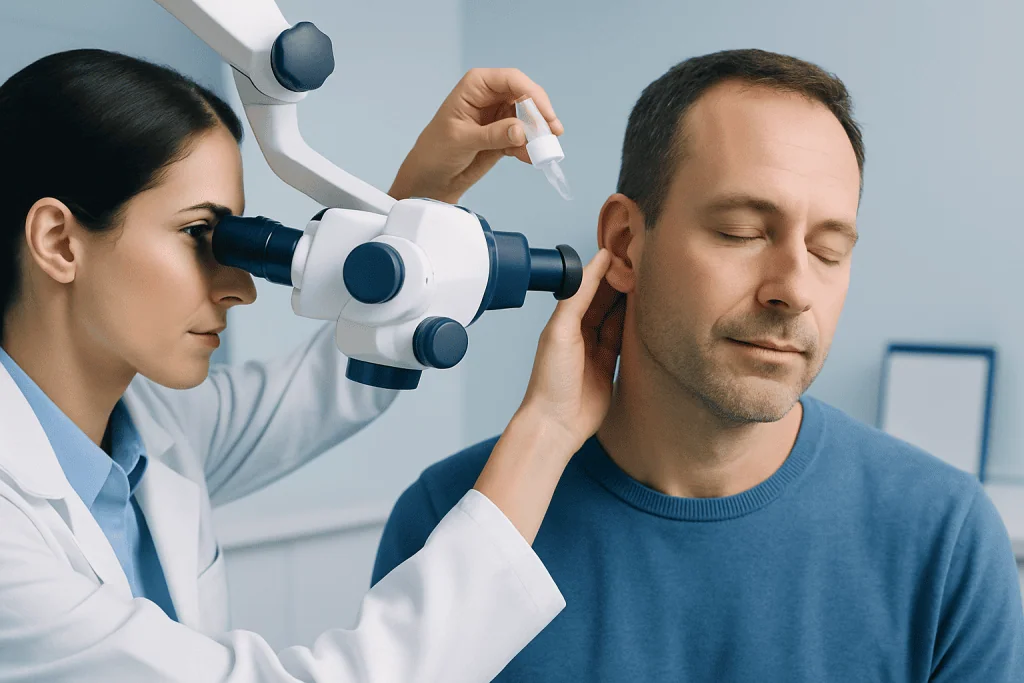
Earwax is a normal mixture of skin cells, natural oils, and gland secretions. It helps trap dust and debris, supports the ear canal’s slightly acidic protective environment, and helps prevent the skin inside the canal from becoming overly dry. In most people, jaw movement while talking and chewing gradually helps wax travel from the deeper canal toward the outer ear, where it dries and falls away.
Earwax becomes a concern when it accumulates enough to block the ear canal. This is called cerumen impaction. It can cause muffled hearing, a blocked sensation, itching, ringing in the ear, discomfort, hearing-aid feedback, or sometimes a cough triggered by stimulation within the canal. These symptoms can be bothersome but are often treatable.
Some people are more likely to develop wax buildup. This includes people who use hearing aids, earbuds, or earplugs regularly; have narrow or unusually shaped ear canals; produce drier or thicker wax; or have skin conditions affecting the ear canal. Cleaning inside the ear with cotton swabs is also a common cause because it can compact wax deeper rather than remove it.
How Hydrogen Peroxide Works—and Its Limits

Hydrogen peroxide is an oxygen-releasing liquid. In earwax products, it may be used alone in a suitable ear-drop preparation or as part of a formulated wax-softening product. The bubbling sensation occurs as oxygen is released. This can help soften wax, especially when the wax is dry or compacted, but it does not mechanically pull wax from the ear.
It is important not to interpret bubbling as a sign that treatment is working perfectly or that the ear is clear. Wax may remain in the canal, and softened material can temporarily make the ear feel more blocked before it exits. Repeated use can also irritate the delicate skin lining the ear canal, particularly in people with eczema, allergies, or sensitive skin.
Evidence-based earwax care focuses on safe softening when appropriate, followed by natural clearance or clinician removal when needed. A healthcare professional may remove wax using specialized instruments, gentle irrigation when suitable, or suction. The best method depends on the wax, the ear anatomy, the person’s medical history, and whether the eardrum can be safely assessed.
Who Should Not Use Hydrogen Peroxide Ear Drops
Hydrogen peroxide ear drops should not be used without medical advice when there is a hole or tear in the eardrum, known as a perforated eardrum. They should also be avoided by people with ear tubes, also called grommets or tympanostomy tubes, unless their ear specialist specifically recommends them. Liquid entering beyond an opening in the eardrum may cause pain, irritation, or complications.
People who have had ear surgery should check with their surgeon or ear specialist before using any ear drops. This includes surgery involving the eardrum, middle ear, mastoid bone, or hearing devices. Individuals with a history of recurrent ear infections, chronic ear discharge, or ear canal skin disease should also seek advice before self-treating suspected wax.
Ear drops are not appropriate when there is unexplained ear pain, bleeding, pus-like or foul-smelling drainage, fever, significant dizziness, or sudden hearing change. These symptoms may indicate a condition that needs assessment. Children, particularly those unable to describe their symptoms clearly, should have suspected wax and ear discomfort assessed by an appropriately qualified clinician rather than being treated repeatedly at home.
Safer Steps for Managing Suspected Earwax
If a person has mild symptoms consistent with wax buildup and no warning signs, they can first avoid putting anything into the ear canal. The outer ear can be cleaned gently with a soft cloth. Cotton swabs should not be inserted into the canal, even when they appear to remove some wax, because they commonly push the remaining wax farther inward.
When an over-the-counter wax-softening product is appropriate, it should be used exactly as directed on its label and only for the recommended period. A person should stop using it if pain, rash, marked burning, dizziness, or drainage occurs. It is sensible to keep the treated ear dry and avoid combining several ear products unless a pharmacist or clinician recommends this.
Other home methods can create preventable risks. Ear candles are not effective for removing wax and can cause burns, wax deposits, or injury. Sharp or narrow objects, including hairpins and improvised tools, can scratch the canal or damage the eardrum. Forceful home irrigation is also unsuitable for people with eardrum problems, prior ear surgery, diabetes, a weakened immune system, or uncertainty about the cause of their symptoms.
- Use drops only when there are no contraindications and the symptoms are mild.
- Do not insert objects into the ear canal.
- Arrange an examination if symptoms do not improve or return frequently.
When to Seek Medical Care
Medical care is recommended when hearing remains reduced after a short period of appropriate wax-softening treatment, when symptoms repeatedly return, or when it is unclear whether wax is causing the problem. An ear examination can distinguish a wax blockage from infection, inflammation, eardrum injury, or another cause of hearing symptoms. This is particularly important before trying to flush the ear with water.
Urgent assessment is appropriate for severe or worsening ear pain, fever, swelling around the ear, bleeding, discharge, marked dizziness, new weakness of the face, or sudden hearing loss. Sudden hearing loss can sometimes be mistaken for a blocked ear and should not be assumed to be wax. A prompt medical evaluation helps ensure that time-sensitive causes are not missed.
People who wear hearing aids may benefit from regular ear checks if wax affects device performance. Acibadem International’s multidisciplinary specialists and JCI-accredited hospitals can assess ear symptoms and provide appropriate wax management for international patients. For anyone with ongoing discomfort or hearing concerns, evaluation by an ear, nose, and throat specialist is the safest next step.
Prevention: Supporting the Ear’s Natural Cleaning Process
Most ears do not need active wax removal. The simplest preventive approach is to allow the ear’s natural self-cleaning process to work. Wiping only the visible outer ear after bathing is usually enough. Avoiding the routine use of cotton swabs inside the canal is one of the most effective ways to reduce compacted wax.
People who are prone to buildup should discuss an individualized plan with a clinician. Depending on the person’s ear history, this may include periodic checks, appropriate softening drops used only when advised, or planned professional cleaning. Hearing aid users should also follow instructions for cleaning the device itself, since debris on the device can affect sound quality even when the ear canal is clear.
It is useful to remember that a small amount of visible wax is not necessarily unhealthy or unhygienic. The goal is not a completely wax-free ear canal. The goal is comfortable ears, clear hearing, and avoidance of practices that may irritate the canal or interfere with its natural protective function.
Frequently asked questions
Can hydrogen peroxide dissolve earwax completely?
Hydrogen peroxide may soften and loosen some earwax, but it does not always dissolve or remove a complete blockage. Wax can remain in the canal or temporarily shift and make the ear feel more blocked. If symptoms persist, a clinician can check whether wax is still present.
Is fizzing in the ear after hydrogen peroxide normal?
A mild fizzing or bubbling sound can occur because hydrogen peroxide releases oxygen when it contacts wax and moisture. It should not cause significant pain, strong burning, dizziness, or discharge. If these symptoms occur, use should stop and medical advice should be sought.
Can hydrogen peroxide ear drops cause harm?
They can irritate the ear canal, especially if used too often or by someone with sensitive skin. They may be unsafe if the eardrum is perforated, ear tubes are present, or there has been ear surgery. It is best to ask a clinician before use when there is any uncertainty about ear health.
Should a person use cotton swabs after ear drops?
No. Cotton swabs can push softened wax farther into the canal and may cause scratches or injury. Only the outer ear should be wiped gently with a cloth. Material that reaches the entrance of the ear can usually be cleaned away without inserting anything inside.
How can someone tell whether reduced hearing is caused by wax?
Wax can cause gradual muffled hearing, a blocked feeling, or hearing-aid feedback, but these symptoms are not specific to wax. Infection, fluid, eardrum problems, and sudden sensorineural hearing loss can feel similar. Looking into the ear is the reliable way to confirm a wax blockage.
When should a child with suspected earwax see a doctor?
A child should be assessed if there is ear pain, fever, discharge, hearing concerns, balance changes, or behavior suggesting discomfort. Medical assessment is also appropriate if a caregiver cannot see the cause of the symptoms or if home measures have not helped. Children should not have objects inserted into their ears to remove wax.
References
- American Academy of Otolaryngology–Head and Neck Surgery
- National Institute on Deafness and Other Communication Disorders
- Mayo Clinic
- NHS
This article is for general information only and is not a substitute for professional medical advice. Please consult a qualified doctor about your individual situation.
Explore treatments in Turkey — costs, top hospitals & a free quote
JCI-accredited · board-certified surgeons · reply within 24h
Add us as a Preferred Source to see more of our trusted health content across Google Search, AI Overviews and Discover.

More from the Health Library



Related Specialists

Fzt. Kübra Otabaş
Physical Medicine & Rehabilitation
Dr. Alper Albayrak
Family Medicine
Dr. Kerim Çıkım
Internal Medicine
Prof. Dr. Ahmet Karabulut
Cardiology