Blood When Throwing Up After Drinking: An Evidence-Based Guide for Patients

Vomiting bright-red blood or material that looks like coffee grounds may indicate bleeding in the upper digestive tract. Alcohol can irritate the stomach lining, worsen existing ulcers, trigger vomiting, and contribute to liver-related bleeding problems.
Key Takeaways
- Vomiting bright-red blood or material that looks like coffee grounds may indicate bleeding in the upper digestive tract.
- Alcohol can irritate the stomach lining, worsen existing ulcers, trigger vomiting, and contribute to liver-related bleeding problems.
- Forceful retching can cause a small tear near the junction of the esophagus and stomach, but medical evaluation is still important.
- Emergency care is needed for ongoing bleeding, fainting, weakness, black stools, severe pain, confusion, or trouble breathing.
- Avoid further alcohol, aspirin, and anti-inflammatory medicines unless a clinician advises otherwise.
Blood when throwing up after drinking is not something to ignore. It may be caused by irritation or a small tear after forceful vomiting, but it can also indicate bleeding from the stomach or esophagus and should be assessed promptly by a healthcare professional.
Overview: What Does Blood in Vomit After Drinking Mean?
Blood when throwing up after drinking may mean there is bleeding somewhere in the upper digestive tract, which includes the esophagus (food pipe), stomach, and first part of the small intestine. The blood may look bright red, dark red, brown, or like wet coffee grounds. Coffee-ground material can occur when blood has been partly changed by stomach acid.
Alcohol does not always directly cause the bleeding. However, it can irritate the stomach lining, increase the likelihood of vomiting, and worsen underlying conditions such as ulcers or liver disease. Forceful retching after drinking can also create a small tear in the lining near the lower esophagus.
Even a small amount of blood should be taken seriously, particularly when the source is uncertain. A person should seek urgent medical advice the same day, while heavy bleeding or symptoms of shock require emergency care.
How the Appearance of Vomit Can Help
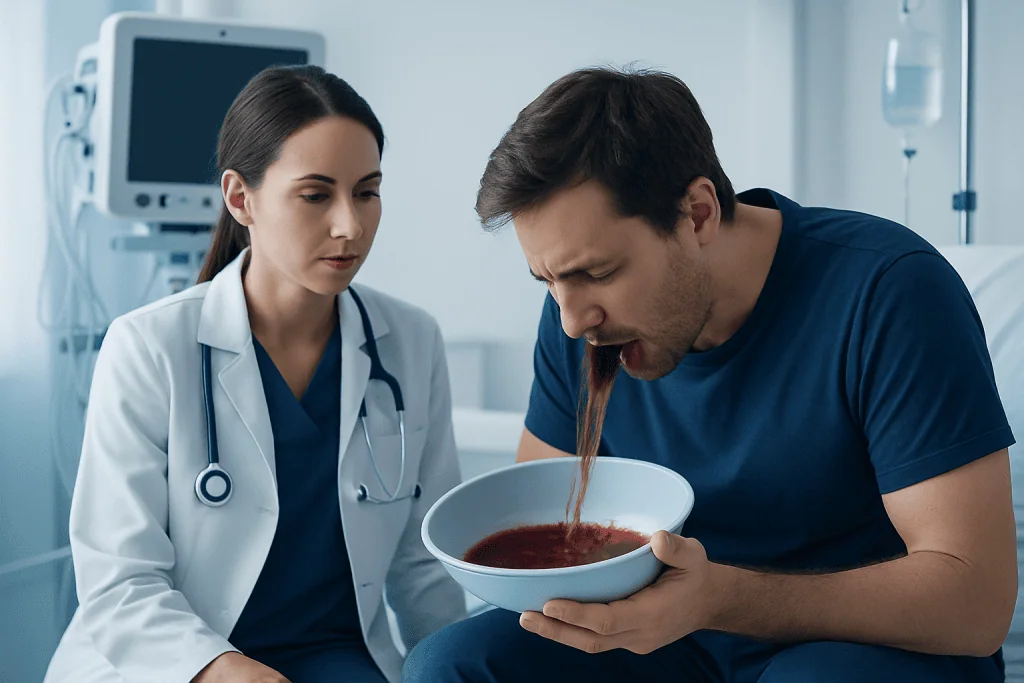
The appearance of vomit can provide useful clues, although it cannot reliably identify the cause without a medical assessment. Bright-red blood may suggest fresh or active bleeding. Darker blood, brown material, or a coffee-ground appearance can suggest blood that has remained in the stomach for a period of time.
Sometimes red-colored food, drinks, medicines, or swallowed blood from a nosebleed can make vomit appear bloody. However, it is safest not to assume this is the explanation, especially after repeated vomiting or if there are additional symptoms such as dizziness, abdominal pain, or black stools.
Blood may also be mixed with mucus, food, or stomach contents. Healthcare teams may ask about the amount, color, timing, and whether vomiting followed heavy alcohol use, repeated retching, an injury, or use of medicines that can affect the stomach or blood clotting.
Possible Causes After Alcohol Use

A common cause is inflammation of the stomach lining, called gastritis. Alcohol can irritate this lining and may contribute to erosions that bleed. Alcohol may also aggravate a pre-existing stomach or duodenal ulcer. Ulcers are often linked with infection from Helicobacter pylori, use of anti-inflammatory medicines, or both, rather than alcohol alone.
Repeated or forceful vomiting can cause a Mallory-Weiss tear, a small tear in the mucosa where the esophagus meets the stomach. It can produce bright-red blood after retching and may stop on its own, but some tears bleed significantly and require treatment.
In people with advanced liver disease, scarring of the liver can raise pressure in veins around the esophagus or stomach. These enlarged veins, called varices, can bleed heavily and need emergency treatment. Alcohol-related liver disease is one possible cause of cirrhosis, but varices can occur for other reasons as well.
Less commonly, blood may come from severe inflammation of the esophagus, an ulcer in the esophagus, a swallowing injury, or another upper gastrointestinal condition. Clinicians consider the full history and examination rather than assuming alcohol is the only explanation.
Factors That Can Increase the Risk of Bleeding
Heavy alcohol use, binge drinking, and vomiting repeatedly can increase the chance of digestive tract irritation and tears. Risk may be higher when alcohol is combined with medicines that affect the stomach lining or bleeding tendency, including aspirin, ibuprofen, naproxen, corticosteroids, anticoagulants, and some antiplatelet medicines.
A history of ulcers, gastrointestinal bleeding, liver disease, acid reflux, blood-clotting disorders, or kidney disease may also be relevant. Older age and multiple medical conditions can increase the risk of complications, but blood in vomit warrants attention at any age.
People should not stop prescribed blood thinners without medical guidance, as stopping them may carry important risks. Instead, they should tell emergency or urgent-care clinicians exactly what medicines, supplements, and substances they have taken, including the time of the last dose if known.
- Recent repeated vomiting or severe retching
- Use of nonsteroidal anti-inflammatory drugs such as ibuprofen or naproxen
- Past ulcers, liver disease, or prior gastrointestinal bleeding
- Current blood-thinning or antiplatelet medicine use
- Black, tar-like stools or increasing weakness
How Doctors Assess and Diagnose the Cause
Assessment begins with checking whether the person is stable. Clinicians may measure blood pressure, pulse, oxygen level, and temperature, and ask about the amount of bleeding, alcohol intake, vomiting, stool color, pain, medications, and medical history. They may also examine the abdomen and look for signs of dehydration, anemia, or liver disease.
Blood tests can help assess blood count, clotting, liver function, kidney function, and other factors relevant to bleeding. Depending on the situation, the care team may give fluids, medicines to reduce stomach acid, or other supportive treatment while investigations are underway.
An upper endoscopy is often used when a significant upper gastrointestinal bleed is suspected. During this procedure, a flexible camera is passed through the mouth to examine the esophagus, stomach, and upper small intestine. It can identify ulcers, tears, inflamed areas, or varices, and sometimes treatment can be delivered during the same procedure.
Further tests depend on the findings and the person’s condition. The goal is to locate the source of bleeding, stop it where necessary, treat contributing conditions, and reduce the risk of recurrence.
Treatment Options and Recovery
Treatment depends on the amount of blood loss and the underlying cause. A person with mild gastritis or a small, self-limited tear may be monitored and treated with medicines that reduce stomach acid, along with advice to avoid alcohol and substances that irritate the stomach. Testing and treatment for H. pylori may be recommended if an ulcer is found.
More substantial bleeding may require hospital observation, intravenous fluids, blood tests, and endoscopic treatment. During endoscopy, doctors may use techniques such as injection therapy, clips, heat-based methods, or banding procedures to control specific sources of bleeding. Some situations require additional imaging, interventional radiology, or surgery, although these are not needed for everyone.
If liver disease and varices are involved, treatment focuses on controlling the acute bleed and managing portal hypertension and the underlying liver condition. Ongoing care may include specialist follow-up, medication, repeat endoscopy, and support to reduce or stop alcohol use when appropriate.
For international patients, Acibadem International’s multidisciplinary specialists and JCI-accredited hospitals can assess upper digestive bleeding and coordinate appropriate diagnostic and treatment care.
What to Do Now and When to Seek Medical Care
Anyone who vomits blood after drinking should avoid further alcohol and seek urgent medical advice. They should not drive themselves if they feel weak, dizzy, confused, or unwell. If possible, a trusted person should stay with them and help arrange care.
Emergency services should be contacted immediately if bleeding is ongoing or large in volume, or if there is fainting, severe dizziness, pale or clammy skin, fast heartbeat, shortness of breath, chest pain, severe abdominal pain, confusion, black tar-like stools, or inability to stay awake. These can be signs of substantial blood loss or another serious problem.
Until assessed, it is generally best to avoid alcohol, aspirin, ibuprofen, naproxen, and other non-prescribed anti-inflammatory medicines because they may worsen bleeding. A person should follow local emergency-service instructions about eating or drinking, especially if an urgent procedure may be needed.
After treatment, follow-up is important even if symptoms settle. A clinician can address ulcers, gastritis, liver health, medication safety, and practical support for reducing alcohol use if this is a concern.
Frequently asked questions
Can alcohol alone cause blood in vomit?
Alcohol can irritate and damage the stomach lining, particularly after heavy use, and it can trigger forceful vomiting that causes a tear. It may also worsen ulcers or liver-related conditions that were already present. Because the cause cannot be confirmed at home, blood in vomit should be assessed promptly.
Is a small streak of blood after vomiting dangerous?
A small streak can occur after irritation or forceful retching, but it should not be dismissed without advice from a clinician. Bleeding can recur or be more significant than it appears. Urgent evaluation is particularly important if the person has repeated vomiting, black stools, pain, dizziness, or takes blood-thinning medicines.
What does coffee-ground vomit mean?
Coffee-ground vomit describes dark brown or black granular material that can indicate blood altered by stomach acid. It may be a sign of bleeding in the upper digestive tract. A person with this symptom should seek urgent medical assessment, even if the vomiting has stopped.
Should someone eat or drink after vomiting blood?
They should seek medical guidance rather than trying to manage the problem at home. In an emergency, clinicians may advise avoiding food and drink because tests or an endoscopy could be needed. Alcohol should be avoided completely, and a person should not take pain medicines such as aspirin or ibuprofen unless a clinician says they are safe.
How do doctors stop bleeding in the stomach or esophagus?
Doctors first assess stability and may provide fluids, blood tests, and medicines. An upper endoscopy can often locate the bleeding source and allow treatment with clips, injections, heat therapy, or bands, depending on the cause. More extensive bleeding may require other hospital-based treatments.
Can vomiting blood be related to liver disease?
Yes. Advanced liver disease can cause increased pressure in veins near the esophagus and stomach, creating varices that may bleed. This is a medical emergency when it occurs, especially if there is a large amount of blood, fainting, weakness, or black stools. Urgent hospital care is needed.
References
- National Institute of Diabetes and Digestive and Kidney Diseases
- American College of Gastroenterology
- National Health Service
- Mayo Clinic
- World Gastroenterology Organisation
This article is for general information only and is not a substitute for professional medical advice. Please consult a qualified doctor about your individual situation.
Persistent digestive symptoms? Get evaluated in Turkey
JCI-accredited · board-certified surgeons · reply within 24h
Add us as a Preferred Source to see more of our trusted health content across Google Search, AI Overviews and Discover.