Am I a Candidate for Laser eye surgery? Eligibility Criteria

Laser eye surgery eligibility is determined by a detailed individual eye examination, not by prescription alone. Candidates commonly need stable vision, healthy corneas and no uncontrolled eye disease.
Key Takeaways
- Laser eye surgery eligibility is determined by a detailed individual eye examination, not by prescription alone.
- Candidates commonly need stable vision, healthy corneas and no uncontrolled eye disease.
- LASIK, PRK and other laser procedures may suit different eye measurements and lifestyles.
- Dry eye, pregnancy, certain medicines and some medical conditions can delay or rule out treatment.
- Laser vision correction can reduce reliance on glasses or contact lenses, but it cannot guarantee perfect vision or prevent age-related reading changes.
Am I a candidate for laser eye surgery? Many adults with a stable glasses or contact lens prescription, healthy eyes and realistic expectations may be eligible, but suitability can only be confirmed through a comprehensive pre-operative eye assessment. The best procedure depends on corneal shape and thickness, refractive error, eye health, age and everyday visual needs.
Overview: Who May Be a Candidate for Laser Eye Surgery?
Am I a candidate for laser eye surgery? A person may be a candidate if they are an adult with a stable glasses or contact lens prescription, healthy eyes and corneas that are suitable for treatment. However, laser vision correction is not appropriate for everyone, and a specialist eye examination is needed to establish whether it is safe and likely to meet the person’s visual goals.
Laser eye surgery is a group of procedures that reshape the cornea, the clear front surface of the eye. This changes the way light focuses on the retina and can correct short-sightedness, long-sightedness and astigmatism. It is often considered by people who wish to reduce their dependence on glasses or contact lenses.
Suitability is more than a question of age or prescription strength. The ophthalmologist considers corneal thickness and curvature, tear-film health, pupil size, refraction stability, general health, work and sport requirements, and expectations about vision after surgery. A structured laser eye surgery assessment is the most reliable way to review these factors.
How Laser Vision Correction Works
The cornea provides much of the eye’s focusing power. When its curve does not match the eye’s length, light may focus in front of, behind, or unevenly on the retina. This causes refractive errors such as myopia (short-sightedness), hyperopia (long-sightedness) and astigmatism.
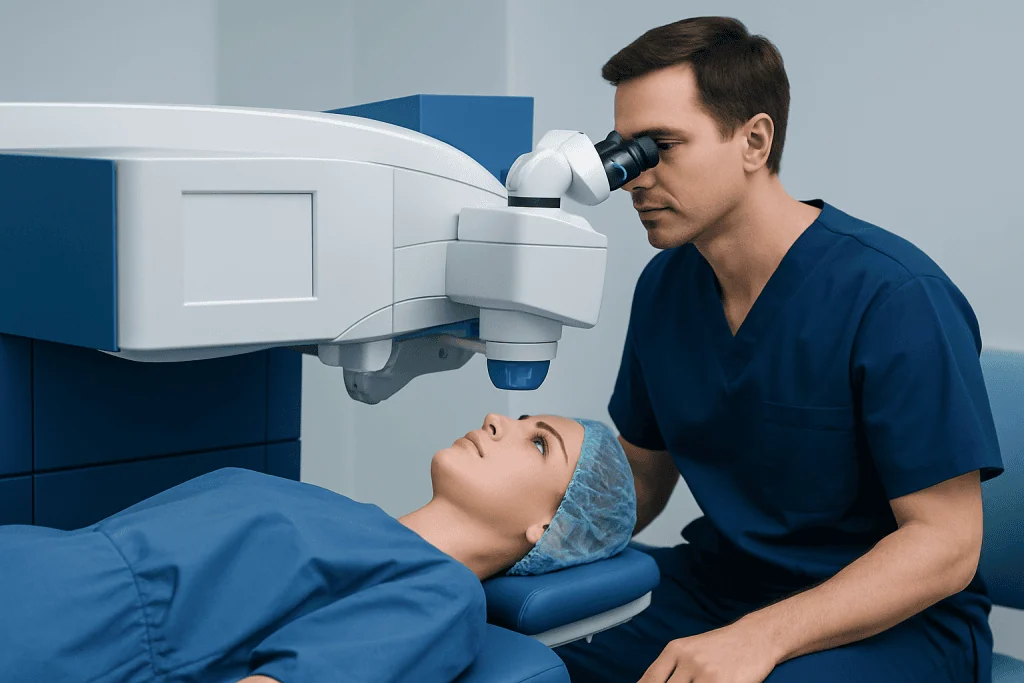
Laser procedures use computer-guided energy to remove microscopic amounts of corneal tissue and refine its shape. In LASIK, a thin corneal flap is created and lifted before the laser treatment is applied underneath. In surface procedures such as PRK, the outer corneal layer is removed or moved aside before reshaping. The most appropriate technique depends on the person’s cornea and clinical findings.
Laser surgery does not replace the natural lens inside the eye and cannot stop normal ageing of the eye. In particular, presbyopia—the gradual loss of near focusing ability that commonly develops from the 40s onward—may mean that reading glasses are still needed after distance vision correction.
Eligibility Criteria: What Specialists Assess
Most people considered for laser eye surgery are at least 18 years old, although the appropriate age can vary with the procedure and local clinical practice. Their prescription should usually have remained broadly stable for at least one year. Continued changes may indicate that the eyes are still developing or that another factor needs investigation before surgery is considered.
Healthy corneas are essential. The assessment includes corneal thickness, shape mapping and screening for disorders that could make corneal tissue less stable. A cornea that is too thin, unusually shaped or affected by a condition such as keratoconus may make a standard laser procedure unsuitable or require another approach.
Eye health is assessed carefully, including the eyelids, tear film, cornea, lens, retina and optic nerve. Significant dry eye, active infection or inflammation, uncontrolled glaucoma, cataract, retinal disease, or a history of certain eye surgeries may affect eligibility. Some concerns can be treated first, while others may mean a different vision-correction option is safer.
- Refractive error that falls within the treatable range for the available technology
- Stable prescription and stable overall eye health
- Corneal measurements that support safe treatment planning
- Ability to attend follow-up appointments and follow aftercare instructions
- Realistic expectations about possible outcomes and the potential need for glasses in some situations
Factors That May Delay or Exclude Surgery
Laser eye surgery may be postponed during pregnancy or breastfeeding because hormonal changes can temporarily alter vision and tear production. It may also be delayed when a prescription has recently changed, when dry eye symptoms are significant, or when there is an active eye infection, allergy flare or inflammation.
Certain medical conditions require individual assessment. Poorly controlled diabetes, autoimmune diseases, immune-suppressing treatment and conditions that affect wound healing can increase surgical risks for some people. This does not automatically exclude every individual, but it makes an ophthalmologist’s review especially important. Medicines that affect the eyes, tear film or healing should also be discussed.
People with very high refractive errors, early cataracts, irregular corneas or age-related lens changes may be better served by another treatment. In some cases, lens-based surgery or continued use of glasses and contact lenses offers a more suitable balance of benefits and risks. A consultation should be viewed as a decision-making process rather than a promise that surgery will be recommended.
What Happens During Assessment and the Procedure?
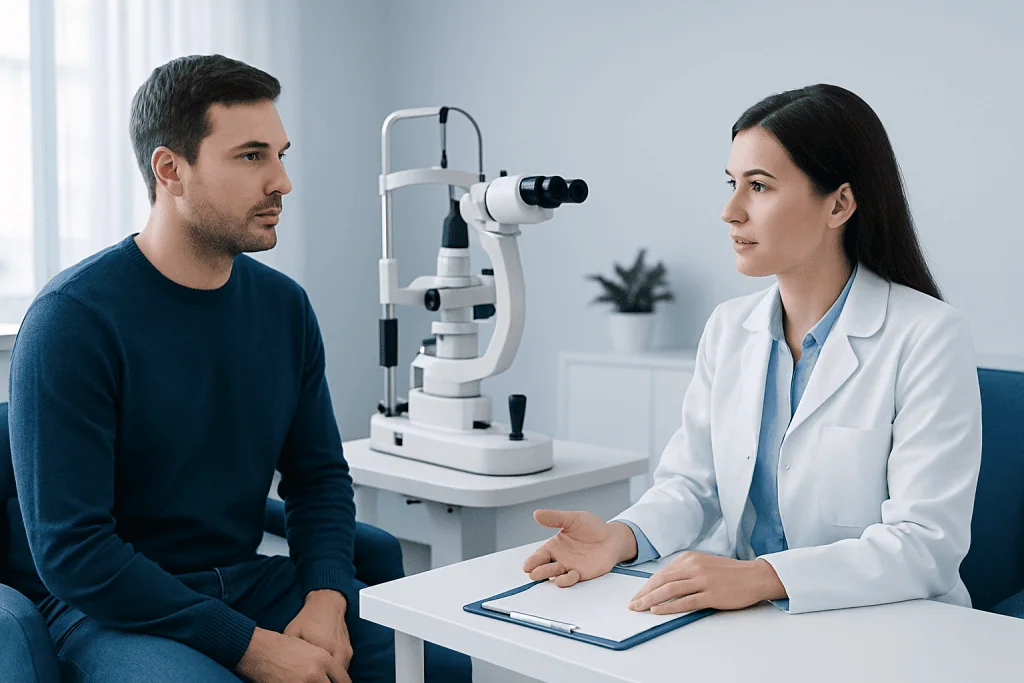
The pre-operative assessment begins with a discussion about visual goals, glasses and contact lens use, health history, medications and previous eye treatment. Contact lenses may need to be stopped for a period before testing, because they can temporarily alter corneal shape. The clinical team will provide individual instructions.
Measurements commonly include refraction testing, corneal topography or tomography, corneal thickness measurement, pupil evaluation, tear-film assessment and a dilated eye examination when appropriate. These tests help the surgeon select a procedure, estimate likely benefits and identify reasons not to proceed. Patients should use this time to discuss night driving, screen use, sports, work conditions and near-vision needs.
On the day of surgery, numbing eye drops are typically used. The person remains awake, and the procedure itself commonly takes only minutes per eye, although preparation and recovery monitoring take longer. The eye is held open with a small device, and the patient is asked to look at a fixation light while the laser tracks eye movement. Vision may be blurry immediately afterward, which is expected.
Recovery Timeline, Benefits and Possible Risks
Recovery differs by procedure. After LASIK, many people notice functional vision within a day or two, although vision can continue to settle over several weeks. Surface laser procedures generally involve more early discomfort and a longer visual recovery, with improvement occurring gradually over weeks to months. Follow-up visits allow the ophthalmologist to monitor healing and vision.
Early effects can include blurred or fluctuating vision, light sensitivity, tearing, glare, halos around lights and dry-eye symptoms. These often improve during healing, but some can persist. Lubricating drops and other treatments may be advised. Patients should avoid rubbing the eyes, follow prescribed drop schedules and return promptly for planned reviews.
Potential benefits include reduced reliance on glasses or contact lenses and greater convenience for certain activities. Important risks include undercorrection or overcorrection, residual astigmatism, persistent dry eye, infection, inflammation, flap-related issues with LASIK, night-vision symptoms and, rarely, reduced best-corrected vision. Some people may still need glasses, contact lenses or an enhancement procedure. A surgeon should explain the individual likelihood and significance of these outcomes before consent.
Preparation, Self-care and When to Seek Medical Care
Before surgery, patients should provide a complete medical and eye history and follow instructions about contact lenses, cosmetics and transportation home. Planning time away from driving, dusty environments, swimming and contact sports may be necessary. After surgery, protecting the eyes from rubbing and using all prescribed medicines exactly as directed supports uncomplicated healing.
People should contact their eye clinic promptly after surgery if they develop increasing pain, rapidly worsening vision, marked redness, discharge, injury to the eye or symptoms that feel substantially different from the guidance they received. These symptoms do not always indicate a serious problem, but timely assessment is important.
Anyone considering treatment should seek routine medical advice if vision changes suddenly, eye pain develops, flashes or a curtain-like shadow appears in vision, or there is persistent redness. These symptoms need urgent eye assessment and should not be attributed to a need for laser surgery. Acibadem International’s multidisciplinary specialists and JCI-accredited hospitals can assess and treat eye conditions for international patients, including evaluation for laser vision correction.
Frequently asked questions
What is the best age for laser eye surgery?
There is no single best age. Candidates are generally adults whose prescription has been stable for at least a year, but the decision also depends on corneal health, refractive error and overall eye health. People in their 40s and beyond should also discuss how presbyopia may affect near vision.
Can a person have laser eye surgery with astigmatism?
Many people with astigmatism can be treated with laser vision correction. The decision depends on the amount and pattern of astigmatism, corneal measurements and the stability of the prescription. An eye examination is needed to determine whether treatment is appropriate.
Can dry eye prevent laser eye surgery?
Significant dry eye can make laser surgery less suitable because treatment may temporarily worsen symptoms. The eye specialist may recommend treating dry eye first and reassessing later. Some people may need a different procedure or may be advised not to have laser surgery.
Will laser eye surgery mean glasses are never needed again?
Not necessarily. Surgery may reduce dependence on glasses or contact lenses, but some people still need correction for certain tasks, such as night driving or reading. Age-related presbyopia can develop even after successful distance vision correction.
Is laser eye surgery painful?
Numbing drops are used during treatment, so pain during the procedure is usually limited. There can be pressure, awareness of instruments and temporary discomfort afterward. Surface laser procedures commonly cause more discomfort during the first few days than LASIK.
How long does laser eye surgery recovery take?
Initial recovery varies by technique. Many LASIK patients can return to many usual activities within a few days, while surface procedures take longer for vision to become clear and stable. Complete healing and visual stabilization may continue for weeks or months.
References
- American Academy of Ophthalmology
- U.S. Food and Drug Administration
- Royal College of Ophthalmologists
- National Eye Institute
- Mayo Clinic
This article is for general information only and is not a substitute for professional medical advice. Please consult a qualified doctor about your individual situation.
Eye Surgery in Turkey — costs, top hospitals & a free quote
JCI-accredited · board-certified surgeons · reply within 24h