Compression Garments for Abdominoplasty: Procedure, Recovery and Results

Most patients wear a surgeon-selected garment for several weeks, but there is no single schedule for every tummy tuck. A garment should feel supportive rather than painful, restrictive, or difficult to breathe in.
Key Takeaways
- Most patients wear a surgeon-selected garment for several weeks, but there is no single schedule for every tummy tuck.
- A garment should feel supportive rather than painful, restrictive, or difficult to breathe in.
- Compression may improve comfort and swelling management, but it does not guarantee a particular surgical result.
- Skipping a recommended garment does not automatically cause a complication, but it may make early recovery less comfortable.
- Stage 1 and stage 2 labels are not standardized, so garments should not be changed without surgical guidance.
Compression garments for abdominoplasty are close-fitting medical supports worn after a tummy tuck to help manage swelling, improve comfort, and support healing tissues. The correct garment, pressure level, and wear schedule should always be chosen by the operating surgeon, as needs vary between patients and procedures.
Compression Garments for Abdominoplasty: Overview
Compression garments for abdominoplasty are usually worn after a tummy tuck operation. They apply gentle, even pressure around the abdomen to support the surgical area while swelling and bruising gradually settle. Depending on the procedure, the garment may be a wrap, abdominal binder, bodysuit, or garment with openings that make wound care and toileting easier.
Surgeons commonly include compression in an individual aftercare plan, although the available research does not prove that every patient receives the same benefit. A well-fitted garment may help patients feel more supported during movement and may make early swelling easier to manage. It does not replace follow-up visits, wound care, walking, or other recovery instructions, and it cannot guarantee a flatter contour, prevent all fluid collections, or speed healing on its own.
How Compression Works and Who May Need It
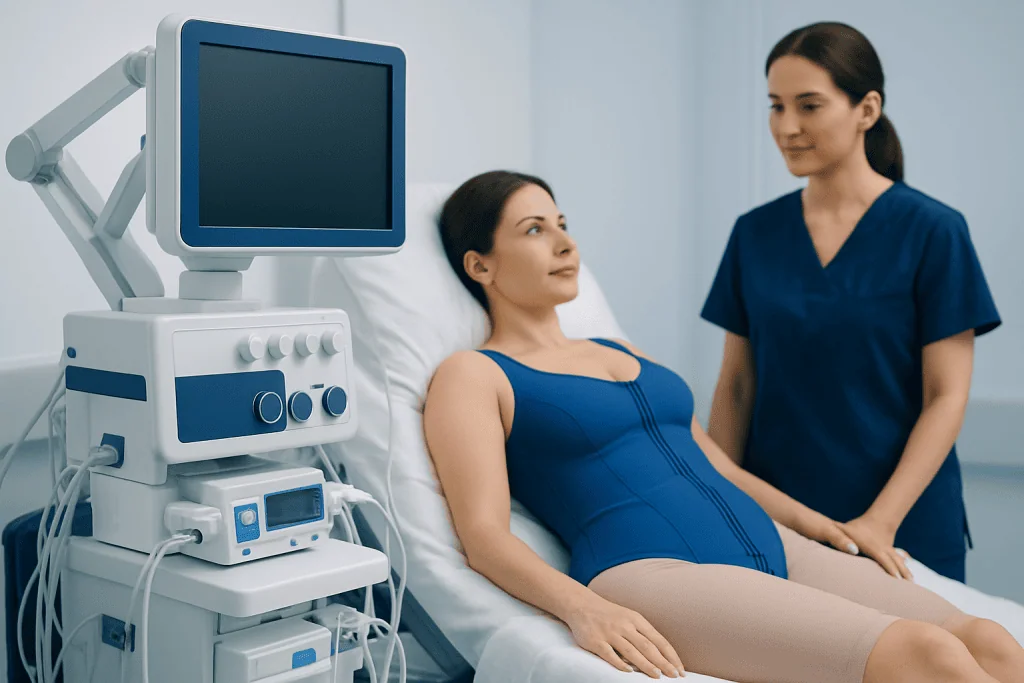
After abdominoplasty, the body naturally produces inflammation and fluid as tissues recover. A postoperative garment provides external support over the operated area and may limit uncomfortable movement of the skin and soft tissue. It can also help dressings stay in place. However, compression must be even and appropriately gentle; concentrated pressure from rolled edges, tight seams, or an incorrectly sized garment can irritate healing skin.
Many people having a full or mini abdominoplasty are prescribed some form of compression, especially when liposuction or muscle repair is also performed. Before recommending a garment, the surgical team should consider the extent of surgery, drain placement, skin condition, comfort, and medical history. Patients with circulation concerns, reduced skin sensation, significant breathing problems, heart or kidney conditions, diabetes, or a history of skin reactions should discuss garment selection carefully with their clinician.
Abdominoplasty Procedure: Step by Step
Abdominoplasty is a body-contouring operation, not a weight-loss treatment. A surgeon first assesses whether a person is medically suitable for surgery, including their general health, weight stability, smoking or nicotine use, abdominal skin laxity, and personal goals. The operation may be a full tummy tuck, a mini tummy tuck, or a more extensive procedure combined with other body-contouring techniques.
- Before surgery, the surgeon marks the planned incision and discusses expected scars, recovery, and aftercare.
- Under anesthesia, an incision is made low on the abdomen; the surgeon may repair separated abdominal muscles, remove excess skin, and reshape fat when appropriate.
- The skin is redraped and closed, sometimes with temporary drains to remove fluid. Dressings and a prescribed compression garment may be applied before discharge.
The operation and immediate recovery plan differ from person to person. The surgeon explains when the garment can be removed, how to care for drains or incisions, which sleeping position is most comfortable, and when normal activities can gradually resume.
How long do I wear a compression garment after abdominoplasty?
Many surgeons recommend wearing a compression garment most of the day and night for approximately four to six weeks after abdominoplasty, removing it only for washing or hygiene when permitted. However, this is a general pattern rather than a universal rule. Some patients need a shorter or longer period depending on the type of tummy tuck, whether liposuction was performed, the amount of swelling, wound healing, and the surgeon’s protocol.
During the first days, patients may need help putting the garment on and taking it off without pulling on incisions or drains. Follow-up visits allow the surgical team to check swelling, skin condition, and garment fit. They may adjust the schedule, recommend a different size, or advise a different style as healing progresses.
Swelling typically improves gradually rather than disappearing immediately. The abdominal contour and scars continue to mature over several months, and a compression garment should not be viewed as the factor that determines the final result. Maintaining follow-up appointments and following activity restrictions remain equally important.
Can you compress too much after a tummy tuck?
Yes. Postoperative compression should feel comfortably firm and supportive, not painfully tight or restrictive. Excessive pressure can cause skin irritation, pressure marks, numbness, worsening pain, pinching at the incision, or reduced comfort when breathing, sitting, or eating. Tight folds or seams can create focused pressure even when the garment initially seemed to fit.
A patient should contact their surgical team promptly if the garment causes severe pain, new numbness, pale, bluish, or cold skin, significant rubbing, blisters, or worsening swelling. It is not advisable to buy a smaller garment, add extra binders, or tighten closures beyond the clinician’s instructions. The team can assess whether the garment needs to be refitted, changed, or paused for a specific reason.
What happens if you don't wear compression garments after a tummy tuck?
Not wearing a recommended compression garment does not automatically mean that a complication will occur or that the surgical result will be lost. However, some patients may experience more swelling, a heavier sensation, or less comfort during movement without the support their surgeon planned. Evidence does not clearly show that compression prevents every postoperative issue, such as fluid collection, so it should be understood as one part of a wider recovery plan.
If a garment is uncomfortable, causes a rash, feels too tight, or cannot be worn as instructed, the patient should contact the surgical office rather than making an independent long-term change. The clinician may recommend a different garment, a fit adjustment, or another approach to support recovery. Gentle walking, avoiding heavy lifting, caring for incisions properly, staying hydrated, and avoiding nicotine are also important parts of tummy tuck aftercare.
Is stage 2 compression garment tighter than stage 1?
Not always. Stage 1 and stage 2 are commercial labels rather than universal medical standards, and their meaning varies by manufacturer. In many practices, a stage 1 garment is designed for the earliest recovery period, when swelling, dressings, and drains may be present, while a stage 2 garment may feel firmer and be used later. However, a garment called stage 2 is not automatically appropriate or necessarily tighter than every stage 1 design.
A patient should move to another garment only when their surgeon confirms that the timing and fit are suitable. The correct garment should lie flat, allow comfortable breathing and walking, and avoid digging into the groin, ribs, or incision line. A garment that feels substantially tighter is not inherently more effective and may create avoidable pressure on healing tissue.
When to Seek Medical Care
Patients should contact their surgical team promptly for increasing redness or warmth around an incision, a fever, foul-smelling drainage, wound opening, sudden one-sided swelling, rapidly increasing pain, persistent vomiting, or dressings that become heavily soaked with blood or fluid. These symptoms do not always indicate a serious problem, but they need timely professional assessment. Concerns about drains, medication side effects, or garment fit should also be discussed with the care team.
Urgent emergency care is needed for chest pain, shortness of breath, coughing blood, fainting, or new pain and swelling in one leg, as these may be signs of a blood clot or another medical emergency. For international patients who need assessment or treatment for post-abdominoplasty concerns, Acibadem International’s multidisciplinary specialists and JCI-accredited hospitals can provide coordinated care.
Frequently asked questions
Can I take my compression garment off to shower?
Many patients may remove the garment briefly for showering once their surgeon permits it. The timing depends on the incision, dressings, drains, and individual recovery instructions, so the surgical team's advice should take priority.
How should a tummy tuck compression garment fit?
It should feel snug and supportive without causing pain, deep indentations, numbness, breathing difficulty, or rolling at the edges. A properly fitted garment should stay smooth over the abdomen and should not press directly into incisions or drain sites.
Can a waist trainer replace a postoperative compression garment?
No. Waist trainers and fashion shapewear are not designed around fresh surgical incisions, swelling patterns, or drains. Only a garment approved by the operating surgeon should be used during early abdominoplasty recovery.
Does compression prevent a seroma after abdominoplasty?
Compression may be included in a surgeon's plan to support healing, but it cannot reliably prevent every seroma or fluid collection. New localized swelling, fluid movement, or increasing tightness should be assessed by the surgical team.
When can I walk and exercise after a tummy tuck?
Short, gentle walks are often encouraged early because movement supports circulation, but the pace and timing should follow the surgeon's advice. Strenuous exercise, abdominal training, and heavy lifting usually need to wait until healing has progressed and medical clearance is given.
Can I wash my compression garment during recovery?
Yes, it usually needs regular washing according to the manufacturer's care instructions to help protect the skin and incision area. Having a surgeon-approved spare garment can be useful, but patients should confirm this before surgery.
References
- American Society of Plastic Surgeons
- International Society of Aesthetic Plastic Surgery
- Aesthetic Surgery Journal
- National Health Service (NHS)
This article is for general information only and is not a substitute for professional medical advice. Please consult a qualified doctor about your individual situation.
Explore treatments in Turkey — costs, top hospitals & a free quote
JCI-accredited · board-certified surgeons · reply within 24h
Add us as a Preferred Source to see more of our trusted health content across Google Search, AI Overviews and Discover.