Kidney Removal Surgery: Procedure, Recovery and Results

Nephrectomy may remove part of a kidney, one whole kidney, or rarely both kidneys in carefully selected circumstances. Minimally invasive surgery often allows a shorter hospital stay and recovery than open surgery, although the safest approach depends on the condition and anatomy.
Key Takeaways
- Nephrectomy may remove part of a kidney, one whole kidney, or rarely both kidneys in carefully selected circumstances.
- Minimally invasive surgery often allows a shorter hospital stay and recovery than open surgery, although the safest approach depends on the condition and anatomy.
- Early gentle movement, breathing exercises, pain control and bowel care support a safer recovery.
- One remaining healthy kidney usually provides adequate function, but regular blood pressure and kidney-function monitoring are important.
- Urgent medical assessment is needed for fever, worsening pain, breathing difficulty, wound problems, reduced urine output or symptoms of blood clots.
Kidney removal surgery, also called nephrectomy, is an operation to remove part or all of a kidney when it is affected by cancer, severe damage, infection, or another serious condition, or when a healthy person donates a kidney. Most people can live well with one healthy kidney, but recovery and follow-up should be individualized by a urology and surgical team.
Overview: what is kidney removal surgery?
Kidney removal surgery is called a nephrectomy. It may involve removing a small section of a kidney (partial nephrectomy), one complete kidney (radical or simple nephrectomy), or, in uncommon situations, both kidneys. The operation is used when preserving the kidney is not safe or possible, and it can also be performed for living kidney donation.
The goal is to treat the underlying problem while protecting as much kidney function as possible. For many localized kidney tumors, surgeons consider a partial nephrectomy when appropriate because it preserves more functioning kidney tissue. A whole-kidney operation may be needed when a tumor is large or centrally located, the kidney is severely damaged, or other treatment options are unsuitable.
Kidney removal surgery and recovery differ from person to person. The surgical approach, reason for surgery, overall health, kidney function before surgery and whether there are other procedures at the same time all affect the expected course.
Why it is recommended and who may be a candidate
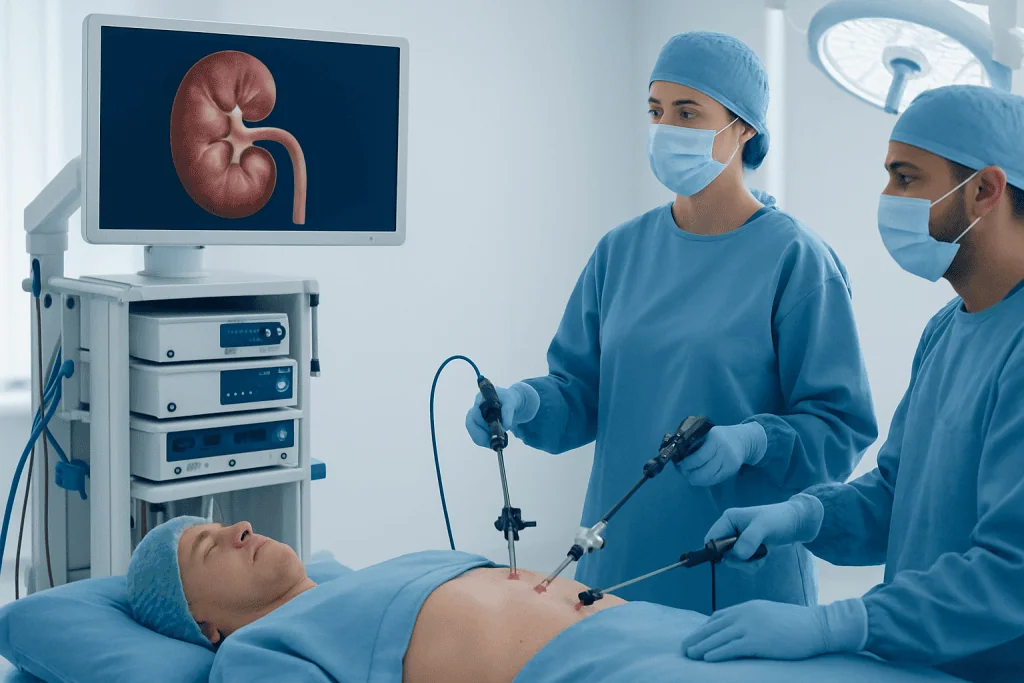
A nephrectomy may be recommended for kidney cancer, a nonfunctioning kidney causing repeated infection or pain, severe injury, congenital abnormalities, or certain complex kidney diseases. It is also an essential part of living-donor kidney transplantation, in which a healthy donor gives one kidney to help another person with kidney failure.
Before recommending surgery, the clinical team reviews scans, blood and urine tests, medical history and the function of both kidneys. They also consider whether the lesion can be monitored, treated with a kidney-sparing procedure, ablated in selected cases, or managed in another way. In cancer care, decisions may involve urologists, oncologists, radiologists, pathologists and anesthesiologists.
People with reduced function in the opposite kidney, diabetes, high blood pressure, heart disease or a history of kidney disease need particularly careful planning. The team may assess estimated kidney filtration, blood pressure control, medications and other factors that can influence surgical risk and long-term kidney health.
- Partial nephrectomy: removes the abnormal area and preserves the remaining kidney.
- Simple nephrectomy: removes a kidney, often for a non-cancerous severely damaged kidney or donation.
- Radical nephrectomy: removes the kidney and may include nearby fatty tissue, the adrenal gland or lymph nodes when medically indicated.
How the procedure works: preparation and step-by-step

Preparation usually includes imaging such as CT or MRI, blood tests, urine testing and an anesthetic assessment. Patients should tell the team about all medicines, supplements, allergies, previous operations and any history of bleeding or blood clots. Instructions about eating, drinking and medicines before surgery should be followed exactly; some medicines may need adjustment under medical guidance.
The operation is performed under general anesthesia, meaning the patient is asleep and does not feel pain during surgery. In laparoscopic or robotic-assisted surgery, the surgeon uses several small incisions to insert a camera and specialized instruments. The kidney or kidney portion is detached carefully and removed through a slightly larger incision. These approaches can reduce incision size, but they are not right for every situation.
Open surgery uses one larger incision, usually in the side or abdomen. It may be preferred for large or complex tumors, extensive scarring, certain injuries, or when the surgeon needs broader access. During a partial nephrectomy, blood flow to the kidney may be temporarily controlled while the lesion is removed and the kidney is reconstructed.
After the surgery, the patient wakes in a recovery area where the care team monitors breathing, blood pressure, pain, nausea and urine output. A urinary catheter may be used temporarily. Tissue removed during surgery is examined by a pathologist, which helps guide next steps when cancer is involved.
Kidney removal surgery recovery time and hospital care
The kidney removal recovery time in hospital is often shorter after laparoscopic or robotic surgery than after open surgery. Many patients go home within a few days after minimally invasive surgery, while open surgery or a more complex operation may require a longer stay. The actual timing depends on pain control, mobility, eating and drinking, bowel function, laboratory results and the presence of any complications.
During the early kidney removal recovery period, nurses encourage safe movement, deep-breathing exercises and use of compression devices or medicines when needed to reduce clot risk. Eating usually resumes gradually as nausea settles and bowel activity returns. The team will provide individualized guidance on showering, wound care, driving, work, lifting and exercise.
At home, fatigue is common and improves gradually. Many people return to light daily activities within a few weeks after minimally invasive surgery, while full recovery after open surgery often takes longer. Heavy lifting, strenuous exercise and contact sports should be avoided until the surgeon confirms that healing is adequate. Follow-up visits commonly include review of the incision, pathology findings if relevant, blood pressure and kidney-function tests.
People living with one kidney are usually advised to maintain good hydration, avoid smoking, keep blood pressure under control and discuss regular use of anti-inflammatory pain medicines with a clinician. A healthy diet and routine medical follow-up help support the remaining kidney over time.
How long is bed rest after kidney removal?
Prolonged bed rest is generally not expected after kidney removal surgery. Unless there is a specific medical reason to remain in bed, patients are usually helped to sit up and walk, often on the day of surgery or the following day. The exact plan depends on the type of surgery, pain level, blood pressure and overall medical condition.
Early, supervised walking supports circulation, lung expansion and bowel activity, and it can lower the risk of complications such as blood clots and constipation. This does not mean patients should push through severe discomfort; activity is increased gradually with support from the surgical team.
At home, regular short walks are often more helpful than staying in bed for long periods. Rest remains important, especially in the first days, but patients should follow the personalized mobility plan and contact their team if dizziness, severe weakness or worsening symptoms make walking difficult.
How painful is kidney removal surgery recovery?
Pain after nephrectomy is expected, particularly around the incision and abdominal or side muscles, but it should be manageable with an individualized pain-control plan. Discomfort is often more noticeable when standing, coughing, laughing or changing position. Minimally invasive surgery may cause less incision pain than open surgery, although shoulder discomfort from surgical gas can occur temporarily after laparoscopy.
Care teams may combine different methods to reduce pain, such as non-opioid medicines, short-term stronger pain medicine when needed, local anesthetic techniques and gentle movement. Good pain control is important because it enables breathing exercises, walking and sleep. Patients should take medicines only as prescribed and ask before using over-the-counter medicines, especially because some can affect kidney function.
Pain should gradually improve rather than become more severe. New or escalating pain, pain with fever, redness or drainage from a wound, persistent vomiting, chest pain or shortness of breath should be assessed promptly by a healthcare professional.
How long does it take to poop after a nephrectomy?
It is common for bowel movements to be delayed for a few days after a nephrectomy. Anesthesia, opioid pain medicines, reduced food intake and less movement can all slow the bowel. Passing gas is often an early sign that intestinal activity is returning.
The surgical team may recommend fluids, gradual reintroduction of food, walking and a stool softener or laxative when appropriate. Patients should not use bowel medicines without checking their discharge instructions or speaking with their clinical team, particularly if they have kidney disease or are taking other medicines.
Contact the surgical team if there is increasing abdominal swelling or pain, repeated vomiting, inability to keep fluids down, or constipation that does not improve as advised. These symptoms do not always indicate a serious problem, but they need timely clinical guidance after abdominal surgery.
Benefits, risks and when to seek medical care
The main benefit of kidney removal surgery is treatment of the condition affecting the kidney. For cancer, it may remove the tumor completely when disease is localized. For a severely damaged or repeatedly infected kidney, it may relieve symptoms and prevent further complications. For living donors, donation can make transplantation possible for a recipient with kidney failure.
Like any major operation, nephrectomy has risks. These include bleeding, infection, reactions to anesthesia, blood clots, injury to nearby organs, urine leakage after partial nephrectomy, hernia and temporary or lasting reduction in kidney function. Cancer-related surgery may also require further monitoring or treatment depending on the final pathology and stage. The team explains the relevant risks and expected benefits for each individual.
When to seek medical care: Patients should contact their surgeon urgently for fever, chills, increasing redness or drainage from the wound, worsening pain, persistent vomiting, new swelling in a leg, reduced urine output, blood in the urine, or difficulty passing urine. Emergency assessment is important for chest pain, sudden shortness of breath, fainting or uncontrolled bleeding.
Acibadem International’s multidisciplinary specialists and JCI-accredited hospitals diagnose and treat kidney conditions for international patients, with care plans based on each person’s diagnosis, kidney function and recovery needs.
Frequently asked questions
How serious is surgery to remove a kidney?
Surgery to remove a kidney is a major operation, but it is commonly performed by experienced urologic surgical teams. Its seriousness depends on the reason for surgery, the surgical method, the person's general health and the function of the remaining kidney. Careful preoperative assessment and follow-up help reduce risks and identify problems early.
Can a person live normally with one kidney?
Most people can live a healthy, active life with one functioning kidney. The remaining kidney usually increases its workload over time, although it does not create a second kidney. Regular monitoring of blood pressure and kidney function, along with healthy lifestyle habits, is important.
How long does kidney removal surgery take?
The length of surgery varies according to whether the procedure is partial or complete, minimally invasive or open, and whether it is being done for cancer, donation or another condition. The surgical team can provide the most accurate estimate after reviewing imaging and the planned approach. Additional time is also needed for anesthesia preparation and recovery-room monitoring.
When can a person return to work after a nephrectomy?
Return-to-work timing depends on the type of operation, the demands of the job and the individual's recovery. Desk-based work may be possible sooner than physically demanding work, while open surgery often requires a longer period away from work. The surgeon should clear the patient before returning to lifting, strenuous activity or work involving physical risk.
What foods should be eaten after kidney removal surgery?
Early after surgery, patients usually return to food gradually as nausea settles and bowel function returns. A balanced diet with adequate fluids, unless fluid intake is restricted for another medical reason, supports recovery. Individual dietary advice may differ for people with reduced kidney function, diabetes, high blood pressure or other health conditions.
Will kidney function decrease after a nephrectomy?
Removing kidney tissue reduces total kidney reserve, so blood tests may show a lower estimated filtration rate after surgery. Many people maintain sufficient kidney function with one healthy kidney, but those with pre-existing kidney disease or other risk factors may have a greater chance of long-term impairment. Follow-up testing helps the healthcare team monitor changes and advise on kidney protection.
References
- National Institute of Diabetes and Digestive and Kidney Diseases
- American Urological Association
- National Cancer Institute
- NHS
- Mayo Clinic
This article is for general information only and is not a substitute for professional medical advice. Please consult a qualified doctor about your individual situation.
Oncology care in Turkey — second opinion and treatment plan
JCI-accredited · board-certified surgeons · reply within 24h
Add us as a Preferred Source to see more of our trusted health content across Google Search, AI Overviews and Discover.
Check your numbers in seconds
BMI, calories, due date, blood pressure and 30+ more clinical calculators — free, instant, doctor-reviewed ranges.