Bone Fracture in Foot Treatment: How It Works, Results and What to Expect

A foot fracture should be assessed promptly because some injuries are not obvious on the first examination or X-ray. Treatment often includes limiting weight-bearing and protecting the foot with a boot, cast or specialized shoe.
Key Takeaways
- A foot fracture should be assessed promptly because some injuries are not obvious on the first examination or X-ray.
- Treatment often includes limiting weight-bearing and protecting the foot with a boot, cast or specialized shoe.
- Surgery is usually reserved for fractures that are displaced, unstable, involve a joint, or are unlikely to heal well without fixation.
- Healing commonly takes weeks, but return to unrestricted activity depends on the fracture site, healing on imaging and rehabilitation progress.
- Increasing pain, numbness, skin color changes or an inability to bear weight need urgent medical assessment.
Bone fracture in foot treatment is tailored to the specific bone involved, whether the fracture is stable or displaced, and a person’s activity needs. Many fractures heal with a boot, cast or stiff-soled shoe, while unstable, displaced or certain high-risk fractures may need a procedure to restore alignment.
Bone Fracture in Foot Treatment: How It Works
Bone fracture in foot treatment aims to protect the broken bone, maintain or restore its normal alignment, and support safe healing before return to everyday activities and sport. The right plan depends on which of the 26 bones of the foot is affected, whether the break is stable, and whether the bones remain in position.
Many uncomplicated fractures can heal without an operation. A clinician may recommend a walking boot, cast, rigid-soled shoe, crutches, or a period of avoiding weight on the foot. These measures reduce movement at the fracture site so new bone can form. Follow-up examinations and imaging help confirm that healing is progressing as expected.
When a fracture is displaced, unstable, open, affects an important joint surface, or involves a bone with a higher risk of poor healing, an orthopedic surgeon may advise reduction and fixation. This means carefully realigning the bone and, when needed, holding it in place with surgical hardware such as screws, plates, pins, or wires. The aim is not simply pain relief; it is to preserve foot shape, walking mechanics and joint function.
Assessment, Candidacy and Diagnosis
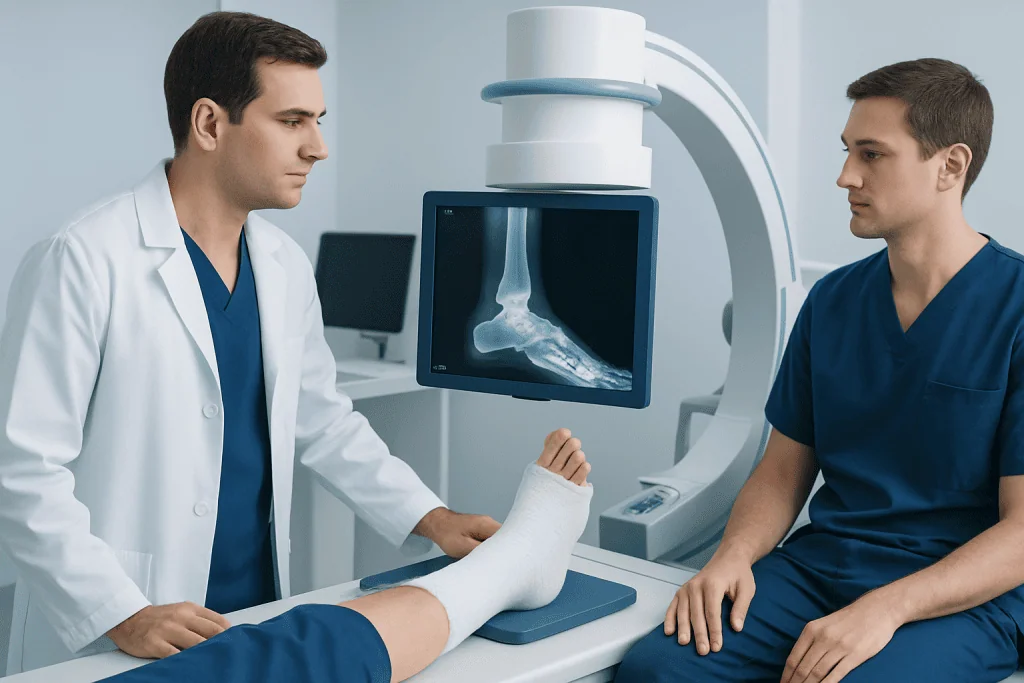
Foot fractures can follow a fall, twist, direct impact, crush injury, or repetitive loading during sport or work. Repetitive stress can cause a small crack known as a stress fracture. Symptoms may include pain, swelling, bruising, tenderness in one precise area, difficulty walking, or pain that increases with activity. However, some people can still walk despite a fracture, particularly when the break is small or stable.
Diagnosis begins with a history and physical examination. The clinician checks the tender area, swelling, circulation, skin condition, nerve function and ability to bear weight. X-rays are commonly the first imaging test. If X-rays do not clearly show the injury but clinical suspicion remains, repeat X-rays, CT scans, or MRI may be used. MRI is particularly helpful for some stress fractures and soft-tissue injuries.
Non-surgical care is generally suitable for stable fractures with acceptable alignment. Surgical treatment may be considered when bone fragments are out of position, the fracture extends into a joint, several bones are injured, the foot is unstable, or normal healing is unlikely with immobilization alone. Individual factors, including diabetes, smoking, circulation problems, bone health, activity level and previous foot conditions, also influence treatment planning.
- Stable fractures may be managed with protection and monitored healing.
- Displaced fractures may require realignment, with or without surgery.
- Open fractures, severe deformity or circulation concerns require urgent specialist care.
Step-by-Step: Non-Surgical and Surgical Treatment

For non-surgical treatment, the first step is usually reducing stress on the injured foot. Depending on the fracture, this may mean a supportive shoe, removable boot, cast, crutches, or complete avoidance of weight-bearing for a period. Elevation and cold packs can help manage early swelling, while suitable pain relief may be recommended by a clinician. The foot should not be repeatedly tested by walking on it before medical advice is given.
During follow-up, the specialist assesses pain, swelling, alignment and imaging. The amount of weight allowed is adjusted gradually. Some fractures permit protected walking early, while others require strict non-weight-bearing. This difference is important: placing weight on a fracture too soon can lead to displacement, delayed union or ongoing pain.
If surgery is recommended, imaging is used to plan the procedure. Under anesthesia, the surgeon restores the bone to its appropriate position and stabilizes it with selected fixation devices. The type of fixation depends on the location and pattern of the break. Afterward, the foot is protected in a splint, cast or boot, and follow-up visits monitor wound healing, bone position and recovery.
Foot and ankle orthopedic teams can coordinate imaging, fracture care, surgery and rehabilitation. Acibadem International’s multidisciplinary specialists and JCI-accredited hospitals provide diagnosis and treatment for international patients who need coordinated orthopedic care.
Benefits, Risks and Expected Results
The main benefit of appropriate treatment is that it gives the fracture the best opportunity to heal in a functional position. Effective stabilization can reduce pain as healing advances and can help protect the foot’s arches, joints and ability to bear weight. For fractures that require surgery, fixation may improve alignment and reduce the likelihood of long-term mechanical problems caused by a poorly healed bone.
Most foot fractures heal well, but results depend on the bone involved, injury severity, adherence to weight-bearing instructions, and general health. It is common for swelling, stiffness and reduced endurance to persist after the bone has united. Physical therapy or guided exercises may be helpful when a person is ready to restore movement, strength, balance and walking pattern.
Possible complications include delayed healing, nonunion, malunion, persistent pain, joint stiffness, arthritis after joint-involving injuries, infection after open injuries or surgery, and blood clots associated with immobility. Surgical risks also include wound problems, nerve irritation and hardware-related discomfort. These risks are not inevitable, and the orthopedic team discusses the expected benefits and alternatives before recommending a procedure.
Recovery Timeline and Return to Walking
Recovery is not identical for every fracture. Many uncomplicated fractures show substantial healing over roughly 6 to 8 weeks, but some need longer protection. Stress fractures, complex midfoot injuries, fractures near a joint, and injuries involving bones with limited blood supply can take several months to fully recover. Imaging and clinical examination guide progression more reliably than a calendar alone.
How long does it take to walk normally after a foot fracture? Some people return to comfortable walking within several weeks after a minor stable fracture, while others need months before gait, strength and confidence feel normal. Normal walking should not be rushed. A clinician may allow progression from no weight-bearing to partial and then full weight-bearing only when the fracture is stable and symptoms support that change.
Recovery often follows a sequence: initial protection and swelling control, gradual loading when approved, restoration of ankle and toe mobility, strengthening, balance work and return to higher-impact activities. Driving, work duties and sports should be discussed individually, particularly if the right foot is injured or if work involves standing, climbing or carrying loads.
Good recovery habits include attending follow-up appointments, using the prescribed boot or cast as directed, avoiding nicotine products, eating a balanced diet with adequate protein and key nutrients, and reporting new symptoms promptly. A clinician may investigate delayed healing if pain remains focal or imaging does not show expected progress.
Common Questions About Foot Fracture Healing
What is the hardest bone to heal in your foot? There is no single answer for every person, but fractures at the base of the fifth metatarsal—especially a Jones fracture—are often treated cautiously because this region can have a relatively limited blood supply. The talus is another important bone that may be challenging after significant injury because of its blood supply and its role in the ankle and foot joints. A specialist evaluates the exact fracture pattern rather than assuming all breaks in one bone behave the same way.
Can you still walk with a fractured bone in your foot? Yes, some people can walk with a foot fracture, especially with stress fractures or stable breaks. This does not mean the injury is minor or safe to ignore. Continuing to walk without assessment can worsen pain, move a fracture out of alignment, or delay healing, so new focal foot pain after an injury should be evaluated.
How do you know when your fractured foot is healing? Pain and tenderness usually decrease gradually, swelling improves, and weight-bearing becomes easier as healing progresses. These signs are encouraging but do not prove that the bone is fully united. A clinician combines symptoms, examination findings and follow-up X-rays or other imaging to decide when activity can safely increase.
When to Seek Medical Care
Medical assessment is advisable for significant foot pain after an injury, persistent swelling or bruising, localized bone tenderness, pain when taking steps, or pain that does not improve with rest. Stress fractures may develop gradually, so a person should seek care for activity-related pain that repeatedly returns or becomes more intense.
Urgent assessment is needed if the foot looks deformed, there is an open wound or visible bone, bleeding is difficult to control, toes are pale, blue or cold, there is numbness or weakness, or pain and swelling are severe. These features may indicate a serious injury requiring prompt treatment.
People should also contact their treating team if a cast or boot causes pressure pain, numbness, color changes in the toes, worsening swelling, fever, drainage from a surgical wound, or a sudden increase in pain. Following individualized instructions is especially important for people with diabetes, reduced circulation, neuropathy or conditions that affect bone healing.
Frequently asked questions
How is a bone fracture in the foot treated?
Treatment ranges from a stiff-soled shoe or walking boot to a cast, crutches and temporary avoidance of weight-bearing. A displaced, unstable or joint-involving fracture may need realignment and surgical fixation. The treatment choice is based on imaging, examination and the particular bone involved.
Do all foot fractures need a cast?
No. Some stable fractures can be managed in a removable walking boot or supportive rigid-soled shoe. Others need a cast or splint, especially when more rigid protection is needed. The treating clinician determines the safest form of immobilization.
Can a foot fracture heal without surgery?
Yes, many foot fractures heal without surgery when the bone alignment is acceptable and the injury is stable. Protection from movement and appropriate limits on weight-bearing are essential. Follow-up is important because some fractures can shift during healing.
When can someone put weight on a fractured foot?
The timing depends on the fracture location, stability and treatment approach. Some injuries allow protected weight-bearing early, while others require no weight-bearing for a period. A person should follow the orthopedic team’s instructions rather than using pain alone to decide.
Why does my foot still swell after the fracture has healed?
Swelling can remain for weeks or months after a foot fracture, particularly later in the day or after activity. It often improves gradually with recovery, elevation and progressive rehabilitation. New or worsening swelling, severe pain, color changes or shortness of breath should be assessed promptly.
What can delay foot fracture healing?
Factors that may delay healing include smoking or nicotine use, poor circulation, diabetes, inadequate protection of the fracture, early excessive weight-bearing, infection and some medications or medical conditions. Regular follow-up helps identify concerns early. A clinician can advise on modifiable factors and whether further assessment is needed.
References
- American Academy of Orthopaedic Surgeons
- American Orthopaedic Foot & Ankle Society
- National Institute of Arthritis and Musculoskeletal and Skin Diseases
- Mayo Clinic
This article is for general information only and is not a substitute for professional medical advice. Please consult a qualified doctor about your individual situation.
Joint and spine care in Turkey — expert assessment & treatment
JCI-accredited · board-certified surgeons · reply within 24h
Add us as a Preferred Source to see more of our trusted health content across Google Search, AI Overviews and Discover.