Dislocated Knee Recovery: A Week-by-Week Timeline

A true knee dislocation is an emergency because it can affect blood flow and nerve function, even if the knee appears to move back into place. Recovery commonly takes several months, while return to pivoting sports may take 9 to 12 months or longer.
Key Takeaways
- A true knee dislocation is an emergency because it can affect blood flow and nerve function, even if the knee appears to move back into place.
- Recovery commonly takes several months, while return to pivoting sports may take 9 to 12 months or longer.
- Treatment may include urgent reduction, bracing, vascular assessment, surgery for ligament injuries and supervised physiotherapy.
- Early rehabilitation protects healing tissues while gradually restoring knee movement, strength, balance and confidence.
- Walking and bending should follow the treating team's instructions, particularly after surgery or when multiple ligaments are injured.
Dislocated knee recovery time is usually measured in months rather than days because this injury can damage several ligaments and, in some cases, nearby blood vessels or nerves. Recovery varies greatly, but early medical assessment, appropriate stabilization or surgery, and a structured rehabilitation plan support the safest return to daily activities and sport.
Overview: what affects dislocated knee recovery time?
Dislocated knee recovery time is commonly several months, and a full return to demanding work or sports may take 9 to 12 months or longer. The timeline depends on whether the injury involved one or more ligaments, the meniscus or cartilage, fracture, nerve injury, or damage to the popliteal artery behind the knee. A knee that has dislocated and then moved back into position still needs urgent medical assessment.
A true knee dislocation occurs when the thighbone and shinbone lose alignment at the knee joint. This differs from a kneecap dislocation, in which the patella moves out of its groove. Because a true knee dislocation can be associated with serious soft-tissue and circulation injuries, treatment focuses first on protecting the limb and then on restoring stable, functional movement.
Each recovery plan is individualized. Age, overall health, activity goals, swelling, tissue healing and the type of treatment all influence progress. Comparing one person’s weekly milestones with another’s can be misleading; the safest guide is the examination and rehabilitation plan provided by the orthopedic team.
Why a dislocated knee needs urgent assessment
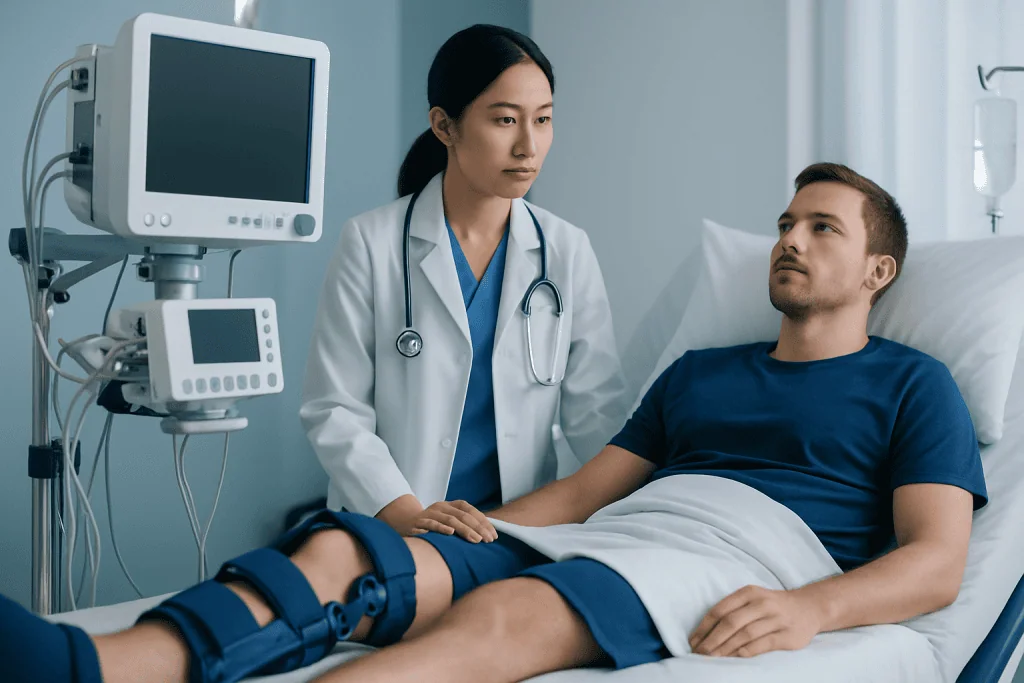
Some knee dislocations happen during high-energy trauma, such as a road traffic collision or a significant sports injury. Others occur after a lower-energy fall or twist, especially in people with joint laxity, obesity or previous knee injury. The knee may look visibly deformed, but it can also spontaneously reduce before medical care is reached.
Clinicians assess circulation in the foot, nerve function, skin condition and joint stability. They may check pulses repeatedly and use imaging such as X-rays, CT angiography, ultrasound or MRI. MRI is particularly helpful for identifying injuries of the anterior cruciate ligament, posterior cruciate ligament, collateral ligaments, menisci and cartilage.
Initial care may involve carefully realigning the joint, using pain relief and immobilization, and closely monitoring blood flow. A brace or external fixation device may be needed to keep the knee aligned while swelling settles or before definitive ligament treatment is planned.
- Cold, pale or blue foot, weak pulses, or worsening pain may suggest impaired blood flow.
- Numbness, tingling, weakness or inability to lift the foot can indicate nerve involvement.
- Open wounds, severe swelling or an obvious deformity require emergency evaluation.
Treatment approach: stabilization, surgery and rehabilitation
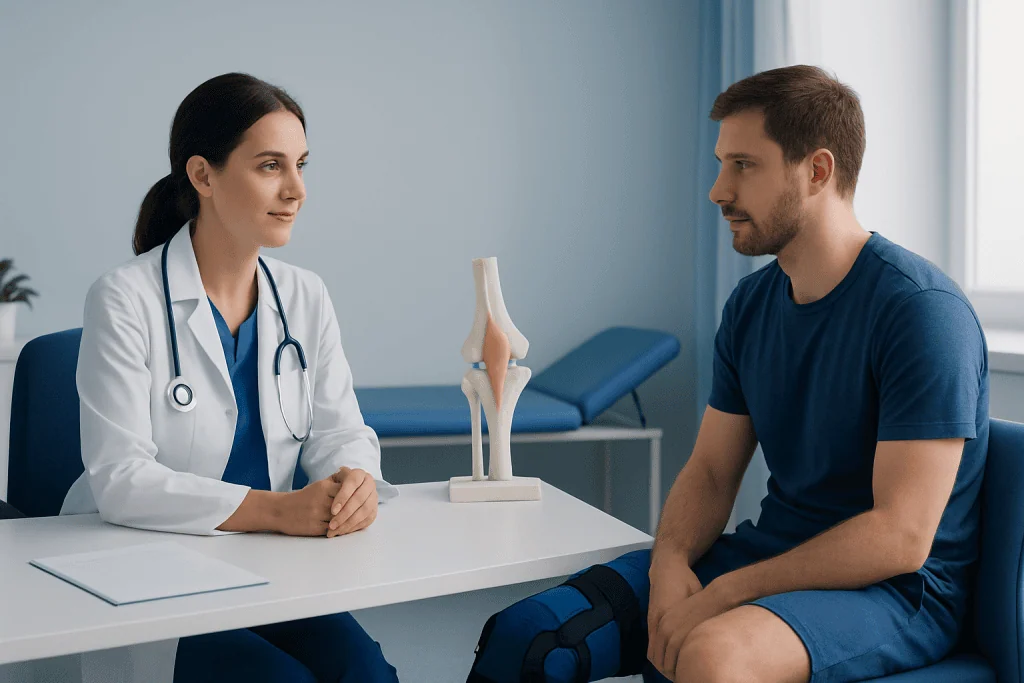
The first goal is a safe, stable knee with normal circulation. Some people with a relatively stable knee and less extensive ligament damage may be treated without ligament reconstruction, using bracing followed by carefully progressed physiotherapy. However, many true knee dislocations involve multiple ligaments and need surgical planning to restore stability for everyday movement or athletic activity.
When surgery is appropriate, the procedure may repair or reconstruct damaged ligaments using a graft. Meniscal tears, cartilage injuries or fractures may also be treated at the same operation or in stages. The exact timing varies: urgent surgery may be needed for vascular injury or certain open injuries, while ligament reconstruction may be delayed until swelling improves and safe early motion is possible.
The procedure generally begins with anesthesia and an examination of knee stability. The surgeon may use arthroscopy, small incisions and imaging guidance to inspect the joint, address associated injuries, position grafts or repair tissues, and secure them with specialized fixation. The knee is then protected in a brace, and the rehabilitation plan specifies permitted weight-bearing and range of motion.
Candidates for reconstruction are assessed individually. Factors include the pattern of ligament injury, knee instability, activity needs, medical conditions, skin and soft-tissue status, vascular or nerve injury, and ability to take part in rehabilitation. The benefits may include improved stability and function, while possible risks include infection, stiffness, blood clots, persistent instability, graft problems, nerve symptoms and the need for further procedures.
A practical week-by-week recovery timeline
Days 1 to 14: The priority is protecting the knee and monitoring circulation, swelling and nerve function. Depending on the injury and treatment, the person may use a brace, crutches or another mobility aid. Elevation, prescribed pain management and safe swelling control can help. Weight-bearing and knee-bending limits must come from the treating team, not from a generic timetable.
Weeks 2 to 6: Rehabilitation often begins or progresses with gentle, approved range-of-motion exercises, muscle activation and work to reduce swelling. The quadriceps muscle commonly weakens quickly after injury or surgery. A physiotherapist may introduce safe exercises for the thigh, hip and core while protecting reconstructed or healing tissues.
Weeks 6 to 12: If clinical checks show appropriate healing, many patients gradually increase motion, strength and weight-bearing. Walking mechanics, balance and controlled functional tasks become more important. Some people still need a brace or support during this phase, particularly after multiligament reconstruction.
Months 3 to 6: Rehabilitation typically shifts toward strengthening, endurance, coordination and movement quality. Selected patients may begin low-impact cardiovascular exercise, then controlled jogging or sport-specific drills when the knee is stable and strength testing supports progression. This stage is not based on time alone; pain, swelling, stability and objective function matter.
Months 6 to 12 and beyond: Return to pivoting, contact or high-impact sport often requires advanced strength, balance and functional testing. Some people regain excellent everyday function but continue to notice stiffness, numbness, weakness or reduced confidence. Longer rehabilitation may be needed after nerve, vascular, cartilage or fracture-related injuries.
How long until I can bend my knee after dislocation?
Some degree of knee bending may begin within days or weeks, but the safe amount and timing depend on the injury pattern and whether surgery was performed. After a simple injury managed without surgery, guided motion may start relatively early. After repair or reconstruction of several ligaments, flexion may be deliberately limited at first to protect healing tissues.
The goal is to restore motion gradually while avoiding excessive stress on repaired structures. Trying to force bending through significant pain or swelling can be counterproductive and may increase stiffness or irritation. A physiotherapist can measure progress and adjust exercises based on the surgeon’s protocol and the knee’s response.
Persistent inability to bend or straighten the knee, increasing swelling, locking, or worsening pain should be discussed promptly with the orthopedic team. These symptoms may need reassessment rather than more aggressive home exercise.
Will my knee ever be the same after dislocation?
Many people return to independent walking, work and recreational activity after a dislocated knee, especially with timely treatment and committed rehabilitation. However, it is not always possible to predict that the knee will feel exactly as it did before the injury. A complex dislocation can leave some degree of stiffness, weakness, altered sensation, instability or reduced tolerance for high-demand activities.
Long-term outcomes are influenced by the number of injured ligaments, cartilage damage, meniscal injury, nerve or blood vessel involvement, and whether rehabilitation goals are met. A previous knee dislocation can also raise the risk of post-traumatic osteoarthritis over time, particularly when cartilage was damaged.
Regular follow-up allows the care team to address ongoing symptoms and adjust rehabilitation. Orthopedic surgeons, vascular specialists, neurologists, pain specialists and physiotherapists may all contribute when the injury is complex. Acibadem International’s multidisciplinary specialists and JCI-accredited hospitals diagnose and treat complex knee injuries for international patients.
What is the fastest way to heal a dislocated knee?
The fastest safe recovery is not achieved by pushing through pain or returning to activity too soon. It comes from prompt emergency assessment, following the protection and weight-bearing plan, attending physiotherapy, and progressing exercises only when healing and knee control allow. Recovery speed must never take priority over circulation, ligament healing or joint stability.
Helpful measures include using the prescribed brace or crutches correctly, keeping follow-up appointments, managing swelling as advised, maintaining adequate sleep and nutrition, and avoiding smoking or nicotine products, which can impair healing. It is also important to maintain strength in the upper body, hips and uninvolved leg through exercises approved by the rehabilitation team.
Patients should ask their clinician about any sudden change in pain, swelling, warmth, calf tenderness or loss of function. These symptoms may have several causes and should not be self-diagnosed or treated by changing the rehabilitation plan independently.
Is walking good for a dislocated knee?
Walking can be an important part of recovery, but only when it is permitted and progressed according to the treating team’s instructions. Immediately after injury or surgery, some people must avoid weight-bearing or place only limited weight through the leg. Others may be allowed to bear weight earlier while using a locked brace and crutches.
Once approved, walking helps restore confidence, joint control, circulation and everyday function. The focus should be on a smooth gait rather than covering long distances. Limping, knee buckling, new swelling or increased pain are signs that activity may be exceeding the current stage of recovery.
Walking is usually combined with supervised strengthening and balance exercises. It does not replace rehabilitation for the ligaments, quadriceps and other muscles that stabilize the knee. A clinician or physiotherapist can advise when to transition away from mobility aids and when higher-impact exercise is appropriate.
When to seek medical care
Seek emergency medical care immediately after a suspected knee dislocation, even if the joint seems to have moved back into place. Emergency assessment is especially important if the foot is cold, pale, blue, numb, weak, increasingly painful, or has reduced pulses. Do not try to force a visibly deformed knee back into place without trained medical help.
During recovery, contact the care team urgently for worsening pain or swelling, fever, drainage or redness around an incision, a new loss of sensation, increasing weakness, calf swelling, chest pain or shortness of breath. These symptoms need timely evaluation because they can indicate complications that require treatment.
Routine follow-up is also important when progress stalls. Difficulty regaining motion, repeated giving-way, persistent locking, or concerns about returning to work, driving or sport are appropriate reasons to speak with an orthopedic specialist and physiotherapist.
Frequently asked questions
How long does it take to recover from a dislocated knee?
Recovery commonly takes several months, and return to demanding sports may take 9 to 12 months or longer. The timeline depends on the number of injured ligaments, whether surgery is needed, and whether there is nerve, blood vessel, cartilage or fracture-related injury.
Can a knee dislocation heal without surgery?
Some knee injuries can be managed with bracing and rehabilitation rather than ligament reconstruction. However, true knee dislocations frequently involve multiple ligaments and require orthopedic assessment to determine whether surgery is appropriate.
Can I put weight on a dislocated knee?
Weight-bearing instructions vary widely after a knee dislocation. A person should only put weight through the leg as directed by their orthopedic team, because some injuries and surgical repairs need a period of protection.
Why is a knee dislocation considered an emergency?
The knee sits close to major blood vessels and nerves. A dislocation can affect blood flow to the lower leg or cause nerve injury, sometimes even when the knee has returned to its usual position.
What exercises should I avoid after a knee dislocation?
Activities that twist, pivot, jump, run or force the knee into deep bending should generally be avoided until specifically cleared. The rehabilitation team will tailor safe exercises to the injured structures and stage of healing.
Can a dislocated knee cause arthritis later in life?
It can increase the risk of post-traumatic osteoarthritis, particularly if cartilage, meniscus or joint surfaces were damaged. Maintaining strength, a healthy activity level and regular follow-up can support long-term knee health.
References
- American Academy of Orthopaedic Surgeons
- OrthoInfo
- Mayo Clinic
- National Institute of Arthritis and Musculoskeletal and Skin Diseases
- MedlinePlus
This article is for general information only and is not a substitute for professional medical advice. Please consult a qualified doctor about your individual situation.
Joint and spine care in Turkey — expert assessment & treatment
JCI-accredited · board-certified surgeons · reply within 24h

More from the Health Library



Related Specialists

Dr. Behrim Malişi
Emergency Service
Assoc. Prof. Dr. Mehmet Ferdi Kıncı
Gynecology & Obstetrics
Dr. Murat Sarıkaş
Orthopedic Surgery & Traumatology
Dr. Emin Yıldırım
Emergency Service