Iridotomy Laser Treatment: How It Works, Results and What to Expect

Laser peripheral iridotomy improves the pathway for fluid to move between the back and front of the eye. It is most often recommended for narrow angles, angle-closure glaucoma, or an acute angle-closure episode after urgent pressure control.
Key Takeaways
- Laser peripheral iridotomy improves the pathway for fluid to move between the back and front of the eye.
- It is most often recommended for narrow angles, angle-closure glaucoma, or an acute angle-closure episode after urgent pressure control.
- The procedure is usually performed in an outpatient setting using numbing eye drops and takes only a short time.
- Vision may be temporarily blurred or light-sensitive afterward, while most routine activities can resume within a day or two if advised by the ophthalmologist.
- A successful opening reduces pupil-block angle-closure risk, but ongoing eye-pressure and optic-nerve monitoring may still be needed.
Iridotomy laser treatment, also called laser peripheral iridotomy, creates a very small opening in the outer edge of the iris. It is commonly used to prevent or treat angle closure, a condition in which eye fluid cannot drain normally and eye pressure may rise.
Overview: What Is Iridotomy Laser Treatment?
Iridotomy laser treatment is an eye procedure that uses focused laser energy to make a tiny opening in the peripheral iris, the colored part of the eye. The opening gives aqueous humor, the clear fluid made inside the eye, another route to pass from behind the iris to the front of the eye. This can help relieve or prevent a pressure mechanism called pupillary block.
The procedure is most often called laser peripheral iridotomy (LPI). It may be advised when the drainage angle between the iris and cornea is narrow or closed, placing a person at risk of angle closure and a potentially harmful rise in eye pressure. It can be performed as preventive care in an eye at risk, or as part of treatment after angle closure has occurred.
People may also encounter the terms iridotomia laser, which means laser iridotomy in English, or “iridotomy iridectomy by laser surgery.” In current clinical practice, laser peripheral iridotomy is the usual term. It differs from a surgical iridectomy, in which an opening is made through an incision rather than with a laser.
How It Works and Who May Be a Candidate
In a healthy eye, aqueous humor flows through the pupil and drains through channels at the front of the eye. In some eyes, the iris sits close to the drainage angle. If fluid builds behind the iris, it can bow the iris forward and narrow or block the angle further. A laser iridotomy bypasses this blockage by creating a small alternate passage for fluid.
An ophthalmologist may consider the iridotomy laser procedure for people with narrow angles seen during an eye examination, primary angle-closure suspect status, angle closure with raised eye pressure, or angle-closure glaucoma. It may also be recommended for the fellow eye after one eye has had an acute angle-closure attack, because eye anatomy is often similar on both sides.
Not every narrow angle requires the same approach. The ophthalmologist considers the shape of the eye, lens position, degree of angle narrowing, eye pressure, optic-nerve health, symptoms, and examination findings. In some people, lens-related crowding or other structural factors continue to narrow the angle even after an iridotomy, so additional monitoring or treatment may be needed.
Before treatment, the clinician usually examines the drainage angle with gonioscopy and measures eye pressure. Imaging or optic-nerve tests may be used when glaucoma is suspected. Evaluation is individualized, especially for people with existing glaucoma, cataracts, inflammation, or previous eye surgery.
What Happens During the Procedure

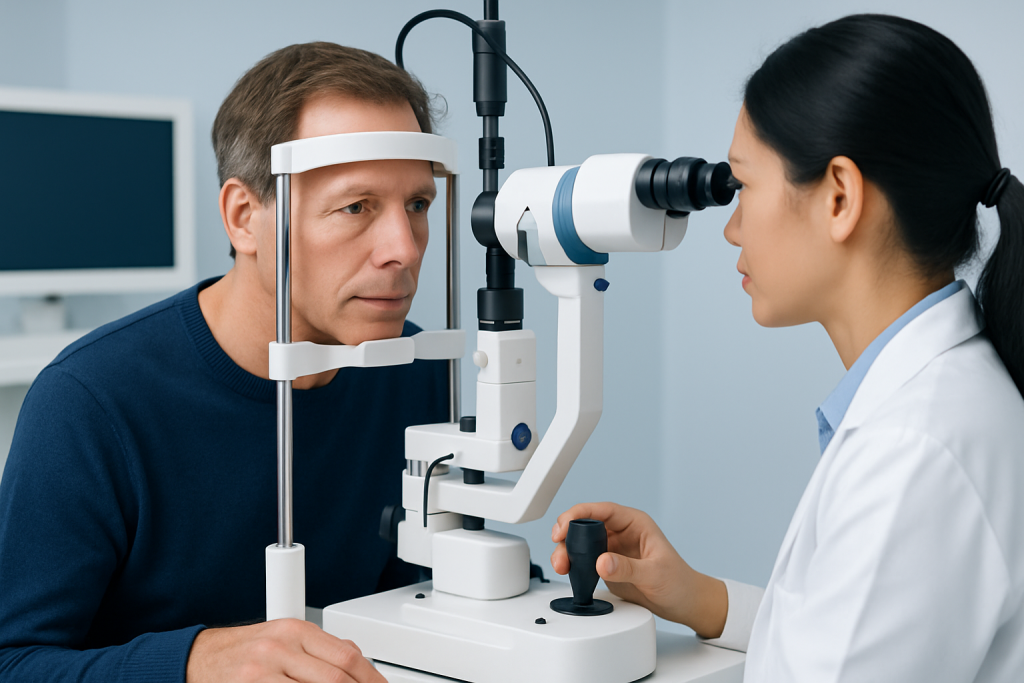
Laser peripheral iridotomy is generally an outpatient procedure. The eye is numbed with anesthetic drops, and drops may be used beforehand to make the pupil smaller and prepare the iris. The ophthalmologist may place a special contact lens on the eye with lubricating gel; this helps keep the eyelids open, focus the laser, and reduce eye movement.
While seated at the laser machine, the person looks in the direction requested by the clinician. The doctor applies a series of laser pulses to a selected area near the outer edge of the iris, usually beneath the upper eyelid where the opening is less noticeable. There may be brief flashes of light and a sensation of pressure or mild discomfort, but significant pain is not expected.
The laser itself commonly takes only minutes, although preparation, checks, and post-procedure observation make the visit longer. Eye pressure is often measured again afterward. The clinician may prescribe anti-inflammatory eye drops for a short period and, in some cases, temporary pressure-lowering drops.
The opening is very small and is intended to remain functional. At follow-up, the ophthalmologist confirms that it is open and assesses whether the drainage angle has widened. If the opening is not adequate or later closes, repeat laser treatment can sometimes be considered.
Benefits, Expected Results and Limits
The main benefit of iridotomy laser treatment is lowering the chance that pupillary block will cause sudden angle closure or contribute to ongoing angle narrowing. In an acute angle-closure situation, it can be an important part of preventing another pressure rise once the eye has been stabilized. In eyes at risk, it may protect vision by helping prevent damage from elevated eye pressure.
What is the success rate of laser iridotomy? Success is not best described by one number because the goal differs between patients. Technically, the procedure is usually able to create a patent, or open, iris passage. Clinically, it is considered effective when it relieves pupillary block and helps open the angle; however, some eyes remain narrow because of lens size, iris shape, or other anatomy.
An iridotomy does not reverse optic-nerve damage that has already occurred from glaucoma, and it does not eliminate every form of glaucoma risk. Some people still need pressure-lowering medication, closer glaucoma surveillance, laser treatment of the drainage angle, or lens surgery depending on their findings. Regular follow-up remains important after treatment for glaucoma and angle-related changes.
Will I see better after laser iridotomy? The procedure is designed primarily to improve fluid flow and protect the eye from pressure-related damage, not to sharpen eyesight. Vision often returns to its usual level after short-lived blurring from drops, light exposure, or mild inflammation. If a person has blurred vision from high pressure during an acute attack, vision may improve as the pressure is treated, but the outcome depends on the cause and whether any optic-nerve or corneal damage occurred.
Recovery Timeline and What Not to Do After an Iridotomy
How long does it take to recover from a laser peripheral iridotomy? Many people have mildly blurred vision, light sensitivity, redness, or a foreign-body sensation for several hours. Most can return to ordinary non-strenuous activities the next day, provided their ophthalmologist agrees. The small opening itself heals as intended, but follow-up evaluation is important to check eye pressure and confirm the opening remains clear.
Temporary visual effects can include glare, halos, lines, or a small sensation of extra light, particularly in certain lighting conditions. These effects often become less noticeable over time, but persistent or troublesome symptoms should be discussed with the eye specialist. The clinician may recommend anti-inflammatory drops for several days; they should be used exactly as directed.
What not to do after an iridotomy? A person should not drive until vision is clear and they feel safe to do so, particularly on the day of the procedure. They should avoid rubbing or pressing on the treated eye, skip swimming or hot tubs until the doctor says it is safe, and avoid strenuous exercise or heavy lifting for the period advised. Eye drops should not be stopped early or shared with others.
It is helpful to arrange transport home if vision may be blurred after dilation or treatment. Contact lenses should only be worn again when approved by the ophthalmologist. The exact iridotomy recovery time and aftercare instructions can vary according to the eye condition, medications used, and whether treatment was performed urgently.
Risks and Follow-Up Care
Laser peripheral iridotomy is widely used and generally well tolerated, but no procedure is completely without risk. Short-term effects can include temporary elevation in eye pressure, inflammation, blurred vision, mild discomfort, redness, or a small amount of bleeding from the iris. These are usually checked for and managed by the treating team.
Less commonly, people may experience persistent glare or visual disturbances, closure of the opening, corneal changes, or effects on nearby eye structures. Serious complications are uncommon, but the ophthalmologist explains individual risks before treatment. People who have advanced glaucoma or complex eye anatomy may require particularly close follow-up.
Follow-up visits allow the clinician to measure eye pressure, inspect the laser opening, and evaluate the angle and optic nerve. Even when the iridotomy is successful, routine eye examinations remain necessary. This is because angle closure can have more than one cause, and glaucoma may progress without noticeable early symptoms.
For people requiring coordinated assessment of narrow angles, glaucoma risk, and lens-related eye anatomy, Acibadem International’s multidisciplinary specialists and JCI-accredited hospitals provide diagnosis and treatment for international patients.
When to Seek Medical Care
Sudden severe eye pain, a red eye, headache, nausea or vomiting, rainbow-colored halos around lights, or rapidly reduced vision may indicate acute angle closure. These symptoms require urgent assessment at an emergency eye service or emergency department, especially when they occur together. Prompt treatment can lower eye pressure and help protect vision.
After laser treatment, the person should contact their ophthalmologist promptly if pain is worsening rather than improving, vision suddenly decreases, there is marked redness or discharge, or they develop significant nausea, vomiting, or severe headache. These symptoms do not necessarily mean a serious problem, but they should be assessed without delay.
People with a family history of angle-closure glaucoma, strong farsightedness, prior angle closure in one eye, or known narrow angles should keep recommended eye appointments even if they feel well. Narrow angles often cause no symptoms until pressure rises, so planned examinations are an important part of prevention.
Frequently asked questions
Is laser peripheral iridotomy painful?
Numbing drops are used before treatment, so most people do not feel significant pain. Some may notice pressure, brief stinging, or bright flashes during laser application. Mild irritation afterward is possible and usually temporary.
Is laser iridotomy performed on both eyes?
It may be performed on both eyes when both have narrow angles or a risk of pupillary block. Treatment may be completed on the same day or at separate appointments, depending on the clinician’s assessment. The plan is individualized for each person.
Can an iridotomy close after laser treatment?
In some cases, the small opening may become too small or close over time. Follow-up examinations allow the ophthalmologist to confirm that it remains open. If necessary, the laser procedure may be repeated.
Do I still need glaucoma checks after a successful iridotomy?
Yes. An iridotomy addresses pupillary block, but it may not correct all reasons for angle narrowing or glaucoma. Ongoing checks of eye pressure, the drainage angle, and the optic nerve help identify any further care needed.
Can I work the day after an iridotomy laser procedure?
Many people can return to desk work or routine daily activities the following day if vision is clear and they feel comfortable. Jobs involving driving, heavy physical work, dust exposure, or safety-sensitive tasks may require more individualized advice. The treating ophthalmologist’s instructions should take priority.
Does laser iridotomy remove a cataract?
No. Laser peripheral iridotomy creates a tiny opening in the iris and does not remove or treat a cataract. If the natural lens contributes significantly to angle crowding or vision problems, cataract or lens surgery may be discussed separately.
References
- American Academy of Ophthalmology
- National Eye Institute
- Glaucoma Research Foundation
- Royal College of Ophthalmologists
This article is for general information only and is not a substitute for professional medical advice. Please consult a qualified doctor about your individual situation.
Explore treatments in Turkey — costs, top hospitals & a free quote
JCI-accredited · board-certified surgeons · reply within 24h