Photodynamic Therapy for Skin Cancer: How It Works, Results and What to Expect

Photodynamic therapy uses a topical photosensitising medicine and controlled light to target abnormal surface skin cells. It is most often considered for actinic keratoses and selected superficial basal cell carcinomas or Bowen disease, depending on local guidance and lesion features.
Key Takeaways
- Photodynamic therapy uses a topical photosensitising medicine and controlled light to target abnormal surface skin cells.
- It is most often considered for actinic keratoses and selected superficial basal cell carcinomas or Bowen disease, depending on local guidance and lesion features.
- Treated skin commonly becomes red, swollen, crusted or peeling before it heals over the following days to weeks.
- Pain or burning during light exposure is common but usually temporary and can be managed by the treatment team.
- Regular skin checks remain important because treated areas can recur and new skin cancers may develop elsewhere.
Photodynamic therapy for skin cancer is a local treatment that combines a light-sensitive medicine with a specific light source to destroy abnormal cells near the skin surface. It may be suitable for certain precancerous lesions and selected superficial non-melanoma skin cancers, but it is not appropriate for every skin cancer type or depth.
Overview: how photodynamic therapy for skin cancer works
Photodynamic therapy for skin cancer, often called PDT, is a treatment that destroys abnormal cells using a light-sensitive medicine and a carefully chosen light source. The medicine is applied to the lesion and nearby skin, where it is preferentially taken up by rapidly growing abnormal cells. When the area is exposed to light, the medicine becomes active and produces a reaction that damages these cells.
PDT is mainly used for conditions close to the skin surface. These can include actinic keratoses, which are sun-damaged precancerous spots, and some superficial non-melanoma skin cancers. It is not a usual treatment for melanoma, and it may not be suitable for thicker, invasive, recurrent or high-risk lesions.
A dermatologist or skin cancer team confirms the diagnosis and assesses the lesion before recommending treatment. This is important because skin cancers can look similar but require different care. PDT may be discussed alongside other options such as surgery, topical medicines, cryotherapy or radiotherapy.
Who may be a candidate for PDT?
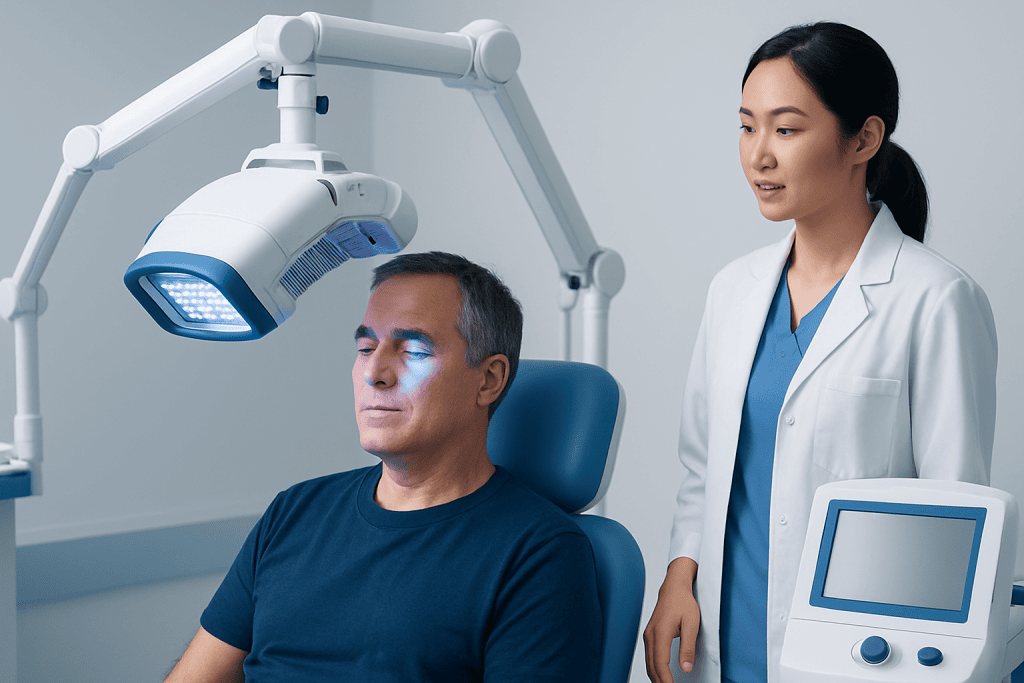
Suitability depends on the exact diagnosis, location, size, depth and number of lesions. PDT can be particularly useful when there are several superficial lesions in one sun-damaged area, such as the face, scalp, chest, forearms or lower legs. Treating an entire affected field may address visible lesions as well as some early abnormal cells in the surrounding skin.
Doctors may consider PDT for selected superficial basal cell carcinomas and squamous cell carcinoma in situ, also called Bowen disease. A biopsy may be needed if the diagnosis is uncertain, the lesion is thick, ulcerated, changing, or has features that suggest a more invasive cancer. Skin cancer assessment helps ensure the safest treatment plan.
PDT may be less suitable for deeply invasive cancers, lesions in certain high-risk locations, or cancers that have returned after treatment. People with sensitivity to light, certain rare porphyria disorders, or allergies to treatment ingredients should tell their doctor. Pregnancy, breastfeeding, medicines and other health conditions should also be reviewed individually.
Step by step: what happens during the procedure
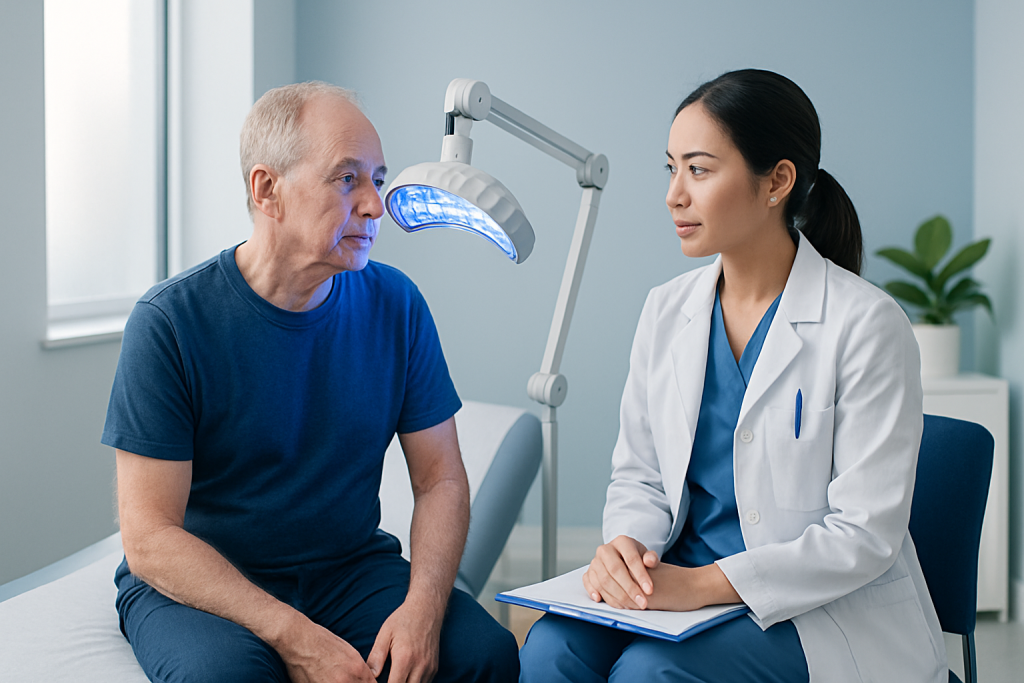
The appointment usually begins with examination and preparation of the treatment area. The clinician may gently remove scale, crust or thickened surface skin so that the medicine can penetrate more effectively. A topical photosensitising cream is then applied and covered with a dressing for a set period, often several hours, although protocols vary.
After the incubation period, the cream is removed and the skin is exposed to a red light or daylight-based method, depending on the treatment plan. During light treatment, patients may feel warmth, stinging, prickling or burning. The team can pause treatment, use cooling measures or adjust comfort strategies if needed.
One treatment session may be enough for some lesions, while others need a second session after an interval. The clinician will explain the expected schedule and arrange review. For patients considering specialist care, photodynamic therapy can be planned after a dermatology evaluation and diagnostic confirmation.
What will my face look like after photodynamic therapy?
When PDT is performed on the face, the treated area commonly looks red and feels tender soon afterward. Swelling can occur, especially around the eyes and cheeks, and it may be more noticeable during the first few days. Some people develop small blisters, weeping, crusting or peeling as the treated cells break down and the skin repairs itself.
The appearance can temporarily resemble a strong sunburn. Most visible reactions settle gradually over one to two weeks, although redness may last longer in some people and healing can take several weeks depending on the treated area, the type of PDT and individual skin response.
The treatment team will provide wound-care instructions. In general, patients should keep the area clean, avoid picking at crusts, use recommended moisturisers or dressings, and protect healing skin from sunlight. Cosmetics should only be restarted when the clinician advises that the skin has healed sufficiently.
Recovery timeline and how to know if photodynamic therapy is working
In the first 24 to 48 hours, soreness, redness and swelling are common. During the following days, the area may darken, crust or peel. New pink skin may appear as healing progresses. Exact timing varies, so a slower recovery does not automatically mean that treatment has failed.
It can be difficult to judge the result too early because inflammation and crusting may temporarily hide the treated lesion. A successful response is usually assessed at a planned follow-up appointment after the skin has had time to heal. The clinician looks for resolution of the abnormal area and may use dermoscopy, photographs or a biopsy if there is any uncertainty.
Signs that need review include a persistent sore, thickening, bleeding, continued growth, or a lesion that does not clear after the expected healing period. Even when a treated area appears clear, ongoing surveillance is important because new lesions can develop in sun-damaged skin.
What are the downsides of photodynamic therapy?
The main drawback is discomfort during illumination. Burning or stinging can be significant for some patients, particularly when larger areas are treated. Redness, swelling, crusting, itchiness and temporary changes in skin colour are also common during recovery.
PDT does not suit every lesion and may have a higher chance of recurrence than surgical removal for some types of skin cancer. Surgery also provides tissue that can be examined to confirm complete removal, whereas PDT does not remove the lesion in the same way. For this reason, careful lesion selection and follow-up are essential.
Rarely, patients may experience infection, prolonged inflammation, scarring or persistent pigment change. The treated skin is unusually sensitive to light immediately after therapy, so strict avoidance of bright sunlight and intense indoor light for the period advised by the care team is important. Patients should contact their clinician if pain worsens, swelling becomes severe, pus develops or they feel unwell.
What is the success rate of photodynamic therapy?
There is no single success rate for photodynamic therapy because outcomes vary according to the condition treated, lesion thickness, location, treatment method and follow-up period. PDT can clear many appropriately selected actinic keratoses and superficial lesions, but clearance and recurrence rates differ across studies and clinical settings.
For selected superficial basal cell carcinomas and Bowen disease, PDT can be an effective option when used according to specialist guidance. However, surgery is often preferred for lesions that are invasive, high risk, poorly defined, recurrent or located where complete cancer clearance is especially important.
The most meaningful measure of success is not only how the skin looks after healing, but whether the lesion remains clear over time. Follow-up appointments allow the dermatologist to check the response and recommend further treatment if any abnormal tissue remains or returns.
When to seek medical care
A person should arrange a medical assessment for a new or changing skin lesion, especially one that bleeds, repeatedly crusts, does not heal, becomes painful, grows, or changes in colour or shape. These signs do not always mean cancer, but they should be checked rather than self-treated.
After PDT, prompt clinical advice is appropriate for severe or increasing pain, rapidly spreading redness, fever, pus-like drainage, marked swelling, or a wound that appears not to be healing. It is also important to attend all scheduled reviews, even if the treated skin looks clear.
Sun protection is an important part of long-term care. Seeking shade, wearing protective clothing and using broad-spectrum sunscreen as advised can reduce further ultraviolet damage. Acibadem International’s multidisciplinary specialists and JCI-accredited hospitals support international patients with dermatology assessment and treatment planning for skin cancer.
Frequently asked questions
Is photodynamic therapy painful?
Many people feel burning, stinging, tingling or heat while the light is being applied. The intensity varies by person and treatment area. The clinical team can use pauses, cooling and other comfort measures to help manage symptoms.
How long does it take to heal after photodynamic therapy?
Early redness and soreness often peak in the first few days. Crusting and peeling may continue for one to two weeks, while complete settling can take longer. Healing time depends on the treated site, size of the area and individual skin response.
Can photodynamic therapy treat melanoma?
Photodynamic therapy is not a standard treatment for melanoma. Melanoma needs prompt assessment and treatment by an experienced specialist team, most often involving surgical removal. The appropriate approach depends on the type and stage of melanoma.
Will I need more than one PDT treatment?
Some lesions respond after one session, while others require repeat treatment. The need for another session depends on the diagnosis, thickness and response after healing. A clinician will assess the area at follow-up and advise on next steps.
Can skin cancer come back after photodynamic therapy?
Yes. A treated lesion can persist or recur, and new sun-related lesions may form elsewhere. Regular follow-up and self-awareness of changing skin are therefore important after PDT.
What should I avoid after photodynamic therapy?
Patients should avoid sunlight and other strong light exposure for the period specified by their treatment team, as the photosensitising medicine can make skin temporarily very light-sensitive. They should also avoid picking or scrubbing the treated area. Individual aftercare instructions should take priority.
References
- American Academy of Dermatology
- National Cancer Institute
- National Health Service
- British Association of Dermatologists
- European Society for Medical Oncology
This article is for general information only and is not a substitute for professional medical advice. Please consult a qualified doctor about your individual situation.
Skin Cancer in Turkey — costs, top hospitals & a free quote
JCI-accredited · board-certified surgeons · reply within 24h

More from the Health Library



Related Specialists

Dr. Fatma Kutlusoy Güçlü
Gynecology & Obstetrics
Dr. Zübeyr Kavcar
Pediatrics
A. Sercan Soyarslan
Physical Medicine & Rehabilitation
Assoc. Prof. Dr. Serdar Baylançiçek
Otorhinolaryngology