Percutaneous Endoscopic Gastrostomy vs Gastrostomy Tube: Differences Explained
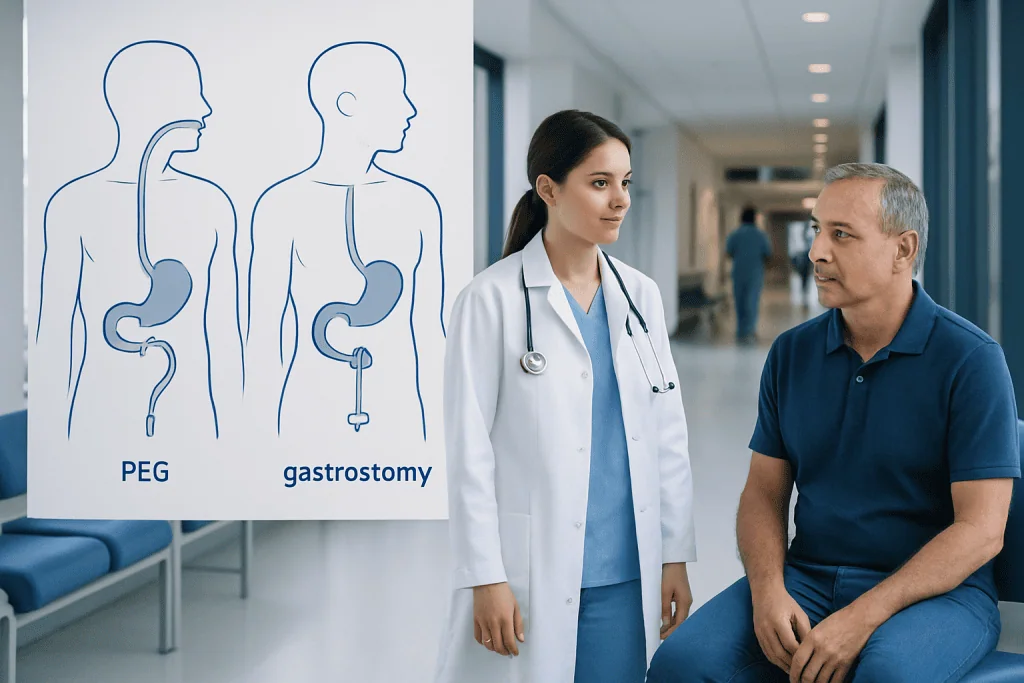
PEG describes a common endoscopic method for placing a gastrostomy tube; it is not a different type of tube. A gastrostomy tube provides nutrition, fluids and medicines directly into the stomach when swallowing is unsafe or insufficient.
Key Takeaways
- PEG describes a common endoscopic method for placing a gastrostomy tube; it is not a different type of tube.
- A gastrostomy tube provides nutrition, fluids and medicines directly into the stomach when swallowing is unsafe or insufficient.
- The best feeding access depends on the expected duration of need, digestive function, aspiration risk and the person’s overall health.
- Nasogastric tubes are usually used for short-term feeding, while PEG feeding is often considered when longer-term access is needed.
- G tubes end in the stomach, whereas J tubes extend into or are placed directly in the small intestine.
- Tube-feeding concerns such as leakage, blockage, pain, fever or breathing symptoms should be assessed promptly by a healthcare professional.
Percutaneous endoscopic gastrostomy (PEG) is a procedure used to place a gastrostomy tube through the abdominal wall and into the stomach. A gastrostomy tube, often called a G tube, is the feeding tube itself and may be placed by PEG or by other surgical or radiologic methods.
Overview: PEG and gastrostomy tubes
Percutaneous endoscopic gastrostomy vs gastrostomy tube is mainly a comparison between a placement technique and the device that results from it. A percutaneous endoscopic gastrostomy, or PEG, is a procedure in which a clinician uses an endoscope to guide placement of a feeding tube through the skin of the abdomen into the stomach. A gastrostomy tube is the general name for any tube that enters the stomach through the abdominal wall.
In everyday conversation, people may say “PEG tube” to mean both the procedure and the tube. This is understandable, but medically a PEG tube is specifically a gastrostomy tube placed using an endoscope. Other gastrostomy tubes may be inserted with X-ray guidance, during surgery, or through an existing tract after a PEG has been placed.
Gastrostomy feeding is a form of enteral nutrition. It can help provide liquid nutrition, water and prescribed medicines when a person cannot safely swallow enough by mouth but their stomach and intestines can digest and absorb nutrients. The tube may be needed temporarily or for longer-term support, depending on the underlying condition.
What is the difference between Percutaneous Endoscopic Gastrostomy (PEG) and a gastrostomy tube?
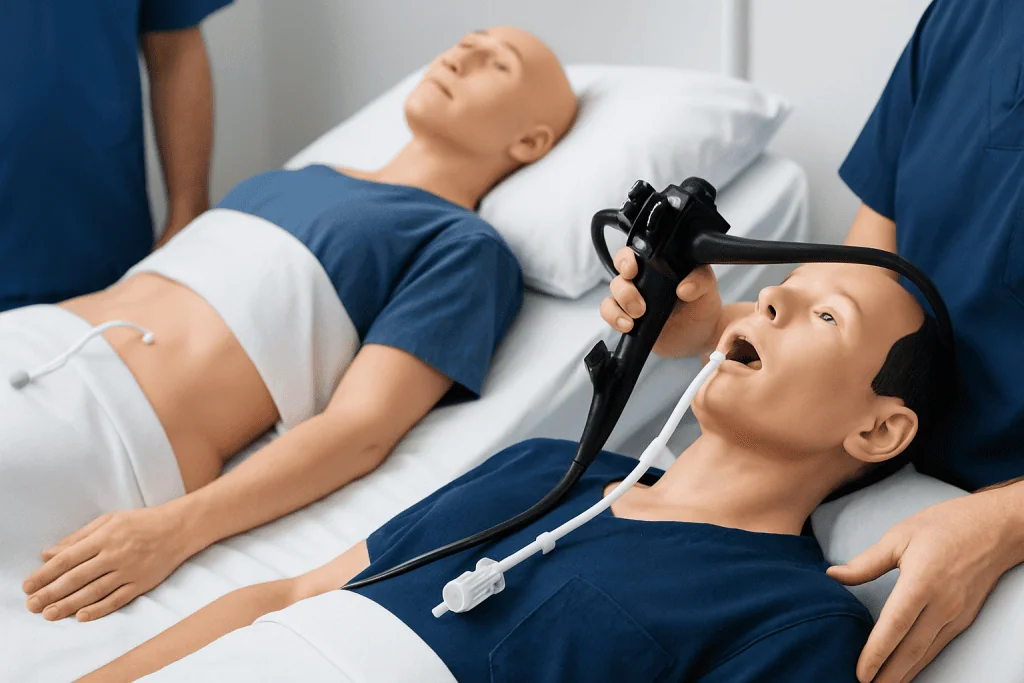
The difference is that PEG refers to how the tube is placed, while a gastrostomy tube refers to what is placed. During PEG placement, a flexible camera called an endoscope is passed through the mouth into the stomach. The clinical team uses the view from the endoscope to identify a suitable location and guide insertion of the tube through the abdominal wall.
A gastrostomy tube may be a PEG tube, but it can also be placed by other approaches. For example, a radiologically inserted gastrostomy uses imaging guidance, and a surgical gastrostomy is placed during an operation. Once the tract has healed, the original PEG tube may sometimes be replaced with a low-profile button or another type of gastrostomy device.
The terms are therefore related rather than competing options. The most suitable placement approach depends on anatomy, prior abdominal surgery, the reason for feeding support, sedation considerations, and whether endoscopy can be performed safely.
How feeding tubes work and who may benefit
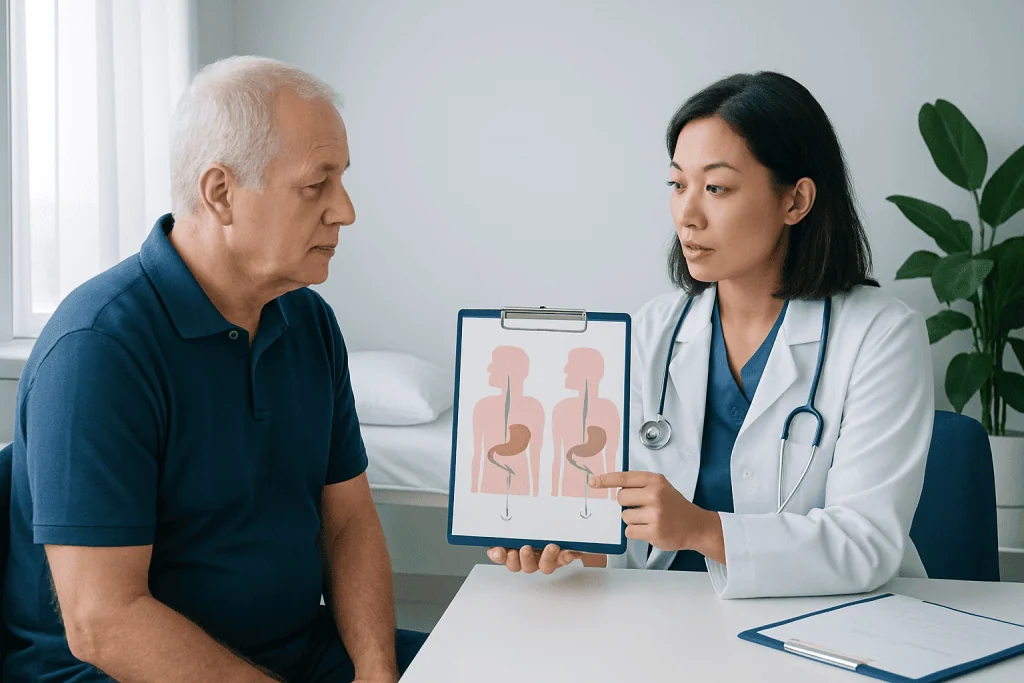
A gastrostomy tube has an external port outside the abdomen and an internal retention device that keeps it in place in the stomach. Specially prepared liquid formula, water and some medicines can be given through the tube using a syringe, gravity feeding set or pump. A dietitian usually helps select the nutrition plan, including the feeding schedule, formula and hydration needs.
Clinicians may consider gastrostomy feeding for someone expected to need nutritional support beyond the short term. Examples include swallowing difficulties after stroke, certain neurological conditions, head and neck cancer treatment, severe injury, or other illnesses that prevent adequate oral intake. The tube can supplement food eaten by mouth or provide most nutritional intake, depending on swallowing safety and medical needs.
Before recommending a PEG or another gastrostomy approach, the team considers the person’s goals of care, likely duration of feeding support, nutritional status, ability to tolerate sedation, stomach function and risks related to the underlying illness. Feeding tubes do not treat the cause of swallowing difficulty; they are supportive tools that can help maintain nutrition and hydration.
- Swallowing assessment may be needed when aspiration is a concern.
- Blood tests and medication review may be arranged before placement.
- Blood-thinning medicines require individualized planning to reduce bleeding risk.
- A specialist may recommend another route if the stomach cannot be used safely.
PEG procedure: step by step and recovery timeline
PEG placement is commonly performed in an endoscopy unit or hospital setting. The person is generally asked not to eat or drink for a period beforehand, following the instructions of the clinical team. Sedation, local anesthetic and monitoring are used according to individual needs, and preventive antibiotics may be given in appropriate situations.
During the procedure, the endoscope is passed into the stomach to guide placement. After the skin and deeper tissues are numbed, a small opening is made in the abdomen and the feeding tube is placed into the stomach. The tube is secured, the site is covered with a dressing, and the person is observed afterward for pain, bleeding, breathing changes or other early concerns.
Feeding may begin after the care team confirms that it is appropriate, often within the first day, though timing varies. Mild soreness around the site can occur initially and usually improves over several days. The skin tract generally matures over several weeks; during this period, tube movement, replacement and site care should follow the treating team’s specific guidance.
Long-term care includes cleaning and drying the skin around the tube, flushing it as instructed, checking the external length or position when advised, and using only prescribed feeding products and medication techniques. A dietitian, gastroenterologist, nurse, speech and language therapist, surgeon and other professionals may all contribute to safe care.
Benefits, risks and alternatives
A gastrostomy tube may reduce the burden of repeated nasal tube placement and can provide a more practical route for longer-term nutrition, fluids and medicines. It can also support recovery when poor intake is expected during treatment. For some people, it may make home nutrition management more feasible with training for the person and caregivers.
Like all procedures, PEG placement has risks. Possible complications include discomfort, skin irritation, leakage, infection around the site, bleeding, tube blockage, accidental tube dislodgement, aspiration and, less commonly, injury to internal organs or serious infection. Individual risk is influenced by overall health, anatomy, medications and the reason a tube is needed.
Alternatives may include oral nutrition support, texture-modified food and drinks, swallowing rehabilitation, temporary nasogastric feeding, nasojejunal feeding, radiologic gastrostomy, surgical gastrostomy or jejunal feeding. A nutrition and swallowing assessment can help clarify which option best fits the person’s needs and goals.
For people considering specialist assessment and management, gastrostomy tube placement and care should be discussed with a qualified clinical team. The decision should include a clear conversation about expected benefits, potential burdens and how feeding support fits into the person’s overall treatment plan.
What is safer, ngt or PEG?
Neither a nasogastric tube (NGT) nor a PEG is universally safer. Safety depends on why feeding is needed, how long it is expected to continue, the person’s swallowing and airway protection, digestive function, medical stability and ability to care for the device.
An NGT passes through the nose, down the throat and into the stomach. It is commonly used for short-term nutrition or while clinicians assess recovery of swallowing. It avoids an abdominal procedure, but it can be uncomfortable, may be displaced, and can irritate the nose, throat or esophagus. Correct placement must be confirmed before use according to local clinical protocols.
A PEG requires an invasive procedure and has procedure-related risks, but it is often more comfortable and stable for longer-term feeding. Importantly, neither route completely eliminates aspiration risk. People who have significant reflux, poor stomach emptying or high aspiration risk may need an individualized assessment, including consideration of feeding beyond the stomach.
How to tell the difference between G and J tube
A G tube ends in the stomach. It is used when the stomach can receive and process feeds safely. A J tube ends in the jejunum, which is part of the small intestine. A jejunal tube may be placed directly through the abdominal wall or as a longer extension that passes through a gastrostomy tube and into the small intestine.
The external device may provide clues, but appearance alone is not always reliable. Some tubes have separate labeled ports, such as a gastric port and a jejunal port, while others have only one port. A healthcare professional can confirm the tube type by reviewing medical records, checking tube markings or using imaging if position is uncertain.
J tubes are generally used when stomach feeding is not well tolerated or is unsuitable, such as with certain problems affecting stomach emptying or when a clinician believes small-bowel feeding is preferable. Jejunal feeding often requires a pump and continuous slower delivery because the jejunum does not hold large feed volumes in the same way as the stomach.
When to seek medical care
Medical advice should be sought promptly if there is increasing redness, swelling, warmth, pus-like drainage, worsening pain, fever, persistent leakage, vomiting, abdominal swelling, repeated diarrhea, a blocked tube that does not clear with prescribed measures, or new difficulty giving feeds or medicines. These symptoms do not always indicate a serious problem, but early assessment can help prevent complications.
Urgent medical care is important if a tube comes out, especially within the first few weeks after placement, because the tract may close quickly and replacement should not be attempted without professional direction. Emergency evaluation is also needed for severe abdominal pain, significant bleeding, fainting, breathing difficulty, chest pain, confusion or signs of severe illness.
Acibadem International’s multidisciplinary specialists and JCI-accredited hospitals support international patients who need evaluation and treatment related to feeding access. Ongoing questions about feeding tolerance, tube care or changes in swallowing should be discussed with the treating clinician or nutrition team.
Frequently asked questions
What is the difference between PEG and PEG?
Usually, there is no difference: “PEG” is the abbreviation for percutaneous endoscopic gastrostomy. Some people use “PEG” to refer to the placement procedure, while others use it to refer to the feeding tube placed by that procedure. In clinical documentation, the context usually clarifies whether the procedure or the device is being discussed.
Is a PEG tube the same as a G tube?
A PEG tube is a type of G tube because it enters the stomach through the abdominal wall. However, not every G tube is a PEG tube, since a gastrostomy tube can be placed using radiologic or surgical methods as well. The tube may later be exchanged for another gastrostomy device after the tract has healed.
How long does a PEG tube stay in place?
A PEG tube can remain in place for as long as nutritional support is needed, provided it is functioning well and the site remains healthy. The original tube may need planned replacement depending on its type, condition and local clinical practice. The treating team can advise on expected tube lifespan and replacement planning.
Can a person eat and drink with a gastrostomy tube?
Some people can continue eating or drinking by mouth, while others need all nutrition through the tube. This depends on the reason for the tube and whether swallowing is safe. A swallowing specialist, doctor and dietitian can provide individualized guidance.
Does a feeding tube prevent aspiration?
No. A feeding tube does not fully prevent aspiration, because saliva, refluxed stomach contents or oral secretions may still enter the airway. Aspiration risk should be assessed individually, and the care plan may include positioning, feeding adjustments and swallowing recommendations.
What should happen if a G tube falls out?
The person or caregiver should contact the treating team urgently, especially if the tube was placed recently. The opening can narrow or close quickly, and replacing a tube before the tract has matured can be unsafe. The clinician will advise where and how replacement should be performed.
References
- American Society for Gastrointestinal Endoscopy
- European Society for Clinical Nutrition and Metabolism
- National Institute of Diabetes and Digestive and Kidney Diseases
- National Health Service
- Merck Manual Consumer Version
This article is for general information only and is not a substitute for professional medical advice. Please consult a qualified doctor about your individual situation.
Persistent digestive symptoms? Get evaluated in Turkey
JCI-accredited · board-certified surgeons · reply within 24h
Add us as a Preferred Source to see more of our trusted health content across Google Search, AI Overviews and Discover.