Christmas Tree Cataract: An Evidence-Based Patient Guide
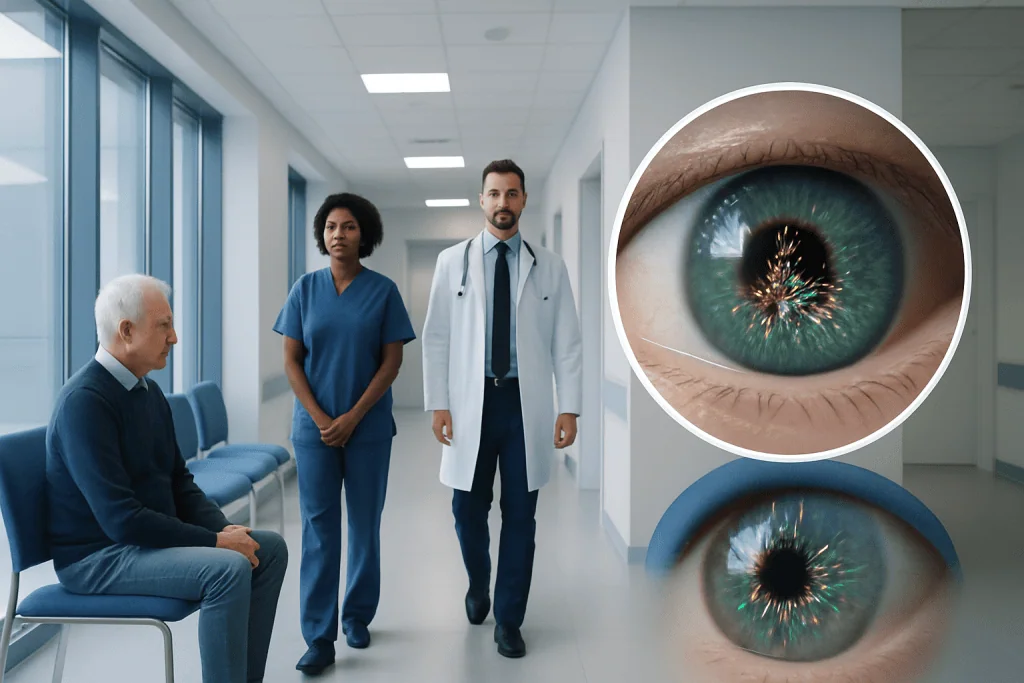
Christmas tree cataracts contain reflective crystals in the eye’s natural lens, producing a distinctive multicolored appearance. They are sometimes associated with myotonic dystrophy, but they can also occur without this condition.
Key Takeaways
- Christmas tree cataracts contain reflective crystals in the eye’s natural lens, producing a distinctive multicolored appearance.
- They are sometimes associated with myotonic dystrophy, but they can also occur without this condition.
- Treatment is based on visual symptoms and daily-life impact, not on the appearance of the cataract alone.
- Cataract surgery is the definitive treatment when lens clouding interferes with vision or important activities.
- Regular eye examinations are important, especially when symptoms change or a neurological or muscle condition is suspected.
A christmas tree cataract is an uncommon type of lens opacity in which tiny, shimmering crystals create a colorful, needle-like pattern. It may not affect vision at first, but an eye examination can determine whether monitoring or cataract surgery is appropriate.
Overview: what is a christmas tree cataract?
A christmas tree cataract is a distinctive type of cataract in which small, highly reflective crystals form within the natural lens of the eye. Under an eye doctor’s examination light, these crystals can appear red, green, gold, blue, or other colors, resembling tinsel or lights on a Christmas tree. The name describes the appearance; it does not mean the cataract is more dangerous than other cataracts.
A cataract is any loss of clarity in the lens, which normally focuses light onto the retina. A christmas tree cataract may be found during a routine examination before it causes noticeable symptoms. If the lens changes become dense enough to affect sight, a person may experience blur, glare, reduced contrast, or difficulty with reading and night driving.
These cataracts are often described in connection with myotonic dystrophy, an inherited condition that can affect muscles and other body systems. However, the finding is not diagnostic on its own: some people with a christmas tree cataract do not have myotonic dystrophy or another underlying disorder. An ophthalmologist can consider the whole clinical picture and advise whether additional assessment is needed.
Symptoms and the outlook for vision
The visible crystals themselves may not cause symptoms. When a christmas tree cataract affects the central or functionally important part of the lens, symptoms can be similar to those of other cataracts: gradually blurred or dim vision, increased sensitivity to bright light, halos or glare around lights, fading of colors, double vision in one eye, and frequent changes in glasses prescription.
Symptoms usually develop gradually, although the rate of change varies. Vision can also be affected by other common eye conditions, such as dry eye, refractive error, glaucoma, or retinal disease. For this reason, a change in sight should not automatically be attributed to the cataract without a comprehensive eye examination.
What is the prognosis for Christmas tree cataract? The outlook is generally good. Many people maintain useful vision for years with observation and updated glasses, while those whose cataract becomes visually significant can usually have it treated with cataract surgery. Prognosis also depends on overall eye health and, where relevant, on any associated systemic condition.
Causes, aging, and christmas tree cataract association

The exact process behind the crystalline appearance is not fully understood. It is thought to involve changes in lens proteins and the formation of cholesterol-rich crystals that reflect light. Like other cataracts, lens changes become more likely with age, but christmas tree cataracts can occur at different ages and may be recognized earlier in people with certain inherited conditions.
The best-known christmas tree cataract association is myotonic dystrophy, particularly myotonic dystrophy type 1. This condition may also involve muscle stiffness or weakness, fatigue, heart rhythm concerns, endocrine changes, or early balding, although symptoms vary greatly. An eye finding alone cannot confirm the diagnosis, and not everyone with myotonic dystrophy develops this lens pattern.
Other contributors to cataract development more broadly include diabetes, long-term corticosteroid use, smoking, significant ultraviolet exposure, eye injury, previous eye inflammation, and prior eye surgery. A clinician may ask about medical history, medications, family history, and any muscle symptoms to decide whether a broader medical evaluation would be useful.
- Do not stop prescribed medicines because of cataract concerns without discussing this with the prescribing clinician.
- Tell the eye doctor about a family history of myotonic dystrophy or symptoms such as muscle stiffness, weakness, or unexplained daytime sleepiness.
- Both eyes should be examined, even when symptoms are present in only one eye.
Diagnosis and monitoring
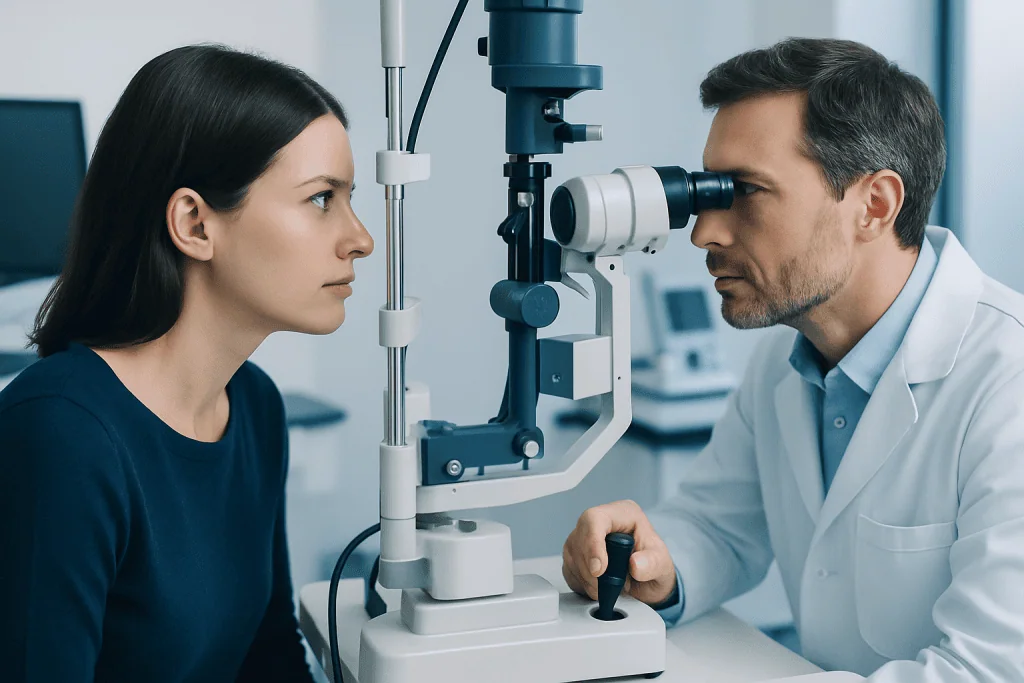
An ophthalmologist diagnoses a christmas tree cataract during a dilated eye examination. After pupil-dilating drops are used, the doctor examines the lens with a slit lamp, a microscope that provides a detailed view of the front of the eye. The colorful crystalline pattern is usually recognizable during this assessment.
The examination also checks whether the cataract is actually responsible for visual symptoms. Visual-acuity testing, refraction, eye-pressure measurement, and examination of the retina and optic nerve can identify other issues that may influence vision or surgical planning. Imaging or further tests may be used if the retina cannot be clearly viewed through the lens or if another eye condition is suspected.
If there are features suggesting myotonic dystrophy or another systemic condition, the ophthalmologist may recommend coordination with a primary care doctor, neurologist, genetic specialist, or cardiologist. This is a precautionary, individualized step rather than a conclusion based solely on the cataract’s appearance.
What are the treatment options for Christmas tree cataracts?
Christmas tree cataract treatment depends on how much the lens change affects a person’s daily life. If vision remains good, regular monitoring and an updated glasses prescription may be all that is needed. Brighter task lighting, anti-glare strategies, and avoiding difficult driving conditions when vision is impaired can help some people manage mild symptoms.
No eye drop, vitamin, or medication has been proven to dissolve the crystals or reverse an established cataract. When the cataract causes troublesome blur, glare, or loss of independence, surgery is the only definitive way to restore lens clarity. The decision is personal and is usually based on visual function rather than a particular cataract grade.
What vitamin prevents cataracts? No vitamin has been shown to reliably prevent cataracts in all people or to remove an existing cataract. A balanced diet rich in fruits, vegetables, whole grains, and healthy protein supports general health, but supplements should not be viewed as a substitute for eye care. People considering supplements should discuss them with a qualified clinician, especially if they have medical conditions or take regular medicines.
Protecting the eyes from ultraviolet light with suitable sunglasses, not smoking, managing diabetes and other long-term conditions, and attending eye examinations may support eye health. These measures cannot guarantee that a cataract will not develop or progress.
Christmas tree cataract surgery: how it works, candidacy, and recovery
Christmas tree cataract surgery uses the same established approach used for most visually significant cataracts. During phacoemulsification, the surgeon makes very small openings in the eye, breaks up and removes the cloudy natural lens using ultrasound energy, and replaces it with a clear artificial intraocular lens. It is commonly performed as an outpatient procedure with local anesthetic eye drops and sometimes light sedation.
A person may be a candidate when the cataract limits reading, work, driving, hobbies, mobility, or other valued activities, or when it prevents the eye doctor from monitoring or treating another eye disease. Preoperative measurements help select an intraocular lens and plan the procedure. Existing eye disease, general health, medications, and possible myotonic dystrophy should all be discussed, because they can affect anesthetic and perioperative planning.
On the day of surgery, the eye is prepared and numbed, the cloudy lens is removed, and the artificial lens is placed inside the lens capsule. The procedure itself is often brief, but time is also needed for preparation and observation afterward. Patients typically need someone to take them home and should follow their surgeon’s instructions about drops, activity, and follow-up appointments.
Vision often begins improving within days, but stabilization can take several weeks. Temporary blur, light sensitivity, mild irritation, and awareness of the eye are common early on. Benefits can include clearer vision, less glare, and improved contrast; risks, though uncommon, include infection, inflammation, pressure changes, retinal swelling or detachment, bleeding, lens-position problems, and a need for additional treatment. The surgeon will explain individual risks and expected outcomes before surgery.
What doctors don’t tell you about cataract surgery—and when to seek medical care
What doctors don’t tell you about cataract surgery? Good surgical counseling should include practical realities as well as benefits. Cataract surgery replaces the lens but does not treat every cause of reduced vision, so macular degeneration, glaucoma, diabetic eye disease, corneal disease, or optic nerve problems may limit the final result. It is also important to discuss whether glasses may still be needed for reading, distance, or both after an intraocular lens is chosen.
Some people later develop clouding of the capsule that holds the artificial lens, sometimes called a secondary cataract. This is not the original cataract returning; it can often be treated with a short laser procedure when it becomes visually significant. Expectations about recovery, eye drops, restrictions, and follow-up are best clarified before surgery.
Routine medical care is appropriate for gradual vision changes or a cataract found during an eye examination. Urgent assessment is needed for sudden vision loss, a curtain or shadow in vision, new flashes with many floaters, severe eye pain, marked redness, nausea with eye pain, or a sudden major change after eye surgery. These symptoms may have causes other than cataract and should be assessed promptly.
Acibadem International’s multidisciplinary specialists and JCI-accredited hospitals can evaluate cataracts and coordinate care for international patients when associated medical conditions require broader assessment.
Frequently asked questions
Is a christmas tree cataract rare?
Yes, the classic multicolored crystalline appearance is less common than the usual age-related cataract patterns. It may be noticed incidentally during a slit-lamp examination. Its presence should be assessed in the context of the person’s age, symptoms, and medical history.
Does a christmas tree cataract always mean myotonic dystrophy?
No. Although there is a recognized association with myotonic dystrophy, a christmas tree cataract alone does not diagnose that condition. An ophthalmologist may ask about family history and symptoms, and may recommend further medical assessment when appropriate.
Can glasses improve vision from a christmas tree cataract?
Glasses can help when some of the visual change is due to an updated refractive error. They cannot remove the lens crystals or reverse cataract-related clouding. If glare or blur continues to interfere with daily life despite glasses, cataract surgery may be discussed.
Is christmas tree cataract surgery different from ordinary cataract surgery?
The core procedure is generally the same: the cloudy natural lens is removed and replaced with an artificial intraocular lens. The surgeon will tailor planning to the individual eye and any other health conditions. If myotonic dystrophy is known or suspected, the wider care team may also consider this in perioperative planning.
Can a christmas tree cataract go away on its own?
An established cataract does not usually clear on its own. If it is not affecting vision, it can often be safely monitored with regular eye examinations. Surgery is considered when visual symptoms or another eye-care need justify it.
When should someone arrange an eye examination?
An appointment should be arranged for gradual blurred vision, glare, trouble with night driving, changes in color perception, or frequent changes in glasses prescription. Sudden vision loss, severe pain, or flashes and floaters with a curtain-like shadow need urgent assessment. Early evaluation helps identify whether the cause is cataract or another eye condition.
References
- American Academy of Ophthalmology
- National Eye Institute
- Mayo Clinic
- National Organization for Rare Disorders
- Merck Manual Professional Edition
This article is for general information only and is not a substitute for professional medical advice. Please consult a qualified doctor about your individual situation.
Explore treatments in Turkey — costs, top hospitals & a free quote
JCI-accredited · board-certified surgeons · reply within 24h
Check your numbers in seconds
BMI, calories, due date, blood pressure and 30+ more clinical calculators — free, instant, doctor-reviewed ranges.