Prostate Surgery Options: Procedure, Recovery and Results

Surgery may treat urinary obstruction from benign prostate enlargement or remove cancer confined to the prostate. Transurethral procedures treat enlarged prostate through the urethra and do not usually remove the entire prostate.
Key Takeaways
- Surgery may treat urinary obstruction from benign prostate enlargement or remove cancer confined to the prostate.
- Transurethral procedures treat enlarged prostate through the urethra and do not usually remove the entire prostate.
- Radical prostatectomy removes the prostate and seminal vesicles, most often for selected people with localized prostate cancer.
- Recovery commonly involves temporary urinary changes; recovery of continence and erections can take months and varies between individuals.
- PSA follow-up is important after prostate cancer surgery because PSA should become very low or undetectable after the prostate is removed.
Prostate surgery options range from tissue-removing procedures for urinary symptoms caused by an enlarged prostate to prostate removal for localized prostate cancer. The right approach depends on the diagnosis, prostate anatomy, symptom severity, cancer characteristics, overall health, and personal priorities regarding urinary and sexual function.
Overview: choosing among prostate surgery options
Prostate surgery options are selected according to the problem being treated. For benign prostatic hyperplasia (BPH), also called enlarged prostate, surgery aims to improve urine flow by removing, vaporizing, or reshaping tissue that blocks the urethra. For prostate cancer, surgery may involve removing the whole prostate gland and nearby tissues to treat cancer that appears confined to the prostate.
A urologist considers urinary symptoms, prostate size and shape, medications already tried, bladder and kidney function, imaging and test findings, age, general health, and personal preferences. Not every person with urinary symptoms or prostate cancer needs surgery. Active surveillance, medicines, radiation treatment, and other minimally invasive approaches may be appropriate in some circumstances.
The two goals should be kept distinct: procedures for BPH improve obstruction but do not treat prostate cancer, while radical prostatectomy is a cancer operation and has different recovery considerations. Evaluation may also identify related conditions, such as prostate cancer, that require a different treatment plan.
How procedures work and who may be a candidate
For enlarged prostate, a person may be considered for a procedure when symptoms remain troublesome despite lifestyle changes or medication, when urinary retention occurs, or when obstruction contributes to recurrent urinary infections, bladder stones, bleeding, or kidney problems. Common procedures include transurethral resection of the prostate (TURP), laser procedures such as holmium laser enucleation of the prostate (HoLEP), photoselective vaporization, prostate aquablation, and selected implant or thermal treatments.
Most BPH procedures are performed through instruments passed through the urethra, so there is no external incision. TURP removes obstructing tissue with an electrically powered loop. Laser enucleation separates enlarged tissue from the prostate capsule and removes it, while vaporization destroys tissue to widen the urinary channel. The best option depends partly on prostate size, use of blood-thinning medicine, anatomy, and the need to obtain tissue for laboratory examination.
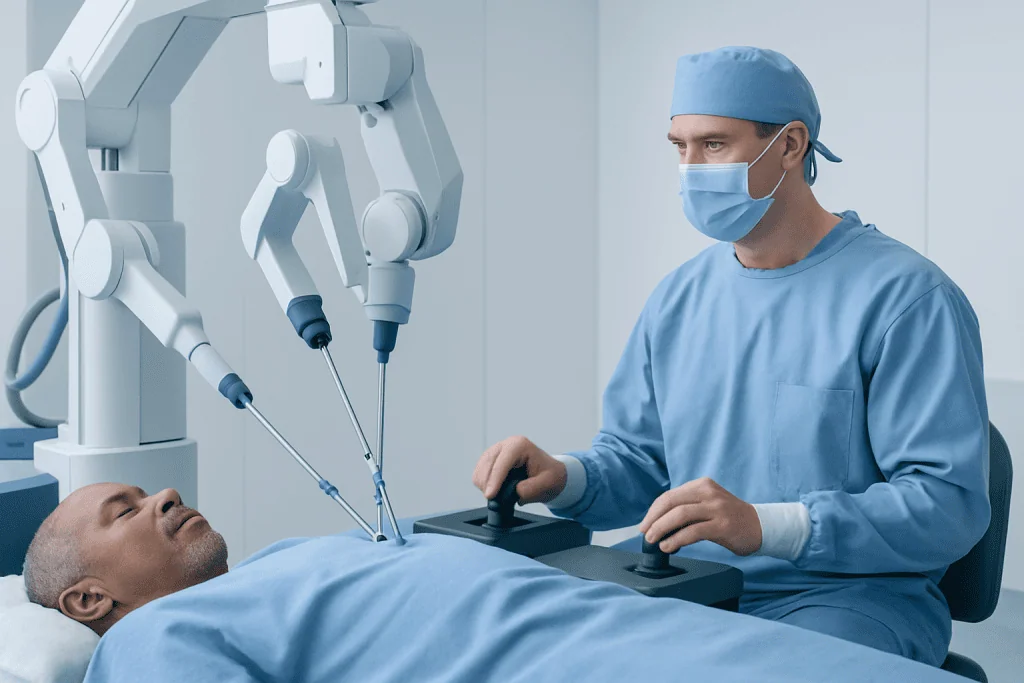
Radical prostatectomy is generally considered for appropriately selected patients with localized or locally advanced prostate cancer, particularly when surgery offers a reasonable chance of cure. It can be performed through open surgery or minimally invasive laparoscopic or robot-assisted techniques. A nerve-sparing approach may be possible when it is oncologically safe, with the aim of supporting later erectile-function recovery.
A multidisciplinary discussion can help a patient compare surgery with other cancer treatments. For people considering an operation for malignancy, prostate cancer treatment planning should incorporate cancer stage, biopsy grade, PSA, imaging findings, life expectancy, and individual treatment goals.
The procedure step by step

Before surgery, the care team reviews medical history, medicines, allergies, and anesthesia risks. Testing may include urine analysis, blood tests, PSA testing where appropriate, imaging, urine-flow studies, cystoscopy, or prostate biopsy results. Patients receive individualized instructions about eating and drinking before anesthesia and about medicines that may affect bleeding or blood sugar.
During a transurethral BPH procedure, anesthesia is given and a narrow surgical instrument is inserted through the penis into the urethra. The surgeon removes, enucleates, vaporizes, or otherwise reduces the tissue causing blockage. A urinary catheter is usually placed at the end of the procedure to drain urine and, in some cases, flush the bladder until bleeding has settled.
During radical prostatectomy, the surgeon removes the prostate gland, seminal vesicles, and a small section of the urethra. The bladder is then reconnected to the remaining urethra. Pelvic lymph nodes may be removed for testing in some patients, based on the cancer risk. A catheter remains in place while the surgical connection heals.
Length of hospital stay and catheter duration vary by procedure, surgical technique, and recovery. The clinician will explain what applies to the individual plan and provide instructions for pain relief, catheter care, activity, and follow-up testing.
What can I expect after prostate surgery?
After surgery for enlarged prostate, urine flow often improves after healing, although it is common to have burning, urgency, frequent urination, mild bleeding, or small clots for a short period. These symptoms usually settle gradually. Temporary difficulty controlling urgency can occur as the bladder adjusts to reduced obstruction.
After radical prostatectomy, a catheter is usually needed for a period determined by the surgeon. Once it is removed, urinary leakage is common initially. Pelvic-floor muscle training, usually guided by a clinician or physiotherapist, may help with continence recovery. Some people regain control within weeks, while others need many months; a smaller number have persistent leakage that needs further treatment.
Fatigue is expected in the early recovery period. Gentle walking is typically encouraged, with gradual return to usual activities according to surgical advice. Heavy lifting, strenuous exercise, driving, sexual activity, bathing, and work duties may need to be limited temporarily. Follow-up appointments assess healing, urinary function, pathology results when relevant, and the need for further care.
Sexual changes are possible after both types of surgery. Retrograde ejaculation, in which semen enters the bladder rather than leaving the penis, is common after TURP and some other BPH operations. After radical prostatectomy, erections may be reduced or absent initially; recovery depends on age, erections before surgery, nerve preservation, and time. Treatments for erectile dysfunction can be discussed with the urology team.
Benefits, risks and recovery timeline
The main benefit of BPH surgery is relief of obstruction, which can improve urinary stream, emptying, sleep disruption from nighttime urination, and quality of life. The main potential benefit of radical prostatectomy is complete removal of detectable prostate cancer in selected patients. Final pathology helps guide whether monitoring alone or additional treatment is recommended.
All surgery has risks, including bleeding, infection, anesthesia reactions, blood clots, pain, and temporary urinary difficulties. BPH procedures can cause urinary infection, narrowing of the urethra or bladder neck, persistent symptoms, need for repeat treatment, and changes in ejaculation. Radical prostatectomy can cause urinary incontinence, erectile dysfunction, infertility, scarring at the bladder-urethra connection, and, less commonly, injury to nearby structures.
Recovery is individual. Many people return to light daily tasks within days to a few weeks after a transurethral procedure, although internal healing takes longer. Following radical prostatectomy, many patients need several weeks before resuming more normal routines and longer for continence and sexual-function recovery. The care team can provide a realistic timeline based on the exact operation and the person’s health.
For suitable patients, modern approaches may reduce the need for a large incision, but no technique removes all risks. A thoughtful discussion of expected benefits and possible trade-offs is essential before deciding on prostate surgery.
What is the latest treatment for enlarged prostate?
There is no single newest or best treatment for every enlarged prostate. Newer and less invasive options include waterjet-based tissue removal, prostatic urethral lift implants, water-vapor thermal therapy, and newer laser techniques. Their suitability depends on prostate size, the presence of a middle lobe, urinary retention, anatomy, treatment goals, and whether preservation of ejaculation is a priority.
More established operations, including TURP and laser enucleation, remain important because they can provide durable relief, especially when the prostate is larger or obstruction is significant. Some newer treatments may offer quicker recovery or fewer sexual side effects for selected patients, but may not be appropriate for every anatomy and may have different long-term retreatment considerations.
A urologist can explain which techniques are available and supported by evidence in a particular setting. The discussion should include expected symptom relief, anesthesia needs, catheter use, recovery, effect on ejaculation and erections, potential complications, and the possibility of needing further treatment in the future.
What is life like with no prostate?
People can live full, active lives without a prostate. The prostate is involved in producing part of semen, but it is not required for everyday bodily function. After radical prostatectomy, orgasm may still be possible, but ejaculation does not occur because the prostate and seminal vesicles have been removed.
Fertility is affected because sperm can no longer be ejaculated. Anyone who may want biological children in the future should discuss sperm banking before cancer treatment begins. Erectile function can change after surgery, and recovery may continue for up to two years or longer in some individuals. Medicines, vacuum devices, penile injections, implants, counseling, and rehabilitation strategies may be considered when appropriate.
Urinary control is another important adjustment after prostate removal. Many people improve substantially with time and pelvic-floor rehabilitation. Persistent leakage should not simply be accepted; a urologist can assess treatable causes and discuss conservative care, devices, or further procedures when needed.
What should PSA levels be after prostate surgery?
After radical prostatectomy for cancer, PSA should fall to a very low or undetectable level because prostate tissue has been removed. The laboratory’s reporting method and the timing of the blood test matter, so results should be interpreted by the treating team rather than compared with a single universal number.
PSA is commonly checked several weeks after surgery and then at regular intervals. A confirmed rise in PSA after it first becomes undetectable may suggest that prostate cells remain or have returned elsewhere, but it does not by itself define the next treatment. The clinician considers the PSA pattern, pathology findings, imaging, and overall health before recommending observation, radiation, hormone treatment, or another approach.
After BPH surgery, PSA does not necessarily become undetectable because much of the prostate remains. PSA may decrease when tissue is removed, but follow-up should be individualized. Any PSA test should be interpreted in the context of the procedure performed, prior PSA values, urinary infection or inflammation, and cancer risk.
When to seek medical care
Prompt medical review is important for inability to pass urine, fever or chills, worsening pain, heavy bleeding or large blood clots in urine, chest pain, shortness of breath, marked leg swelling, or a catheter that stops draining. These symptoms may need urgent assessment, particularly soon after an operation.
A person should also contact their surgical team for worsening burning during urination, cloudy or foul-smelling urine, persistent leakage, new difficulty urinating, constipation that does not improve, or concerns about wound healing. The team can advise whether symptoms are expected during recovery or require testing or treatment.
For international patients, Acibadem International’s multidisciplinary specialists and JCI-accredited hospitals diagnose and treat prostate conditions, coordinating urology, oncology, imaging, pathology, rehabilitation, and follow-up care where needed.
Frequently asked questions
How long does it take to recover from prostate surgery?
Recovery depends on the procedure. Many people resume light activities within days to a few weeks after surgery for enlarged prostate, while recovery after radical prostatectomy often takes several weeks. Urinary control and sexual function may continue improving for months or longer.
Is prostate surgery painful?
Anesthesia prevents pain during the procedure, and pain relief is provided afterward. Discomfort, bladder spasms, burning with urination, and fatigue can occur during early recovery. Severe or worsening pain should be discussed promptly with the surgical team.
Will prostate surgery affect erections?
Erectile function may be affected, particularly after radical prostatectomy. Recovery varies according to erectile function before surgery, age, cancer factors, and whether nerve-sparing surgery was possible. Treatment and rehabilitation options are available and should be discussed before and after surgery.
Can an enlarged prostate grow back after surgery?
Some procedures remove or reduce obstructing tissue while leaving part of the prostate behind, so symptoms can occasionally recur over time. The likelihood depends on the technique, prostate size, and individual healing. Regular follow-up helps identify recurrent obstruction or other urinary problems.
Do all prostate surgeries cause dry orgasm?
No, but retrograde ejaculation or no visible semen is common after several operations for enlarged prostate and is expected after radical prostatectomy. Orgasm sensation may still occur. The likelihood of ejaculation changes differs by procedure, so patients should ask their urologist before treatment.
Can prostate cancer return after the prostate is removed?
Cancer can recur in some people after radical prostatectomy, even when the prostate has been removed. Regular PSA monitoring is used to look for evidence of recurrence early. If PSA rises in a concerning pattern, the care team can discuss further assessment and treatment options.
References
- American Urological Association
- European Association of Urology
- National Cancer Institute
- National Health Service
- Urology Care Foundation
This article is for general information only and is not a substitute for professional medical advice. Please consult a qualified doctor about your individual situation.
Oncology care in Turkey — second opinion and treatment plan
JCI-accredited · board-certified surgeons · reply within 24h
Add us as a Preferred Source to see more of our trusted health content across Google Search, AI Overviews and Discover.