New Prostate Cancer Treatment 100 Effective: How It Works, Results and What to Expect

Claims that a prostate cancer treatment is 100% effective should be treated cautiously because outcomes vary by stage, grade, PSA level, cancer genetics, and overall health. Active surveillance, surgery, radiation therapy, hormone therapy, chemotherapy, targeted medicines, immunotherapy, and radioligand therapy may all have a role in selected patients.
Key Takeaways
- Claims that a prostate cancer treatment is 100% effective should be treated cautiously because outcomes vary by stage, grade, PSA level, cancer genetics, and overall health.
- Active surveillance, surgery, radiation therapy, hormone therapy, chemotherapy, targeted medicines, immunotherapy, and radioligand therapy may all have a role in selected patients.
- For localized prostate cancer, cure may be possible; for metastatic disease, treatment commonly aims to control cancer, extend life, and preserve quality of life.
- A multidisciplinary review helps match treatment intensity to the cancer’s likely behavior and the person’s priorities.
- New urinary symptoms, blood in urine or semen, unexplained bone pain, or unexplained weight loss should be medically assessed.
No new prostate cancer treatment is 100% effective for every person. Modern treatments can achieve excellent long-term cancer control for many localized prostate cancers, while advanced disease is often managed with a personalized combination of systemic therapies, radiation, and supportive care.
Overview: is a new prostate cancer treatment 100 effective?
No new prostate cancer treatment is 100% effective for every person. A treatment that works very well in one group may not be appropriate or equally successful in another because prostate cancer ranges from slow-growing, low-risk disease to aggressive cancer that has spread beyond the prostate.
Some prostate cancers can be cured, particularly when they are confined to the prostate or nearby tissues. Others can be controlled for many years with modern medicines and carefully planned combinations of treatment. The most reliable approach is an individual treatment plan based on the cancer’s stage and grade, prostate-specific antigen (PSA) level, imaging findings, biopsy results, general health, and personal preferences.
Online claims may use the word “effective” to describe a response seen in a small study, a particular cancer subtype, or a short period of follow-up. Patients should ask what outcome is being measured: removal of visible cancer, a falling PSA, time without cancer progression, survival, or quality of life. These are different outcomes and none should be assumed to guarantee a cure.
How modern prostate cancer treatment works
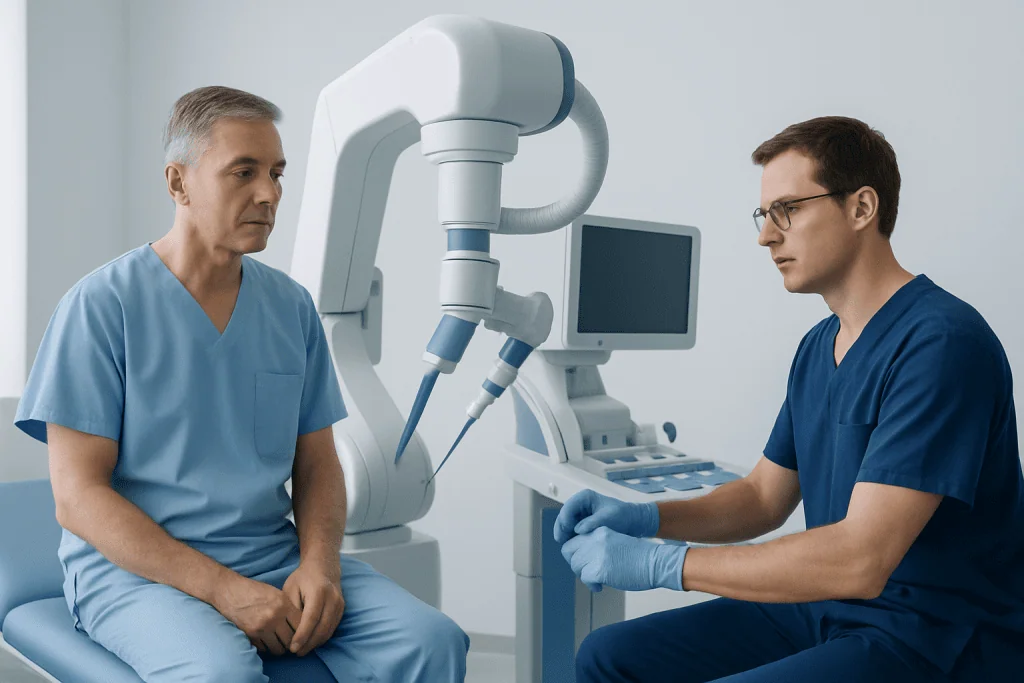
Modern prostate cancer care is not one new procedure but a growing set of tools that can be used alone or together. Local treatments target the prostate itself. They include surgery to remove the prostate, external-beam radiation therapy, and, in selected settings, focused forms of radiation or ablative treatment. These options are most often considered when cancer is localized or locally advanced.
Systemic treatments travel through the bloodstream and are used when there is a higher risk of recurrence or cancer has spread. Androgen-deprivation therapy lowers or blocks the effect of male hormones that commonly fuel prostate cancer growth. Depending on the situation, it may be combined with newer hormone-blocking medicines, chemotherapy, targeted therapy for cancers with specific gene changes, immunotherapy in a small number of suitable cases, or radioligand therapy for eligible advanced disease.
Advanced imaging, including prostate MRI and selected PET scans, can improve staging and help clinicians plan treatment. Genetic and genomic testing may also identify inherited cancer risks or tumor features that affect treatment choices. These advances make care more precise, but they do not eliminate uncertainty or replace follow-up.
What is the most successful treatment for prostate cancer?

There is no single most successful treatment for all prostate cancers. For low-risk cancer that is unlikely to cause harm, active surveillance can be the best approach because it avoids or delays treatment side effects while monitoring closely for signs that treatment is needed. It is active monitoring, not ignoring the cancer.
For localized cancer requiring treatment, surgery and radiation therapy are both established options with strong long-term evidence. The most suitable choice depends on the cancer’s risk group, location, urinary and sexual function before treatment, age, other medical conditions, and the patient’s priorities about recovery and possible side effects.
For recurrent or metastatic prostate cancer, success is often measured by how long treatment controls disease and maintains daily function rather than by cure alone. Combining hormone therapy with other systemic treatments has improved outcomes for many appropriate patients. A urologist, radiation oncologist, and medical oncologist can explain the expected benefits and trade-offs of each option.
- Active surveillance: often appropriate for selected low-risk cancers.
- Surgery or radiation: common curative-intent options for localized disease.
- Systemic therapy: central to treatment of recurrent, high-risk, or metastatic disease.
Candidacy and the treatment-planning process
Before recommending a treatment, clinicians confirm the diagnosis and estimate how likely the cancer is to grow or spread. This commonly includes PSA testing, a digital rectal examination, prostate biopsy findings such as Grade Group or Gleason score, and imaging when indicated. MRI can help define disease within the prostate, while other scans may be used to look for spread in higher-risk cases.
Candidacy for a particular treatment depends on more than the cancer stage. Clinicians consider life expectancy, heart and bone health, urinary symptoms, bowel conditions, medications, previous pelvic treatments, and the person’s goals. For example, someone with significant urinary obstruction may face different considerations from someone with inflammatory bowel disease or prior abdominal surgery.
For some people, genetic counseling and testing are important. Inherited changes in genes involved in DNA repair can affect family cancer risk and may open the door to certain treatments in advanced disease. Tumor testing may similarly identify features that make a targeted medicine or immunotherapy more relevant.
It is reasonable to seek a multidisciplinary opinion before making a decision, particularly for high-risk, recurrent, or metastatic cancer. Acibadem International’s multidisciplinary specialists and JCI-accredited hospitals evaluate and treat prostate cancer for international patients using individualized care planning.
What happens during treatment and recovery?
The steps differ by treatment. With radical prostatectomy, preoperative assessment is followed by surgery to remove the prostate and reconnect the urinary tract. A urinary catheter is usually needed for a short period afterward. Hospital stay, activity restrictions, and recovery speed vary, but many patients gradually return to routine activities over several weeks. Urinary control and erections may take longer to recover, and rehabilitation strategies may be offered.
External-beam radiation treatment begins with planning scans and precise positioning to protect nearby organs. Treatment is commonly delivered in short outpatient sessions over a planned course, although the schedule varies with the radiation technique and cancer risk. Fatigue, urinary frequency, bowel changes, and skin irritation can occur during or shortly after treatment and often improve over time.
Hormone therapy and other systemic medicines are usually given over months or longer. Monitoring visits typically include PSA tests, symptom review, blood tests, and attention to effects on energy, sexual function, mood, weight, metabolic health, bone density, and cardiovascular health. Supportive care, physical activity, nutrition, and treatment of side effects are important parts of the plan.
Patients should discuss expected timelines with their treating team rather than compare recovery with another person’s experience. The plan may change if PSA levels, imaging, symptoms, or treatment tolerance indicate that another approach is needed.
What is the success rate of new prostate cancer treatments?
Success rates cannot be summarized with one accurate percentage. Research may report different endpoints, including PSA response, tumor shrinkage, time without progression, cancer-specific survival, overall survival, or cure. Results also depend strongly on whether the cancer is low risk, localized but higher risk, recurrent, or metastatic.
Newer therapies have expanded treatment options, especially for advanced prostate cancer. For example, some newer hormone-directed medicines, targeted therapies, immunotherapies, and radioligand treatments can help carefully selected patients. However, not every patient is eligible, and a response does not necessarily mean that cancer will never return or progress.
When reviewing a study or advertisement, patients can ask which patients were included, whether the treatment was compared with standard care, how long participants were followed, and which side effects occurred. The treating team can put these findings in context and explain whether the evidence applies to an individual situation.
What is the 2 week rule for prostate cancer?
The “2 week rule” is not a universal medical rule for prostate cancer treatment. In some health systems, it refers to an urgent referral pathway intended to help people with concerning symptoms or test results see a specialist promptly, often within about two weeks. It does not mean that every prostate cancer must be treated within two weeks of diagnosis.
For many prostate cancers, especially lower-risk disease, there is time to review pathology, complete staging when needed, discuss choices, and obtain another opinion. Taking time for informed decision-making is often appropriate. However, appointments and investigations should not be unnecessarily delayed, especially when PSA is markedly abnormal, imaging suggests advanced disease, or symptoms are concerning.
People should follow the timeframe advised by their clinician. If new severe symptoms develop, such as inability to pass urine, weakness or numbness in the legs, loss of bowel or bladder control, or severe new back pain, urgent medical assessment is needed.
How long does it take for prostate cancer to spread to the bones?
There is no fixed timeline. Some prostate cancers never spread, and many low-risk cancers grow so slowly that they can be safely monitored for years. Higher-grade or more advanced cancers may behave more aggressively, but clinicians cannot predict the exact timing for one person from symptoms alone.
When prostate cancer spreads, bone is a common site. The likelihood is assessed using the Grade Group or Gleason score, PSA pattern, clinical stage, imaging, and response to treatment. Modern staging scans can sometimes identify spread earlier than older imaging methods, which helps guide management.
New persistent bone pain, especially pain in the back, hips, ribs, or pelvis, should be reported to a clinician. It is often caused by non-cancer conditions, but it deserves assessment in someone with known prostate cancer. Sudden severe back pain with leg weakness, numbness, or bowel or bladder changes requires urgent care because spinal cord compression must be ruled out quickly.
When to seek medical care
People should arrange a medical appointment for persistent urinary changes, such as difficulty starting urination, a weak stream, frequent urination, or waking often at night. These symptoms are common and are more often caused by benign prostate enlargement than cancer, but they should be evaluated when persistent or bothersome. Blood in urine or semen, unexplained weight loss, or ongoing pelvic discomfort also warrants medical advice.
Emergency assessment is important for an inability to urinate, severe uncontrolled pain, new leg weakness or numbness, loss of bladder or bowel control, or rapidly worsening general health. These symptoms do not always indicate prostate cancer, but prompt assessment is the safest course.
After diagnosis, patients should contact their oncology or urology team about fever, significant bleeding, severe medication side effects, worsening pain, or new symptoms between scheduled visits. Regular follow-up and PSA monitoring allow clinicians to identify recurrence or progression early and adapt care when necessary.
Frequently asked questions
Is there a prostate cancer treatment that is 100% effective?
No. There is no treatment that is guaranteed to cure or control prostate cancer in every person. Some localized cancers have excellent outcomes with appropriate treatment, but the result depends on the cancer’s characteristics and the individual’s health.
Can prostate cancer be cured?
Many localized prostate cancers can be cured with surgery or radiation therapy. In some low-risk cases, active surveillance is appropriate because immediate treatment may not be necessary. Metastatic prostate cancer is usually managed as a long-term condition, although treatment can often control it effectively.
Are newer prostate cancer treatments safer than standard treatments?
Newer treatments may offer benefits for selected patients, but they can still cause side effects and are not automatically safer than established options. Safety depends on the treatment, dose, duration, other health conditions, and how closely side effects are monitored.
Should everyone with prostate cancer have surgery?
No. Surgery is one important option, but it is not necessary or best for everyone. Active surveillance, radiation therapy, systemic therapy, or combined approaches may be more appropriate depending on cancer risk and personal circumstances.
Does a low PSA mean prostate cancer cannot spread?
A low PSA can be reassuring in some contexts, but it does not rule out prostate cancer or fully predict behavior. Doctors interpret PSA together with examination findings, biopsy results, imaging, and changes over time.
What should a patient ask before choosing treatment?
Useful questions include the cancer risk group and stage, the goal of treatment, expected benefits, possible short- and long-term side effects, alternatives, and how follow-up will work. Patients can also ask whether a second opinion or multidisciplinary review would be helpful.
References
- National Cancer Institute
- European Association of Urology
- American Cancer Society
- National Comprehensive Cancer Network
- World Health Organization
This article is for general information only and is not a substitute for professional medical advice. Please consult a qualified doctor about your individual situation.
Prostate Cancer in Turkey — costs, top hospitals & a free quote
JCI-accredited · board-certified surgeons · reply within 24h
Add us as a Preferred Source to see more of our trusted health content across Google Search, AI Overviews and Discover.