Rheumatoid Arthritis: Symptoms, Diagnosis, and Modern Treatment

Rheumatoid arthritis occurs when the immune system mistakenly attacks the lining of the joints, causing inflammation, pain, swelling, and stiffness. Symptoms often affect small joints of the hands and feet on both sides of the body and may include fatigue, low-grade fever, and morning stiffness.
Key Takeaways
- Rheumatoid arthritis occurs when the immune system mistakenly attacks the lining of the joints, causing inflammation, pain, swelling, and stiffness.
- Symptoms often affect small joints of the hands and feet on both sides of the body and may include fatigue, low-grade fever, and morning stiffness.
- Diagnosis is based on symptoms, physical examination, blood tests, and imaging; no single test confirms every case.
- Modern treatment often uses a treat-to-target approach with disease-modifying medicines, lifestyle support, and regular monitoring.
- People should seek medical advice early if joint swelling, pain, or stiffness lasts more than a few weeks.
Rheumatoid arthritis is a chronic autoimmune condition that mainly affects the joints, but it can also involve other parts of the body. Early diagnosis and modern treatment can help reduce inflammation, protect joints, and support an active life.
Overview
Rheumatoid arthritis is a long-term autoimmune inflammatory disease. In autoimmune conditions, the immune system mistakenly reacts against the body’s own tissues. In rheumatoid arthritis, this reaction most often targets the synovium, the thin lining inside joints. The result is inflammation that can cause pain, swelling, warmth, and stiffness.
Unlike osteoarthritis, which is mainly related to wear and tear of cartilage over time, rheumatoid arthritis is driven by immune system activity. It may begin gradually, with mild stiffness or aching, or it may appear more suddenly. The condition commonly affects the small joints of the hands, wrists, and feet, often in a symmetrical pattern on both sides of the body.
Rheumatoid arthritis can be variable. Some people have periods of increased symptoms, called flares, followed by quieter phases. Others may have ongoing symptoms without appropriate treatment. Today, earlier diagnosis and modern therapies can help many people control inflammation, reduce joint damage, and maintain daily function.
Rheumatoid Arthritis Symptoms
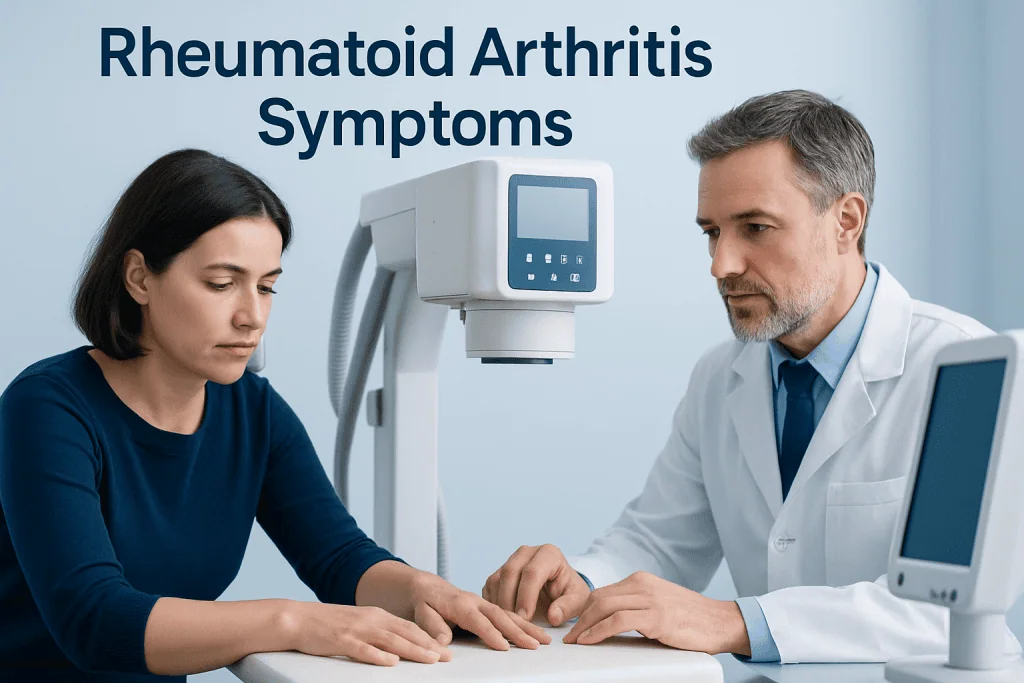
Rheumatoid arthritis symptoms may differ from person to person, but joint inflammation is the main feature. Pain is often accompanied by swelling and a feeling of warmth around affected joints. Morning stiffness is common and may last longer than 30 minutes, especially during active disease.
The joints most often affected include the knuckles, middle joints of the fingers, wrists, toes, and balls of the feet. Knees, ankles, elbows, shoulders, and hips may also be involved. Symptoms are frequently symmetrical, meaning similar joints on both sides of the body are affected.
- Persistent joint pain, swelling, or tenderness
- Stiffness after rest or in the morning
- Fatigue or reduced energy
- Low-grade fever or a general feeling of being unwell
- Reduced grip strength or difficulty with daily tasks
- Small firm lumps under the skin, called rheumatoid nodules, in some people
Rheumatoid arthritis can sometimes affect areas outside the joints, including the eyes, lungs, skin, blood vessels, or heart. These complications do not occur in everyone, but they are one reason regular follow-up with a qualified doctor is important.
Causes and Risk Factors

The exact cause of rheumatoid arthritis is not fully understood. It develops when a combination of immune, genetic, hormonal, and environmental factors leads to abnormal inflammation. Having a genetic tendency does not mean a person will definitely develop the condition, but it may increase susceptibility.
Several factors are associated with a higher risk of rheumatoid arthritis. Smoking is one of the best-established environmental risk factors and may also be linked to more severe disease in some people. Family history, female sex, increasing age, certain infections, and exposure to some environmental irritants may also contribute to risk.
Rheumatoid arthritis is not contagious and cannot be passed from person to person through contact. It is also not caused by a single food, injury, or lifestyle choice. However, lifestyle factors such as smoking, physical inactivity, poor sleep, and unmanaged stress can influence overall health and may affect how a person copes with chronic inflammation.
Diagnosis
Rheumatoid arthritis diagnosis begins with a detailed medical history and physical examination. A doctor will ask about the pattern of joint pain, swelling, stiffness, fatigue, symptom duration, family history, and any symptoms outside the joints. During the examination, the doctor checks for joint tenderness, swelling, range of motion, warmth, and function.
Blood tests can support the diagnosis and assess inflammation. Common tests may include rheumatoid factor, anti-cyclic citrullinated peptide antibodies, C-reactive protein, erythrocyte sedimentation rate, and a complete blood count. Some people with rheumatoid arthritis have negative antibody tests, especially early in the disease, so blood results are interpreted together with symptoms and examination findings.
Imaging may also be used. X-rays can show joint damage or changes over time, while ultrasound or magnetic resonance imaging can detect inflammation earlier in some cases. These tests can help distinguish rheumatoid arthritis from other causes of joint pain, such as osteoarthritis, gout, lupus, psoriatic arthritis, infection, or injury.
Early evaluation by a rheumatologist is often helpful when inflammatory arthritis is suspected. Starting appropriate treatment early may reduce the risk of joint damage and improve long-term function.
Modern Treatment Options
Rheumatoid arthritis treatment aims to reduce inflammation, relieve symptoms, prevent joint damage, and support quality of life. Many specialists use a treat-to-target approach, meaning treatment is adjusted regularly to reach low disease activity or remission when possible. Treatment plans are individualized based on disease activity, other medical conditions, pregnancy plans, infection risk, and patient preferences.
Disease-modifying antirheumatic drugs, often called DMARDs, are central to treatment because they target the inflammatory process rather than only relieving pain. Conventional synthetic DMARDs are commonly used first. If disease remains active, biologic medicines or targeted synthetic DMARDs may be considered. These medicines affect specific parts of the immune system and require medical monitoring.
Short-term anti-inflammatory medicines or corticosteroids may sometimes be used to control symptoms while longer-term medicines take effect, but they are not usually the main long-term strategy. Pain relief medicines may help comfort but do not prevent inflammatory joint damage. Because some rheumatoid arthritis treatments can affect the immune system, regular blood tests, infection screening, vaccination review, and follow-up appointments may be needed.
Treatment is often multidisciplinary. Rheumatologists, physiotherapists, occupational therapists, nurses, rehabilitation specialists, and primary care doctors may all contribute. In advanced joint damage, orthopedic consultation may be appropriate, but the goal of modern medical treatment is to reduce inflammation early and help preserve joint function.
Prevention, Self-Care, and Daily Living
There is no guaranteed way to prevent rheumatoid arthritis, but some steps can support joint health and overall well-being. Not smoking is especially important. Maintaining a healthy weight can reduce strain on joints, while regular movement helps preserve flexibility, strength, balance, and confidence.
Exercise should be appropriate for the person’s condition and adjusted during flares. Low-impact activities such as walking, swimming, cycling, and supervised strengthening exercises are often helpful. A physiotherapist can recommend safe movements and joint-protection techniques. Occupational therapists can suggest splints, ergonomic tools, or changes at home and work to reduce joint stress.
- Balance activity with rest, especially during flares
- Use heat for stiffness or cold packs for swelling when advised
- Follow prescribed treatment and monitoring schedules
- Choose a balanced diet rich in vegetables, fruits, whole grains, lean proteins, and healthy fats
- Protect sleep and address stress with healthy coping strategies
- Report medication side effects or new symptoms promptly
Self-care does not replace medical treatment, but it can make treatment more effective and daily life more manageable. People with rheumatoid arthritis should discuss supplements, alternative therapies, or major diet changes with their doctor, as some may interact with medicines or delay evidence-based care.
When to See a Doctor
A person should seek medical advice if joint pain, swelling, or stiffness persists for more than a few weeks, especially when symptoms affect both sides of the body or are worse in the morning. Early assessment is important because rheumatoid arthritis can cause joint changes before symptoms become severe.
People already diagnosed with rheumatoid arthritis should contact their healthcare team if symptoms suddenly worsen, if a new joint becomes swollen, or if daily activities become more difficult. Medical review is also important for fever, shortness of breath, chest pain, eye redness or pain, unexplained weight loss, or signs of infection, particularly when taking immune-modifying medicines.
Regular follow-up helps doctors adjust treatment safely and monitor disease activity. Acibadem International’s multidisciplinary specialists and JCI-accredited hospitals diagnose and treat rheumatoid arthritis for international patients, including evaluation, imaging, laboratory testing, and coordinated care when needed.
Frequently asked questions
Is rheumatoid arthritis the same as osteoarthritis?
No. Rheumatoid arthritis is an autoimmune inflammatory disease in which the immune system attacks joint lining. Osteoarthritis is mainly related to cartilage wear and mechanical stress over time, although inflammation can also be present.
Can rheumatoid arthritis be cured?
There is currently no guaranteed cure for rheumatoid arthritis. However, modern treatments can control inflammation, reduce symptoms, and help prevent joint damage. Some people reach remission or very low disease activity with appropriate care.
What are the early signs of rheumatoid arthritis?
Early signs may include stiffness in the morning, swelling in small joints of the hands or feet, tenderness, fatigue, and symptoms affecting both sides of the body. Because early symptoms can be subtle, persistent joint swelling or stiffness should be assessed by a doctor.
How is rheumatoid arthritis diagnosed?
Diagnosis is based on a combination of medical history, physical examination, blood tests, and imaging. Blood tests such as rheumatoid factor, anti-CCP antibodies, ESR, and CRP may help, but no single test confirms every case.
Are biologic treatments safe?
Biologic medicines can be effective for many people with active rheumatoid arthritis, but they may increase infection risk and require medical monitoring. A rheumatologist considers benefits, risks, screening results, other health conditions, and patient preferences before recommending them.
Can diet improve rheumatoid arthritis?
A balanced diet can support general health and may help with energy, weight management, and inflammation control. Diet alone usually cannot replace disease-modifying treatment. People should discuss restrictive diets or supplements with their doctor.
Should people with rheumatoid arthritis exercise?
Yes, appropriate exercise is usually beneficial. Low-impact aerobic activity, stretching, and strengthening can support joint movement and muscle function. During flares, exercise may need to be modified with guidance from a healthcare professional.
References
- American College of Rheumatology
- European Alliance of Associations for Rheumatology
- National Institute of Arthritis and Musculoskeletal and Skin Diseases
- Mayo Clinic
- World Health Organization
This article is for general information only and is not a substitute for professional medical advice. Please consult a qualified doctor about your individual situation.
Rheumatoid Arthritis in Turkey — costs, top hospitals & a free quote
JCI-accredited · board-certified surgeons · reply within 24h
Add us as a Preferred Source to see more of our trusted health content across Google Search, AI Overviews and Discover.

Physical Medicine & Rehabilitation
Restoring movement and function after injury, surgery or neurological conditions.
150 specialists in this unitMore from the Health Library



Related Specialists

Assoc. Prof. Dr. Aylin Altan Kuş
Gastrointestinal Oncology Unit Clinical Service
Prof. Dr. Mahir Gülşen
Orthopedic Surgery & Traumatology
Prof. Dr. Cem Akbal
Urology
Prof. Dr. Ersin Erek
Cardiovascular Surgery