Retinoblastoma Treatment: How It Works, Results and What to Expect
Retinoblastoma is a rare cancer that begins in the retina, the light-sensitive layer at the back of the eye. Treatment may combine chemotherapy, focused eye treatments, radiation in selected situations, or removal of an eye when necessary.
Key Takeaways
- Retinoblastoma is a rare cancer that begins in the retina, the light-sensitive layer at the back of the eye.
- Treatment may combine chemotherapy, focused eye treatments, radiation in selected situations, or removal of an eye when necessary.
- Most children with retinoblastoma confined to the eye can be treated successfully, especially with early diagnosis and expert follow-up.
- Regular examinations after treatment are essential because tumors can recur and some children have an inherited form of the condition.
- A white pupil reflex, new squint, reduced vision, eye redness, or eye enlargement in a child needs prompt medical assessment.
Retinoblastoma treatment is planned by a specialist pediatric eye-cancer team and aims first to protect a child’s life, then preserve the eye and vision whenever safely possible. The best approach depends on whether one or both eyes are involved, the size and position of tumors, and whether cancer has spread beyond the eye.
Retinoblastoma Treatment: How It Works
Retinoblastoma treatment is a personalized plan for a cancer that develops in the retina, the light-sensitive tissue lining the inside back of the eye. Care is usually provided by a multidisciplinary team that includes pediatric ophthalmology, ocular oncology, pediatric oncology, radiology, pathology, genetics, anesthesia, and supportive-care specialists. The central priority is to cure the cancer and prevent spread; preserving the eye and useful vision is pursued whenever this can be done safely.
For small tumors limited to the eye, focused treatments may destroy cancer cells directly. Larger tumors are often reduced first with chemotherapy so that local treatment can be used more effectively. If an eye has extensive disease and little chance of retaining useful vision, removing the eye may offer the safest and most reliable way to control cancer in that eye.
Planning begins with determining whether retinoblastoma affects one eye or both eyes and whether there is any evidence of spread outside the eye. Doctors also consider the tumor’s location, retinal detachment, fluid or tumor seeds in the eye, visual potential, the child’s age, and family history. This careful staging helps avoid both undertreatment and unnecessary treatment.
Who Is a Candidate and How Is Treatment Planned?
Every child diagnosed with retinoblastoma needs timely assessment by a team experienced in childhood eye cancer. Many children are diagnosed before age 3, although the condition can be identified at other ages. The choice of therapy is not based on one feature alone: it reflects the condition of each eye, whether disease is confined to the eye, and the possibility of safely saving vision.
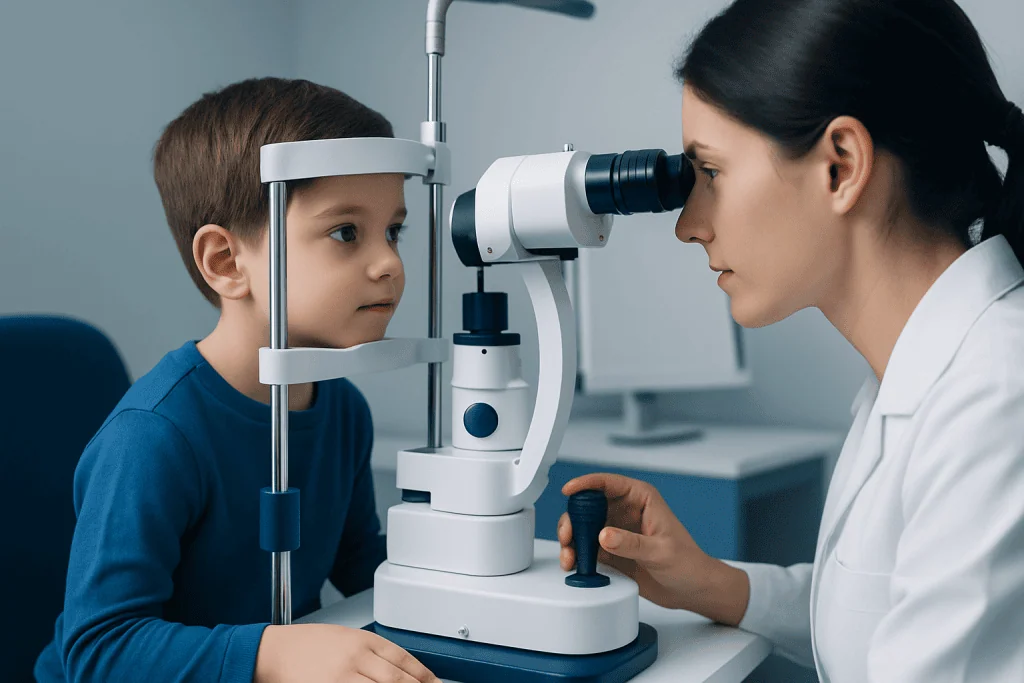
Doctors may perform an examination under anesthesia to inspect the retina in detail and photograph or map each tumor. Ultrasound is commonly used to assess the eye, while magnetic resonance imaging (MRI) of the eyes and brain may help evaluate the optic nerve and surrounding structures. A biopsy of the eye is generally avoided because it can increase the risk of tumor spread.
Genetic counseling and testing are important parts of care. Some children have a germline change in the RB1 gene, which can be inherited and may increase the risk of retinoblastoma in both eyes and certain later cancers. Testing can guide surveillance for the child and screening for siblings or future children in the family.
- Eye-confined disease: may be treated with local therapy, chemotherapy delivered into or around the eye, systemic chemotherapy, surgery, or selected radiation approaches.
- Advanced eye disease: may require removal of the affected eye when eye-preserving treatment is unlikely to be safe or effective.
- Extraocular or metastatic disease: requires urgent care at a specialist pediatric oncology center and may involve intensive combined treatment.
Step by Step: What Happens During Retinoblastoma Treatment?
Initial treatment often starts with a detailed eye examination under anesthesia, imaging, and discussion of the proposed plan with the family. Because young children need to stay still for precise retinal assessment and treatment, several parts of care are commonly performed under general anesthesia. The team explains the expected number of examinations and treatments, which varies greatly among children.
Chemotherapy can be delivered through the bloodstream, directly into the artery supplying the eye (intra-arterial chemotherapy), or into the gel-like fluid inside the eye (intravitreal chemotherapy) in carefully selected cases. These methods are intended to shrink tumors and control tumor seeds, often allowing local techniques to complete treatment. The route depends on the tumor pattern, whether one or both eyes are affected, and the expertise available.
Local therapies include laser treatment (photocoagulation or transpupillary thermotherapy), cryotherapy that freezes small peripheral tumors, and plaque brachytherapy, in which a small radioactive plaque is temporarily positioned on the outside of the eye. These approaches target cancer while limiting exposure to the rest of the body. Treatment is usually repeated or adjusted based on how tumors respond during follow-up examinations.
Enucleation is surgery to remove an eye and may be recommended when disease fills much of the eye, glaucoma or severe bleeding is present, or vision cannot be preserved safely. An orbital implant is typically placed at surgery, followed later by a custom-painted prosthetic eye. A prosthetic eye does not restore sight, but it can support facial appearance and movement as a child grows.
Benefits, Risks and Recovery Timeline
The principal benefit of retinoblastoma treatment is cancer control. When the cancer is confined to the eye, modern care has a very high likelihood of saving life. Depending on the eye and tumor characteristics, treatment may also preserve the eye and retain some degree of vision. Vision outcomes vary, particularly when tumors involve the macula or optic nerve area, which are important for central vision.
Risks differ by treatment. Systemic chemotherapy can temporarily lower blood cell counts and may cause nausea, fatigue, infection risk, or other effects that the oncology team monitors closely. Intra-arterial and intravitreal treatments can have eye-specific risks, including retinal or blood-vessel changes, inflammation, cataract, or vision loss. Local treatments and radiation can also affect the retina, lens, eye growth, or surrounding tissues. The treating team discusses the expected benefits and potential effects for the individual child.
After an examination or treatment under anesthesia, many children return home the same day once they are awake, drinking fluids, and comfortable. Recovery after enucleation takes longer; swelling, bruising, and discomfort are expected initially and usually improve over the following days to weeks. Families receive instructions for eye care, pain relief, activity, and symptoms that require urgent contact with the surgical team.
Follow-up is intensive at first because recurrence or new tumors may occur. Examinations under anesthesia may be needed at regular intervals, with visits gradually becoming less frequent when the eyes remain stable. Children who receive systemic therapy also have blood tests and oncology review. Long-term follow-up may include vision support, prosthetic-eye care, genetic surveillance, and emotional support for the child and family.
What Is the Success Rate of Retinoblastoma Treatment?
For retinoblastoma that is diagnosed while still confined to the eye, treatment outcomes are generally excellent in centers with appropriate expertise. Survival is very high in countries and settings where children can access early diagnosis, specialized eye care, chemotherapy, surgery, and long-term monitoring. However, no single success rate applies to every child.
Outcome depends on whether cancer is in one or both eyes, the size and location of tumors, the presence of tumor seeds, involvement of the optic nerve or tissues outside the eye, and the response to initial therapy. Eye preservation and vision preservation are separate outcomes from survival. Some children need removal of one eye to achieve the safest cancer control, yet can adapt well with vision from the other eye.
Families should ask the treating team about their child’s specific goals: control of cancer, likelihood of preserving the eye, probable visual outcome, treatment duration, and follow-up needs. Prognosis is most accurately discussed after staging and repeated assessments of response to treatment.
Is Retinoblastoma a Brain Cancer?
Retinoblastoma is not a brain cancer. It begins in the retina, which is part of the eye and develops from nervous-system tissue. Although the retina connects to the brain through the optic nerve, a tumor that remains within the eye is classified as an eye cancer.
Doctors use MRI in many children with retinoblastoma because imaging can assess the optic nerve and structures around the eye, and because a rare related condition called trilateral retinoblastoma can involve a tumor in the pineal region of the brain. This does not mean that every child with retinoblastoma has brain involvement.
Prompt specialist assessment is important because untreated retinoblastoma can extend beyond the eye. Imaging and follow-up allow the team to identify higher-risk features early and choose the right level of treatment.
Can Stage 4 Retinoblastoma Be Cured?
Stage 4 retinoblastoma generally refers to cancer that has spread beyond the eye to distant parts of the body, such as bone marrow, bones, lymph nodes, liver, or brain. It is a serious and uncommon presentation that requires urgent treatment in a specialized pediatric oncology center. The outlook is more guarded than for disease limited to the eye, but treatment may still be given with curative intent in some situations.
Care may involve intensive systemic chemotherapy, treatment of the eye, surgery when appropriate, radiation in selected circumstances, high-dose chemotherapy with stem-cell rescue, and treatment directed at sites of spread. The exact approach depends on where the cancer has spread, the child’s overall health, tumor biology, and response to treatment.
Families facing advanced disease benefit from clear discussions with a specialist team about treatment goals, expected benefits, possible short- and long-term effects, and available supportive services. Expert supportive care for nutrition, infection prevention, pain control, emotional wellbeing, and family needs remains essential throughout treatment.
Is Retinoblastoma a Rare Cancer? When to Seek Medical Care
Yes. Retinoblastoma is a rare childhood cancer, but it is the most common cancer that begins inside the eye in young children. It may occur in one eye or both eyes. Most cases are diagnosed in early childhood, which is why parents, caregivers, and clinicians should take certain eye changes seriously even though many have non-cancerous causes.
A white or pale reflection in the pupil, often noticed in photographs with flash, is a key warning sign and should be assessed urgently. Other signs can include a new squint or wandering eye, reduced vision, persistent eye redness, swelling, pain, an enlarged-looking eye, or a difference in the appearance of the two eyes. These symptoms do not confirm retinoblastoma, but they need prompt examination by an eye specialist.
Children who have a parent or sibling with retinoblastoma, or a known RB1 gene change in the family, should receive planned eye screening from an experienced pediatric ophthalmology team. Acibadem International’s multidisciplinary specialists and JCI-accredited hospitals support diagnosis and treatment planning for international patients with retinoblastoma.
Frequently asked questions
Can retinoblastoma treatment save a child’s vision?
Vision can sometimes be preserved, particularly when tumors are small, away from the center of the retina, and respond well to treatment. However, cancer control always comes first. Even when an eye cannot be saved, many children adapt very well if the other eye has useful vision.
How long does retinoblastoma treatment take?
Treatment length varies according to the type and extent of disease and the therapies used. A course involving chemotherapy and repeated local treatments may continue for several months, followed by regular eye examinations for years. The team adjusts the schedule according to the child’s response.
Will a child need anesthesia for retinoblastoma follow-up?
Young children often need general anesthesia for detailed retinal examinations and precise local treatment. This allows the ophthalmology team to inspect the entire retina safely and accurately. As a child gets older and can cooperate with examination, the need for anesthesia may decrease.
Can retinoblastoma come back after treatment?
Yes, recurrent tumors or new tumors can occur, especially during the early years after diagnosis. This is why scheduled follow-up examinations are essential even when the eye appears to have responded fully. Early detection of recurrence can make additional treatment more effective.
Is retinoblastoma inherited?
Some cases are linked to an inherited or new change in the RB1 gene, while others are not inherited. Children with tumors in both eyes are more likely to have a heritable form, but genetic testing is useful in many situations. A genetics specialist can explain what the result means for the child and family members.
What happens after an eye is removed for retinoblastoma?
After enucleation, an implant is usually placed in the eye socket and a temporary conformer helps maintain its shape during healing. A custom prosthetic eye is fitted after recovery and is adjusted as the child grows. The surgical and prosthetic teams provide ongoing care and support.
References
- World Health Organization
- American Cancer Society
- National Cancer Institute
- American Academy of Ophthalmology
- Children's Oncology Group
This article is for general information only and is not a substitute for professional medical advice. Please consult a qualified doctor about your individual situation.
Oncology care in Turkey — second opinion and treatment plan
JCI-accredited · board-certified surgeons · reply within 24h
Add us as a Preferred Source to see more of our trusted health content across Google Search, AI Overviews and Discover.

More from the Health Library

Related Specialists

Dr. Burak Boynuk
Orthopedic Surgery & Traumatology
Assoc. Prof. Dr. Berkin Toker
Orthopedic Surgery & Traumatology
Dr. Gülden Cancan
General Surgery
Dr. Engin Erdemoğlu
Medical Oncology