Amblyopia Lazy Eye Treatment: How It Works, Results and What to Expect
Amblyopia is reduced vision caused by the brain favoring one eye during visual development, not simply an eye that appears misaligned. The most effective treatment plan depends on the cause, age, vision level and whether both eyes are affected.
Key Takeaways
- Amblyopia is reduced vision caused by the brain favoring one eye during visual development, not simply an eye that appears misaligned.
- The most effective treatment plan depends on the cause, age, vision level and whether both eyes are affected.
- Glasses alone may improve vision for some people; patching or atropine drops can further encourage use of the weaker eye.
- Eye muscle surgery can straighten eyes but does not directly cure amblyopia; visual therapy may still be needed.
- Children usually respond best because their visual system is still developing, but selected teenagers and adults may also gain improvement.
- Regular follow-up is important because amblyopia can recur, particularly after treatment is reduced or stopped.
Amblyopia lazy eye treatment helps the brain use vision from the weaker eye more effectively. Treatment commonly includes glasses or contact lenses, patching or eye drops, and occasionally surgery to correct an underlying eye alignment problem or cataract.
Amblyopia lazy eye treatment: how it works
Amblyopia lazy eye treatment works by correcting the cause of reduced vision and encouraging the brain to pay better attention to images from the weaker eye. It is most often started in childhood, when the connections between the eyes and brain are still developing. However, an eye specialist may also recommend assessment and treatment for teenagers or adults, as some people can still improve.
Amblyopia, often called lazy eye, occurs when one eye sends a less clear or less well-aligned image to the brain. Over time, the brain may rely more on the stronger eye and suppress input from the weaker one. This is different from an eye that merely looks turned. A turn in the eye, called strabismus, can cause amblyopia, but a person may have amblyopia without an obvious eye turn.
The main goals are to provide the clearest possible image to each eye, strengthen use of the weaker eye and protect vision in the stronger eye. A pediatric ophthalmologist or ophthalmologist can tailor the plan after identifying whether refractive error, eye misalignment, a cataract or another condition is responsible.
Who may benefit and what assessment involves
Children with unequal vision, squinting, a noticeable eye turn, poor depth perception, head tilting or difficulty with visually detailed tasks should have a complete eye examination. Amblyopia may not cause symptoms that a child can describe, especially when the stronger eye sees well. This is why routine childhood vision screening is valuable.
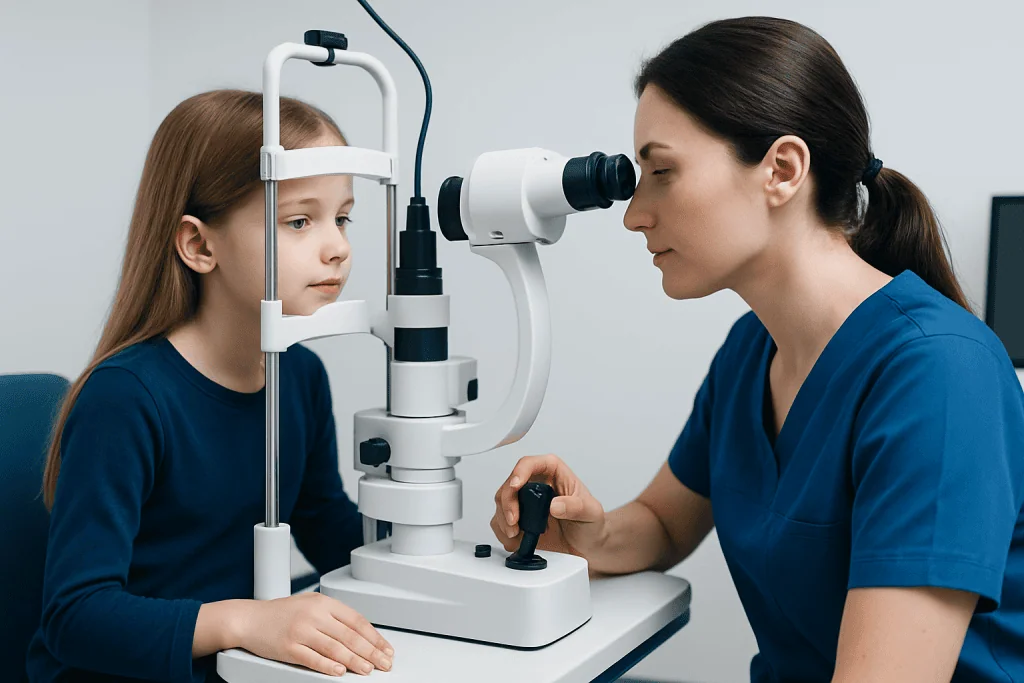
Assessment generally includes measuring visual acuity in each eye, checking how the eyes move and work together, testing for refractive errors and examining the front and back of the eye. Eye drops may be used to temporarily relax focusing during a more accurate refraction test. The clinician also looks for less common physical causes of reduced vision, such as a cataract, drooping eyelid or retinal condition.
Treatment is particularly important when amblyopia is identified early. Still, age alone should not prevent an evaluation. Older children, adolescents and adults with longstanding reduced vision, eye misalignment or a newly noticed change in sight should seek specialist advice to establish the cause and discuss realistic treatment goals.
- Refractive amblyopia: caused by a significant focusing error in one or both eyes.
- Strabismic amblyopia: associated with persistent eye misalignment.
- Deprivation amblyopia: caused when light is blocked from entering the eye, such as by a congenital cataract.
Step by step: treatment options and what happens
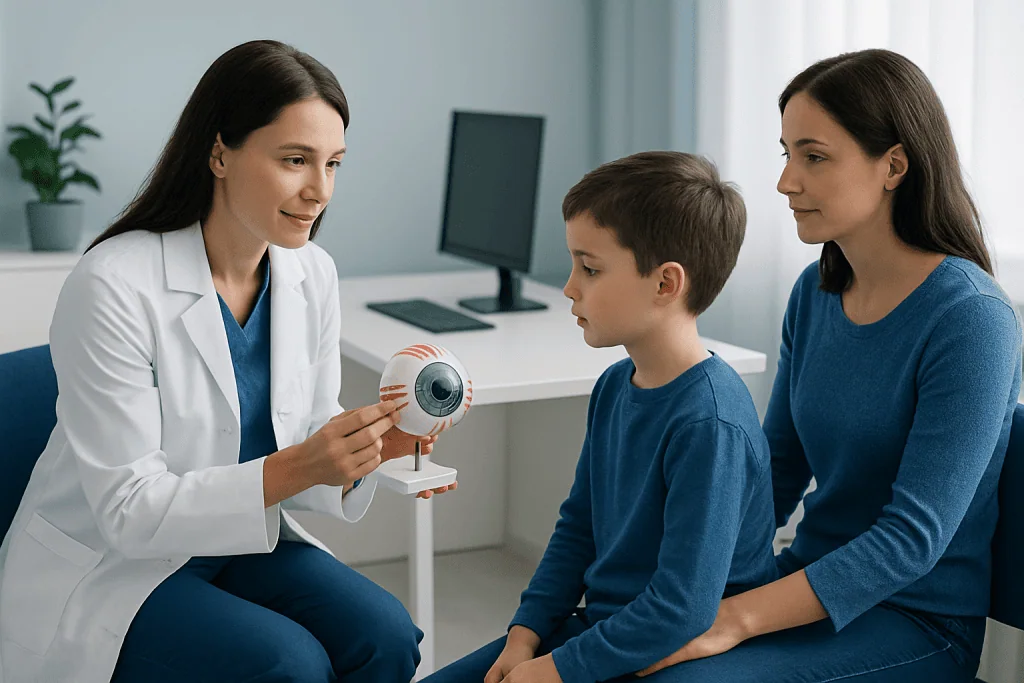
The first step is usually to correct blurred vision. Prescription glasses or contact lenses may be all that is needed for some children with refractive amblyopia. Vision is then rechecked over time because the brain may gradually begin using the weaker eye more once it receives a clear image.
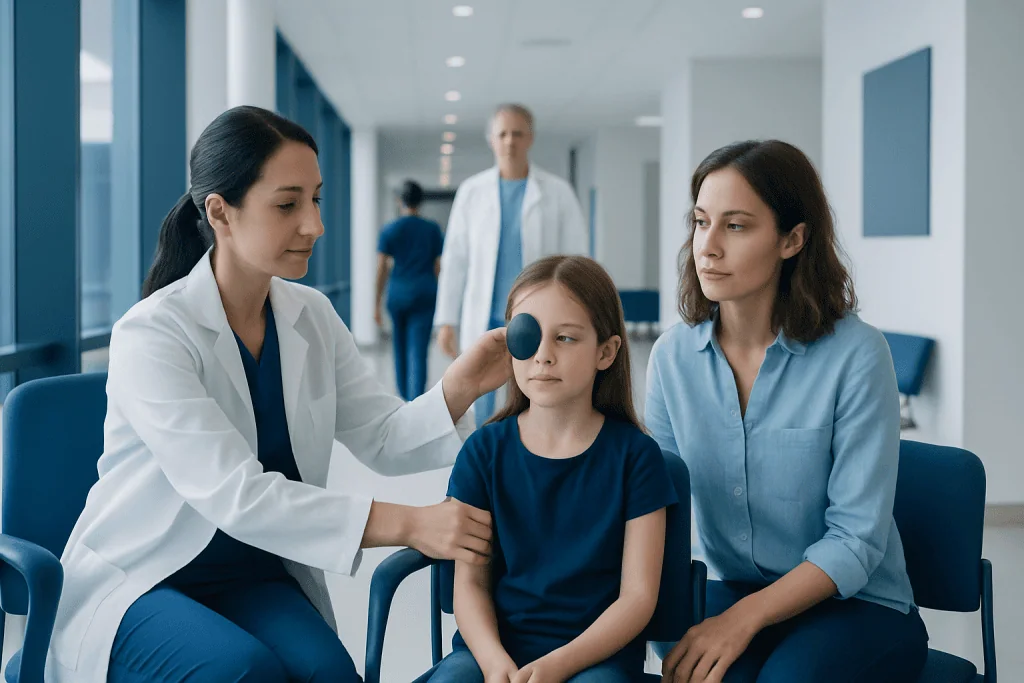
If the difference in vision remains, the clinician may prescribe patching of the stronger eye for a defined part of the day. Covering the stronger eye makes the brain practice processing information from the weaker eye. For some children, atropine eye drops in the stronger eye are an alternative. The drops temporarily blur near vision in that eye, encouraging use of the amblyopic eye. The schedule and duration must be individualized and monitored.
When cataract, eyelid drooping or significant eye misalignment is contributing, a procedure may be needed to remove the obstruction or improve alignment. Eye surgery for a cataract or another structural problem may allow a clearer image to reach the brain. Strabismus surgery adjusts selected eye muscles to improve alignment, but patching, glasses or drops may still be needed because alignment surgery does not directly retrain vision.
Appointments commonly involve checking vision in each eye, reviewing adherence and adjusting treatment. Families can support progress by making patching part of a predictable routine and by following instructions on glasses wear, drop use and follow-up visits.
How much time does it take to fix a lazy eye?
The time needed to improve a lazy eye varies widely. Some improvement may be seen within weeks to a few months after glasses, patching or drops begin, while treatment often continues for many months and sometimes longer. The starting vision level, the cause of amblyopia, the child’s age and how consistently treatment is followed all affect the timeline.
There is not always a complete “fix,” particularly when amblyopia is severe or was present for many years before treatment. The aim is meaningful, stable improvement in vision and visual function. Eye specialists usually reduce patching or other treatment gradually once vision has improved, rather than stopping abruptly, because recurrence can occur.
Follow-up may continue after active treatment ends. This allows the clinician to detect renewed differences between the eyes, update a glasses prescription and respond promptly if visual acuity declines.
Is amblyopia brain damage?
Amblyopia is not brain damage in the usual sense of an injury, stroke or progressive disease of the brain. It is a developmental vision condition in which the brain learns to favor input from one eye because the visual information from that eye was blurred, blocked or misaligned during early development.
The eye and brain are part of the same visual system, so amblyopia involves the way visual signals are processed. Importantly, this process can often be modified, especially in childhood, through timely treatment that gives the weaker eye a clearer image and encourages the brain to use it.
Because other eye or neurological conditions can also reduce vision, a new change in sight should not be assumed to be amblyopia. A comprehensive eye examination is the appropriate way to identify the cause and decide whether treatment is needed.
How risky is lazy eye surgery?
There is no operation that directly cures amblyopia itself. Surgery may be recommended when an underlying problem contributes to amblyopia, such as a cataract, a drooping eyelid that blocks vision or strabismus. The purpose, expected benefits and alternatives depend on the specific condition.
Eye muscle surgery for strabismus is generally a well-established procedure, but every operation has potential risks. These can include temporary redness, soreness, swelling, double vision during adjustment, undercorrection or overcorrection of alignment, and a need for further treatment. Less common risks can include infection, bleeding, scarring or anesthesia-related complications.
Before surgery, the ophthalmic team discusses the individual balance of benefits and risks and explains the recovery plan. Even when surgery improves eye position, glasses, patching or atropine may remain important for amblyopia treatment. Strabismus and amblyopia can occur together, but they are distinct conditions that may require different parts of a care plan.
Will my amblyopia get worse as years go?
Amblyopia itself does not usually continue to worsen simply because a person is getting older. However, if the underlying cause is not corrected, the weaker eye may remain reduced in vision. In childhood, untreated amblyopia can become more difficult to improve as the visual system matures.
Vision may also seem worse later in life if the stronger eye develops another problem, such as cataract, injury, glaucoma or retinal disease. This is one reason people with amblyopia should protect both eyes from injury, use prescribed eyewear and attend recommended eye examinations.
Any sudden loss of vision, new pain, flashes of light, a curtain-like shadow, new double vision or a rapidly changing eye position needs prompt medical assessment. These symptoms are not typical signs of stable amblyopia and may indicate another eye condition.
When to seek medical care
A child should be assessed promptly if an eye turns in or out after early infancy, one eyelid appears to cover the pupil, the child frequently closes one eye, tilts the head, struggles with visual tasks or fails a vision screening. Adults should arrange an eye examination for longstanding unequal vision or concerns about alignment, and should seek urgent care for sudden or painful visual symptoms.
Early evaluation gives the best opportunity to strengthen vision in a developing eye. It is also important to keep all planned follow-up appointments, because the treatment schedule may need adjustment as vision changes. Parents and caregivers should not start patching independently without professional guidance, as inappropriate patching can affect the stronger eye.
Acibadem International’s multidisciplinary eye specialists at JCI-accredited hospitals assess and treat amblyopia and related eye conditions for international patients. A qualified ophthalmologist can explain whether glasses, patching, drops, surgery or observation is most appropriate for the individual.
Frequently asked questions
Can adults receive amblyopia lazy eye treatment?
Adults can have an eye examination and may be offered treatment depending on the cause of reduced vision and their individual circumstances. Improvement is often more limited and less predictable than in young children, but correcting refractive errors, treating eye disease and addressing alignment may still be beneficial. An ophthalmologist can discuss realistic expectations.
Do glasses alone treat a lazy eye?
Glasses alone can improve amblyopia when an uncorrected refractive error is the main cause. Some people need additional patching or atropine drops if vision remains different between the eyes after a period of consistent glasses wear. Regular testing determines whether further treatment is needed.
Does patching hurt?
Patching should not be painful, but some children initially find it frustrating because they must use the weaker eye more. Skin irritation from adhesive patches can occur in some cases. The care team can suggest suitable patch types and practical ways to improve comfort and consistency.
Can lazy eye return after treatment?
Yes, amblyopia can recur after vision has improved, particularly when patching or drops are stopped too quickly or during the years when vision is still developing. Follow-up visits help detect recurrence early. The clinician may recommend gradually reducing treatment rather than ending it suddenly.
Is surgery always needed for a lazy eye?
No. Most amblyopia treatment begins with glasses or contact lenses and may include patching or atropine drops. Surgery is considered only when a contributing problem, such as cataract, eyelid obstruction or eye misalignment, needs correction.
What happens if amblyopia is left untreated?
The weaker eye may retain reduced vision, and treatment can become less effective as childhood visual development progresses. The person may also have reduced depth perception and be more dependent on the stronger eye. An eye assessment is recommended whenever amblyopia is suspected.
References
- American Academy of Ophthalmology
- American Association for Pediatric Ophthalmology and Strabismus
- National Eye Institute
- Mayo Clinic
This article is for general information only and is not a substitute for professional medical advice. Please consult a qualified doctor about your individual situation.
Explore treatments in Turkey — costs, top hospitals & a free quote
JCI-accredited · board-certified surgeons · reply within 24h
Add us as a Preferred Source to see more of our trusted health content across Google Search, AI Overviews and Discover.

Ophthalmology
Comprehensive eye care from laser vision correction to retina, cornea and cataract surgery.
75 specialists in this unit