Radiation Therapy for Ovarian Cancer: How It Works, Results and What to Expect
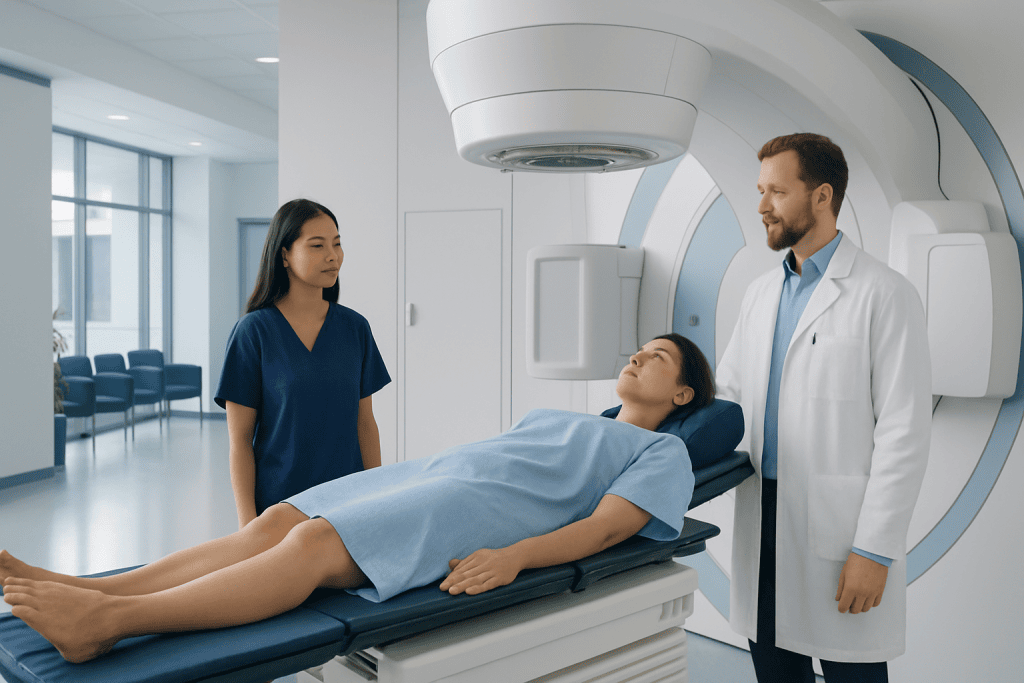
Radiation therapy is most often used for a specific area of ovarian cancer rather than as treatment for the whole abdomen. External beam radiation is the most common approach and is carefully planned to limit exposure to nearby organs.
Key Takeaways
- Radiation therapy is most often used for a specific area of ovarian cancer rather than as treatment for the whole abdomen.
- External beam radiation is the most common approach and is carefully planned to limit exposure to nearby organs.
- Treatment may help control a local recurrence or ease symptoms such as pain, bleeding, or pressure.
- Side effects depend on the body area treated and commonly improve in the weeks after treatment ends.
- A gynecologic oncologist and radiation oncologist help determine whether radiation is appropriate within an overall care plan.
Radiation therapy for ovarian cancer uses high-energy radiation to damage cancer cells in a planned treatment area. It is not usually the main treatment for ovarian cancer, but it can be helpful for selected recurrent, persistent, or symptom-causing disease.
Overview: the role of radiation therapy for ovarian cancer
Radiation therapy for ovarian cancer uses carefully targeted, high-energy radiation to damage the DNA of cancer cells, limiting their ability to grow and divide. It is generally used to treat a defined area of disease or to reduce symptoms from cancer affecting a particular location. For most people with newly diagnosed ovarian cancer, surgery and systemic treatments such as chemotherapy are more central parts of care.
Ovarian cancer can spread within the abdomen and pelvis, so radiation to the entire area would expose nearby organs, including the bowel, bladder, kidneys, and bone marrow. For this reason, radiation is not routinely used as the main treatment for widespread ovarian cancer. Modern planning techniques can, however, focus radiation on a smaller target while helping protect healthy tissue.
Radiation may be considered when cancer remains in, or returns to, one or a few locations; when surgery is not suitable; or when a tumor is causing troublesome symptoms. Treatment decisions are individualized and usually made by a multidisciplinary team. For broader information about the disease and its care, see ovarian cancer.
How radiation works and who may be a candidate
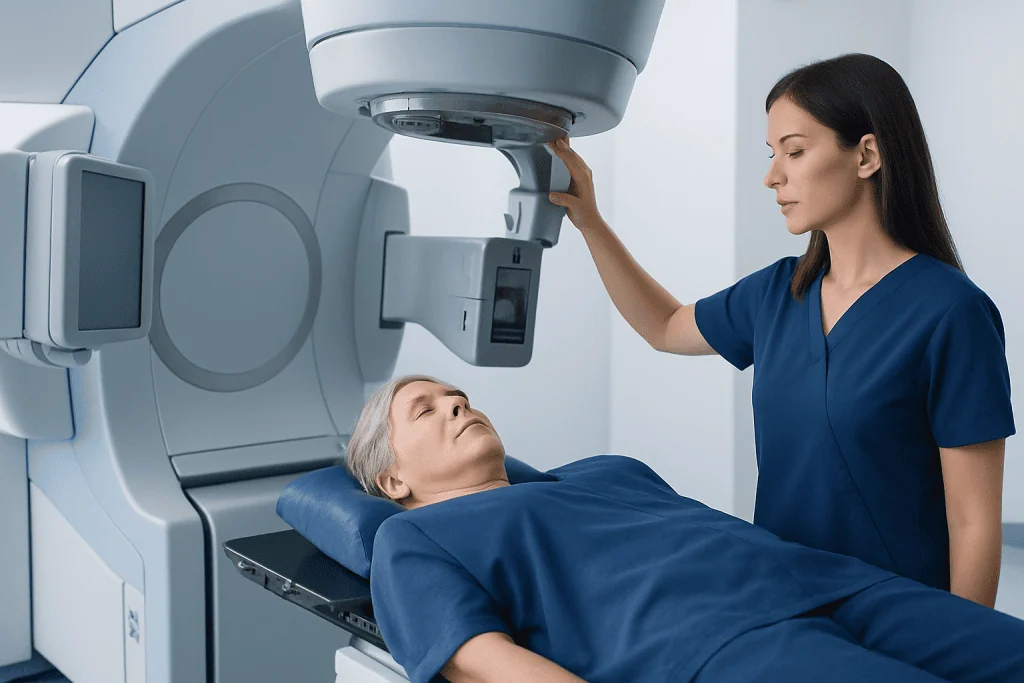
Radiation harms cancer cells by creating damage that is difficult for them to repair. Healthy cells in the treatment field can also be affected, but they are generally better able to recover between sessions. Radiation is usually delivered in small daily amounts, called fractions, to balance effectiveness with safety for normal tissue.
The most common method is external beam radiation therapy. A machine outside the body directs radiation beams toward the tumor from different angles. Advanced approaches, such as intensity-modulated radiation therapy (IMRT), image-guided radiation therapy, or stereotactic body radiation therapy (SBRT), may be used in appropriate circumstances to improve precision.
A person may be considered for radiation when imaging shows a localized pelvic, abdominal, lymph node, bone, brain, or other site of recurrence; when cancer is causing pain or pressure; or when bleeding or obstruction needs symptom-focused treatment. Previous surgery, prior radiation, the location and size of the tumor, overall health, and current medications all influence whether radiation is a suitable option.
Radiation is often discussed alongside surgery, chemotherapy, targeted therapy, hormonal treatment in selected tumor types, and supportive care. The goal may be durable local control, slowing progression in a particular area, or improving comfort and daily function.
The procedure: planning, daily treatment and follow-up
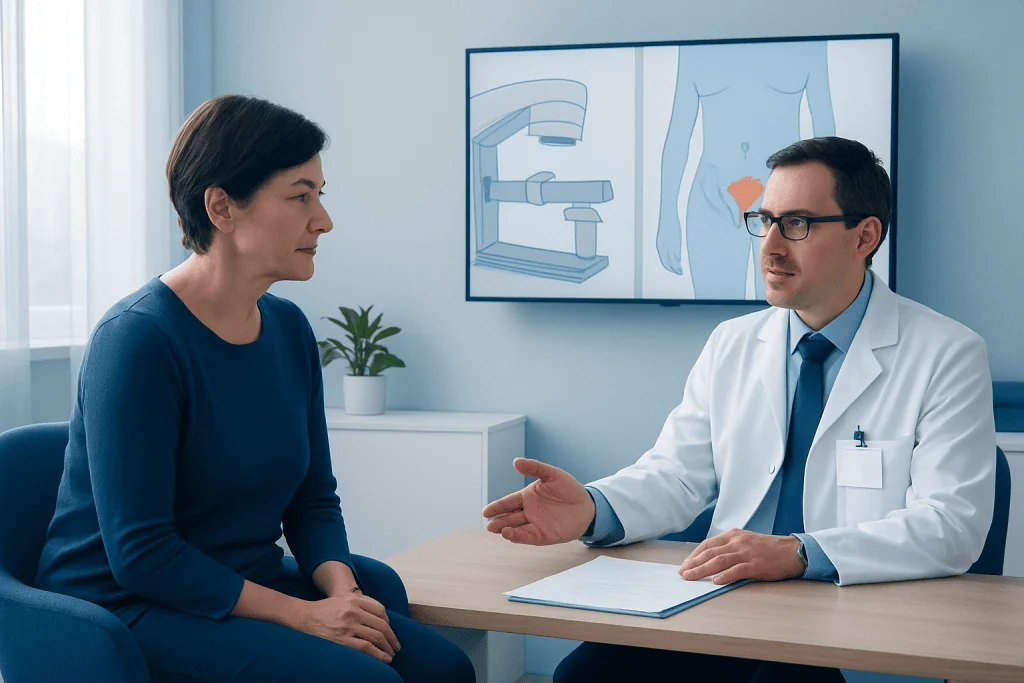
Before treatment begins, the radiation oncology team holds a consultation to review pathology reports, scans, symptoms, previous treatments, and personal priorities. The clinician explains the intended goal, expected benefits, possible side effects, and alternatives. Questions about fertility, sexual health, bowel and bladder symptoms, and practical travel or work arrangements are appropriate to raise at this visit.
The next step is simulation, a planning appointment rather than a treatment session. A CT scan is typically performed in the treatment position, often with customized supports to help the person lie comfortably and consistently. Small skin marks or tattoos may be used as alignment guides. In some cases, instructions about bladder filling or bowel preparation help move normal organs away from the radiation field.
Radiation oncologists, medical physicists, and dosimetrists use these images to create a personalized treatment plan. The planning process may take several days to a couple of weeks. During daily external beam treatments, the person lies on the treatment table while staff position them precisely; the machine moves around the body but does not touch it. The radiation itself is painless, and each visit commonly lasts around 15 to 30 minutes, although the actual beam-on time is shorter.
Regular on-treatment reviews allow the team to check side effects, nutrition, hydration, pain control, and emotional wellbeing. Follow-up after radiation is coordinated with the gynecologic oncology team and may include physical examinations, tumor-marker testing when relevant, and imaging based on the clinical situation.
How long is radiation for ovarian cancer?
The length of radiation for ovarian cancer varies with the treatment goal, the site being treated, the tumor size, and the technique used. Symptom-relieving radiation may be delivered over a short course, sometimes only a few visits. Treatment intended to achieve stronger local control may be given over more sessions, often on weekdays over several weeks.
Stereotactic treatment, when appropriate, can sometimes deliver highly focused radiation in fewer sessions. It is not suitable for every tumor, particularly when a target is close to sensitive organs or is too large for safe high-dose treatment. The radiation oncologist will explain why a particular schedule is recommended.
Appointments are usually outpatient, meaning the person returns home after each session. A treatment schedule may be adjusted if side effects, illness, technical factors, or other medical needs arise. Completing the planned course matters, but the team can provide support and make safe modifications if difficulties develop.
Benefits, risks and what to expect during recovery
Potential benefits of radiation include shrinking or stabilizing a treated tumor, reducing pain, controlling bleeding, easing pressure on nearby structures, and delaying growth at a specific site. The response can differ from person to person and depends on the biology of the cancer, the amount of disease, previous treatment, and whether cancer is present elsewhere in the body.
Short-term side effects depend largely on the treatment area. Pelvic or abdominal radiation can cause tiredness, nausea, reduced appetite, loose stools, abdominal cramping, gas, urinary frequency, burning with urination, or skin irritation in the treated region. If radiation is directed at bone or another organ, symptoms and side effects will differ. The treatment team can recommend practical measures and medications when needed.
Most short-term effects build gradually during treatment and improve over several weeks afterward. Fatigue may take longer to settle. Less commonly, radiation can lead to longer-lasting bowel, bladder, sexual, fertility, bone, nerve, or tissue changes, depending on the site and dose. Careful planning lowers these risks but cannot remove them entirely.
Recovery is supported by rest balanced with gentle activity, adequate fluids, nourishing foods as tolerated, and early reporting of new symptoms. Do not start supplements, anti-diarrheal medicines, or other remedies without checking with the cancer care team, as individual guidance may be needed.
What I wish I knew before radiation?
Many people find it helpful to know that radiation appointments themselves are usually brief and painless, but preparation and positioning are important parts of each visit. It is also useful to expect that fatigue and bowel or bladder changes may develop gradually rather than immediately. Keeping a simple record of symptoms, food intake, medicines, and questions can make clinic reviews more productive.
Before treatment starts, it can help to ask which organs are near the planned radiation field, which side effects are most likely, how to reach the team after hours, and whether there are diet or bladder-preparation instructions. People should also tell the team about prior radiation, implanted medical devices, pregnancy or possible pregnancy, current medications, and any history of inflammatory bowel disease or urinary problems.
Practical planning can reduce stress. Arranging transport if fatigue becomes difficult, wearing loose comfortable clothing, and identifying support at home may be useful. Emotional responses are common during cancer treatment, and counseling, support groups, palliative care, and social-work services can be valuable at any stage.
What are the hardest days after radiation treatment?
For many people, the most difficult period is the final week of treatment and the first one to two weeks after it ends. Radiation effects can continue to develop briefly after the last session because the body is still responding to treatment. Fatigue, bowel changes, urinary irritation, nausea, or skin sensitivity may be more noticeable during this time.
Symptoms often begin to improve over the following weeks, though the pace differs between individuals. The team should be contacted promptly if side effects interfere with drinking fluids, eating, sleeping, or daily activities. Supportive treatments can often make recovery more manageable.
It is important not to assume every new symptom is an expected radiation effect. Severe or worsening abdominal pain, persistent vomiting, fever, inability to pass urine, heavy bleeding, black stools, confusion, sudden weakness, or shortness of breath require urgent medical assessment.
Can you be fully cured of ovarian cancer?
Whether ovarian cancer can be cured depends on the type and stage of cancer, how much disease is present, whether it can be completely removed with surgery, and how it responds to treatment. Some people, especially those diagnosed at an earlier stage, can remain free of cancer long term after treatment. Others may experience recurrence and need further treatment over time.
When radiation is used for a single or limited recurrence, it may provide long-lasting control in that treated area. However, radiation to one location does not necessarily treat cancer cells elsewhere in the body. The oncology team will discuss the realistic aim of treatment using the person’s scan results, pathology, previous therapies, and overall health.
Ongoing follow-up is important even after a good response. New symptoms do not always mean recurrence, but persistent bloating, pelvic or abdominal pain, changes in bowel or bladder habits, unexplained weight loss, new bleeding, or increasing fatigue should be discussed with a clinician.
When to seek medical care
Anyone receiving radiation should contact their oncology team for symptoms that are new, severe, persistent, or difficult to manage. The team should also know about dehydration, repeated diarrhea, painful urination, worsening pelvic or abdominal pain, inability to maintain food or fluid intake, or side effects that prevent normal activities.
Emergency care is appropriate for heavy bleeding, severe pain, repeated vomiting, fever with feeling unwell, fainting, chest pain, shortness of breath, confusion, sudden weakness, or inability to pass urine or stool with significant discomfort. These symptoms may have causes unrelated to radiation but should not be delayed.
At Acibadem International, multidisciplinary specialists in JCI-accredited hospitals assess ovarian cancer and coordinate individualized treatment plans for international patients. A gynecologic oncologist and radiation oncologist can explain whether radiation has a role in a person’s specific care plan and arrange appropriate follow-up.
Frequently asked questions
Is radiation therapy commonly used for ovarian cancer?
Radiation is not usually the primary treatment for ovarian cancer because the disease often involves more than one area within the abdomen or pelvis. It may be used for a localized recurrence, persistent disease in a specific site, or symptom relief such as pain or bleeding. The decision is made individually by the cancer care team.
Is radiation therapy for ovarian cancer painful?
External beam radiation itself is painless. A person may need to lie still in a specific position during treatment, but the machine does not touch the body. Side effects such as fatigue, bowel changes, or urinary irritation can develop later depending on the treated area.
Can radiation be given after ovarian cancer surgery?
In selected situations, radiation may be considered after surgery if there is a specific area at high risk of local recurrence or remaining disease that can be safely targeted. It is not routinely used after surgery for every person with ovarian cancer. The recommendation depends on pathology, imaging, prior therapy, and the location of disease.
Will radiation make ovarian cancer symptoms better right away?
Symptom improvement may begin during treatment or in the weeks after it ends, but the timing varies. Pain, bleeding, or pressure caused by a treated tumor may improve as the tumor responds. The care team can provide supportive treatment while waiting for radiation effects to develop.
Can radiation affect fertility or menopause?
Radiation directed at the pelvis can affect the ovaries, uterus, and sexual tissues, and may affect fertility or trigger menopause in some circumstances. The risk depends on the dose, field, age, and whether the ovaries have already been removed. Fertility and hormone-related concerns should be discussed before treatment begins whenever possible.
Can a person work during radiation treatment?
Some people continue working or maintaining usual routines during treatment, particularly with a short course. Others need reduced hours or time away because of fatigue, appointments, travel, or side effects. Planning with the care team and employer can help make the schedule more manageable.
References
- National Cancer Institute
- American Cancer Society
- National Comprehensive Cancer Network
- European Society for Medical Oncology
- American Society for Radiation Oncology
This article is for general information only and is not a substitute for professional medical advice. Please consult a qualified doctor about your individual situation.
Radiation Therapy in Turkey — costs, top hospitals & a free quote
JCI-accredited · board-certified surgeons · reply within 24h
Add us as a Preferred Source to see more of our trusted health content across Google Search, AI Overviews and Discover.

Radiation Oncology
Precision radiotherapy and radiosurgery using advanced linear accelerators and image-guided techniques.
26 specialists in this unit