Neurologist Specialist in Parkinson: An Evidence-Based Patient Guide

A movement-disorder neurologist has focused expertise in Parkinson’s disease and related conditions. Parkinson’s disease mainly affects brain cells that produce dopamine, leading to movement and non-movement symptoms.
Key Takeaways
- A movement-disorder neurologist has focused expertise in Parkinson’s disease and related conditions.
- Parkinson’s disease mainly affects brain cells that produce dopamine, leading to movement and non-movement symptoms.
- Diagnosis is clinical and is based on history and neurological examination; no single blood test confirms Parkinson’s disease.
- Treatment is individualized and may include medication, exercise, rehabilitation and advanced therapies.
- A 5:2:1 pattern can indicate that a medication review with a Parkinson’s specialist may be helpful.
- Prompt assessment is important for new, worsening or atypical neurological symptoms.
A neurologist specialist in Parkinson is usually a neurologist with expertise in movement disorders who evaluates symptoms, confirms or revises the diagnosis, and creates an individual long-term care plan. Parkinson’s care often combines medicines, rehabilitation, lifestyle support and, for selected people, advanced treatments such as deep brain stimulation.
Overview: What a neurologist specialist in Parkinson does
A neurologist specialist in Parkinson is a doctor who diagnoses and manages Parkinson’s disease, often with additional training or substantial experience in movement disorders. This specialist evaluates changes in movement, balance, sleep, thinking, mood, digestion and medication response. Their role is not only to prescribe treatment, but also to help a person and their family understand the condition and plan care over time.
Parkinson’s disease is a progressive neurological condition. It most often develops gradually and can affect people differently. Symptoms may be managed effectively for many years, especially when treatment is regularly reviewed and includes rehabilitation, physical activity and attention to non-movement symptoms.
Care commonly involves a wider team. Depending on a person’s needs, this may include a Parkinson’s nurse, physiotherapist, occupational therapist, speech and language therapist, dietitian, psychologist, psychiatrist, sleep specialist and neurosurgeon. A coordinated approach can support independence, safety and quality of life.
What organ is most affected by Parkinson’s disease?
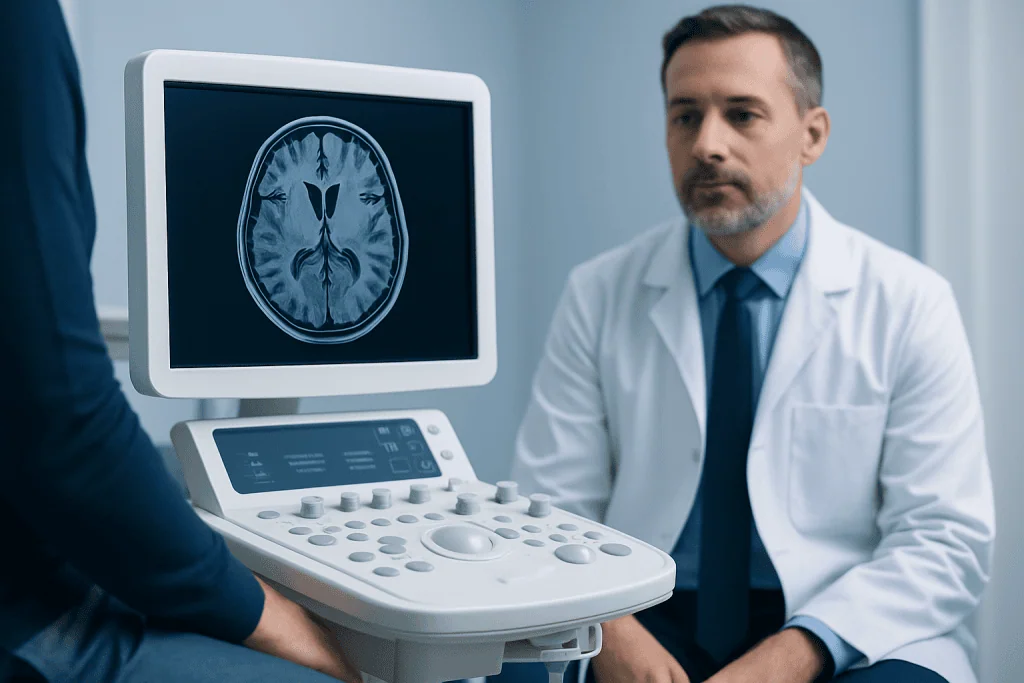
The organ most affected by Parkinson’s disease is the brain. In particular, the condition involves gradual loss of nerve cells in an area called the substantia nigra, which is part of the midbrain. These cells normally make dopamine, a chemical messenger that helps regulate smooth, purposeful movement.
When dopamine levels fall, a person may develop slowness of movement, stiffness, tremor or changes in walking and balance. Parkinson’s also affects networks beyond those controlling movement. This helps explain why some people experience constipation, reduced sense of smell, sleep disturbance, low mood, anxiety, pain, fatigue or changes in thinking.
Parkinson’s disease is not simply a tremor condition. A thorough neurological review considers the full range of symptoms, other health conditions and the effect of symptoms on daily activities. More information about the condition is available in this Parkinson’s disease overview.
Symptoms, causes and risk factors
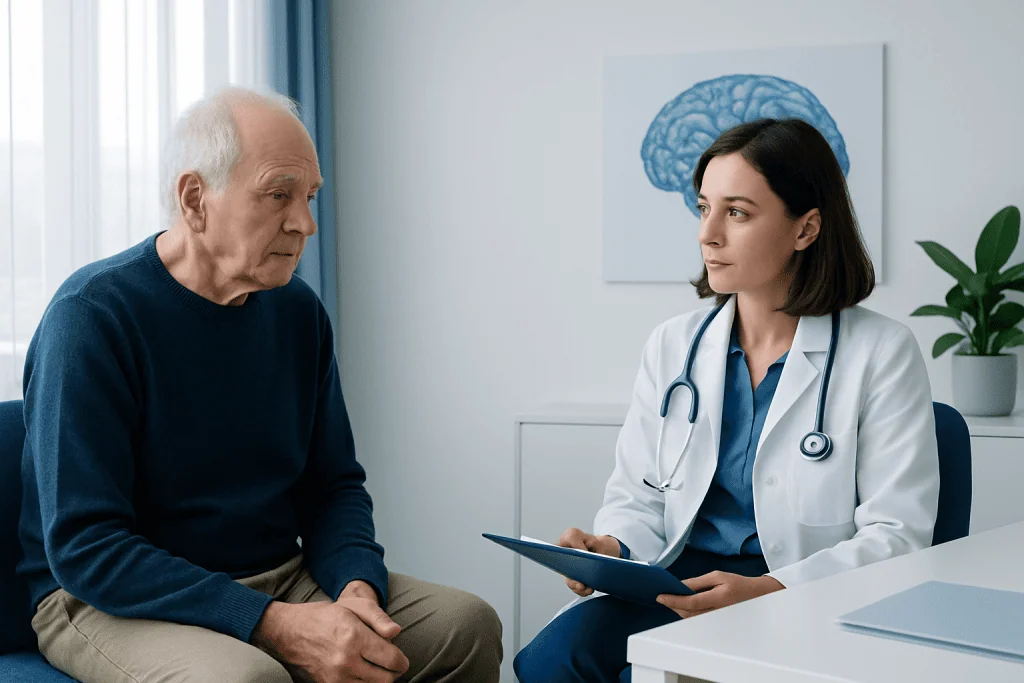
The main movement symptoms of Parkinson’s disease are bradykinesia, meaning slowness of movement, along with stiffness and sometimes a resting tremor. Walking may become slower or shuffling, arm swing may reduce, handwriting may become smaller, and facial expression or voice volume may change. Balance difficulties often occur later, but early falls should be assessed carefully because they can suggest another condition.
Non-movement symptoms may occur before, alongside or after movement symptoms. These can include constipation, urinary symptoms, sleep problems, vivid dreams, daytime sleepiness, reduced smell, depression, anxiety, fatigue, sexual difficulties, pain and cognitive changes. Not every symptom is caused by Parkinson’s disease, so clinicians evaluate other possible explanations as well.
The precise cause is not fully understood. Parkinson’s disease is thought to arise from a combination of aging, genetic susceptibility and environmental influences. Most cases are not directly inherited. A family history, younger age at onset or unusual features may lead a neurologist to discuss genetic counseling or testing, where appropriate.
Several other conditions can resemble Parkinson’s disease, including essential tremor, medication-induced parkinsonism and atypical parkinsonian disorders. This is one reason expert assessment and follow-up matter: the pattern of symptoms and response to treatment can become clearer over time.
Who is the best doctor for Parkinson’s disease?
There is no single doctor who is best for every person with Parkinson’s disease. For most people, the most appropriate lead clinician is a neurologist with expertise in movement disorders, often called a movement-disorder specialist. They have focused experience distinguishing Parkinson’s disease from similar conditions and adjusting treatment as symptoms change.
A general neurologist can also provide high-quality Parkinson’s care, particularly where movement-disorder services are not readily available. Referral to a specialist is especially useful when the diagnosis is uncertain, symptoms progress unexpectedly, medication effects become difficult to manage, falls occur, or advanced treatment is being considered.
The best clinical relationship is one in which the specialist listens to the person’s priorities, explains choices clearly and works with rehabilitation and other health professionals. Regular appointments allow treatment to be adjusted for both movement symptoms and less visible concerns such as sleep, mood or cognition.
Diagnosis and building an individualized care plan
Parkinson’s disease is diagnosed primarily through a detailed medical history and neurological examination. The neurologist looks for bradykinesia together with features such as rigidity, resting tremor or characteristic walking changes. They also ask about symptom timing, medications, family history, sleep, bowel function, mood and everyday functioning.
There is no single routine blood test or scan that confirms Parkinson’s disease. Blood tests, brain imaging or other assessments may be used to exclude alternative causes of symptoms or investigate atypical features. In selected cases, dopamine transporter imaging may provide supporting information, but it does not replace a specialist clinical assessment.
At the first consultation, patients can help by bringing a list of current medicines, a record of symptoms, relevant test results and a family member or friend when possible. Short videos of intermittent tremor, walking changes or involuntary movements may also be useful. The specialist then works with the patient to set practical goals, such as improving mobility, sleep, work participation or confidence outdoors.
Treatment options and the role of advanced procedures
Parkinson’s treatment is tailored to symptoms, daily activities, age, other medical conditions and personal goals. Dopamine-replacement medicines and other Parkinson’s medicines can improve slowness, stiffness and tremor for many people. The neurologist reviews benefit, side effects, timing of doses and any wearing-off periods, then adjusts the plan cautiously rather than relying on a one-size-fits-all approach.
Exercise and rehabilitation are core parts of care at every stage. Physiotherapy can address walking, posture, balance and falls prevention. Occupational therapy may support daily tasks and home safety, while speech and language therapy can help with a quiet voice, communication or swallowing concerns. Sleep, constipation, mood and cognitive symptoms should also be assessed and treated individually.
For people whose symptoms remain troublesome despite carefully optimized medicines, advanced options may be discussed. These include medication-delivery therapies and deep brain stimulation, also called DBS. DBS does not cure Parkinson’s disease or stop progression, but it may reduce selected movement symptoms and medication-related fluctuations in appropriately selected patients.
A multidisciplinary team is important when advanced treatment is being considered. Acibadem International’s multidisciplinary specialists and JCI-accredited hospitals assess and treat neurological conditions for international patients, including coordinated evaluation for Parkinson’s care.
How deep brain stimulation works, candidacy, steps and recovery
Deep brain stimulation is a surgical treatment in which thin electrodes are placed in carefully selected areas of the brain that influence movement. The electrodes connect to a small pulse generator placed under the skin, usually in the chest. The device sends controlled electrical signals that can modify abnormal movement circuits; it does not destroy brain tissue.
DBS is generally considered for people with a clear diagnosis of Parkinson’s disease who have meaningful improvement with levodopa but experience disabling wearing-off periods, troublesome involuntary movements or medication-resistant tremor. It is not suitable for everyone. The evaluation may include neurological examinations, medication-response testing, brain imaging, neuropsychological assessment and discussion of medical, cognitive and emotional health.
During the procedure, a neurosurgical team uses detailed imaging and targeting methods to place the electrodes. Depending on the center and individual plan, parts of the surgery may be performed while the person is awake or under anesthesia. A later procedure may place the pulse generator and connect the system. After surgery, the device is programmed over follow-up visits, and Parkinson’s medicines may be adjusted gradually.
Recovery varies. Many people return home after a short hospital stay, while wound healing and initial programming take place over the following weeks. Benefits may develop as settings are refined. Possible risks include bleeding, infection, seizure, stroke-like complications, hardware problems, speech or balance changes, and mood or cognitive effects. The team discusses expected benefits and risks in relation to the individual’s symptoms and health.
What is the 5:2:1 rule for Parkinson’s?
The 5:2:1 rule is a practical prompt used to identify people who may benefit from a review by a Parkinson’s specialist. It refers to taking levodopa five or more times a day, having two or more hours of “off” time daily when symptoms return between doses, or experiencing one or more hours of troublesome dyskinesia, meaning involuntary movements.
It is not a diagnosis, a severity score or a rule that automatically means surgery is needed. Instead, it signals that treatment may be becoming more complex. A neurologist can review medicine timing, identify triggers, consider rehabilitation needs and discuss whether advanced therapies might be appropriate.
People should not change or stop Parkinson’s medication suddenly without medical advice. Keeping a diary of dose times, symptom fluctuations, sleep, meals and involuntary movements can help the clinician understand the pattern and make safer adjustments.
What is the new breakthrough treatment for Parkinson’s disease?
There is currently no single new breakthrough treatment that cures Parkinson’s disease or reliably stops its progression. Research is active in areas such as treatments targeting alpha-synuclein, gene-based therapies, cell therapies and medicines intended to protect nerve cells. These approaches remain under study, and their safety and long-term benefits must be established through well-designed clinical trials.
For people living with Parkinson’s disease today, important advances include more individualized medication strategies, improved device-assisted therapies, refined DBS techniques and better recognition of non-movement symptoms. These can provide meaningful symptom control when chosen carefully by an experienced team.
Clinical trials may be an option for some individuals, but participation should be discussed with a neurologist. A specialist can explain the purpose of a study, possible burdens and uncertainties, eligibility requirements, and how trial participation fits with standard care.
When to seek medical care
A person should arrange a medical assessment for a new resting tremor, persistent slowness, stiffness, shuffling walk, reduced arm swing, unexplained loss of balance or a marked change in handwriting or voice. These symptoms can have several causes, and early assessment supports appropriate diagnosis and treatment.
People already diagnosed with Parkinson’s should contact their care team if medication is wearing off sooner, involuntary movements become troublesome, falls increase, swallowing becomes difficult, hallucinations develop, mood changes are severe, or daily tasks become harder. These changes do not always mean the disease has suddenly worsened, but they deserve review.
Urgent medical help is needed for sudden weakness, facial drooping, new speech difficulty, severe confusion, chest pain, loss of consciousness, a serious fall or signs of infection after a procedure. Such symptoms may not be caused by Parkinson’s disease and should be evaluated promptly.
Frequently asked questions
When should someone see a neurologist specialist in Parkinson?
A person should see a neurologist when they develop persistent tremor, slowness, stiffness, walking changes or balance concerns. A movement-disorder specialist is particularly helpful when the diagnosis is uncertain, symptoms are complex, medicines cause fluctuations, or advanced treatment is being considered.
Can a neurologist diagnose Parkinson’s disease without a scan?
Yes. Parkinson’s disease is usually diagnosed from the medical history and neurological examination. Scans and laboratory tests may be used to rule out other causes or support assessment in selected cases, but no single test confirms every case.
Who is the best doctor for Parkinson’s disease?
A neurologist with movement-disorder expertise is often the most suitable specialist for Parkinson’s disease. The right doctor is also someone who provides ongoing follow-up, communicates clearly and coordinates rehabilitation and other needed services.
What is the 5:2:1 rule for Parkinson’s?
The 5:2:1 rule suggests specialist review when a person takes levodopa at least five times daily, has at least two hours of off time, or has at least one hour of troublesome dyskinesia per day. It is a prompt for reassessment, not a rule that automatically requires surgery or another advanced treatment.
What is the new breakthrough treatment for Parkinson’s disease?
There is no proven treatment that currently cures Parkinson’s disease or stops its progression. Research into gene therapies, cell therapies and disease-modifying medicines is continuing, while existing treatments can often improve symptoms and daily functioning.
What organ is most affected by Parkinson’s disease?
Parkinson’s disease primarily affects the brain, especially dopamine-producing cells in the substantia nigra. Changes in other brain networks can also contribute to sleep, mood, bowel, cognitive and autonomic symptoms.
References
- Parkinson’s Foundation
- National Institute of Neurological Disorders and Stroke
- National Institute for Health and Care Excellence
- International Parkinson and Movement Disorder Society
- Michael J. Fox Foundation for Parkinson’s Research
This article is for general information only and is not a substitute for professional medical advice. Please consult a qualified doctor about your individual situation.
Explore treatments in Turkey — costs, top hospitals & a free quote
JCI-accredited · board-certified surgeons · reply within 24h
Add us as a Preferred Source to see more of our trusted health content across Google Search, AI Overviews and Discover.

More from the Health Library


Related Specialists
Dr. Ahmet Alan
General Surgery
Fzt. Serkan Başkurt
Physical Medicine and Rehabilitation
Dr. Sirri Baştürk
Orthopedic Surgery & Traumatology
Prof. Dr. Hakan Yavuzer
Internal Medicine