Pediatric Cataract: An Evidence-Based Patient Guide

Pediatric cataracts may be present at birth or develop during childhood and can affect one or both eyes. A cataract that blocks the visual pathway can lead to amblyopia, also called “lazy eye,” without timely treatment.
Key Takeaways
- Pediatric cataracts may be present at birth or develop during childhood and can affect one or both eyes.
- A cataract that blocks the visual pathway can lead to amblyopia, also called “lazy eye,” without timely treatment.
- Some small, non-central cataracts can be monitored, while visually significant cataracts usually need surgery.
- Pediatric cataract surgery is typically performed under general anesthesia and is followed by long-term vision rehabilitation.
- Glasses, contact lenses, patching, and regular eye examinations can be as important as the operation itself.
A pediatric cataract is a cloudy area in the natural lens of an infant’s or child’s eye. Because clear vision is needed for the brain to learn how to see, prompt assessment by a pediatric eye specialist is important, even when the clouding appears small or the child seems comfortable.
Overview: What Is a Pediatric Cataract?
A pediatric cataract is a loss of clarity in the eye’s natural lens in a baby, child, or teenager. The lens normally focuses light onto the retina, the light-sensitive tissue at the back of the eye. When the lens becomes cloudy, light may be scattered or blocked, causing blurred vision or preventing a clear image from reaching the developing visual system.
Cataracts in children are uncommon, but they require careful attention because vision develops rapidly in early life. If one eye sends a blurred image to the brain, the brain may gradually rely more on the clearer eye. This can cause amblyopia, a reduction in vision that may persist even after the cataract is removed unless it is treated appropriately.
A cataract may affect one eye or both eyes and may involve the center or edge of the lens. Its impact depends on its location, density, size, the child’s age, and whether another eye condition is present. A pediatric ophthalmologist can determine whether the cataract is likely to interfere with visual development and whether observation or treatment is appropriate.
Signs and Symptoms in Babies and Children
Children do not always report blurred vision, especially infants and toddlers who have never experienced normal vision. Parents, caregivers, and clinicians may instead notice a white, gray, or dull-looking pupil, an unusual reflection in photographs, or a difference between the appearance of the two eyes. A visible white pupil requires urgent medical assessment because several conditions, not only cataract, can cause this sign.
Other possible signs include poor eye contact, failure to follow faces or objects, eye wandering, crossing of the eyes, shaking eye movements called nystagmus, frequent head turning, squinting, or difficulty with schoolwork and visually demanding activities. A child with a cataract in one eye may appear to see well because the other eye compensates.
Not every cataract causes obvious symptoms. Cataracts found during routine newborn screening or an eye examination can be small and may not affect the visual axis. Regular follow-up remains important, as the appearance of the cataract and the child’s visual needs can change over time.
Causes and Risk Factors

Some pediatric cataracts are congenital, meaning they are present at birth. Others develop later in childhood. In many cases, especially when only one eye is affected, no definite cause is identified. This is not usually the result of anything a parent did or did not do during pregnancy or childhood.
Potential causes include inherited genetic changes, metabolic disorders, eye inflammation, eye injury, previous eye surgery, and long-term use of certain medicines such as corticosteroids. Cataracts can also occur with some infections during pregnancy or alongside syndromes that affect other parts of the body. When both eyes are affected, a family history or an underlying health condition may be more likely, although this is not always the case.
The eye specialist may recommend evaluation by a pediatrician, genetic specialist, or other relevant clinician when the cataracts are bilateral, there are additional health findings, or the family history suggests an inherited condition. Testing is individualized; extensive testing is not needed for every child.
Diagnosis and Vision Assessment
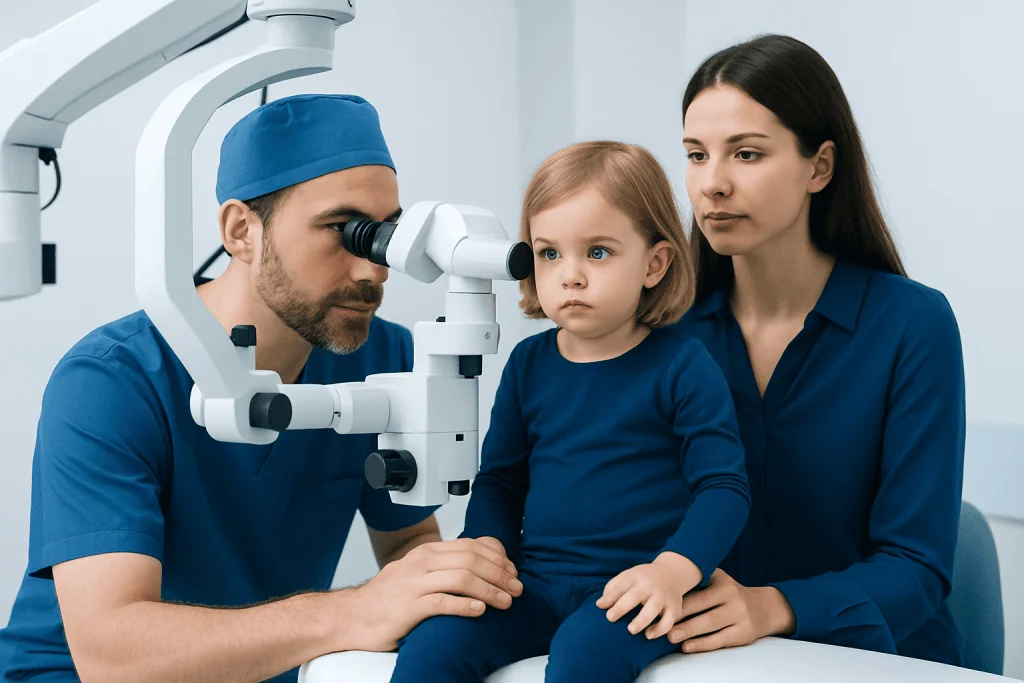
Diagnosis begins with a detailed eye examination by an ophthalmologist experienced in caring for children. The examination assesses the lens, pupil reflex, eye alignment, retina, and other structures that can affect vision. In younger children, dilating drops help the doctor view the lens and back of the eye more fully.
The clinician also evaluates how well each eye is seeing at the child’s developmental stage. This may involve observing fixation and following behavior in infants, using picture-based or letter-based tests in older children, and measuring the need for glasses. If the examination cannot be completed safely in the clinic, an examination under anesthesia may be recommended.
Additional tests are guided by the individual situation. Ultrasound may be used when the cataract prevents a clear view of the retina. Blood tests, genetic assessment, or pediatric review may be considered when there is a concern for an associated systemic condition. Early assessment helps the care team plan pediatric cataract treatment around both the lens opacity and the child’s visual development.
Pediatric Cataract Treatment and Surgery
Treatment depends on whether the cataract significantly blocks or distorts vision. A small cataract outside the central visual pathway may be monitored with scheduled examinations, glasses if needed, and treatment for amblyopia when appropriate. Monitoring is active care: parents should keep follow-up appointments and report any changes in eye appearance, alignment, or visual behavior.
When the cataract is visually significant, pediatric cataract removal is generally recommended to clear the visual pathway. During pediatric cataract extraction, the surgeon makes small openings in the eye, removes the cloudy lens material, and may create an opening in the lens capsule behind it. In younger children, the surgeon may also remove a small amount of the gel-like vitreous behind the lens to lower the chance that the visual axis becomes cloudy again.
Pediatric cataract anesthesia is usually general anesthesia because children need to remain completely still and comfortable during delicate eye surgery. An anesthesiology team reviews the child’s health before the procedure and monitors breathing, heart rate, and other vital signs throughout. Parents should follow the hospital’s fasting and medication instructions carefully before surgery.
After the natural lens is removed, the eye needs optical correction. Depending on the child’s age, eye anatomy, and the type of cataract, this may be a contact lens, glasses, or an intraocular lens implant. An intraocular lens is an artificial lens placed inside the eye, but it is not the best choice for every infant or child. The ophthalmologist discusses the expected benefits and limitations of each option with the family.
Parents may encounter the term “pediatric cataract surgery CPT” in insurance documentation or billing discussions. CPT codes are administrative procedure codes and do not determine whether surgery is medically appropriate. The clinical decision is based on the cataract’s effect on vision and the child’s individual eye examination.
What to Expect: Candidacy, Recovery, Benefits and Risks
A child may be a candidate for surgery when the cataract obstructs the central visual axis, causes reduced vision, contributes to amblyopia, or prevents the eye specialist from monitoring important structures at the back of the eye. Timing is individualized. For dense congenital cataracts, prompt treatment can be particularly important because early visual deprivation may affect long-term vision development.
On the day of surgery, the child is admitted, assessed by the surgical and anesthesia teams, and taken to the operating room after anesthesia begins. The operation itself is commonly performed as a day procedure, although the care plan varies by age and medical needs. After surgery, the eye is usually protected with a shield, and prescribed eye drops help reduce inflammation and lower infection risk.
Many children return to gentle daily activities within several days, but eye rubbing, rough play, swimming, and activities that may injure the eye may need to be avoided temporarily. Follow-up visits are frequent at first and continue for years. The optical prescription may change as the eye grows, and children may need contact lens fitting, glasses adjustments, or amblyopia treatment such as patching the stronger eye.
The main benefit of surgery is restoration of a clearer pathway for vision. Possible risks include infection, bleeding, inflammation, increased eye pressure or glaucoma, retinal problems, clouding of the visual axis, changes in refractive error, and the possible need for additional procedures. These complications are not inevitable, but lifelong ophthalmic follow-up is important because some can develop months or years later.
Supporting Vision Development After Treatment
Removing a cataract is only one part of care. The brain must learn to use the visual information from the treated eye, particularly when the cataract developed early in life. Consistent use of prescribed glasses or contact lenses and careful adherence to patching or other amblyopia therapy can have a major effect on visual outcomes.
Parents may find contact lens care challenging in babies and young children, but the eye-care team can provide practical instruction on insertion, removal, cleaning, and replacement schedules. Families should not alter a lens-care plan, stop prescribed drops, or change patching routines without discussing it with the treating clinician.
Children also benefit from routine developmental and educational support. Teachers and caregivers may need to know about the child’s visual needs, such as seating closer to learning materials, good lighting, protective eyewear for sports, and help recognizing changes in vision. Regular pediatric and eye examinations support the child’s overall health as well as vision.
When to Seek Medical Care
Parents should arrange a prompt eye assessment if they notice a white or gray pupil, an abnormal red reflex in photographs, persistent eye crossing, shaking eyes, reduced eye contact, or concern that a child is not seeing normally. A white pupil should be evaluated urgently, as it can be caused by conditions that require timely treatment.
After cataract surgery, families should contact the surgical team promptly for increasing eye redness, significant swelling, persistent or worsening pain, vomiting with eye discomfort, new discharge, fever with concerning symptoms, a change in the child’s vision behavior, or accidental eye injury. The treating team can advise whether same-day evaluation is needed.
Pediatric ophthalmologists, pediatricians, optometrists, anesthesiologists, genetic specialists, and low-vision or rehabilitation professionals may work together when needed. Acibadem International’s multidisciplinary specialists and JCI-accredited hospitals provide assessment and treatment planning for international patients with pediatric eye conditions.
Frequently asked questions
Can a pediatric cataract go away on its own?
A true cataract usually does not clear on its own. Small cataracts that do not interfere with the visual pathway may be observed closely, but they still need regular assessment by a pediatric eye specialist. A visually significant cataract generally requires treatment to protect vision development.
At what age can pediatric cataract surgery be performed?
Surgery can be performed in infancy when a cataract is dense or blocks the central visual pathway. The best timing depends on the child’s age, the density and position of the cataract, whether one or both eyes are involved, and the presence of other eye conditions. The pediatric ophthalmologist balances the need for prompt visual rehabilitation with surgical and anesthesia considerations.
Will a child need glasses after cataract removal?
Most children need optical correction after cataract removal because the natural lens is no longer available to focus light. Correction may involve glasses, contact lenses, an intraocular lens implant, or a combination over time. Prescriptions commonly change as the child’s eyes grow.
Is pediatric cataract surgery safe?
Pediatric cataract surgery is a well-established procedure performed by specialist eye surgeons, but all surgery carries risks. The care team discusses individual risks, including infection, inflammation, glaucoma, and the possibility of further treatment. Long-term follow-up is essential to detect and manage complications early.
What is amblyopia after a pediatric cataract?
Amblyopia occurs when the brain does not develop normal use of an eye because the image from that eye is blurred, blocked, or misaligned during childhood. A cataract can cause amblyopia, especially when it develops early or affects one eye more than the other. Treatment may include restoring a clear visual pathway, correcting focus with glasses or contact lenses, and patching or blurring the stronger eye under professional guidance.
Can children with cataracts play sports?
Many children can return to sports after recovery, with clearance from their ophthalmologist. Protective sports eyewear may be advised, especially for activities with a risk of eye injury. The timing of return depends on healing, the procedure performed, and the child’s individual eye health.
References
- American Academy of Ophthalmology
- American Association for Pediatric Ophthalmology and Strabismus
- National Eye Institute
- World Health Organization
This article is for general information only and is not a substitute for professional medical advice. Please consult a qualified doctor about your individual situation.
Explore treatments in Turkey — costs, top hospitals & a free quote
JCI-accredited · board-certified surgeons · reply within 24h
Add us as a Preferred Source to see more of our trusted health content across Google Search, AI Overviews and Discover.
Check your numbers in seconds
BMI, calories, due date, blood pressure and 30+ more clinical calculators — free, instant, doctor-reviewed ranges.