Hematemesis Treatment: How It Works, Results and What to Expect

Hematemesis means vomiting blood and should always be assessed urgently. Treatment depends on the amount of bleeding, the person's stability, and the underlying cause.
Key Takeaways
- Hematemesis means vomiting blood and should always be assessed urgently.
- Treatment depends on the amount of bleeding, the person's stability, and the underlying cause.
- Upper endoscopy can diagnose and often treat bleeding in the esophagus, stomach, or duodenum.
- Medicines, blood products, endoscopic therapy, radiology procedures, or surgery may be used when appropriate.
- Avoid eating, drinking, alcohol, and non-prescribed anti-inflammatory medicines until urgent medical advice is received.
Hematemesis treatment focuses first on safety: clinicians assess circulation, replace fluids or blood when needed, and rapidly identify the source of bleeding. Most people can recover when the cause is diagnosed and treated promptly, often with upper endoscopy and targeted medication or procedures.
Overview: How Hematemesis Treatment Works
Hematemesis is the medical term for vomiting blood. It may appear as bright-red blood, dark red or brown material, or vomit that resembles coffee grounds. Because it can indicate bleeding in the upper digestive tract, hematemesis treatment is usually urgent and begins with checking whether the person is stable, protecting their airway when necessary, and supporting blood circulation.
The immediate aim is to stop active bleeding and prevent complications from blood loss. The next aim is to find and treat its cause, which may range from irritation of the stomach lining to a bleeding ulcer, enlarged veins in the esophagus, or a tear caused by forceful vomiting. Care is individualized; some people need observation and medication, while others need endoscopic treatment, interventional radiology, or surgery.
Vomiting blood is different from coughing up blood, which usually comes from the lungs or airways. It is also different from blood that may be swallowed after a nosebleed. A clinical assessment is needed to determine the source safely.
What Does Hematemesis Vomit Look Like?
Hematemesis can look different depending on how quickly the blood is bleeding and how long it has been exposed to stomach acid. Fresh, rapidly bleeding blood may look bright red or contain red clots. Blood that has remained in the stomach longer may look dark brown, black, grainy, or similar to coffee grounds.
The amount of blood may be small or large, and appearance alone cannot reliably show how serious the situation is. Black, tar-like stools may also occur when blood passes through the digestive tract, although stool color can change for other reasons, including iron supplements and certain foods.
Anyone who vomits blood, coffee-ground material, or has black stools with weakness, dizziness, fainting, shortness of breath, or abdominal pain should seek emergency assessment. It is safest not to drive oneself if feeling unwell or light-headed.
What Is the Most Likely Cause of Hematemesis?

Bleeding peptic ulcers in the stomach or first part of the small intestine are among the most common causes of hematemesis. Ulcers can be linked to infection with Helicobacter pylori, use of nonsteroidal anti-inflammatory drugs such as ibuprofen or naproxen, or other factors. Peptic ulcer disease may cause burning upper abdominal discomfort, but some ulcers bleed without causing pain beforehand.
Other causes include inflammation of the stomach or esophagus, a small tear near the lower esophagus after repeated retching or vomiting, and enlarged veins in the esophagus or stomach called varices. Varices are most often associated with advanced liver disease and can cause significant bleeding. Less commonly, tumors, blood-clotting problems, or injury to the upper digestive tract may be responsible.
Risk can be higher in people who use anti-inflammatory pain medicines, aspirin, blood-thinning medicines, alcohol, tobacco, or who have liver disease, prior ulcers, or a history of gastrointestinal bleeding. A clinician should review all prescription medicines, over-the-counter products, supplements, and alcohol use because this information helps guide safe treatment.
Assessment, Candidacy, and Diagnosis
Anyone with suspected hematemesis is a candidate for urgent medical evaluation. In an emergency setting, the clinical team checks blood pressure, heart rate, oxygen level, mental alertness, urine output, and signs of ongoing blood loss. Two intravenous lines may be placed, and blood tests commonly assess blood count, clotting, kidney function, liver function, and blood type in case transfusion is required.
Clinicians also ask about the timing and appearance of vomiting, black stools, abdominal symptoms, prior bleeding, liver disease, recent vomiting, and medication use. A physical examination helps identify signs of dehydration, anemia, liver disease, or abdominal tenderness. This initial information helps determine whether close monitoring, admission to hospital, or intensive care is needed.
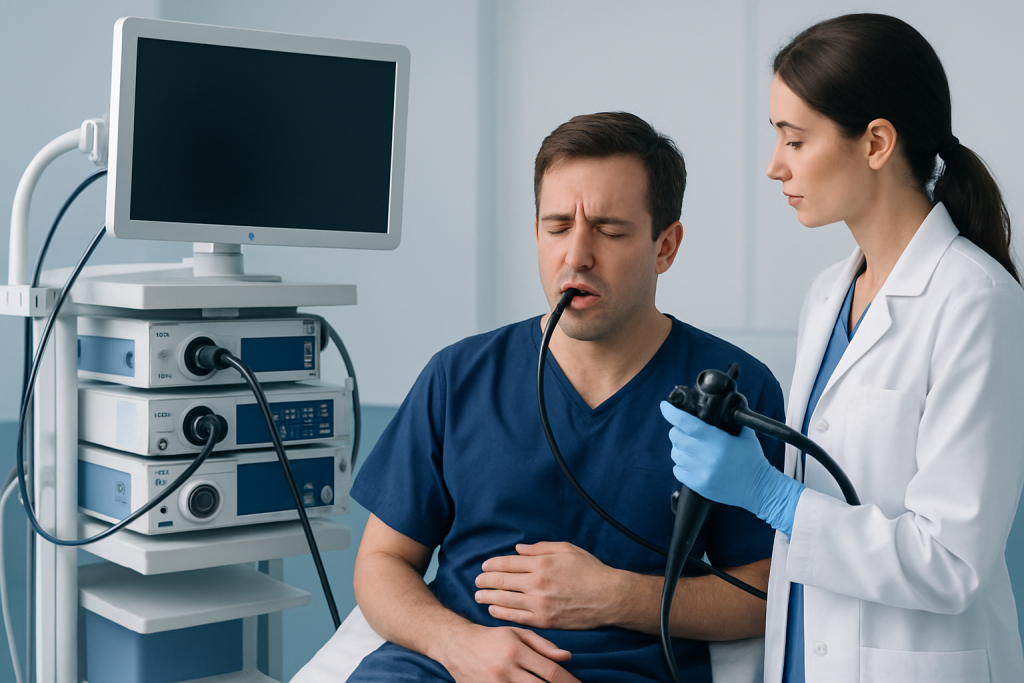
Upper gastrointestinal endoscopy is often the key test. A flexible camera passes through the mouth to examine the esophagus, stomach, and duodenum. It can identify the bleeding location and often provide treatment during the same procedure. In selected situations, CT imaging or angiography may help locate bleeding that is difficult to identify or control by endoscopy.
Step by Step: Endoscopic and Medical Treatment
First, the person is stabilized. This may involve intravenous fluids, oxygen, anti-nausea medicine, and blood products if blood loss is substantial or blood counts are low. Medicines that reduce stomach acid are commonly given when an ulcer-related upper gastrointestinal bleed is suspected. If variceal bleeding is possible, treatment may also include medicines that reduce pressure in the affected veins and antibiotics when clinically indicated.
During endoscopy, a gastroenterologist examines the lining of the upper digestive tract. Sedation is commonly used to improve comfort, and airway protection may be needed in people with heavy bleeding or reduced consciousness. If an ulcer or another accessible bleeding site is found, the specialist may inject medication, apply a clip, use heat-based therapy, or use topical agents to achieve hemostasis. This approach is part of upper gastrointestinal endoscopy.
If bleeding continues or returns despite endoscopic treatment, an interventional radiology team may block the bleeding blood vessel through a catheter-based procedure. Surgery is less commonly required but may be lifesaving when other methods cannot control bleeding. Once the immediate episode is controlled, treatment addresses the underlying condition, such as eliminating H. pylori, reviewing anti-inflammatory medicines, or managing liver disease and portal hypertension.
- Do not take aspirin, ibuprofen, naproxen, or similar medicines unless a treating clinician specifically advises it.
- Do not stop prescribed blood thinners independently; urgent clinicians should decide whether and how they need adjustment.
- Do not eat or drink if active bleeding is suspected, as an urgent procedure may be needed.
Benefits, Risks, and Recovery Timeline
The main benefit of prompt hematemesis treatment is control of bleeding before serious blood loss occurs. Endoscopy can frequently provide both a diagnosis and immediate treatment, reducing the need for surgery in many cases. Follow-up treatment lowers the chance of recurrent bleeding by addressing the cause rather than only the symptom.
Recovery depends on the amount of blood loss, the cause, other health conditions, and whether bleeding recurs. Some people are monitored for a short period and go home with medication and follow-up, while others need several days in hospital. Tiredness may persist after blood loss, especially if anemia developed, and blood counts may be checked during recovery.
Endoscopy is generally safe, but possible risks include a reaction to sedation, aspiration, bleeding, infection, and rarely a tear or perforation of the digestive tract. Endoscopic bleeding-control techniques and radiology procedures have additional procedure-specific risks, which the treating team discusses when possible. Repeat bleeding can occur, so it is important to follow discharge instructions and attend follow-up appointments.
Acibadem International’s multidisciplinary specialists in JCI-accredited hospitals evaluate and treat upper gastrointestinal bleeding for international patients, coordinating gastroenterology, emergency medicine, radiology, surgery, and other services when needed.
Is Hematemesis Painful?
Hematemesis itself may not be painful. Some people experience nausea, retching, weakness, or a sudden sensation of illness without significant pain. Others have pain from the underlying condition, such as a stomach ulcer, inflammation of the stomach lining, esophageal irritation, pancreatitis, or another abdominal disorder.
Severe or worsening chest pain, abdominal pain, fainting, confusion, difficulty breathing, or repeated vomiting of blood requires emergency care. The absence of pain does not mean the bleeding is minor, especially if there is dizziness, pallor, a fast heartbeat, or black stools.
After treatment, mild throat discomfort, bloating, or drowsiness can occur briefly after endoscopy and sedation. Persistent pain, fever, trouble swallowing, vomiting, or new bleeding after a procedure should be reported promptly to the treating team.
Can You Recover From Hematemesis?
Yes. Many people recover from hematemesis, particularly when the bleeding source is found and treated quickly. Recovery is influenced by the cause, the severity and duration of blood loss, age, overall health, use of blood-thinning medicines, and whether conditions such as liver disease are present.
Preventing another episode is an important part of recovery. Depending on the diagnosis, this may include completing treatment for H. pylori, using acid-reducing medicine for the recommended period, avoiding unnecessary anti-inflammatory drugs, limiting alcohol, stopping smoking, and attending follow-up endoscopy or liver care. A clinician may advise testing to confirm that an infection has cleared or to reassess ulcer healing in certain situations.
People who have had a gastrointestinal bleed should ask their doctor which pain medicines and supplements are safe. This is especially important for those who need aspirin or anticoagulants for heart, stroke, or clot prevention, as decisions about these medicines require careful balancing of bleeding and clotting risks.
When to Seek Medical Care
Vomiting blood should be treated as an emergency, even if the amount seems small or the person feels better afterward. Seek emergency medical care immediately for bright-red blood, coffee-ground vomit, black tar-like stools, fainting, confusion, severe weakness, sweating, rapid heartbeat, shortness of breath, severe abdominal pain, or ongoing vomiting.
While waiting for help, the person should sit or lie safely on their side if nauseated, avoid food, drinks, alcohol, and non-prescribed medicines, and keep any information about recent medicines available. If possible, a family member or friend should stay with the person. Emergency clinicians should be told about blood thinners, liver disease, prior ulcers, recent procedures, and any previous bleeding episode.
Even after bleeding has stopped, urgent same-day medical advice is appropriate. Early evaluation helps identify causes that may bleed again and supports a safer, more complete recovery.
Frequently asked questions
What is hematemesis treatment?
Hematemesis treatment is urgent care for vomiting blood. It includes stabilizing the person, finding the source of bleeding, and stopping it with medicines, endoscopy, radiology procedures, or surgery when needed.
Can you recover from hematemesis?
Many people recover fully, especially when the cause is identified and treated promptly. Recovery depends on the source and severity of bleeding, overall health, and whether there are conditions such as liver disease or clotting problems.
What does hematemesis vomit look like?
It may be bright red, dark red, or brown-black and grainy like coffee grounds. Coffee-ground material can indicate blood altered by stomach acid, but any suspected blood in vomit needs urgent medical assessment.
What is the most likely cause of hematemesis?
Bleeding from a peptic ulcer is a common cause. Other important causes include stomach or esophageal inflammation, a tear after forceful vomiting, and varices related to liver disease.
Is hematemesis painful?
It may be painless, although nausea, retching, or pain from the underlying digestive condition can occur. Lack of pain does not indicate that bleeding is mild, so urgent evaluation remains important.
Should a person eat or drink after vomiting blood?
It is generally safest to avoid food and drink until an urgent clinician provides instructions, since tests or endoscopy may be required. Emergency teams can provide fluids and other support safely if needed.
References
- American College of Gastroenterology
- National Institute of Diabetes and Digestive and Kidney Diseases
- National Health Service
- Merck Manual Consumer Version
- World Gastroenterology Organisation
This article is for general information only and is not a substitute for professional medical advice. Please consult a qualified doctor about your individual situation.
Explore treatments in Turkey — costs, top hospitals & a free quote
JCI-accredited · board-certified surgeons · reply within 24h
Add us as a Preferred Source to see more of our trusted health content across Google Search, AI Overviews and Discover.
Check your numbers in seconds
BMI, calories, due date, blood pressure and 30+ more clinical calculators — free, instant, doctor-reviewed ranges.