Primary Sclerosing Cholangitis Psc Treatment: How It Works, Results and What to Expect

PSC is a long-term disease that causes inflammation and scarring of bile ducts inside and outside the liver. Treatment focuses on treating dominant strictures, symptoms, infections, nutritional needs and complications of cirrhosis.
Key Takeaways
- PSC is a long-term disease that causes inflammation and scarring of bile ducts inside and outside the liver.
- Treatment focuses on treating dominant strictures, symptoms, infections, nutritional needs and complications of cirrhosis.
- Regular monitoring is important because PSC can raise the risk of bile duct cancer, gallbladder problems and colon cancer in people with inflammatory bowel disease.
- Disease progression is highly variable; some people remain stable for many years, while others develop advanced liver disease sooner.
- Liver transplantation is the established treatment for end-stage liver disease or certain serious PSC complications.
Primary sclerosing cholangitis (PSC) has no medication proven to stop the disease in every person, but treatment can relieve bile-duct blockages, manage itching and infections, monitor cancer risk, and address liver failure. Care is individualized and usually coordinated by hepatology, gastroenterology, endoscopy and transplant specialists.
Primary sclerosing cholangitis PSC treatment: how it works
Primary sclerosing cholangitis PSC treatment aims to protect health and quality of life by improving bile flow where possible, treating complications early and monitoring the liver over time. PSC causes ongoing inflammation and scarring in the bile ducts, the tubes that carry bile from the liver to the intestine. As ducts become narrowed, or strictured, bile may build up and damage the liver.
There is currently no medicine that reliably cures PSC or has been proven to prevent progression for every patient. A care plan may include blood tests and scans, endoscopic procedures to open an important narrowing, medicines for symptoms such as itching, antibiotics for bacterial cholangitis, and management of nutritional or liver-related complications.
When PSC leads to severe cirrhosis, repeated serious infections, poor quality of life from complications, or selected cancer-related concerns, liver transplantation may be considered. Treatment decisions are based on symptoms, liver function, imaging findings, the location of strictures and each person’s overall health.
Who may need treatment and specialist monitoring?

Anyone diagnosed with PSC should have follow-up with a hepatologist or gastroenterologist experienced in bile-duct disease, even if they feel well. Some people are diagnosed after abnormal liver blood tests, while others develop fatigue, itch, jaundice, fever, abdominal discomfort or recurrent bile-duct infections. Symptoms alone do not always show how active the disease is, so planned monitoring remains important.
Intervention is most often considered when a significant narrowing causes jaundice, worsening liver tests, itching, recurrent cholangitis or concern for a blockage that needs further assessment. A new or worsening dominant stricture needs careful evaluation because benign scarring, stones and cholangiocarcinoma can produce similar findings.
PSC is closely associated with inflammatory bowel disease, particularly ulcerative colitis. Patients may therefore need colonoscopy at diagnosis and at intervals advised by their clinical team. The care plan can involve hepatology, gastroenterology, endoscopy, radiology, pathology, nutrition and transplant services.
Step by step: testing, endoscopic treatment and follow-up
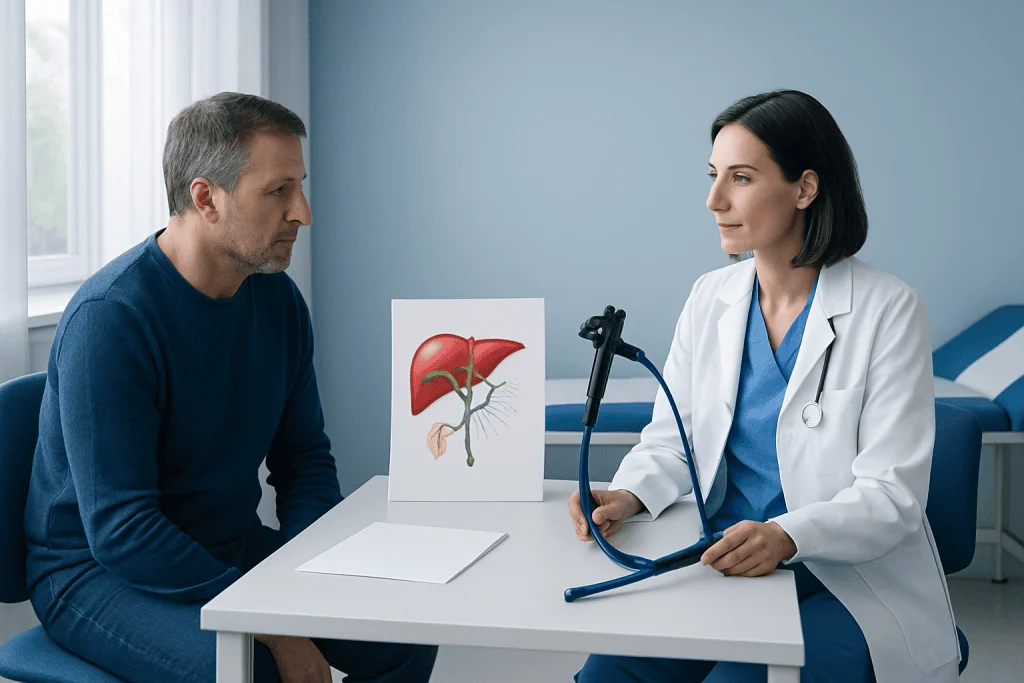
Evaluation usually starts with a review of symptoms, medical history, medicines and blood tests that assess liver inflammation, bile flow and liver function. Magnetic resonance cholangiopancreatography (MRCP), a noninvasive MRI-based scan of the bile ducts, is commonly used to assess the pattern and extent of PSC. Ultrasound, MRI or other imaging may also be used for surveillance and to investigate new symptoms.
If a concerning or clinically important narrowing is found, a doctor may recommend endoscopic retrograde cholangiopancreatography (ERCP). During this procedure, a flexible camera is passed through the mouth into the small intestine, and contrast dye is used to view the bile ducts with X-ray guidance. The specialist may collect brushings or biopsies, remove a stone if present, and widen an accessible stricture using a small balloon. A temporary stent is used selectively rather than routinely.
After ERCP, patients are observed for procedure-related problems and may go home the same day or after a short stay, depending on their condition and what was done. Follow-up includes reviewing symptoms and test results, arranging surveillance imaging or endoscopy when appropriate, and adjusting the management plan. ERCP is generally reserved for a specific clinical reason rather than repeated simply to monitor PSC.
- Blood tests help track cholestasis, liver function and complications.
- MRCP is often used for noninvasive assessment of the bile ducts.
- ERCP can diagnose and treat selected important strictures.
- Surveillance plans are individualized according to PSC type, inflammatory bowel disease and risk factors.
Benefits, limits and risks of PSC treatment
Opening a symptomatic major narrowing can improve bile drainage and may reduce jaundice, itching or repeated infections. Treating cholangitis promptly can prevent serious illness, while nutrition support and treatment of cirrhosis-related complications can improve comfort and day-to-day functioning. Regular follow-up also gives clinicians an opportunity to recognize concerning changes early.
However, balloon dilation or stenting treats a particular blockage; it does not remove the underlying tendency toward inflammation and scarring throughout the bile ducts. Medicines may help certain symptoms or correct deficiencies, but patients should discuss the expected benefit and possible side effects of any medication with their specialist. Unproven supplements should not replace medical follow-up.
ERCP carries risks, including pancreatitis, bleeding, infection, perforation and reactions to sedation, although serious complications are uncommon. Stents can become blocked or infected and may need planned removal. Liver transplantation is a major operation with risks related to surgery, infection and lifelong anti-rejection medicines, but it can be life-saving for advanced PSC-related liver disease.
Recovery, self-care and everyday planning
Recovery after a straightforward ERCP is often quick. A person may have mild throat discomfort, bloating or temporary tiredness from sedation and is usually advised not to drive, drink alcohol or make important decisions for the rest of the day. The clinical team will give specific instructions about eating, medicines and when to seek help.
Long-term self-care supports, but does not replace, specialist care. People with PSC can benefit from avoiding alcohol or discussing safe limits with their liver specialist, not smoking, keeping vaccinations up to date, maintaining a balanced diet and discussing calcium, vitamin D and other nutritional needs. Cholestasis can impair absorption of fat-soluble vitamins, and advanced liver disease may require more tailored dietary advice.
Before starting herbal products, over-the-counter medicines or new supplements, patients should ask a clinician or pharmacist to check liver safety and interactions. Emotional support is also valuable: living with an unpredictable chronic condition can be difficult, and counseling, patient support organizations and clear communication with the care team may help.
When to seek medical care
Urgent medical assessment is needed for fever, chills, new or worsening jaundice, severe upper abdominal pain, vomiting, confusion, fainting, black stools or vomiting blood. These symptoms can signal cholangitis, a blocked bile duct, gastrointestinal bleeding or another complication requiring prompt care. People with PSC should follow their clinician’s instructions about where to seek urgent help.
A non-urgent but timely review is appropriate for increasing itch, fatigue, unintended weight loss, pale stools, dark urine, new abdominal swelling, leg swelling, or a persistent change in symptoms. New symptoms do not automatically mean that PSC has progressed, but they deserve assessment.
Acibadem International’s multidisciplinary specialists at JCI-accredited hospitals diagnose and treat PSC and its liver and bile-duct complications for international patients. A specialist consultation can help patients understand their monitoring schedule, treatment options and whether referral to a transplant center is appropriate.
Can you live 30 years with PSC?
Yes. Some people with PSC live for several decades, particularly when disease progression is slow and complications are monitored and treated promptly. PSC varies greatly between individuals, so no single timeline can accurately predict one person’s future.
Outlook depends on factors such as liver test trends, the severity and location of strictures, recurrent cholangitis, development of cirrhosis, inflammatory bowel disease and cancer surveillance findings. Regular follow-up allows the care team to respond to changes and consider transplant evaluation when it may be beneficial.
How quickly does PSC progress?
PSC may progress slowly over many years, but its course is unpredictable. Some patients have mild disease with few symptoms for a long time, whereas others develop meaningful bile-duct obstruction, cirrhosis or other complications over a shorter period.
Doctors assess progression using a combination of symptoms, repeated liver blood tests, imaging of the bile ducts, signs of portal hypertension and overall liver function. A sudden change in jaundice, fever or abdominal pain should be assessed rather than assumed to be routine PSC progression.
What does PSC pain feel like?
PSC does not always cause pain. When discomfort occurs, it may be felt as a dull ache, pressure or pain in the upper right side of the abdomen. It can also occur with bile-duct blockage, gallbladder disease, infection or another digestive condition that may not be directly caused by PSC.
Severe pain, especially with fever, chills, jaundice, nausea or vomiting, needs prompt medical evaluation. A healthcare professional can determine whether imaging, blood tests or urgent treatment is needed.
Which is more serious, PBC or PSC?
Primary biliary cholangitis (PBC) and PSC are both chronic cholestatic liver diseases, but they affect different parts of the bile-duct system and have different patterns of complications. It is not generally helpful to label one as universally more serious because severity depends on the individual, disease stage, treatment response and associated conditions.
PSC more often affects larger ducts and is associated with inflammatory bowel disease and an increased risk of cholangiocarcinoma. PBC mainly affects small bile ducts within the liver and often responds to medicines designed to slow disease progression. Both conditions require specialist follow-up and individualized care.
Frequently asked questions
Is there a cure for primary sclerosing cholangitis?
There is no medication that currently cures PSC or reliably stops it in every patient. Treatment focuses on bile-duct blockages, symptoms, infections, surveillance and complications of liver disease. Liver transplantation can treat end-stage PSC-related liver failure.
What medication is used for PSC itching?
A clinician may prescribe medicines that reduce itching related to impaired bile flow, with the choice depending on symptom severity and other health conditions. Moisturizers, cool showers and avoiding overheating may also offer modest relief. Persistent or worsening itch should be discussed with the liver team.
Why is ERCP not used routinely to diagnose PSC?
MRCP can often show the bile ducts without placing instruments into them, so it avoids the procedural risks of ERCP. ERCP is usually used when a significant narrowing needs treatment or when samples are needed to investigate a possible cancer or other cause of obstruction.
Can PSC cause cholangiocarcinoma?
PSC is associated with an increased risk of cholangiocarcinoma, a cancer of the bile ducts. This is why regular monitoring and prompt assessment of new jaundice, fever, weight loss or worsening liver tests are important. Screening approaches vary, so patients should follow their specialist’s plan.
Does everyone with PSC need a liver transplant?
No. Many people with PSC do not need a transplant for many years, and some may never need one. Transplant assessment is considered when liver disease becomes advanced or when severe PSC complications cannot be managed adequately with other treatments.
What foods should be avoided with PSC?
There is no single PSC diet that fits everyone. Avoiding alcohol, maintaining balanced nutrition and discussing vitamins or nutritional concerns with a liver specialist are sensible steps. People with cirrhosis, weight loss or vitamin deficiencies may need individualized dietary advice.
References
- American Association for the Study of Liver Diseases
- European Association for the Study of the Liver
- National Institute of Diabetes and Digestive and Kidney Diseases
- Mayo Clinic
- Crohn's & Colitis Foundation
This article is for general information only and is not a substitute for professional medical advice. Please consult a qualified doctor about your individual situation.
Oncology care in Turkey — second opinion and treatment plan
JCI-accredited · board-certified surgeons · reply within 24h
Add us as a Preferred Source to see more of our trusted health content across Google Search, AI Overviews and Discover.