Speech Therapy Hearing Impaired: How It Works, Results and What to Expect
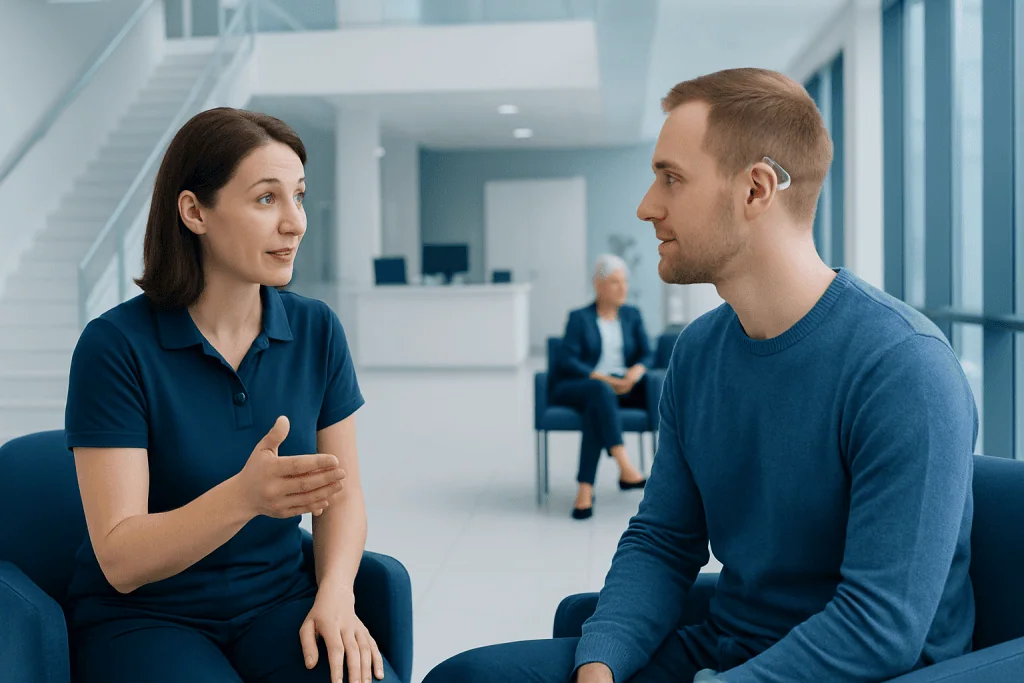
Speech-language therapy does not restore damaged hearing, but it can improve communication skills and participation in daily life. Care is individualized and may include listening practice, speech-sound work, language development, lip-reading strategies and communication training.
Key Takeaways
- Speech-language therapy does not restore damaged hearing, but it can improve communication skills and participation in daily life.
- Care is individualized and may include listening practice, speech-sound work, language development, lip-reading strategies and communication training.
- Hearing assessment and appropriate hearing technology are often important parts of a speech therapy plan.
- Children benefit from early assessment and family involvement, while adults may benefit after new hearing loss or changes in hearing.
- A sudden hearing loss, ear pain, discharge, dizziness or rapidly worsening hearing needs prompt medical assessment.
Speech therapy for hearing-impaired children and adults supports clearer speech, language development, listening skills and confident everyday communication. Progress varies with the type and degree of hearing loss, age, communication goals, hearing technology and regular practice.
Overview: how speech therapy supports hearing-impaired people
Speech therapy hearing impaired programs help people use the hearing they have, develop effective speech and language skills, and choose communication strategies that fit their daily lives. Therapy may be useful for children born with hearing loss, adults who develop hearing loss later, and people adjusting to hearing aids or cochlear implants. It is usually provided by a speech-language therapist, often working closely with an ear, nose and throat specialist and an audiologist.
Hearing loss can make it harder to hear speech sounds clearly, especially soft consonants such as “s,” “f,” “th” and “k.” Depending on when hearing loss began, this may affect speech clarity, vocabulary, grammar, conversation skills or confidence. Therapy is not a one-size-fits-all procedure: goals are based on the person’s age, hearing profile, preferred language and communication method.
Communication may involve spoken language, sign language, visual cues, speechreading, written supports, assistive listening devices, or a combination of approaches. The aim is practical and person-centred: helping the individual communicate safely, comfortably and independently at home, school, work and in social settings.
How hearing loss can affect speaking

Hearing helps people monitor their own voice and learn the sound patterns of language. When sounds are difficult to detect or distinguish, a person may have trouble producing certain speech sounds, controlling loudness or pitch, or understanding how spoken words are put together. The effect differs widely between individuals and does not reflect intelligence or willingness to communicate.
For a child with early or untreated hearing loss, reduced access to speech may influence language learning during important developmental years. Some children may use fewer words, have difficulty following complex spoken instructions, or speak less clearly. Early hearing assessment, appropriate support and regular communication with caregivers can promote language development.
Adults with acquired hearing loss generally already have established speech and language. However, they may begin to speak more loudly, find conversation tiring, avoid group settings, or feel uncertain about whether they are being understood. Speech therapy can address these challenges through listening rehabilitation, communication strategies and practice in realistic situations.
Hearing loss can also occur with other ear-related conditions. An ENT assessment can help clarify the cause and identify whether medical, hearing-device or rehabilitative support is appropriate.
Who may benefit and how assessment works
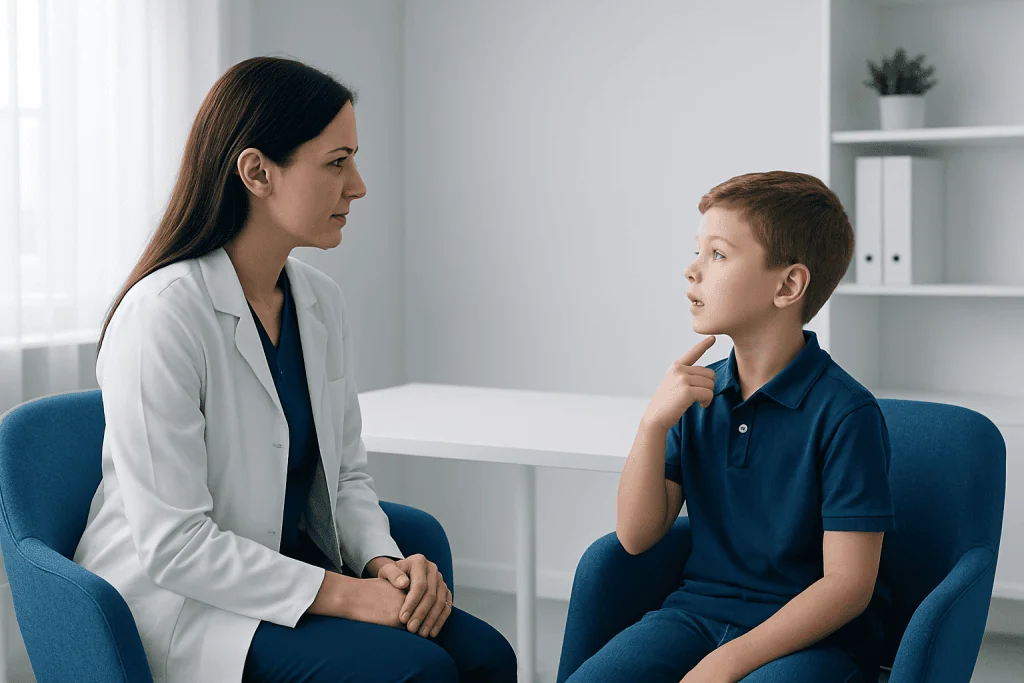
Speech therapy may be considered when hearing loss affects speech clarity, language development, listening ability or participation in everyday communication. It can be appropriate for infants and children, teenagers, working-age adults and older adults. A referral may come from an ENT specialist, audiologist, paediatrician, teacher or primary care clinician, but local referral pathways vary.
The evaluation usually begins with a hearing assessment, known as audiological testing. This helps establish the type, degree and pattern of hearing loss. A speech-language assessment then examines areas relevant to the person’s goals, such as speech-sound production, understanding and use of language, voice, listening in noise, reading, social communication and use of communication aids.
For children, the therapist also asks about developmental history, languages used at home, school needs and family communication preferences. For adults, assessment may explore work demands, telephone use, fatigue in conversation and the effect of hearing difficulties on relationships. The findings are used to set achievable, measurable goals.
A multidisciplinary plan may include hearing care, medical treatment where indicated, education support and rehabilitation. If amplification is recommended after assessment, hearing aid fitting and follow-up can help provide access to sounds that therapy then builds upon.
What happens during speech therapy sessions
There is no single speech therapy procedure for hearing impairment. After assessment, the therapist explains the goals, expected format and how progress will be reviewed. Sessions may be individual, family-based or group-based, and can take place in a clinic, school, rehabilitation setting or remotely when suitable.
Early sessions commonly focus on identifying listening needs and building useful strategies. Activities may include detecting and distinguishing sounds, recognising words and sentences, following speech in background noise, practising clear pronunciation, expanding vocabulary, strengthening conversation skills and learning how to request clarification. The therapist adjusts the difficulty as skills develop.
For children, play-based activities and caregiver coaching are central. Parents or caregivers may learn ways to create language-rich routines, gain a child’s attention before speaking, reduce background noise and respond to communication attempts. For adults, therapy may include role-play for meetings, restaurants, telephone conversations and discussions with family members.
Hearing aids, cochlear implants and other assistive technology can be incorporated into sessions when relevant. Therapy helps a person learn to interpret sound information and use strategies effectively, rather than replacing audiology or medical care.
How long does it take to see results from speech therapy?
Some people notice early improvements in confidence, listening strategies or awareness of speech patterns within a few sessions. More substantial changes in speech clarity, language skills or ease of understanding conversation often take weeks to months of regular practice. There is no fixed timetable because needs and starting points vary.
Progress depends on factors such as the degree and cause of hearing loss, whether it began before or after language developed, consistent use of appropriate hearing technology, the frequency of therapy, home practice and access to communication support. For young children, progress is often assessed over time through developmental milestones and participation in everyday routines rather than a single test.
Therapists should review goals regularly and adapt the programme where needed. Meaningful outcomes may include understanding more of a conversation, being understood more easily, using communication repair strategies, participating more at school or work, or feeling less exhausted after listening.
Benefits, limits and possible challenges
Potential benefits of speech therapy include improved speech intelligibility, stronger language and listening skills, more effective communication with others and greater confidence in daily interactions. It can also help families, teachers and colleagues understand practical ways to support communication. For people using hearing technology, rehabilitation can make device use more productive and comfortable.
Speech therapy cannot repair the inner-ear damage responsible for most permanent sensorineural hearing loss. It also cannot guarantee that every spoken sound will be heard clearly, particularly in noisy environments. A realistic plan focuses on functional communication and combines therapy with medical and audiological care where appropriate.
Therapy itself is generally low risk. Possible challenges include frustration, listening fatigue, emotional adjustment to a new diagnosis, or difficulty finding time for practice. These concerns should be discussed openly with the therapist, who can modify goals, pace and activities. Counselling or peer support may also be useful for some individuals.
Supportive listening environments matter. Facing the speaker, improving lighting, reducing competing noise, using captions and allowing extra response time can make communication easier while skills are developing.
Is there a way to completely restore hearing loss?
Whether hearing can be restored depends on its cause. Some forms of hearing loss are temporary or medically treatable, such as hearing difficulties caused by earwax, middle-ear fluid, infection or certain structural problems. An ENT specialist can assess these possibilities and recommend appropriate treatment.
Most sensorineural hearing loss, which involves the inner ear or auditory nerve, is currently permanent. In these cases, hearing aids, cochlear implants for suitable candidates, assistive devices and rehabilitation may improve access to sound and communication, but they do not fully restore natural hearing. The best approach is individualized after a professional hearing evaluation.
Sudden hearing loss is different from gradual age-related hearing change and should be assessed urgently. Prompt medical review is important because early treatment may be needed depending on the cause.
Is 60 dB hearing loss bad?
A 60-decibel hearing loss is generally considered moderately severe. It means that many everyday sounds and much of normal conversation may be difficult to hear without support, particularly when speech is soft, distant or competing noise is present. The practical impact differs according to the frequencies affected and whether one or both ears are involved.
A person with this degree of hearing loss may miss parts of conversations, turn up device volume, struggle on the phone or rely more heavily on visual cues. Children may have difficulty accessing spoken instruction in school without appropriate accommodations. A comprehensive audiology assessment is important because a single number does not describe the full hearing profile.
Hearing devices, classroom or workplace accommodations and speech-language therapy may all be considered. Early support can reduce communication strain and help preserve participation in important activities.
When to seek medical care
Anyone who notices persistent hearing difficulty, ringing in the ears, reduced understanding of speech, delayed speech or language development in a child, or increasing effort during conversation should arrange a hearing assessment. A clinician can identify treatable causes and coordinate referral to audiology, ENT care or speech-language therapy when needed.
Urgent medical assessment is needed for sudden hearing loss in one or both ears, especially if it develops over hours or a few days. New hearing loss with severe dizziness, facial weakness, head injury, significant ear pain, ear discharge, fever or neurological symptoms also requires prompt care.
For international patients, Acibadem International’s multidisciplinary specialists and JCI-accredited hospitals can assess hearing concerns and coordinate ENT, audiology and communication rehabilitation care. Ongoing follow-up should remain tailored to the person’s hearing needs, communication goals and local support system.
Frequently asked questions
Can speech therapy help a person with hearing loss speak more clearly?
Yes. Speech-language therapy can help improve speech clarity, voice control, listening skills and strategies for being understood. The likely benefit depends on the person’s hearing profile, communication history, access to sound and regular practice.
Does a hearing aid replace speech therapy?
No. A hearing aid can make sounds more audible when it is appropriate and correctly fitted, while speech therapy develops the skills needed to understand, use and respond to spoken language. Many people benefit from both forms of support.
How does hearing loss affect speaking?
Hearing loss can reduce access to speech sounds and make it harder to monitor one’s own voice. Depending on when it occurs, it may affect pronunciation, loudness, language development, conversation skills or confidence.
How long does speech therapy last for hearing impairment?
The length of therapy is individualized and can range from a short targeted programme to longer-term support. It depends on the communication goals, age, hearing needs, progress and availability of support at home, school or work.
Can adults start speech therapy after developing hearing loss?
Yes. Adults can benefit from auditory rehabilitation and communication-focused speech therapy after gradual or sudden changes in hearing. Therapy can address listening fatigue, speech understanding in noise, conversation strategies and adjustment to hearing devices.
What should parents do if a child has delayed speech and may not hear well?
Parents should arrange prompt assessment with a qualified healthcare professional, audiologist or paediatric service. Early identification of hearing and language needs allows the family to access appropriate medical care, communication support and speech-language therapy.
References
- World Health Organization
- American Speech-Language-Hearing Association
- National Institute on Deafness and Other Communication Disorders
- American Academy of Otolaryngology–Head and Neck Surgery
- Centers for Disease Control and Prevention
This article is for general information only and is not a substitute for professional medical advice. Please consult a qualified doctor about your individual situation.
Explore treatments in Turkey — costs, top hospitals & a free quote
JCI-accredited · board-certified surgeons · reply within 24h
Add us as a Preferred Source to see more of our trusted health content across Google Search, AI Overviews and Discover.

More from the Health Library



Related Specialists

Dr. Evrim Ergin
Anesthesiology
Prof. Dr. Ahmet Alanay
Orthopedic Surgery & Traumatology
Dr. Selim Çepel
Hand Surgery
Fzt. Fatmanur Yıldırım
Physical Medicine & Rehabilitation