Treatment Visual Snow: How It Works, Results and What to Expect

Visual snow is a persistent field-wide visual effect, often described as fine flickering dots or static. A normal eye examination does not rule out visual snow syndrome; diagnosis is based on symptoms and exclusion of other conditions.
Key Takeaways
- Visual snow is a persistent field-wide visual effect, often described as fine flickering dots or static.
- A normal eye examination does not rule out visual snow syndrome; diagnosis is based on symptoms and exclusion of other conditions.
- There is currently no single treatment that reliably eliminates visual snow for everyone.
- Managing migraine, sleep, stress, medication effects and visual triggers may reduce symptom burden for some people.
- New or sudden visual symptoms require prompt medical assessment to exclude urgent eye or neurological problems.
Treatment visual snow usually begins with a careful eye and neurological assessment to confirm the pattern and exclude other causes of persistent visual disturbance. Although there is no universally proven cure, many people benefit from trigger management, treatment of associated conditions and individualized rehabilitation strategies.
Overview: How Treatment Visual Snow Works
Treatment visual snow is not one single procedure or medication. It is an individualized care plan designed to confirm the diagnosis, rule out conditions that need different treatment and reduce the day-to-day impact of symptoms. Visual snow is commonly described as continuous tiny dots, grain or television-like static across the whole visual field, present even with the eyes closed or in the dark.
When visual snow occurs with additional features such as light sensitivity, afterimages, poor night vision, floaters, tinnitus or migraine, clinicians may refer to it as visual snow syndrome. Research suggests that it involves altered processing in the brain’s visual networks rather than damage that can be seen on a routine eye examination. This does not mean symptoms are imagined; it means care often needs both eye and neurological expertise.
The first goal is safety. A clinician will look for eye disease, migraine-related visual symptoms, medication or substance effects, and less common neurological causes. Once other explanations have been considered, care can focus on reducing triggers, treating associated migraine or anxiety where present, and helping the person adapt to persistent symptoms.
Symptoms, Associated Features and Candidacy for Care
Visual snow is usually a long-lasting, continuous symptom rather than a brief visual episode. People may notice it throughout the day, although its prominence can vary with lighting, fatigue, stress or attention. The symptom may start gradually or be noticed suddenly, and it can occur in people with or without a history of migraine.
A person may be a candidate for specialist assessment when static-like vision is persistent, affects reading, driving, screen use, sleep or work, or occurs with other visual or neurological symptoms. Evaluation is particularly useful when symptoms began after a medication change, head injury, illness, recreational drug exposure, or a new migraine pattern.
- Common associated features include light sensitivity, afterimages and difficulty seeing in low light.
- Some people also have migraine, tinnitus, dizziness, anxiety or sleep difficulties.
- Visual snow is different from a typical migraine aura, which usually develops and resolves over minutes to an hour rather than remaining continuously present.
A specialist should assess individual symptoms rather than assuming every visual disturbance is visual snow. Similar complaints may arise from eye, retinal, optic nerve, medication-related or neurological conditions, and their treatment can be very different.
Assessment: What Happens Step by Step

There is no single blood test, scan or eye test that confirms visual snow syndrome. Diagnosis is clinical, meaning it is based on a detailed description of symptoms, examination findings and the exclusion of other causes. Doctors can take visual snow seriously even when standard eye tests are normal.
The first step is usually a symptom history. The clinician may ask when the static began, whether it is constant, whether it affects one or both eyes, and whether there are migraine, headache, tinnitus, dizziness, medication or substance-use factors. Keeping a brief symptom and trigger diary before an appointment can make these patterns easier to discuss.
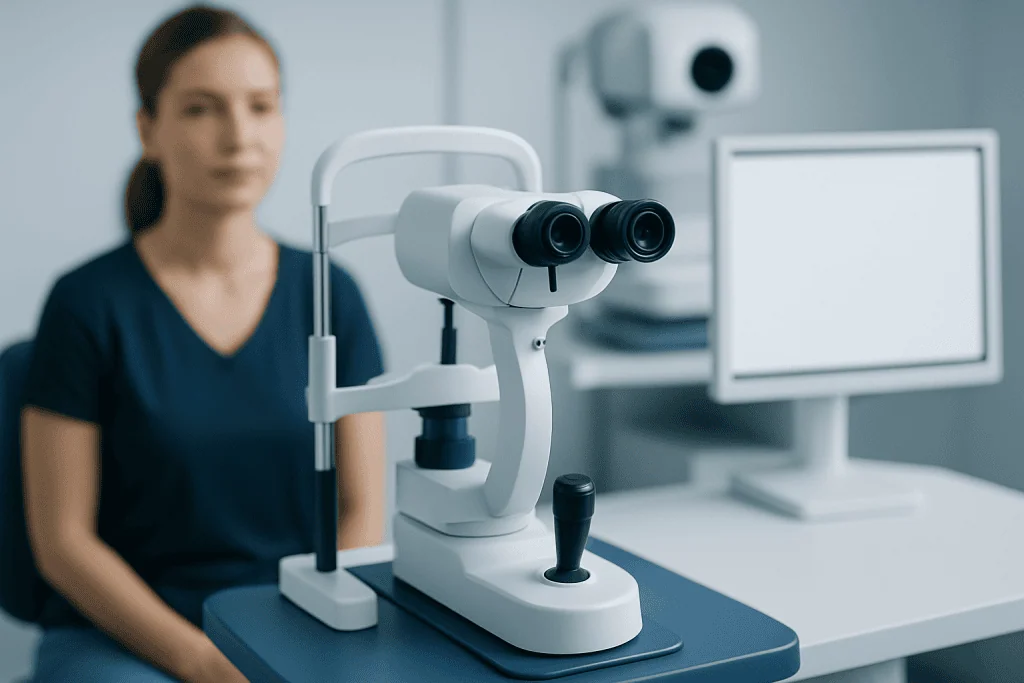
The next step may include an eye examination, visual acuity testing, visual field testing and assessment of the retina and optic nerve. Depending on the history, a neuro-ophthalmologist, neurologist or headache specialist may recommend imaging or other tests to exclude an alternative diagnosis. These tests are not always needed, but are more likely when symptoms are new, one-sided, progressive or accompanied by abnormal examination findings.
After assessment, the clinician discusses whether symptoms fit visual snow syndrome and creates a practical plan. This may include treatment for coexisting migraine, advice on sleep and visual comfort, review of medications and referral for rehabilitation or psychological support if symptoms are significantly affecting daily life.
Treatment Options, Benefits and Limits
There is currently no treatment that consistently cures visual snow for every person. Some people find that symptoms remain stable and become less intrusive over time, especially when associated migraine, sleep problems or anxiety are well managed. Treatment therefore aims to improve comfort, function and quality of life rather than promise complete removal of visual static.
If migraine is present, a clinician may recommend a migraine-focused plan. This can include identifying personal triggers, improving regular sleep and meals, and considering preventive or acute medicines when appropriate. Medication choices need careful individual review because response varies, side effects are possible and some medicines may worsen visual symptoms in certain people.
Non-drug approaches may also be helpful. Tinted lenses or carefully selected filters can reduce light sensitivity for some people, while screen adjustments, reduced glare and regular breaks may make reading or computer work more comfortable. Visual rehabilitation approaches and cognitive behavioural strategies may help a person reduce symptom-related distress and regain confidence with daily tasks; they do not imply that the symptoms are psychological.
Research into neuromodulation, perceptual therapies and targeted medicines is ongoing, but evidence remains limited. Any intervention should be discussed with a qualified clinician, particularly when it is marketed as a rapid cure. For patients who need coordinated assessment, Acibadem International’s multidisciplinary specialists and JCI-accredited hospitals can evaluate persistent visual and neurological symptoms for international patients.
Recovery Timeline, Self-Care and What May Worsen Symptoms
There is no standard recovery timeline because visual snow differs from person to person. Some people have stable symptoms for years, while others experience fluctuations. When a treatable contributing factor is found, such as poorly controlled migraine or a medication effect, improvement may occur after that issue is addressed; however, changes are often gradual rather than immediate.
Symptoms may feel more noticeable during stress, poor sleep, fatigue, illness, dehydration or migraine attacks. Bright or flickering lights, prolonged screen exposure, alcohol, caffeine and certain medications may be triggers for some people, but not for everyone. A diary can help identify individual patterns without unnecessarily restricting daily life.
Helpful self-care measures include maintaining regular sleep, eating regular balanced meals, staying hydrated, pacing screen-based work and using comfortable lighting. It may also help to take planned visual breaks, reduce glare, wear appropriate sunglasses outdoors and seek support for anxiety or low mood. Avoid stopping prescribed medicines abruptly; a doctor or pharmacist should review any concern about medication-related symptoms.
The benefits of a structured plan are usually better symptom coping, fewer trigger-related flares and improved ability to work, study and socialize. The main risk is delaying assessment by self-diagnosing a new visual symptom as visual snow. Persistent symptoms deserve medical review, especially when their pattern changes.
Can You Recover From Visual Snow?
Some people experience partial improvement, periods when symptoms are less noticeable or better functioning despite ongoing static. Others continue to see visual snow but learn effective strategies that reduce its effect on daily life. At present, clinicians cannot predict with certainty who will have complete resolution.
Recovery should not be defined only as the disappearance of visual static. Better sleep, reduced migraine frequency, less light sensitivity, improved screen tolerance and lower anxiety about the symptom can all be meaningful improvements. A personalized plan and follow-up can help adjust care as symptoms and priorities change.
It is important to be cautious about online claims of guaranteed cures. Treatments should be selected after a proper assessment and should take into account a person’s health history, other symptoms and current medicines.
Can Doctors See if You Have Visual Snow?
Doctors usually cannot see visual snow directly during an examination, because it is a visual processing symptom reported by the person experiencing it. Many people with visual snow syndrome have normal routine eye examinations and normal eye structure. This can be reassuring, but it does not make the symptom any less real.
Clinicians use the symptom pattern, eye examination and, when needed, neurological assessment to determine whether visual snow syndrome is the most likely explanation. Tests may be used to rule out retinal disease, optic nerve problems, inflammation, neurological conditions or other causes of altered vision.
Clear descriptions are useful. A person should explain whether symptoms are constant, whether they are present with eyes closed, whether they affect the entire visual field, and whether they occur with headache, flashes, vision loss, weakness or balance symptoms. Photographs or drawings cannot fully capture visual snow, but a written symptom diary can support the consultation.
Is There a New Treatment for Visual Snow Syndrome? When to Seek Medical Care
Research is continuing into visual snow syndrome, including brain-network research, visual processing therapies and non-invasive neuromodulation. However, no newly established treatment has yet been shown to reliably eliminate visual snow for all patients. A specialist can discuss whether any emerging approach is suitable, evidence-based and available within appropriate clinical care.
Medical care should be sought promptly for sudden vision loss, a curtain or shadow over vision, a sudden increase in flashes or floaters, severe new headache, eye pain, weakness, numbness, difficulty speaking, confusion or loss of balance. These symptoms are not typical reasons to assume visual snow and may require urgent assessment.
A non-urgent appointment is appropriate for persistent static-like vision, increasing light sensitivity, difficulty with driving or reading, frequent migraine, tinnitus or distress about symptoms. An ophthalmologist, neuro-ophthalmologist or neurologist can guide the next steps and coordinate care when more than one specialty is involved.
Frequently asked questions
What is the best treatment for visual snow?
There is no single best treatment for everyone with visual snow. The most useful plan usually starts with confirming the diagnosis, excluding other causes and treating associated migraine, sleep problems, anxiety or medication-related factors when present. Visual comfort strategies and rehabilitation may also help reduce the impact on daily life.
Can you recover from visual snow?
Some people notice partial improvement or periods when visual snow is less intrusive, while others have persistent symptoms. Complete recovery can occur for some individuals but cannot be predicted or guaranteed. Treatment often focuses on improving daily function and reducing associated symptoms.
What worsens visual snow?
Many people report that poor sleep, fatigue, stress, migraine attacks, bright lights, flickering screens or illness make symptoms more noticeable. Alcohol, caffeine and certain medicines may also be relevant for some people. A symptom diary can help identify personal triggers without assuming the same triggers affect everyone.
Can doctors see if you have visual snow?
Visual snow is usually not visible to a doctor during a routine examination. Diagnosis depends on the person’s symptom description, an eye examination and, when necessary, tests to rule out other eye or neurological conditions. Normal test results can support the diagnosis after other causes have been considered.
Is there a new treatment for visual snow syndrome?
Research into visual snow syndrome is active, including studies of neuromodulation and visual processing approaches. At present, no new therapy has been proven to cure visual snow reliably for all people. A specialist can explain the evidence, potential benefits and limitations of available options.
Should visual snow be treated as an emergency?
Long-standing, unchanged visual snow is usually assessed through a scheduled medical appointment. Sudden vision loss, a dark curtain in the vision, severe eye pain, new neurological weakness, speech difficulty or a severe unusual headache need urgent medical attention. These signs may indicate a condition other than visual snow.
References
- American Academy of Ophthalmology
- American Headache Society
- National Eye Institute
- National Institute of Neurological Disorders and Stroke
- International Headache Society
This article is for general information only and is not a substitute for professional medical advice. Please consult a qualified doctor about your individual situation.
Explore treatments in Turkey — costs, top hospitals & a free quote
JCI-accredited · board-certified surgeons · reply within 24h
Add us as a Preferred Source to see more of our trusted health content across Google Search, AI Overviews and Discover.

More from the Health Library


Related Specialists
Assoc. Prof. Dr. Onur Taşar
Cardiology
Deniz Beyza Kılıç
Physical Medicine & Rehabilitation
Dr. Alper Albayrak
Family Medicine
Dr. Arzu Aslan
Dermatology