Amgen Therapy Locator Blincyto Home Infusion: Procedure, Recovery and Results

Blincyto is the brand name for blinatumomab, an immunotherapy used for certain B-cell acute lymphoblastic leukemias. It is delivered as a continuous intravenous infusion through a pump, often in treatment cycles with planned breaks.
Key Takeaways
- Blincyto is the brand name for blinatumomab, an immunotherapy used for certain B-cell acute lymphoblastic leukemias.
- It is delivered as a continuous intravenous infusion through a pump, often in treatment cycles with planned breaks.
- The first days of treatment usually require close monitoring because immune and neurologic reactions can occur.
- A home infusion service may be appropriate only after the patient, caregivers and clinical team are prepared for pump and line care.
- Never flush, disconnect, restart or alter a blinatumomab infusion pump without direct instructions from the treating team.
Amgen Therapy Locator Blincyto home infusion refers to support for eligible people receiving blinatumomab, a continuous intravenous treatment that may be managed at home after hospital-based initiation and training. Safe home treatment depends on a specialist oncology team, a trained infusion provider, reliable pump care and clear plans for urgent symptoms.
Overview: What Amgen Therapy Locator Blincyto Home Infusion Means
Amgen Therapy Locator Blincyto home infusion generally describes finding treatment and infusion-support services for people prescribed Blincyto, also called blinatumomab. Blinatumomab is a targeted immunotherapy for certain people with B-cell precursor <a href="https://acibademinternational.com/diseases/acute-lymphoblastic-leukemia/”>acute lymphoblastic leukemia (ALL), including some people whose leukemia has returned, has not responded to previous therapy, or has measurable residual disease after treatment.
Unlike many cancer medicines that are given over a few hours, blinatumomab is supplied continuously through a small portable infusion pump. After initial assessment and monitoring, some eligible patients may continue treatment at home with coordinated oncology and home-infusion support. The exact arrangement varies by country, insurer, hospital, medicine availability and individual clinical needs.
Home infusion is not a less intensive form of treatment. It is a structured extension of specialist care that requires regular contact with the leukemia team, scheduled pump and bag changes, blood tests and a clear emergency plan. The treatment approach for ALL is individualized and may involve other therapies before or after blinatumomab.
How Blinatumomab Works and Who May Be Eligible
Blinatumomab is a bispecific T-cell engager, often shortened to BiTE immunotherapy. It binds to CD19, a protein found on many B-cell leukemia cells, and CD3 on a person’s T cells. This helps bring the immune cells into contact with leukemia cells so that the immune system can attack them.
It is not conventional cytotoxic chemotherapy. However, it is an anticancer treatment with important potential side effects and requires careful supervision by clinicians experienced in leukemia care. Whether it is suitable depends on the type and features of the leukemia, previous treatments, blood test results, general health, infection status and treatment goals.
For home infusion, clinicians also consider whether the patient has a stable home environment, access to a telephone and emergency services, ability to attend appointments, and a caregiver or support person when needed. A central venous catheter is commonly used because the medicine must run continuously. People receiving related leukemia care may also benefit from information about acute lymphoblastic leukemia.
- Eligibility is decided by the treating hematology-oncology team.
- Hospital admission may be needed at the start of a cycle or after a treatment interruption.
- Home infusion should only begin after education about the pump, catheter and warning symptoms.
What Is the Infusion Protocol for Blinatumomab?

Blinatumomab is administered as a continuous intravenous infusion, typically over a planned treatment cycle followed by a treatment-free interval. The precise schedule, dose and number of cycles are determined by the prescribing oncology team and differ according to the patient’s age, leukemia status and treatment plan. A steroid medicine may be given before starting treatment or when restarting it to reduce certain infusion-related risks.
Treatment commonly begins in a hospital or closely supervised setting. This is particularly important early in the first cycle, when reactions such as cytokine release syndrome or neurologic effects are more likely to occur. The team checks symptoms, vital signs and laboratory results, and may adjust the plan if side effects develop.
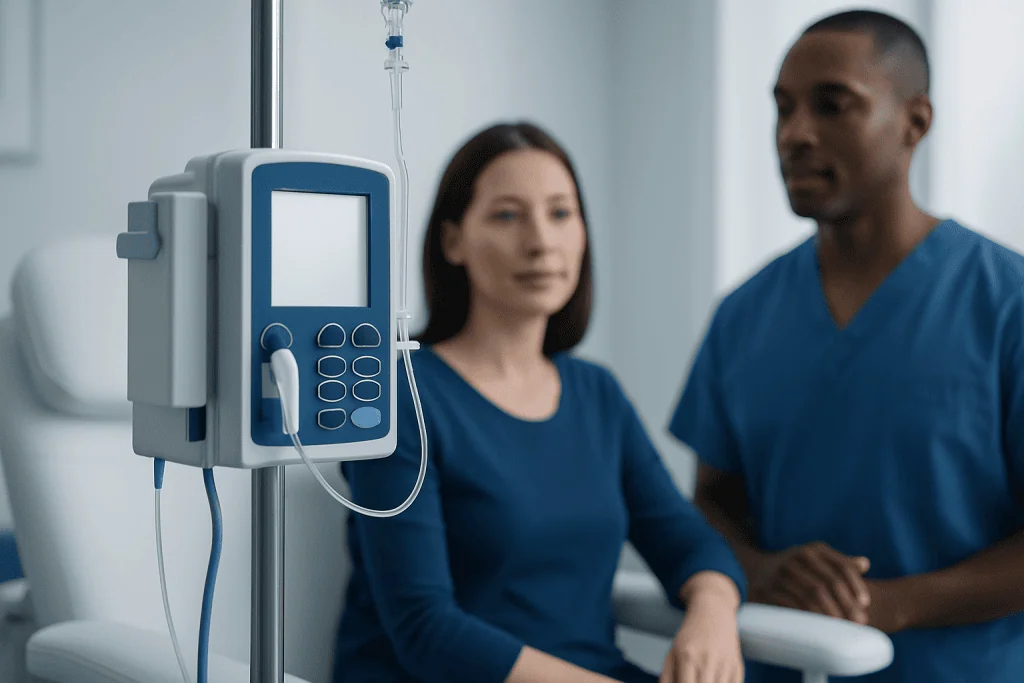
For home treatment, an infusion nurse changes the medication bag and pump according to the prescribed schedule. The pump must run continuously as directed. Patients and caregivers should keep appointments, protect the line from pulling or getting wet, and use the 24-hour contact number provided by their service if an alarm sounds, a leak is seen or the infusion stops.
The care team may use blood tests to monitor blood counts, liver function, electrolytes and signs of infection. Some patients also require preventive or supportive medicines, depending on their individual risks and other cancer treatments.
What Happens If You Flush Blinatumomab?
The blinatumomab line should not be flushed unless the treating team gives explicit instructions. Flushing a line that contains blinatumomab can unintentionally deliver medication remaining in the tubing too quickly. This may increase the risk of receiving an unintended amount of medicine over a short period.
Patients and caregivers should not disconnect the pump, attempt to clear a blockage, silence and ignore repeated alarms, or restart an infusion after an interruption without guidance. If the pump stops, the tubing leaks, the catheter is damaged, or there is uncertainty about what happened, the safest step is to clamp or manage the line only as previously taught and contact the infusion provider or oncology team immediately.
If an accidental flush or other infusion problem occurs, the oncology team will advise what to do next. They may ask about the timing, amount of medicine remaining, symptoms and pump status, and may recommend urgent assessment. Prompt reporting helps the team manage the situation safely.
Recovery Timeline, Expected Benefits and Common Side Effects
There is no single recovery timeline for blinatumomab because it is an ongoing treatment rather than a one-time procedure. The first days of an infusion cycle usually involve the closest observation. If the treatment is tolerated and the home plan is in place, patients may spend more time at home while continuing regular clinical review, laboratory monitoring and pump changes.
The potential benefit is an immune-based treatment option that can help control eligible CD19-positive B-cell ALL. Response is assessed by the oncology team using blood counts, bone marrow testing and other appropriate evaluations. A response cannot be guaranteed, and the next step in treatment depends on the results and the person’s overall condition.
Common side effects of Blincyto can include fever, headache, fatigue, nausea, tremor, rash, low blood cell counts and changes in liver blood tests. Low blood counts can raise the risk of infection, anemia or bleeding. Not every symptom is caused by treatment, but new or worsening symptoms should always be reported.
Some effects require urgent medical assessment. Cytokine release syndrome can cause fever, low blood pressure, breathing difficulty or rapid heartbeat. Neurologic effects can include confusion, trouble speaking, dizziness, weakness, loss of balance, seizures or changes in consciousness. Clinicians may pause treatment and provide supportive care when significant adverse effects occur.
Practical Home-Infusion Care and Safety Planning
Before leaving the hospital or infusion center, patients and caregivers should understand the pump display, battery and alarm instructions, dressing care and contact pathway for problems. They should know the location of emergency supplies if these are provided, but should not make changes to the infusion system beyond their specific training.
It is helpful to keep the pump dry, secure it carefully during sleep and movement, and avoid activities that may pull on the catheter. The dressing should remain clean, dry and intact. Redness, pain, warmth, swelling, drainage or fever may indicate a possible catheter-related infection and should be reported promptly.
Patients should take other medicines only as instructed and tell their team about prescription medicines, supplements and vaccines. Because blinatumomab can affect alertness or cause neurologic symptoms, driving and operating machinery may be unsafe for some people during treatment. The care team can provide individualized advice.
Leukemia treatment is often coordinated across hematology, medical oncology, infectious diseases, neurology, nursing and supportive-care services. At Acibadem International, multidisciplinary specialists and JCI-accredited hospitals assess and treat eligible international patients with individualized leukemia care plans.
When to Seek Medical Care
Patients should contact their oncology or home-infusion team promptly for fever, chills, increasing fatigue, vomiting that prevents drinking, new rash, catheter-site changes, pump alarms, a stopped infusion, leakage, accidental disconnection or uncertainty about the infusion. It is better to ask early than to try to solve an equipment problem alone.
Urgent medical care is needed for trouble breathing, chest pain, fainting, severe weakness, severe headache, confusion, difficulty speaking, new seizure, marked drowsiness, loss of balance, facial drooping, sudden vision changes or signs of a serious allergic reaction. These symptoms can have several causes, but they need immediate assessment during blinatumomab treatment.
Scheduled follow-up remains important even when a person feels well. The team uses visits and tests to monitor treatment response, infection risk, blood counts and treatment-related complications, and to decide whether home infusion should continue.
Frequently asked questions
Is Blincyto a type of chemotherapy?
Blincyto, or blinatumomab, is not conventional chemotherapy. It is an immunotherapy that helps a patient’s T cells recognize and attack CD19-positive B-cell leukemia cells. It is still a powerful anticancer treatment and requires close specialist monitoring.
What happens if you flush blinatumomab?
Flushing a line containing blinatumomab may push medicine left in the tubing into the bloodstream too quickly. Patients and caregivers should not flush, disconnect or manipulate the infusion system unless specifically instructed by their oncology team. If it happens accidentally, they should contact the treating service immediately for advice.
What is the infusion protocol for blinatumomab?
Blinatumomab is given as a continuous intravenous infusion through a pump during prescribed treatment cycles, with planned treatment-free intervals. The exact dose, cycle length, monitoring and bag-change schedule are individualized by the oncology team. Initial treatment or treatment restart often requires hospital-based monitoring.
What are the common side effects of Blincyto?
Common side effects can include fever, headache, fatigue, nausea, tremor, rash, low blood counts and abnormal liver blood tests. More serious risks include cytokine release syndrome, infections and neurologic reactions. New symptoms should be reported promptly, especially fever, confusion, weakness, speech changes or seizures.
Can Blincyto be given at home?
Some eligible patients may receive part of a blinatumomab treatment cycle at home using a portable infusion pump and home-infusion nursing support. Eligibility is determined by the leukemia team after considering treatment tolerance, clinical stability, catheter care needs and the available support system. Hospital monitoring is commonly needed at the start of therapy or after interruptions.
What should a patient do if the Blincyto pump alarm sounds?
The patient should follow the written instructions provided by the infusion service and contact the designated nurse or oncology team promptly. They should not ignore persistent alarms, attempt an unsupervised repair or restart the pump without advice. The team can determine whether the infusion needs urgent assessment or replacement.
References
- U.S. Food and Drug Administration
- National Cancer Institute
- American Cancer Society
- European Society for Medical Oncology
- Leukemia & Lymphoma Society
This article is for general information only and is not a substitute for professional medical advice. Please consult a qualified doctor about your individual situation.
Explore treatments in Turkey — costs, top hospitals & a free quote
JCI-accredited · board-certified surgeons · reply within 24h
Add us as a Preferred Source to see more of our trusted health content across Google Search, AI Overviews and Discover.