CT Scan Spelling: Preparation, Procedure and Results
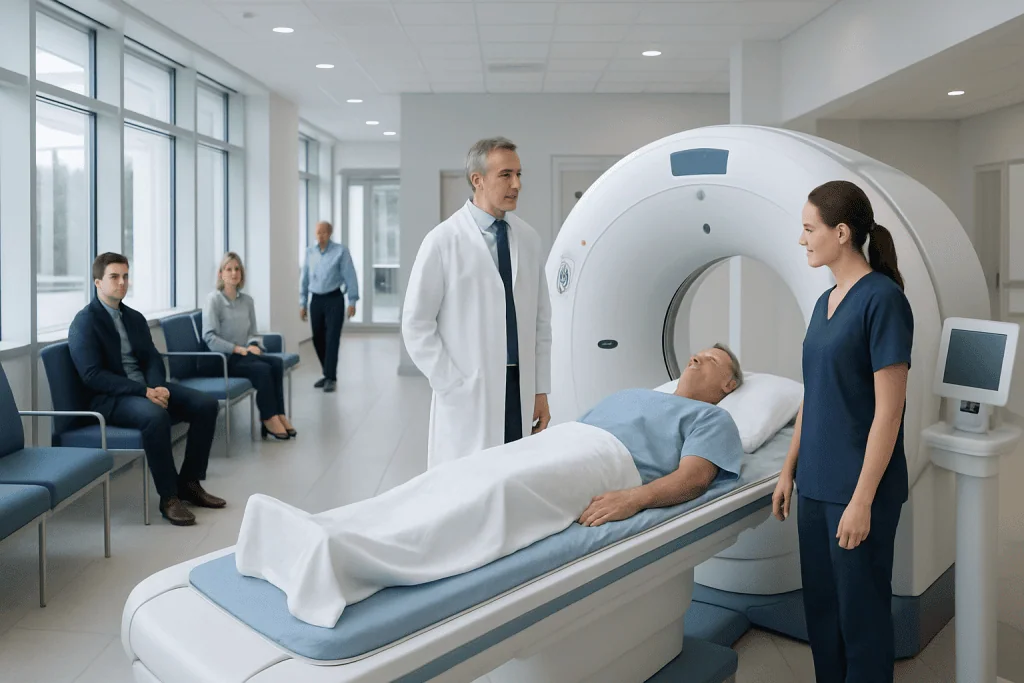
“CT scan” is the standard spelling; CT stands for computed tomography. Preparation instructions vary, especially when contrast dye or abdominal and pelvic imaging is planned.
Key Takeaways
- “CT scan” is the standard spelling; CT stands for computed tomography.
- Preparation instructions vary, especially when contrast dye or abdominal and pelvic imaging is planned.
- Some patients may be asked to fast, drink water, or temporarily adjust certain medicines before the scan.
- CT scans are usually painless and brief, although the full appointment may take longer than the image acquisition.
- Most people return to normal activities immediately, but extra fluids may be advised after intravenous contrast.
- Urgent symptoms, a history of contrast reactions, kidney disease, pregnancy, or diabetes medicines should be discussed before the appointment.
CT scan spelling is most commonly written as “CT scan,” short for computed tomography scan. A CT scan is a fast imaging test that creates detailed cross-sectional pictures of the body, and its preparation depends on the body area examined and whether contrast material is needed.
CT Scan Spelling and What the Test Means
The usual CT scan spelling is CT scan, with CT standing for computed tomography. It may also be written as “computed tomography scan” or, less commonly, “CAT scan,” meaning computerized axial tomography. The modern term CT scan is preferred because the images can be created in many planes, not only axial views.
A CT scan uses a rotating X-ray source and computer processing to build detailed images of internal structures. It can show bones, lungs, blood vessels, organs, and certain soft tissues more clearly than a standard X-ray. A clinician may request it to investigate symptoms, assess an injury, guide treatment planning, monitor a known condition, or check how well treatment is working.
The phrase ct spelling rule may appear in searches, but there is no special medical spelling rule beyond using “CT” as an abbreviation. In formal health information, “CT scan” is clear and widely understood. The imaging team will explain the precise type of CT examination and any personal preparation needed.
How a CT Scan Works and Who May Need One
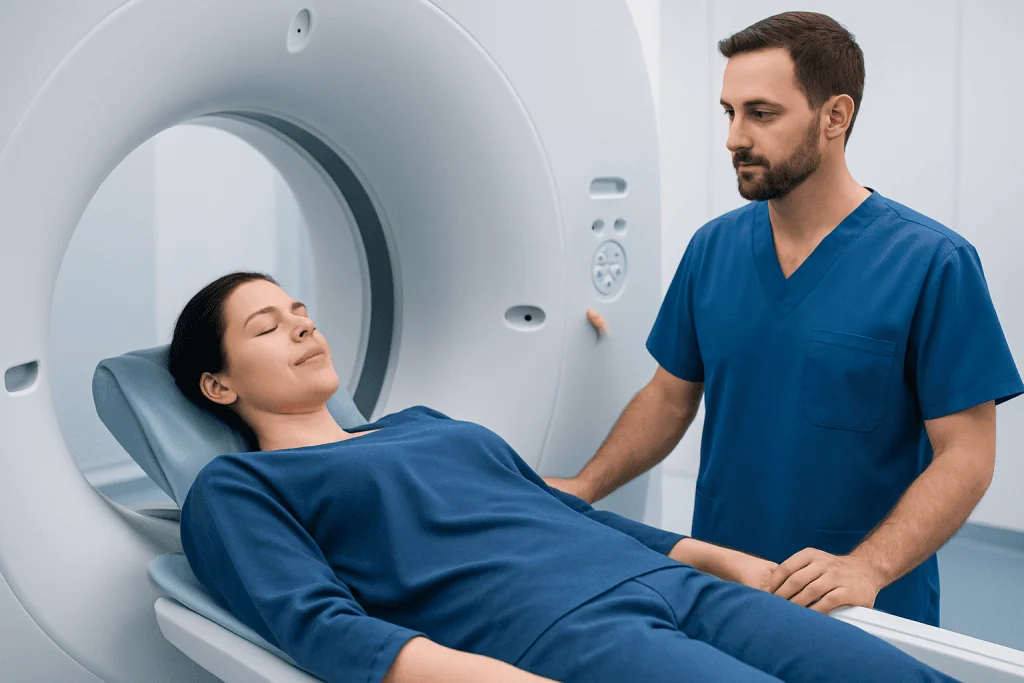
During a CT scan, the patient lies on a narrow table that moves slowly through a doughnut-shaped scanner. The scanner is open at both ends and does not enclose the entire body like some MRI scanners. As the X-ray equipment rotates, it takes many images from different angles; a computer combines them into detailed slices or three-dimensional views.
CT can be useful for evaluating many concerns, including head injury, persistent chest symptoms, abdominal pain, urinary tract stones, complex fractures, infections, and suspected blood vessel problems. Depending on the clinical question, the scan may focus on one area or include several body regions. A scan may be performed without contrast, with contrast given into a vein, or after drinking an oral contrast liquid.
CT is not automatically appropriate for every symptom. The requesting clinician considers the expected benefit, other possible tests, previous imaging, radiation exposure, pregnancy status, kidney function, and allergy history. Ultrasound or MRI may be preferred in some situations, while CT may provide the fastest or most informative answer in others.
CT Scan Preparation Instructions: Food, Water and Medicines

Individual CT scan preparation instructions come from the radiology department and should take priority over general advice. For some non-contrast examinations, no special preparation is required. For others, especially scans of the abdomen, pelvis, or blood vessels, patients may be asked not to eat for several hours beforehand. Clear liquids may be permitted, but this varies by scan and facility.
Patients should tell the imaging team about pregnancy or a possible pregnancy, previous reactions to contrast material, asthma, kidney disease, thyroid conditions, diabetes, dehydration, and all medicines or supplements they use. Some medicines may need particular consideration around contrast imaging, so medication changes should only be made on the advice of the prescribing clinician or imaging team.
For a CT scan preparation patient checklist, it is generally helpful to bring identification, referral information, prior imaging reports if requested, and a current medication list. Comfortable clothing without metal is useful; jewelry, belts, hair clips, removable dental appliances, and other metal objects may need to be removed because they can interfere with images.
Is there anything I shouldn’t do before a CT scan?
Patients should not ignore fasting, hydration, or medicine instructions given for their specific scan. They should also avoid arriving without reporting a previous contrast reaction, kidney problem, pregnancy, or possibility of pregnancy. Unless specifically instructed otherwise, people should continue their usual prescribed medicines; they should not stop medication independently.
Why do you have to drink 1 litre of water before a CT scan?
Drinking water before some scans helps fill the bladder and may improve views of the bladder, pelvic organs, urinary tract, or nearby structures. It can also support hydration, which may be particularly useful when contrast is planned. Not every CT scan requires one litre of water, so the amount and timing should follow the department’s instructions.
Can I brush my teeth before a CT scan?
Yes, brushing teeth is usually fine before a CT scan, even when fasting is required. Patients should avoid swallowing toothpaste or water if they have been told to take nothing by mouth, and they should follow any more restrictive instructions given for sedation or a particular examination. The radiology team can clarify if there is any uncertainty.
The CT Scan Procedure: Step by Step
On arrival, a radiographer or imaging professional confirms the patient’s identity, the planned examination, and relevant safety information. The patient may change into a gown and remove metal items. If contrast is needed through a vein, a small cannula is placed, usually in the hand or arm. Oral contrast, when required, is provided before the scan according to the planned examination.
The patient lies on the scanning table in the correct position, sometimes with arms raised above the head. Straps or supports may be used to help maintain stillness and comfort. The radiographer operates the scanner from an adjacent room but can see, hear, and speak with the patient throughout the examination.
During image capture, the table moves through the scanner. The patient may be asked to hold their breath briefly to reduce motion blur. Intravenous contrast can cause a temporary warm sensation, metallic taste, or feeling of needing to urinate; these sensations usually pass quickly. The scan itself often takes only minutes, although preparation and contrast timing can make the visit longer.
For patients needing coordinated assessment and imaging-led treatment planning, computed tomography (CT) scanning can be part of a broader diagnostic pathway. The findings are interpreted alongside symptoms, examination results, and other tests rather than in isolation.
Benefits, Risks and Comfort During CT Imaging
A key benefit of CT is its speed and detail. It can quickly identify many important findings and help clinicians make timely decisions about further tests or treatment. CT is particularly valuable in emergencies and for assessing structures that may not be as clearly shown on a conventional X-ray.
CT uses ionizing radiation. The imaging team uses protocols designed to keep radiation exposure as low as reasonably achievable while obtaining diagnostically useful images. The balance of benefit and risk is individualized, and unnecessary repeat imaging is avoided where possible. Patients can ask why the scan is recommended and whether another test could be suitable.
Contrast material is safe for most people, but mild effects such as warmth or nausea can occur. Less commonly, people may have an allergic-like reaction. Serious reactions are rare, and imaging departments are prepared to assess and treat them. Kidney function may be relevant before certain contrast-enhanced scans, particularly for people with known kidney disease or other risk factors.
People who feel anxious about medical tests, have difficulty lying flat, or have pain that makes stillness difficult should mention this in advance. The team may be able to offer positioning adjustments, additional explanation, or other practical support to make the experience more manageable.
Recovery Timeline, Results and Aftercare
Most patients can leave shortly after a routine CT scan and return to usual activities the same day. If intravenous contrast was used, the team may recommend drinking fluids unless the patient has been advised to limit fluid intake for a medical reason. This supports normal hydration while the kidneys clear the contrast material.
Occasionally, a patient may be observed briefly after contrast, especially if there was a prior reaction or symptoms during the examination. If sedation was used, which is uncommon for routine CT, the patient will need specific discharge arrangements and should not drive or make important decisions until the sedative effects have fully worn off.
A radiologist reviews the images and sends a report to the clinician who requested the scan. Results may be available quickly in urgent settings, while non-urgent reports can take longer depending on the examination and local process. The requesting clinician explains what the findings mean, whether they account for the symptoms, and whether follow-up is needed.
Is there anything you shouldn’t do after a CT scan?
After an uncomplicated CT scan, most people do not need to avoid normal activities. If contrast was used, patients should follow advice about hydration and watch for delayed symptoms such as rash, itching, swelling, breathing difficulty, or persistent vomiting. Anyone who develops severe symptoms should seek urgent medical help; patients with milder concerns should contact the imaging department or their clinician.
When to Seek Medical Care
A CT scan is often requested because a clinician needs more information about a symptom or injury. People should seek urgent medical assessment for severe or worsening chest pain, sudden weakness or trouble speaking, serious head injury, new confusion, severe shortness of breath, coughing blood, severe abdominal pain, uncontrolled bleeding, or symptoms of a serious allergic reaction. These symptoms should not wait for a routine imaging appointment.
Before a scheduled CT scan, patients should contact the imaging provider if they become pregnant or think they may be pregnant, develop a significant illness, have had a new contrast reaction, or cannot follow the provided preparation instructions. They should also ask for advice if they have kidney disease, diabetes, fluid restrictions, or questions about medicines.
After a contrast-enhanced CT, immediate medical attention is appropriate for difficulty breathing, facial or throat swelling, fainting, or widespread hives. These symptoms may indicate a significant reaction and require prompt evaluation. Most people do not experience these problems, but knowing when to ask for help supports safe imaging care.
Acibadem International’s multidisciplinary specialists and JCI-accredited hospitals support international patients who need diagnostic evaluation and treatment planning. A qualified clinician can explain whether CT is appropriate and interpret results in the context of the person’s overall health.
Frequently asked questions
What is the correct spelling: CT scan or CAT scan?
CT scan is the preferred modern term and stands for computed tomography scan. CAT scan is an older term meaning computerized axial tomography and is still understood, but it is used less often.
Do all CT scans require contrast dye?
No. Whether contrast is used depends on the part of the body being examined and the clinical question. Contrast can make blood vessels, organs, inflammation, and some abnormalities easier to assess, but many CT scans are performed without it.
How long does a CT scan take?
The image acquisition often takes only a few minutes. The full appointment can take longer because of registration, safety checks, changing clothes, positioning, and possible contrast preparation.
Can I eat before a CT scan?
Some CT scans do not require fasting, while others require avoiding food for a period before the appointment. Patients should follow the instructions supplied for their particular examination and contact the radiology department if they did not receive them.
Will a CT scan hurt?
A CT scan itself is painless. Lying still on the table may be uncomfortable for some people, and an intravenous contrast injection can cause brief warmth, a metallic taste, or a sensation of needing to urinate.
When will I receive my CT scan results?
A radiologist reviews the scan and sends a report to the clinician who requested it. Timing varies according to urgency and local reporting processes, so the requesting clinician or imaging center can explain when results are expected.
References
- Radiological Society of North America
- American College of Radiology
- U.S. Food and Drug Administration
- National Health Service
- World Health Organization
This article is for general information only and is not a substitute for professional medical advice. Please consult a qualified doctor about your individual situation.
Explore treatments in Turkey — costs, top hospitals & a free quote
JCI-accredited · board-certified surgeons · reply within 24h
Add us as a Preferred Source to see more of our trusted health content across Google Search, AI Overviews and Discover.