Sarcoma Radiation Treatment: How It Works, Results and What to Expect

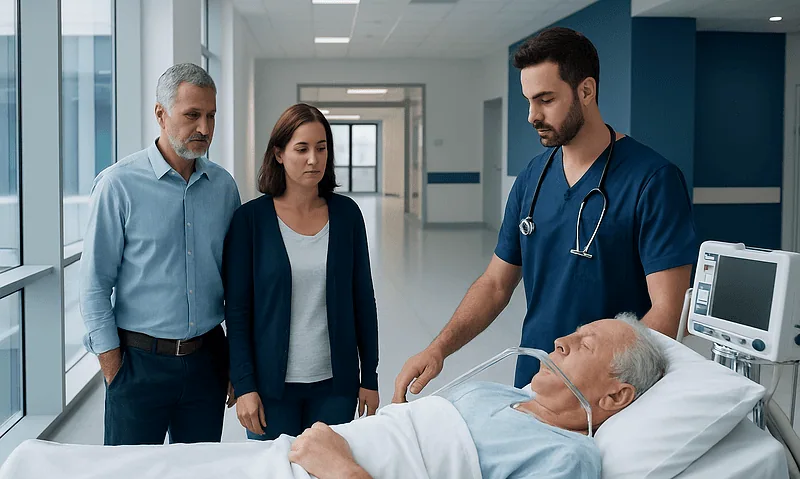
Radiation therapy is commonly combined with surgery for selected soft tissue and bone sarcomas. Treatment planning is individualized and usually involves a sarcoma surgeon, radiation oncologist, medical oncologist and imaging specialists.
Key Takeaways
- Radiation therapy is commonly combined with surgery for selected soft tissue and bone sarcomas.
- Treatment planning is individualized and usually involves a sarcoma surgeon, radiation oncologist, medical oncologist and imaging specialists.
- External-beam radiation is the most common approach and is generally delivered in short daily appointments over several weeks.
- Side effects depend largely on the treated body area and can include fatigue, skin changes, swelling, stiffness or temporary digestive or urinary symptoms.
- Scans and clinical examinations, rather than symptoms alone, help the care team assess whether treatment is working.
Sarcoma radiation treatment uses carefully planned high-energy beams to damage cancer cells while limiting exposure to healthy tissue. It may be given before surgery, after surgery, or for sarcoma that cannot be completely removed, depending on the tumor type, location and treatment goals.
Sarcoma Radiation Treatment: How It Works
Sarcoma radiation treatment, also called radiotherapy, uses high-energy radiation to damage the DNA of cancer cells. Cancer cells are less able than many healthy cells to repair this damage, so they gradually stop dividing and die. The goal may be to reduce the chance that sarcoma returns in the same area, shrink a tumor before an operation, control disease that cannot be removed safely, or relieve symptoms such as pain or pressure.
Sarcomas are uncommon tumors that arise in connective tissues, including muscle, fat, nerves, blood vessels, fibrous tissue and bone. Because they can occur in many parts of the body, radiation is planned very differently for a tumor in an arm or leg than for one in the abdomen, pelvis, chest wall, head and neck, or spine. Treatment decisions should ideally be made by a multidisciplinary team with specific experience in sarcoma.
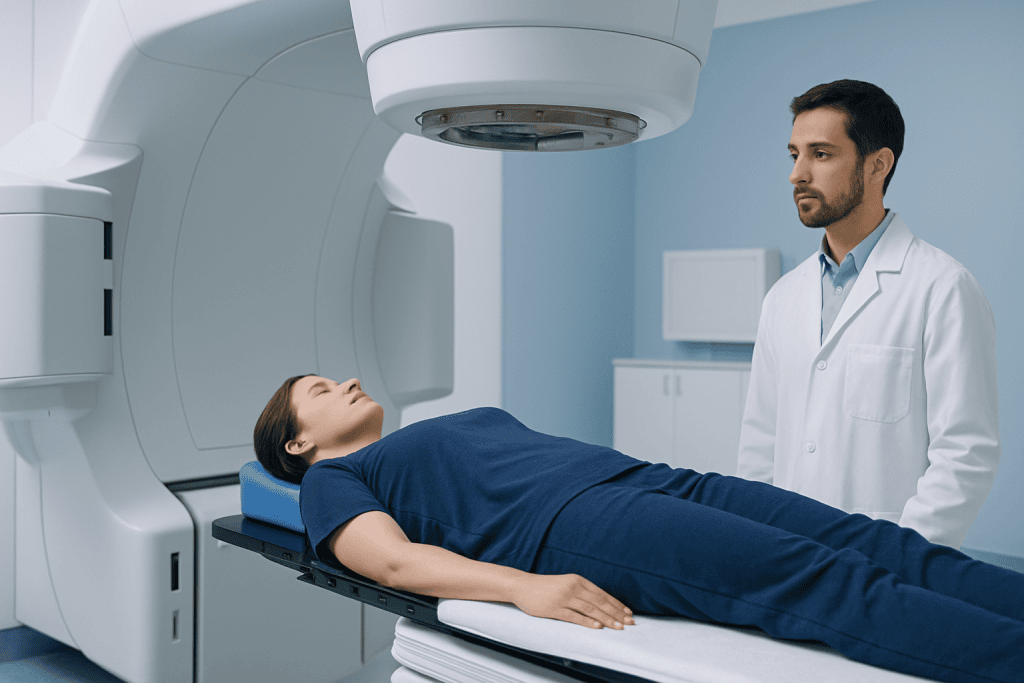
External-beam radiation therapy is the most frequently used method. A treatment machine directs beams from outside the body toward the tumor area. Modern planning methods, including image-guided radiation and intensity-modulated radiation therapy, shape and direct the dose as precisely as possible. In selected circumstances, specialists may discuss other techniques, such as proton therapy or internal radiation, but these are not appropriate for every person or sarcoma type.
Who May Be a Candidate for Radiation Therapy?
Radiation may be recommended before surgery, known as preoperative or neoadjuvant radiation, particularly when a soft tissue sarcoma is close to important nerves, blood vessels or organs. Shrinking or stabilizing the tumor before surgery can sometimes make removal easier while preserving function. Preoperative treatment may use a lower overall radiation dose than postoperative treatment, but it can increase the risk of wound-healing problems after surgery.
Postoperative, or adjuvant, radiation may be considered when there is a meaningful risk of local recurrence after surgery. This risk is influenced by the tumor grade, size, location, depth, surgical margins and sarcoma subtype. Radiation is not routinely required for every small, low-grade tumor that has been fully removed; the expected benefit must be balanced against possible long-term effects.
For some people, surgery is not possible because of tumor location, extent of disease or other health considerations. Radiation may then be used as the main local treatment, sometimes alongside systemic treatment such as chemotherapy or targeted therapy. It can also be used for symptom relief when sarcoma has spread or is causing pain, bleeding, nerve compression or other local problems. Related treatment decisions may also involve sarcoma diagnosis and management and comprehensive cancer treatment.
What Happens During Sarcoma Radiation Treatment?
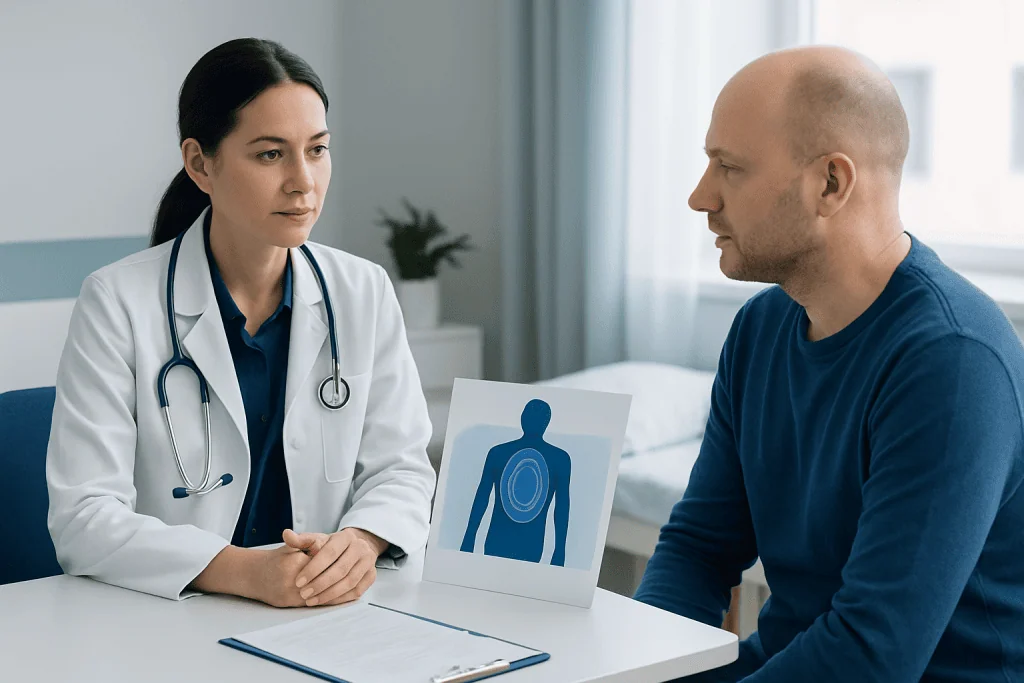
The process begins with a consultation with a radiation oncologist. The doctor reviews biopsy findings, imaging, prior treatment, general health and personal priorities. Sarcoma pathology can be complex, so confirmation of the diagnosis by an experienced pathologist is often important before a treatment plan is finalized.
Next, the patient attends a planning appointment called simulation. A computed tomography scan is usually performed in the treatment position. The team may make a custom support, mask or immobilization device to help the patient stay comfortably in the same position for each session. Small skin marks or tiny tattoo dots may be used as positioning guides. Additional MRI, PET or diagnostic CT images may be combined with the planning scan to define the target accurately.
Radiation oncologists, medical physicists and dosimetrists then develop and check the plan. They outline the tumor bed or visible tumor, account for possible microscopic disease, and identify nearby organs that need protection. This planning stage can take several days or longer, especially for complex sites.
At each treatment visit, radiation therapists position the patient and often take verification images before delivering radiation. The treatment itself is painless; the patient does not feel the radiation beam and is not radioactive afterward. A typical appointment may last 15 to 30 minutes, although beam delivery is usually shorter. Treatments are commonly given on weekdays for several weeks, but the schedule varies with the treatment purpose and technique.
Benefits, Risks and Recovery Timeline
The main potential benefit of radiation is improved local control: lowering the chance that sarcoma grows back in or near the original area. When used with limb-sparing surgery for selected extremity soft tissue sarcomas, radiation can help avoid more extensive surgery while maintaining local disease control. Its benefits are specific to the individual tumor and do not necessarily mean that radiation will prevent spread to distant organs.
Short-term effects often develop gradually during treatment and may continue for a short time after it ends. Common effects include tiredness, redness or darkening of the skin, dryness, tenderness and hair loss in the treated area. Depending on the site, people may also experience swelling, stiffness, nausea, diarrhea, bladder irritation, sore throat or swallowing discomfort. The clinical team can provide practical measures to manage these symptoms.
Recovery is different for every person. Many people continue usual light activities during treatment, while adjusting their routine for fatigue and appointments. Acute skin and energy-related effects often peak in the first one to two weeks after the final session, then begin to improve over the following weeks. Surgery, if planned after preoperative radiation, is commonly scheduled after an interval that allows tissues to recover; the timing is individualized.
Some effects can appear months or years later, including persistent swelling, fibrosis or tissue tightness, reduced joint movement, fracture risk in irradiated bone, nerve changes, infertility when reproductive organs are exposed, or changes in bowel or bladder function. There is also a small long-term risk of a new cancer in an irradiated area. Careful planning, follow-up and rehabilitation can help reduce and manage these risks. Radiation therapy planning and delivery should always be discussed in relation to the expected benefits and alternatives.
How to Tell If Radiation Therapy Is Working
Whether radiation is working is assessed through the treatment goal and planned follow-up, not by day-to-day symptoms. Side effects such as tiredness or skin irritation do not show how well the tumor is responding. Likewise, a tumor may not shrink immediately because radiation-related inflammation or scar tissue can temporarily affect how the area looks or feels.
For sarcoma treated before surgery, the surgical specimen and imaging may provide information about response, although the amount of tumor shrinkage does not always predict the overall outcome. For sarcoma treated without surgery, the team usually compares scans over time and considers symptoms, physical examination findings and, when relevant, functional improvement.
Follow-up imaging may include MRI, CT, chest imaging or other tests selected for the sarcoma subtype and location. The first assessment scan is often scheduled weeks or months after treatment rather than immediately afterward. This allows time for treatment-related changes to settle and makes interpretation more reliable. Patients should keep scheduled follow-up appointments even if they feel well.
What I Wish I Knew Before Radiation
Many people find it helpful to know that radiation treatment is usually a course of many brief visits rather than a single procedure. The planning period is detailed because precision matters, and the first treatment may not occur immediately after the consultation. Bringing a list of medications, previous scan results when requested, and questions about work, travel and caregiving can help the team plan realistically.
It is also useful to expect that fatigue may build gradually. Rest, regular meals, hydration and gentle activity when tolerated can support daily wellbeing, but there is no need to push through exhaustion. Skin in the treatment area should be cared for only with products approved by the radiation team, and the area should be protected from friction, heat and strong sun exposure.
Patients can ask which body structures may receive radiation, which short- and long-term effects are most relevant to their treatment field, and whom to contact outside appointment hours. If surgery is part of care, it is particularly important to ask about wound care, rehabilitation and the expected interval between radiation and surgery. Open communication allows side effects to be treated early and supports safe completion of therapy.
How Fast Does Sarcoma Cancer Spread?
Sarcoma does not spread at one predictable speed. Growth and spread depend on the specific subtype, tumor grade, size, depth, location and biology. Higher-grade sarcomas are generally more likely to grow and spread than low-grade tumors, but individual behavior can still vary widely.
Soft tissue sarcomas often spread through the bloodstream, with the lungs being a common site of distant spread for many subtypes. Some sarcomas have different patterns, including a greater likelihood of spread to lymph nodes or other organs. This is why staging commonly includes imaging of the primary tumor and chest, with additional tests when clinically indicated.
It is understandable to want a precise timetable, but no clinician can reliably predict how quickly an individual sarcoma will progress without ongoing assessment. Prompt evaluation by a specialist team, completion of recommended scans and adherence to follow-up are the most useful steps. New or changing symptoms should be reported rather than assumed to reflect routine treatment effects.
What Is the Survival Rate for Patients With Radiation-Induced Sarcomas?
Radiation-induced sarcoma is a rare sarcoma that develops years after radiation was given for another condition. It is different from receiving radiation as treatment for an existing sarcoma. Survival cannot be summarized accurately with one number because outcomes vary substantially by sarcoma subtype, tumor site, size, grade, whether the tumor can be completely removed, whether it has spread, and the person’s overall health.
These tumors can be challenging to treat because they arise in previously irradiated tissues, which may limit the ability to give further radiation safely. When possible, complete surgical removal is often an important part of treatment. Some people may also be offered systemic therapy, additional highly specialized radiation approaches, or clinical trials based on their circumstances.
A sarcoma specialist can explain prognosis using the details of the individual pathology and imaging rather than relying on broad online estimates. Asking about treatment intent, surgical options, pathology review and supportive care can help patients and families understand the plan. Experienced multidisciplinary assessment is especially valuable for this uncommon situation.
When to Seek Medical Care
Anyone with a new lump that is enlarging, deep beneath the skin, painful, firm, or larger than a golf ball should arrange medical assessment. Persistent unexplained bone pain, pain that worsens at night, a growing abdominal mass, or new loss of function in an arm or leg also deserves timely evaluation. Most lumps are not sarcoma, but assessment is important because early diagnosis can guide appropriate care.
During radiation treatment, patients should contact their care team promptly for fever, rapidly worsening pain, severe skin breakdown, uncontrolled vomiting or diarrhea, inability to drink fluids, new severe swelling, shortness of breath, chest pain, new weakness, or other sudden concerning symptoms. The team can advise whether urgent assessment is needed.
Acibadem International’s multidisciplinary specialists and JCI-accredited hospitals diagnose and treat sarcoma for international patients, coordinating surgical, radiation and medical oncology care when appropriate. A qualified oncology team can help determine whether radiation is suitable and create an individualized follow-up plan.
Frequently asked questions
Is radiation therapy used for all sarcomas?
No. Radiation is not needed for every sarcoma. Its use depends on the sarcoma type, grade, size, location, surgical margins, chance of recurrence and the person’s overall treatment plan.
Is sarcoma radiation treatment painful?
The radiation beam itself is painless, and patients do not feel it being delivered. Some side effects, such as skin soreness, swelling or stiffness, may develop gradually and can usually be managed with support from the treatment team.
Can radiation shrink a sarcoma before surgery?
Yes, radiation may be given before surgery for selected sarcomas to help control the tumor and support a less extensive operation. The response differs among tumors, and radiation does not always produce a visible or immediate reduction in size.
How long does sarcoma radiation treatment take?
The schedule depends on the treatment goal, tumor location and radiation technique. Many curative courses involve weekday sessions over several weeks, while symptom-relieving treatment may be shorter.
What is the survival rate for patients with radiation-induced sarcomas?
There is no single survival rate that applies to all radiation-induced sarcomas. Prognosis depends on whether the tumor can be fully removed, its subtype and grade, its size and location, whether it has spread, and the treatments that can be used safely.
What I wish I knew before radiation?
It is helpful to know that planning is an essential part of treatment and may take time before the first session. Fatigue and skin changes often build gradually, so patients should report symptoms early and ask their team about skin care, work, travel and recovery planning.
How to tell if radiation therapy is working?
Treatment response is assessed through scheduled examinations and imaging, not by side effects alone. Tumors may take time to shrink, and radiation-related inflammation can temporarily affect scans, so the care team interprets results in context.
References
- National Cancer Institute
- American Cancer Society
- European Society for Medical Oncology
- National Comprehensive Cancer Network
- Radiotherapy and Oncology
This article is for general information only and is not a substitute for professional medical advice. Please consult a qualified doctor about your individual situation.
Oncology care in Turkey — second opinion and treatment plan
JCI-accredited · board-certified surgeons · reply within 24h
Add us as a Preferred Source to see more of our trusted health content across Google Search, AI Overviews and Discover.