

Eoe Biopsy: Procedure, Recovery and Results

An EoE biopsy is taken during upper endoscopy and usually adds little time to the examination. Several samples are commonly collected because EoE inflammation can occur in patchy areas of the esophagus.
Key Takeaways
- An EoE biopsy is taken during upper endoscopy and usually adds little time to the examination.
- Several samples are commonly collected because EoE inflammation can occur in patchy areas of the esophagus.
- Most people have only a mild sore throat or bloating afterward and return to normal activities the following day.
- A biopsy showing increased eosinophils supports EoE but must be interpreted alongside symptoms and other possible causes.
- EoE is not cancer and does not turn into esophageal cancer, but untreated inflammation may lead to narrowing of the esophagus.
An EoE biopsy is a simple tissue-sampling procedure performed during an upper endoscopy to help diagnose eosinophilic esophagitis (EoE), an immune-mediated condition that can cause swallowing difficulties and food getting stuck. The samples are examined under a microscope, and results help the gastroenterology team confirm the diagnosis and plan care.
Overview: What Is an EoE Biopsy?
An EoE biopsy is the removal of very small tissue samples from the lining of the esophagus during an upper endoscopy. It is used to identify eosinophils, a type of white blood cell that can build up in the esophagus in eosinophilic esophagitis (EoE). Because the esophagus may look normal even when inflammation is present, biopsy samples are essential for confirming or excluding the condition.
The procedure is usually outpatient. A flexible camera called an endoscope passes through the mouth while the person is sedated, allowing the specialist to view the esophagus, stomach, and first part of the small intestine. Small biopsy forceps pass through the endoscope to collect samples; patients do not feel the sampling itself.
EoE can affect children and adults. It may cause trouble swallowing, food sticking after swallowing, chest discomfort, reflux-like symptoms, vomiting, feeding difficulties in children, or avoidance of particular food textures. Diagnosis and treatment are commonly coordinated by a gastroenterologist, with allergy, nutrition, and pediatric specialists involved when appropriate.
How the Procedure Works and Who May Need It
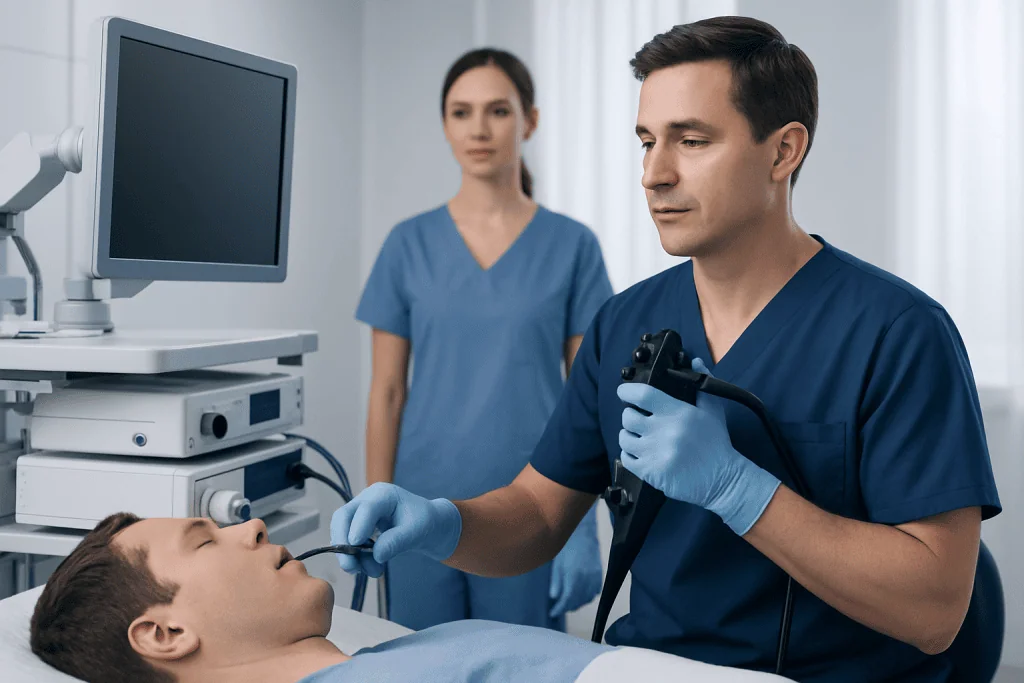
An EoE biopsy is considered when symptoms suggest inflammation or narrowing of the esophagus. In adults, the most common reason is dysphagia, meaning food seems to move slowly or becomes stuck. In children, symptoms may be less specific and can include poor feeding, abdominal pain, nausea, vomiting, poor growth, or reluctance to eat.
During endoscopy, the clinician may see features associated with EoE, such as rings, narrow areas, furrows, white spots, swelling, or fragile tissue. These appearances can support suspicion, but they cannot establish the diagnosis on their own. Conversely, a normal-looking esophagus does not rule out EoE.
Current clinical practice commonly involves obtaining multiple samples from different levels of the esophagus. This approach matters because eosinophilic inflammation may be unevenly distributed. The same endoscopy may also help assess other explanations for symptoms, including reflux-related irritation, infection, medication injury, or structural narrowing.
People with recurrent food impaction, progressive swallowing difficulty, unexplained dysphagia, or persistent symptoms despite initial treatment should discuss endoscopy with a qualified gastroenterologist. Urgent assessment is needed if food is stuck and cannot pass, particularly if swallowing saliva becomes difficult.
Step by Step: What Happens During an EoE Biopsy
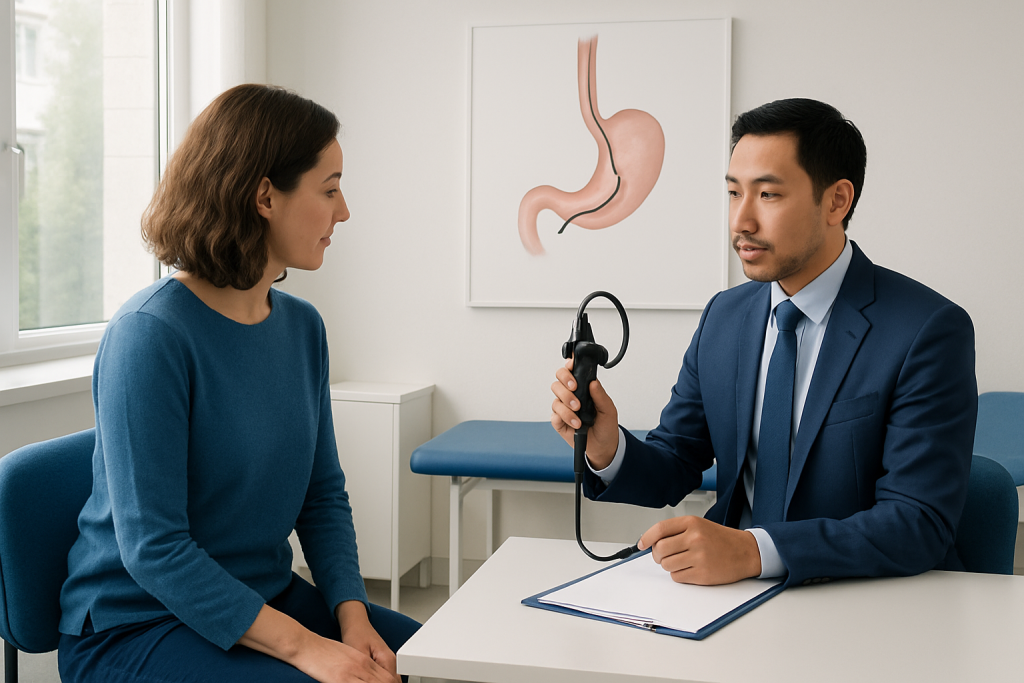
Before the appointment, the care team reviews medical history, medicines, allergies, and sedation risks. Instructions may include stopping food and drink for a set period before the procedure. It is important to ask the team whether blood thinners, diabetes medicines, supplements, or other regular treatments need special planning; people should not stop prescribed medication without medical advice.
At the endoscopy unit, a nurse checks vital signs and an intravenous line may be placed. Sedation or anesthesia is then given according to the person’s health needs and the center’s protocol. A mouth guard protects the teeth and endoscope while the flexible instrument is gently guided through the mouth into the upper digestive tract.
The gastroenterologist examines the lining and takes several pinhead-sized samples with forceps. The samples do not create a hole in the esophagus and are sent to a pathology laboratory. If a narrowing is found, the clinician may discuss whether a separate or same-session procedure to widen the esophagus is suitable; this decision is individualized.
The examination itself often takes a relatively short time, though preparation and recovery from sedation take longer. Since sedating medicines can affect alertness and coordination for the rest of the day, patients generally need an adult to take them home and should avoid driving, alcohol, and important decisions until the sedation has worn off.
Recovery Timeline, Benefits and Possible Risks
After an EoE biopsy, patients are observed while sedation wears off. A dry or mildly sore throat, temporary bloating, belching, or mild nausea can occur because air or gas is used to improve visibility during endoscopy. These effects usually settle within hours to a day. Once swallowing is comfortable and the care team approves, fluids and food can be restarted as advised.
How long does it take for the esophagus to heal after a biopsy? The tiny biopsy sites generally begin healing quickly and are not usually felt by the patient. Most people can resume their usual diet and routine the next day, unless their clinician gives different instructions because of additional findings or procedures. The healing of EoE-related inflammation itself is different: it can take weeks or longer and depends on effective treatment and follow-up.
The main benefit of biopsy is diagnostic clarity. It can confirm inflammation, measure its degree, and help distinguish EoE from other causes of symptoms. This information supports individualized treatment decisions and may help prevent long-term complications such as scarring and esophageal narrowing.
Upper endoscopy with biopsy is generally considered safe, but no procedure is risk-free. Uncommon complications include bleeding, reactions to sedation, aspiration, infection, and a tear or perforation of the digestive tract. The risk can vary with a person’s health, anatomy, and any additional procedures. Severe chest or abdominal pain, fever, vomiting blood, black stools, breathing difficulty, or trouble swallowing after the procedure should be assessed promptly.
Understanding EoE Biopsy Results
Pathologists examine the tissue under a microscope and report whether eosinophils and other inflammatory changes are present. What are the typical results of eosinophilic esophagitis biopsies? A diagnosis of EoE is supported when esophageal biopsies show at least 15 eosinophils in a high-power microscopic field, together with symptoms of esophageal dysfunction and evaluation for other potential causes of eosinophilia.
The report may also describe features such as surface-layer eosinophils, small eosinophil collections, thickening of the basal cell layer, or fibrosis-related changes. These details may help the treating clinician understand the pattern of inflammation, but the diagnosis is not based on one laboratory number alone. Results must be interpreted in the context of symptoms, endoscopy findings, medical history, and response to treatment.
Results often take several days to about two weeks, depending on laboratory processes and whether specialized review is needed. The gastroenterologist explains what the findings mean and whether treatment, dietary guidance, allergy input, or repeat endoscopy is appropriate. Treatment may include acid-suppressing therapy, swallowed topical corticosteroids, dietary elimination plans, biologic therapy for selected people, and management of narrowing when present.
Can an EoE biopsy be wrong? A biopsy can occasionally be non-diagnostic or misleading, particularly if too few samples are taken, inflammation is patchy, or treatment has reduced visible eosinophils before the procedure. Eosinophils can also appear in other conditions. When symptoms and results do not match, the clinician may review medication use, consider alternative diagnoses, request pathology review, or recommend repeat endoscopy with adequate sampling.
Outlook and Ongoing Care for EoE
EoE is a chronic inflammatory condition, but many people achieve good symptom control and healing of the esophageal lining with a personalized treatment plan. Follow-up matters because symptoms do not always accurately reflect whether inflammation has improved. For this reason, clinicians may recommend repeat endoscopy and biopsy after treatment changes to assess response.
Can eosinophilic esophagitis be cancerous? No. EoE is not cancer and is not considered a condition that changes into esophageal cancer. However, persistent untreated inflammation may contribute to remodeling of the esophagus, including rings, stiffness, or narrowing, which can make swallowing more difficult over time.
Daily habits can support medical care. Taking prescribed medicines consistently, following an agreed food-elimination plan only with professional guidance, chewing thoroughly, eating slowly, and taking small bites may reduce swallowing difficulties. Restrictive diets should be monitored by a dietitian, especially for children, to help maintain adequate nutrition and growth.
Care may involve gastroenterologists, pathologists, allergists, dietitians, pediatricians, and surgeons or endoscopists when needed. Acibadem International’s multidisciplinary specialists and JCI-accredited hospitals diagnose and treat EoE for international patients, with care plans based on each person’s symptoms and test findings.
When to Seek Medical Care
Medical assessment is advisable for ongoing difficulty swallowing, food sticking in the chest or throat, repeated vomiting, reflux-like symptoms that do not improve as expected, unexplained feeding difficulties, or unintentional weight loss. These symptoms can have several causes, and timely evaluation helps identify the appropriate next step.
Emergency care is important when food is completely stuck, swallowing saliva is not possible, there is severe chest pain, breathing difficulty, fainting, or signs of gastrointestinal bleeding such as vomiting blood or passing black stools. These symptoms do not necessarily mean EoE, but they require urgent evaluation.
After an endoscopy, patients should contact the procedural team or seek urgent care for worsening pain, persistent fever, severe vomiting, shortness of breath, or bleeding. The team’s discharge instructions should always take priority, as they reflect the individual procedure and health history.
Frequently asked questions
Is an EoE biopsy painful?
Biopsy sampling is performed during upper endoscopy, usually with sedation or anesthesia, so patients generally do not feel the tissue collection. A mild sore throat, bloating, or temporary nausea may occur afterward. Serious discomfort is uncommon and should be reported to the care team.
How many biopsies are needed to diagnose EoE?
Several biopsies are usually taken from different parts of the esophagus because EoE inflammation can be patchy. The exact number depends on current clinical guidance and the specialist’s assessment. Taking multiple samples improves the chance of detecting meaningful inflammation.
Do I need to stop EoE medicine before a biopsy?
Whether medicine should be continued or temporarily changed before endoscopy depends on the purpose of testing and the individual treatment plan. Acid-suppressing medicines, swallowed steroids, and dietary therapy may affect findings in some situations. A patient should ask the gastroenterology team for individualized instructions and should not stop treatment independently.
How long do EoE biopsy results take?
Results commonly take several days and may take up to about two weeks, depending on the pathology laboratory and whether additional testing or review is needed. The gastroenterologist will explain the report in the context of symptoms and endoscopy findings. A pathology result alone is not interpreted as a diagnosis without clinical evaluation.
Can EoE be diagnosed without a biopsy?
Symptoms and endoscopy findings can raise strong suspicion for EoE, but biopsy is generally needed to confirm the diagnosis. The microscopic examination identifies eosinophilic inflammation and helps rule out or consider other causes. This is why a normal-looking esophagus may still be biopsied when EoE is suspected.
Will I need another endoscopy after EoE treatment?
Many patients need follow-up endoscopy with biopsies after starting or changing treatment, because symptom improvement does not always mean inflammation has resolved. The timing is individualized based on age, symptoms, treatment choice, and initial findings. A gastroenterologist can explain whether repeat testing is appropriate.
References
- American College of Gastroenterology
- American Gastroenterological Association
- National Institute of Diabetes and Digestive and Kidney Diseases
- National Institute of Allergy and Infectious Diseases
- European Society for Paediatric Gastroenterology Hepatology and Nutrition
This article is for general information only and is not a substitute for professional medical advice. Please consult a qualified doctor about your individual situation.
Oncology care in Turkey — second opinion and treatment plan
JCI-accredited · board-certified surgeons · reply within 24h
Add us as a Preferred Source to see more of our trusted health content across Google Search, AI Overviews and Discover.

More from the Health Library



Related Specialists
Assoc. Prof. Dr. Baran Bozkurt
Neurosurgery
Fzt. Murat Özel
Physical Medicine & Rehabilitation
Öznur Tanişman
Physical Medicine & Rehabilitation
Dr. Sedat Özkaya
Emergency Service