

Spinal Stenosis
Spinal Stenosis is narrowing of the spinal canal that can press on nerves, causing back, neck, leg or arm symptoms. Learn diagnosis and treatment.

Quick answer
Spinal stenosis is a narrowing of the spaces within the spine that can put pressure on the spinal cord or nerves, causing symptoms such as pain, numbness, weakness, or difficulty walking. Treatment depends on the location and severity of the narrowing and may include medication, physical therapy, pain management, and when needed, surgery to relieve pressure on the affected nerves.
Spinal stenosis is a narrowing of the spaces in the spine that can put pressure on the spinal cord or nerve roots. It most often develops gradually with age and may cause back or neck pain, numbness, weakness, or walking difficulty, although some people have mild or no symptoms.
Overview
Spinal stenosis is a condition in which the spinal canal, the side openings where nerves exit, or both become narrowed. This reduced space can irritate or compress the spinal cord or nerve roots, leading to pain, tingling, numbness, weakness, or problems with walking. The condition can occur anywhere in the spine, but it is most often seen in the lumbar spine, which is the lower back, and the cervical spine, which is the neck.
The spine is made of bones, discs, joints, ligaments, nerves, and muscles that work together to support movement and protect the spinal cord. Over time, normal age-related changes such as disc wear, joint enlargement, and thickening of ligaments may reduce the space around the nerves. In many people these changes develop slowly, and symptoms may come and go or progress gradually.
Spinal stenosis is not the same experience for every patient. Some people have significant narrowing on imaging but few symptoms, while others have moderate narrowing that causes daily discomfort or walking limitation. For this reason, doctors interpret scans together with a detailed examination and the patient’s symptoms rather than relying on imaging alone.
Symptoms
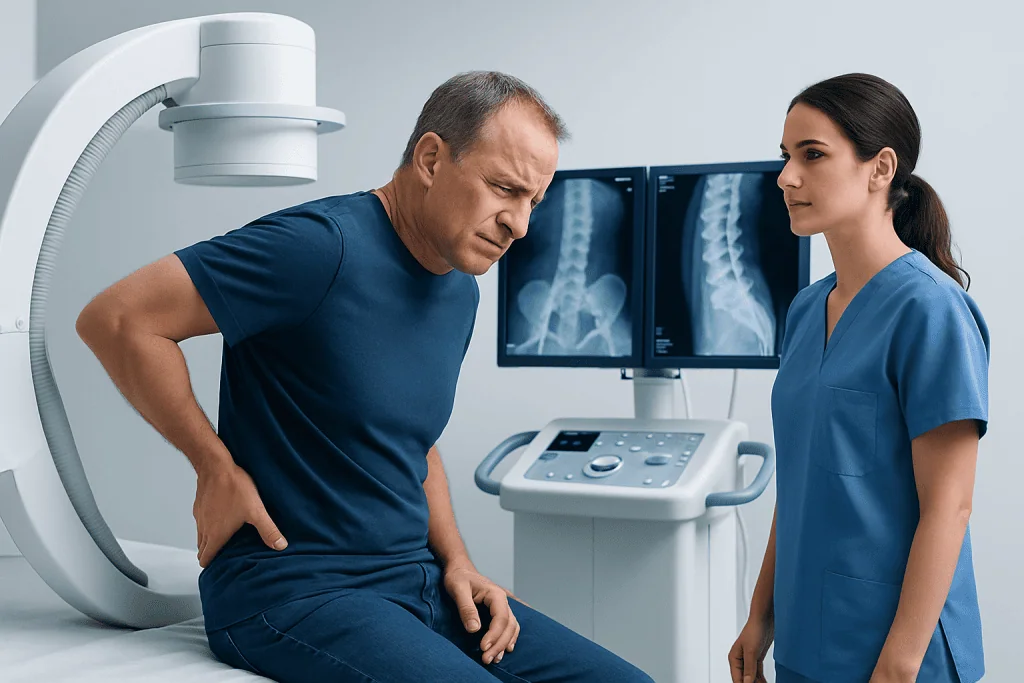
Spinal stenosis symptoms depend on where the narrowing occurs and which nerves are affected. Lumbar spinal stenosis commonly causes pain, heaviness, tingling, numbness, or weakness in the buttocks, thighs, calves, or feet. Symptoms may worsen with standing or walking and improve when sitting down or leaning forward, because this posture can temporarily create more space in the spinal canal.
Cervical spinal stenosis can affect the neck, shoulders, arms, hands, and sometimes the legs. A person may notice neck pain, arm pain, hand numbness, reduced grip strength, clumsiness with buttons or handwriting, or balance changes. When the spinal cord itself is compressed in the neck, symptoms may involve both arms and legs, and medical assessment is important.
Common symptoms may include:
- Back or neck pain that varies in intensity
- Numbness, tingling, burning, or pins-and-needles sensations
- Leg pain that appears after walking a certain distance
- Weakness in the legs, feet, arms, or hands
- Difficulty standing upright for long periods
- Balance problems or changes in walking pattern
Symptoms usually develop gradually, but their impact can become more noticeable during daily activities such as shopping, climbing stairs, or walking outdoors. Any new weakness, bladder or bowel control problem, or rapidly worsening neurological symptom should be assessed urgently.
Causes & Risk Factors
The most common cause of spinal stenosis is degenerative change, which means gradual wear and structural change in the spine over time. Intervertebral discs can lose height and bulge, small spinal joints can become enlarged due to arthritis, and ligaments may thicken. These changes can narrow the canal and nerve openings, especially in people over middle age.
Other causes include a herniated disc, spinal injury, previous spine surgery, abnormal curvature of the spine, bone overgrowth, or a condition that affects bone and joint structure. Some people are born with a naturally narrower spinal canal, which can make symptoms appear earlier if additional degenerative changes occur.
Risk factors for spinal stenosis include increasing age, a history of spinal arthritis, physically demanding work, previous trauma, and conditions that affect posture or spinal alignment. Genetics and body mechanics may also contribute. Having these risk factors does not mean a person will definitely develop symptoms, but they can increase the likelihood of narrowing becoming clinically relevant.
Daily habits do not usually cause spinal stenosis on their own, but they can influence symptom control. Prolonged inactivity, poor conditioning, smoking, and excess body weight may make back or neck symptoms harder to manage. Maintaining strength, flexibility, and general health can support the spine and may improve comfort and function.
Diagnosis
Diagnosis begins with a medical history and physical examination. The doctor asks about the location of pain, walking tolerance, posture-related changes, numbness, weakness, previous injuries, and how symptoms affect daily life. A neurological examination may check reflexes, muscle strength, sensation, coordination, and balance.
Imaging is often used when symptoms suggest nerve involvement, when pain persists despite initial care, or when treatment planning is needed. Magnetic resonance imaging is commonly used because it shows discs, nerves, ligaments, and the spinal canal in detail. Computed tomography may be helpful in some cases, particularly for assessing bone structures, and X-rays can show alignment, arthritis, or instability.
Additional tests may be considered if the diagnosis is unclear or if symptoms could come from another condition. Nerve conduction studies or electromyography may help evaluate nerve function in selected patients. Blood tests are not used to diagnose spinal stenosis directly, but they may help rule out other causes of pain, weakness, or inflammation when appropriate.
A key part of diagnosis is matching the scan findings with the patient’s actual symptoms. Many adults have degenerative changes on imaging that are not causing problems. A specialist assessment helps determine whether stenosis is the main cause of symptoms and which treatment options are most suitable.
Treatment Options
Treatment for spinal stenosis depends on the location of narrowing, symptom severity, neurological findings, general health, and the patient’s goals. The right approach is decided by a spine specialist after a full assessment. Many people start with conservative care, especially when symptoms are mild to moderate and there is no significant or worsening nerve deficit.
Non-surgical treatment may include education, activity modification, physiotherapy, supervised exercises, posture training, and pain management. Physiotherapy often focuses on improving flexibility, core and hip strength, walking tolerance, and safe movement patterns. Medication may be used to reduce pain or inflammation when appropriate, but it should be selected by a doctor based on the patient’s medical history and other medicines.
Injection-based treatments may be considered for some patients to reduce nerve irritation and improve function for a period of time. These procedures are performed by trained specialists using appropriate imaging guidance and safety measures. They do not remove the narrowing, but they may help selected people participate more comfortably in rehabilitation or delay the need for surgery.
Surgery may be discussed when symptoms are severe, daily function is significantly limited, conservative treatment has not provided enough benefit, or there is progressive neurological impairment. Surgical options generally aim to decompress the affected nerves by creating more space, and in some cases stabilizing the spine may also be necessary. The type of surgery, expected recovery, and risks are individualized and should be reviewed carefully with a qualified spine surgeon.
Living With / Prognosis
Many people with spinal stenosis manage their symptoms successfully with a combination of medical guidance, exercise, and lifestyle adjustments. The condition often changes gradually, and symptoms may fluctuate. A practical care plan can help patients remain active, reduce flare-ups, and maintain independence.
Helpful strategies may include pacing activities, taking sitting breaks during longer walks, using supportive footwear, maintaining a comfortable weight, and following a spine-safe strengthening program. Some people find that walking with a slight forward lean, such as using a walker or leaning on a shopping cart, reduces leg symptoms. These adjustments should be used alongside professional advice rather than as a substitute for diagnosis.
The outlook depends on the degree of nerve compression, the location of stenosis, overall health, and how early troublesome symptoms are addressed. Conservative care may be enough for many patients, while others benefit from procedures or surgery after specialist review. Improvement is usually measured not only by pain reduction but also by walking ability, sleep, balance, and confidence in daily activities.
Emotional wellbeing also matters. Chronic back, neck, or leg symptoms can affect mood and routines, so clear information, realistic goals, and regular follow-up can be reassuring. Acibadem International’s multidisciplinary specialists and JCI-accredited hospitals diagnose and treat spinal stenosis for international patients, with treatment decisions made after individual assessment.
When to See a Doctor
A person should see a doctor if back or neck pain is accompanied by numbness, tingling, weakness, balance difficulty, or pain that travels into the arms or legs. Medical assessment is also recommended when walking distance is becoming shorter, symptoms interfere with work or daily tasks, or pain does not improve with simple self-care.
Prompt medical advice is important if symptoms are worsening, if there is new weakness in a foot or hand, or if coordination and balance are changing. These signs do not always mean a serious problem, but they should be evaluated so that nerve function can be protected and appropriate treatment can begin.
Urgent care is needed for loss of bladder or bowel control, numbness around the groin or saddle area, sudden severe weakness, or symptoms after a significant injury. These situations are uncommon but require immediate medical attention.
Patients should also seek specialist input before starting intensive exercise programs, spinal manipulation, or invasive treatments if they have known spinal stenosis or neurological symptoms. A tailored plan is safer and more effective than a one-size-fits-all approach.
Frequently asked questions
What is spinal stenosis?
Spinal stenosis is narrowing of the spaces in the spine that can put pressure on the spinal cord or nerve roots. It most often affects the lower back or neck. Symptoms may include pain, numbness, tingling, weakness, or difficulty walking.
What are the most common spinal stenosis symptoms?
Common symptoms include back or neck pain, leg or arm pain, numbness, tingling, weakness, and reduced walking tolerance. Lumbar spinal stenosis often feels worse when standing or walking and better when sitting or leaning forward. Cervical stenosis may affect hand function, balance, or coordination.
Is spinal stenosis always caused by aging?
Age-related degenerative change is the most common cause, but it is not the only one. Some people are born with a narrower spinal canal, and others develop narrowing after disc herniation, arthritis, injury, abnormal spinal alignment, or previous surgery. A doctor’s evaluation helps identify the likely cause.
Can spinal stenosis be treated without surgery?
Yes, many people begin with non-surgical care such as physiotherapy, activity modification, exercise, and doctor-guided pain management. Injections may be considered for selected patients. Surgery is usually considered when symptoms are severe, function is limited, or nerve problems are progressing.
How is spinal stenosis diagnosed?
Diagnosis usually includes a medical history, physical examination, and neurological assessment. Imaging such as MRI, CT, or X-ray may be used to confirm narrowing and guide treatment planning. The doctor compares imaging findings with symptoms because some narrowing may not cause problems.
Is walking good for spinal stenosis?
Walking can be helpful when it is tolerated, but some people with lumbar spinal stenosis develop leg symptoms after a certain distance. Shorter walks, rest breaks, gentle conditioning, and physiotherapy-guided exercises may improve endurance. A clinician can advise on safe activity levels based on symptoms and examination.
When should spinal stenosis symptoms be treated urgently?
Urgent medical care is needed for loss of bladder or bowel control, numbness in the saddle area, sudden severe weakness, or rapidly worsening neurological symptoms. These signs are uncommon but may indicate serious nerve compression. Prompt assessment helps reduce the risk of lasting nerve problems.
References
- American Academy of Orthopaedic Surgeons
- North American Spine Society
- National Institute of Neurological Disorders and Stroke
- Mayo Clinic
- National Health Service
This article is for general information only and is not a substitute for professional medical advice. Please consult a qualified doctor about your individual situation.
