Ankle Sprain: Severity Grades, Rehabilitation, and Prevention

An ankle sprain happens when one or more ankle ligaments are overstretched or torn, most often after the foot rolls inward. Severity is commonly described as Grade I, II, or III, depending on pain, swelling, stability, and ligament damage.
Key Takeaways
- An ankle sprain happens when one or more ankle ligaments are overstretched or torn, most often after the foot rolls inward.
- Severity is commonly described as Grade I, II, or III, depending on pain, swelling, stability, and ligament damage.
- Early care focuses on protection, swelling control, gentle movement, and appropriate weight-bearing guided by symptoms.
- Rehabilitation is essential because balance, strength, and mobility training reduce the risk of repeated sprains.
- Medical assessment is important if pain is severe, walking is difficult, swelling is significant, or symptoms do not improve.
An ankle sprain is a common ligament injury that ranges from mild stretching to a complete tear. With the right diagnosis, rehabilitation, and prevention plan, most people can return safely to daily activities and sport.
Overview
An ankle sprain is an injury to the ligaments that help stabilize the ankle joint. Ligaments are strong bands of tissue that connect bones to each other. When the ankle twists beyond its normal range, these ligaments can stretch, partially tear, or tear completely.
The most common type is a lateral ankle sprain, which occurs when the foot rolls inward and the outer ankle ligaments are stressed. This can happen during sports, walking on uneven ground, missing a step, or simply landing awkwardly. Less commonly, the ankle may roll outward and injure the inner ligament, or the force may affect the ligaments above the ankle in what is known as a high ankle sprain.
Although many ankle sprains improve with conservative care, they should not be dismissed as minor injuries. Inadequate rehabilitation can leave the ankle stiff, weak, or unstable, increasing the chance of another sprain. A structured approach to recovery helps protect healing tissue while restoring movement, strength, balance, and confidence.
Symptoms and Severity Grades
Ankle sprain symptoms vary depending on the severity and location of the injury. Common symptoms include pain around the ankle, swelling, bruising, tenderness to touch, difficulty walking, and a feeling that the ankle is weak or unstable. Some people feel or hear a pop at the time of injury, but this alone does not confirm the grade of the sprain.
Healthcare professionals often describe ankle sprains in three grades. A Grade I sprain is mild, with ligament stretching or microscopic tearing. Pain and swelling are usually limited, and walking may be possible with mild discomfort. A Grade II sprain involves a partial ligament tear, with more swelling, bruising, tenderness, and some loss of motion or stability.
A Grade III sprain is a complete tear of one or more ligaments. It can cause significant swelling, bruising, difficulty bearing weight, and a sense of giving way. However, pain intensity alone can be misleading, so a careful examination is important. Some fractures, tendon injuries, or cartilage injuries can feel similar to a sprain and may require different management.
- Mild sprain: slight swelling, minimal bruising, able to walk with little difficulty.
- Moderate sprain: more noticeable swelling and bruising, painful walking, reduced ankle movement.
- Severe sprain: marked swelling, instability, difficulty or inability to bear weight, possible associated injury.
Causes and Risk Factors

Ankle sprains most often occur when the foot lands in an unexpected position. This can happen during running, jumping, cutting movements, or stepping on an uneven surface. Sports such as basketball, football, tennis, volleyball, and trail running are common settings, but ankle sprains also occur during everyday activities.
Several factors can increase the risk of an ankle sprain. A previous sprain is one of the most important risk factors, especially if rehabilitation was incomplete. Limited ankle mobility, weak hip or ankle muscles, poor balance, inappropriate footwear, fatigue, and uneven playing surfaces may also contribute. People with naturally looser ligaments or certain foot shapes may be more prone to rolling the ankle.
High ankle sprains are caused by a different mechanism, usually when the foot is forced upward and rotated outward. These injuries affect the ligaments between the tibia and fibula above the ankle joint. They may take longer to recover than typical lateral sprains and often require closer medical follow-up.
Diagnosis
Diagnosis begins with a discussion of how the injury happened, where the pain is located, and whether the person can walk. The clinician examines swelling, bruising, tenderness, range of motion, and joint stability. They may also check the foot, lower leg, tendons, nerves, and circulation to make sure no related injury is missed.
Imaging is not always needed for a simple sprain, but an X-ray may be recommended when there is bony tenderness, significant swelling, or difficulty bearing weight. Clinical decision tools, such as the Ottawa ankle rules, help clinicians decide when X-rays are appropriate. These rules are used by trained professionals and do not replace medical assessment when symptoms are concerning.
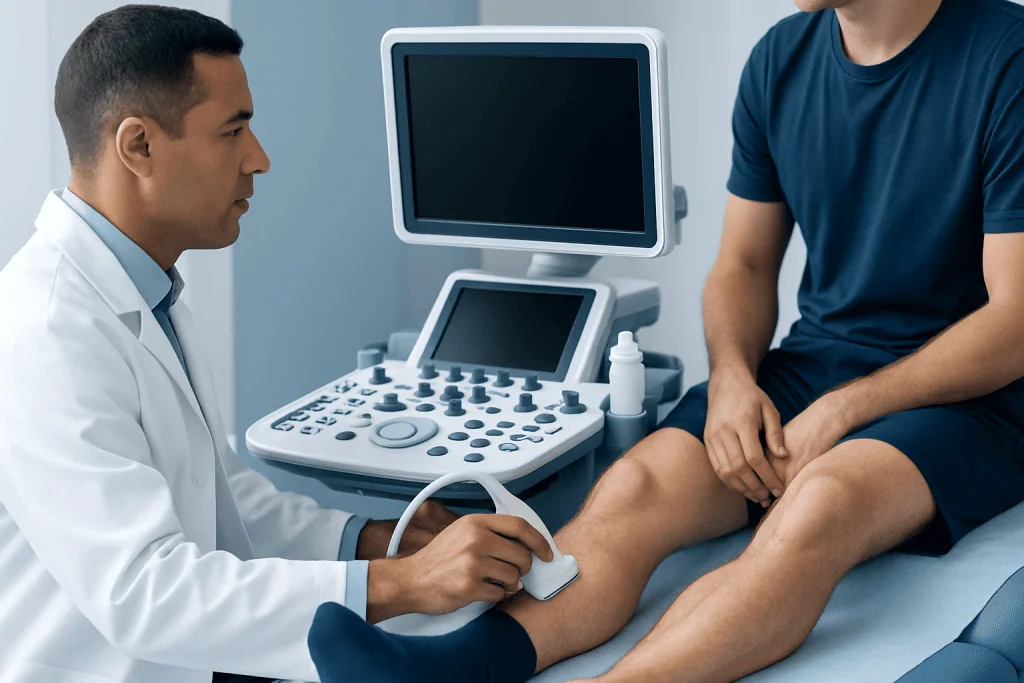
Ultrasound or MRI may be considered if symptoms are severe, if the diagnosis is unclear, or if pain and instability persist despite appropriate care. MRI can show ligament tears, cartilage injuries, tendon problems, and bone bruising. Correct diagnosis is especially important for athletes, people with recurrent sprains, and those whose work requires prolonged standing or walking.
Treatment Options
Most ankle sprains are treated without surgery. Early treatment focuses on protecting the ankle, reducing swelling, and maintaining safe movement. A commonly used approach is protection, relative rest, ice, compression, and elevation. Short periods of reduced activity are helpful, but complete immobilization for too long can contribute to stiffness and muscle weakness.
Weight-bearing is usually guided by pain and the severity of the injury. Some people may need crutches for a short time, while others can walk with a brace or supportive wrap. Functional support, such as an ankle brace, lace-up support, or taping, can protect the ligaments while allowing gradual movement. Pain relief may include over-the-counter medicines when appropriate, but people should ask a doctor or pharmacist if they have medical conditions, take other medications, or are unsure what is safe for them.
More severe sprains, high ankle sprains, or injuries with marked instability may require a walking boot, longer protection, or specialist assessment. Surgery is uncommon for a first-time typical ankle sprain, but it may be considered in selected cases, such as persistent mechanical instability, associated fractures, or injuries that do not improve with a well-supervised rehabilitation program.
Rehabilitation and Return to Activity
Rehabilitation is one of the most important parts of ankle sprain recovery. The goal is not only to reduce pain but also to restore ankle motion, calf and ankle strength, balance, coordination, and sport-specific control. Recovery time varies depending on the grade of injury, overall health, activity level, and whether there have been previous sprains.
In the early phase, exercises may include gentle ankle circles, moving the foot up and down, and pain-free range-of-motion activities. As swelling and pain improve, strengthening exercises are added, such as resisted movements with an exercise band, calf raises, and controlled step exercises. Balance training is especially important because sprains can affect proprioception, the body’s sense of joint position.
A safe return to sport or demanding activity should be gradual. The person should be able to walk briskly, climb stairs, balance on the injured leg, jog, cut, jump, and land without pain, swelling, or a feeling of instability before returning fully. Athletes may benefit from a physiotherapist-guided progression that includes agility drills and sport-specific movements.
- Mobility: restore comfortable ankle motion without forcing painful stretching.
- Strength: rebuild calf, ankle, foot, and hip strength to support movement.
- Balance: practice single-leg balance and controlled movements to retrain joint awareness.
- Function: progress from walking to jogging, jumping, cutting, and sport-specific drills.
Prevention and Self-Care
Prevention is particularly important for people who have had an ankle sprain before. A consistent program that includes balance training, strengthening, flexibility, and gradual conditioning can reduce the risk of recurrence. Warm-up routines before sport and careful progression of training intensity also help prepare the ankle for sudden changes in direction.
Supportive footwear appropriate to the activity and surface can improve comfort and control. People with recurrent sprains may benefit from bracing or taping during high-risk activities, especially in the months after returning to sport. Braces should be fitted correctly and used as part of a broader rehabilitation plan, not as a replacement for strength and balance work.
At home, swelling can be managed by elevating the ankle and using compression if comfortable. Ice may help with pain in the first days after injury, but it should not be applied directly to the skin. Gentle movement within a comfortable range is usually encouraged, while running, jumping, or uneven-ground activities should wait until the ankle has recovered enough to handle them safely.
When to See a Doctor
Medical assessment is recommended if there is severe pain, rapid swelling, deformity, numbness, open wounds, or an inability to take a few steps after the injury. A doctor should also assess ankle pain that is not improving after several days of appropriate self-care, recurrent sprains, or a feeling that the ankle gives way during normal activities.
Children, older adults, competitive athletes, and people with diabetes, circulation problems, or nerve conditions should seek professional advice early. These groups may need closer evaluation or modified treatment plans. Persistent pain after a sprain can sometimes indicate a fracture, cartilage injury, tendon problem, or high ankle sprain.
For international patients seeking evaluation or treatment, Acibadem International’s multidisciplinary orthopedic, rehabilitation, and imaging teams in JCI-accredited hospitals can help diagnose ankle injuries and plan appropriate care. Regardless of where care is received, the best results usually come from timely assessment, individualized rehabilitation, and a careful return to activity.
Frequently asked questions
How can a person tell if an ankle sprain is serious?
A sprain may be more serious if there is severe swelling, extensive bruising, deformity, numbness, or inability to bear weight. A feeling that the ankle is unstable or giving way also needs attention. Because fractures and tendon injuries can resemble sprains, a medical examination is the safest way to confirm the diagnosis.
Is it better to rest completely after an ankle sprain?
Short-term protection and relative rest are helpful, especially in the first days. However, complete rest for too long can lead to stiffness and weakness. Most recovery plans gradually introduce gentle movement, weight-bearing, and exercises as symptoms allow.
How long does an ankle sprain take to heal?
Healing time depends on the severity of the sprain and the person’s activity demands. Mild sprains may improve within a short period, while moderate or severe sprains can take longer and need structured rehabilitation. Return to sport should be based on function, not just the number of days since injury.
Should an ankle sprain be wrapped or braced?
Compression wrapping can help reduce swelling in the early stage if it is comfortable and not too tight. A brace or taping may provide support during walking or return to sport. The best option depends on the injury grade, comfort, and the advice of a healthcare professional.
Can walking on a sprained ankle make it worse?
Walking too soon or without support can worsen pain and swelling, especially in moderate or severe sprains. Some weight-bearing is often allowed when pain is manageable, but crutches, a brace, or a boot may be needed temporarily. A clinician can guide safe progression.
Why do ankle sprains keep happening?
Repeated sprains often occur when strength, balance, and joint position sense have not fully recovered. Ligament laxity, poor footwear, uneven surfaces, or returning to sport too quickly can also contribute. Rehabilitation that includes balance and neuromuscular training is important for prevention.
References
- American Academy of Orthopaedic Surgeons
- Mayo Clinic
- National Institute for Health and Care Excellence
- American Orthopaedic Foot and Ankle Society
- British Journal of Sports Medicine
This article is for general information only and is not a substitute for professional medical advice. Please consult a qualified doctor about your individual situation.
Joint and spine care in Turkey — expert assessment & treatment
JCI-accredited · board-certified surgeons · reply within 24h
Add us as a Preferred Source to see more of our trusted health content across Google Search, AI Overviews and Discover.

Orthopedics & Spine
Care for bones, joints and the musculoskeletal system, including joint replacement, sports injuries and trauma.
125 specialists in this unit