Testicular Cancer: Lumps, Ultrasound, and Fertility Concerns
A new lump, swelling, firmness, or heaviness in the testicle should be checked by a doctor, even if it is painless. Scrotal ultrasound is a safe, noninvasive test that helps distinguish solid testicular masses from cysts or other benign causes.
Key Takeaways
- A new lump, swelling, firmness, or heaviness in the testicle should be checked by a doctor, even if it is painless.
- Scrotal ultrasound is a safe, noninvasive test that helps distinguish solid testicular masses from cysts or other benign causes.
- Treatment often begins with surgical removal of the affected testicle, followed by surveillance, chemotherapy, radiotherapy, or further surgery when needed.
- Fertility can be affected by the cancer itself or by treatment, so sperm banking is usually discussed before therapy begins.
- Most men can live normally with one testicle, including maintaining sexual function and testosterone production in many cases.
Testicular cancer is often highly treatable, especially when found early, and many men first notice a painless lump, swelling, or change in one testicle. Ultrasound, blood tests, and specialist evaluation help confirm the diagnosis and guide treatment while also addressing important fertility concerns.
Overview
Testicular cancer is a cancer that begins in the cells of one or, less commonly, both testicles. The testicles produce sperm and the hormone testosterone, and they are located inside the scrotum. Although any cancer diagnosis can feel overwhelming, testicular cancer is among the more treatable cancers, particularly when it is diagnosed and managed promptly by an experienced medical team.
Most testicular cancers develop from germ cells, the cells involved in sperm production. These cancers are broadly grouped into seminomas and non-seminomas, terms that help doctors choose the most appropriate treatment. Some tumors contain features of both groups, and the final pathology report after surgery provides important information about the exact type.
Many men first seek care after noticing a lump, swelling, or change in how a testicle feels. Not every testicular lump is cancer; infections, cysts, fluid collections, injuries, and varicoceles can also cause changes. However, because testicular cancer is best treated early, any new or persistent change should be evaluated rather than watched for a long time at home.
Symptoms and What a Lump May Feel Like
The most common sign of testicular cancer is a painless lump or swelling in one testicle. Some men describe a testicle as feeling firmer, larger, or heavier than usual. Others notice a dull ache in the lower abdomen, groin, or scrotum. Pain can occur, but the absence of pain does not rule out a problem.
Changes may be subtle. A lump may feel like a small hard area on the testicle, or the whole testicle may seem enlarged. Sometimes there is a sensation of heaviness in the scrotum or a sudden collection of fluid around the testicle. Less commonly, breast tenderness or enlargement can occur because some tumors produce hormones.
Possible symptoms that should prompt medical assessment include:
- A new lump, nodule, or hard area in the testicle
- Swelling, enlargement, or shrinkage of a testicle
- A feeling of heaviness in the scrotum
- Dull pain in the groin, lower abdomen, or back
- Sudden scrotal swelling or persistent discomfort
Severe sudden testicular pain is more often linked to urgent conditions such as testicular torsion, where blood flow to the testicle is reduced. This is a medical emergency. Whether symptoms are painful or painless, timely evaluation protects both health and, when possible, fertility.
Causes and Risk Factors
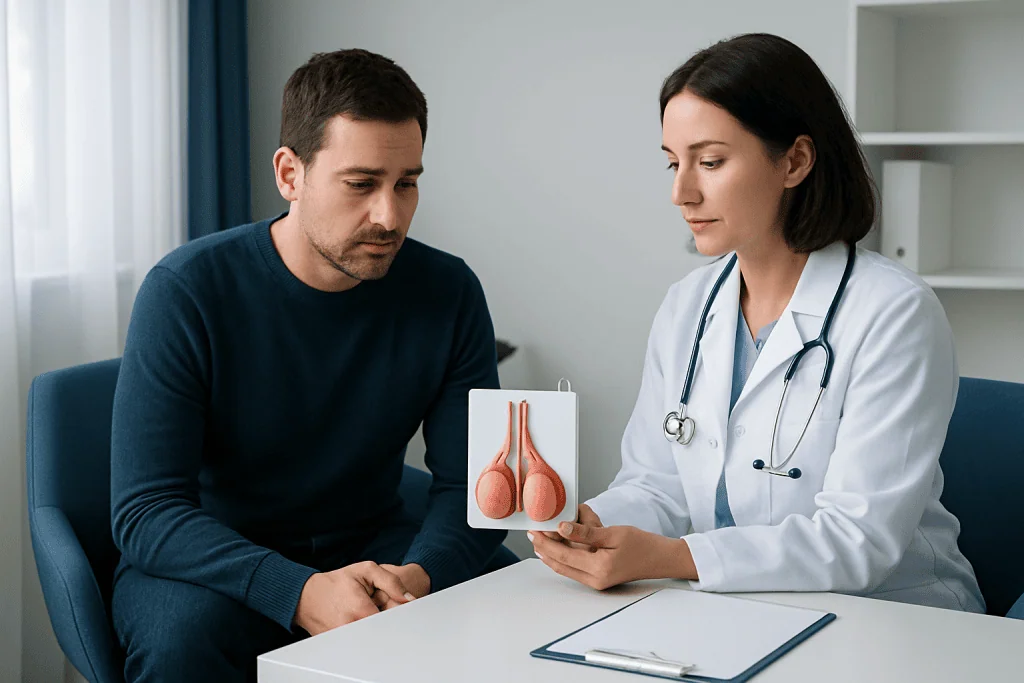
In most cases, the exact cause of testicular cancer is not known. Cancer develops when cells acquire changes that allow them to grow in an uncontrolled way. These changes are not usually caused by anything a man did or did not do, and testicular cancer is not contagious.
Several factors are associated with a higher risk. The strongest known risk factor is a history of an undescended testicle, also called cryptorchidism, even if it was corrected during childhood. A personal history of testicular cancer in one testicle also increases the risk of developing cancer in the other testicle. A family history, especially in a father or brother, may also raise risk.
Other risk patterns include age, as testicular cancer is more common in younger and middle-aged adult men, though it can occur at any age. Some inherited or developmental conditions may be associated with increased risk. Having one or more risk factors does not mean a man will develop testicular cancer, and many men diagnosed with it have no clear risk factor.
There is no proven way to prevent most cases. What men can do is become familiar with the normal size, shape, and feel of their testicles and seek medical advice if something changes. Early attention to symptoms is one of the most useful steps.
Diagnosis: Examination, Ultrasound, and Blood Tests
Diagnosis usually begins with a medical history and a physical examination. The doctor may ask when the change was first noticed, whether there is pain, whether the size has changed, and whether there are risk factors such as previous undescended testicle or past testicular cancer. The examination helps determine whether the lump seems to be within the testicle or related to the surrounding scrotal structures.
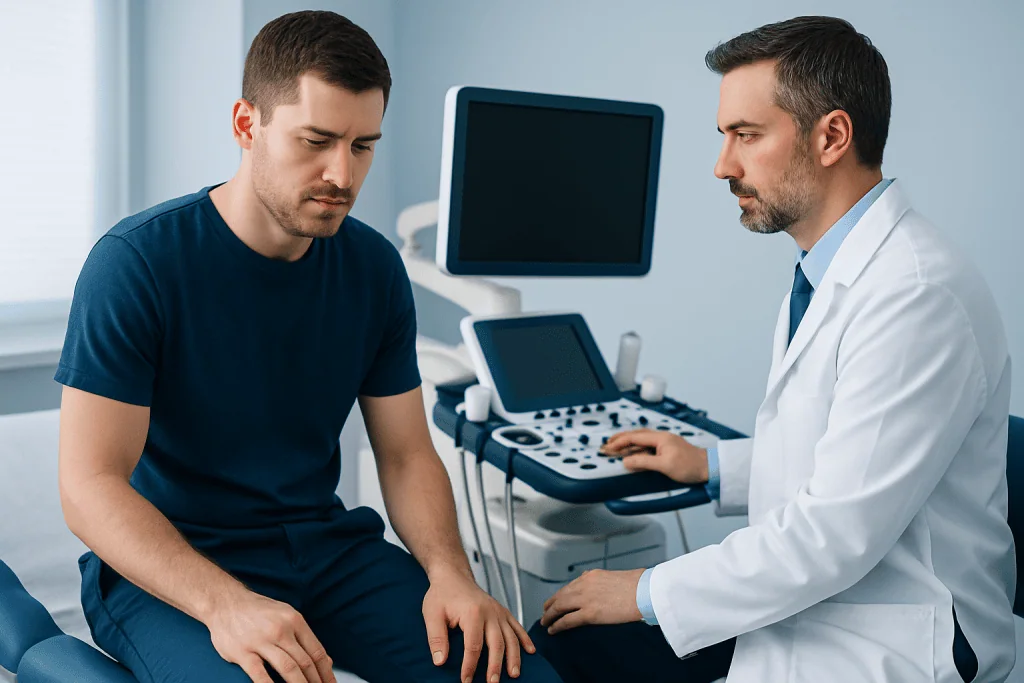
Scrotal ultrasound is the key imaging test for a suspected testicular lump. It uses sound waves, not radiation, and is usually quick and painless. Ultrasound can show whether a mass is solid or fluid-filled and whether it is located inside the testicle. A solid mass within the testicle is taken seriously and usually requires specialist evaluation by a urologist.
Blood tests called tumor markers are often ordered. These may include alpha-fetoprotein, beta-human chorionic gonadotropin, and lactate dehydrogenase. Tumor markers can support the diagnosis, help classify the tumor, guide staging, and provide a baseline for monitoring after treatment. Not all testicular cancers raise tumor markers, so normal results do not always exclude cancer.
If cancer is suspected, doctors generally avoid placing a needle through the scrotum to biopsy the testicle, because this may affect local tissues and staging. Instead, the standard diagnostic and initial treatment step is often removal of the affected testicle through an incision in the groin, called radical inguinal orchiectomy. The removed tissue is then examined by a pathologist to confirm the diagnosis and tumor type.
Staging and Treatment Options
After testicular cancer is diagnosed, staging determines whether cancer is limited to the testicle or has spread to lymph nodes or other organs. Staging may include blood tumor marker tests after surgery and imaging such as CT scans of the abdomen and pelvis, and sometimes the chest. The stage, tumor type, marker levels, and patient preferences all help guide treatment planning.
Radical inguinal orchiectomy is commonly the first treatment. Most men can live well with one testicle. The remaining testicle often produces enough testosterone and sperm for normal sexual function and overall hormonal health, although this varies and can be checked with blood tests if symptoms develop. A testicular prosthesis can be discussed for men who are concerned about scrotal appearance.
Further treatment depends on the pathology and stage. Some men need only careful surveillance after surgery, with scheduled blood tests and imaging. Others may be advised to have chemotherapy, radiotherapy, or surgery to remove lymph nodes in selected cases. Seminomas and non-seminomas respond differently to treatments, which is why accurate classification is important.
Surveillance is an active medical plan, not a passive approach. It requires keeping follow-up appointments, because early detection of recurrence allows timely treatment. Doctors aim to balance effective cancer control with reducing unnecessary treatment and long-term side effects whenever safely possible.
Fertility, Hormones, and Sexual Health
Fertility is an important part of testicular cancer care. Some men have reduced sperm counts even before treatment, possibly because the cancer and underlying testicular changes can affect sperm production. Surgery to remove one testicle may still leave good fertility potential, but chemotherapy, radiotherapy, and some lymph node surgeries can affect sperm production or ejaculation.
For this reason, sperm banking is usually discussed before orchiectomy when possible, and especially before chemotherapy, radiotherapy, or additional surgery. Sperm banking involves collecting and freezing semen samples for possible future use in assisted reproduction. Even if a man is not currently planning children, preserving this option can be valuable.
Testosterone production is also considered. Many men maintain normal testosterone levels with the remaining testicle, but some may experience symptoms of low testosterone, such as fatigue, reduced libido, low mood, decreased muscle strength, or erectile difficulties. If symptoms occur, doctors can check hormone levels and discuss safe management options.
Sexual function and body image concerns are common and valid. Removal of one testicle does not automatically mean loss of erections, orgasm, or masculinity. Open discussion with a urologist, oncologist, fertility specialist, or counselor can help men and partners understand what to expect and address concerns early.
Prevention, Self-Care, and Follow-Up
There is no reliable screening test recommended for all men without symptoms, and most cases cannot be prevented. However, being aware of normal testicular anatomy can help a man notice changes sooner. A simple self-check after a warm shower, when the scrotal skin is relaxed, can help identify new lumps, firmness, or size differences. The goal is awareness, not frequent or anxious checking.
Healthy self-care during and after treatment includes keeping follow-up visits, reporting new symptoms, and discussing fertility and hormone concerns. Men who receive chemotherapy or radiotherapy may also need long-term monitoring for treatment effects. Follow-up schedules vary by cancer type, stage, and treatment plan, so the individual schedule provided by the care team is important.
General wellness measures such as not smoking, staying physically active as advised, eating a balanced diet, and managing stress can support recovery and overall health. These steps do not replace cancer treatment, but they may improve energy, resilience, and long-term wellbeing.
Emotional support is part of care. Testicular cancer often affects men at stages of life when relationships, work, education, and family planning are central. Speaking with a mental health professional, joining a support group, or involving a trusted partner or family member can make the treatment journey easier to navigate.
When to See a Doctor
A doctor should evaluate any new testicular lump, swelling, firmness, or persistent discomfort. Men should not wait to see whether a painless lump goes away on its own. Prompt assessment often leads to reassurance when the cause is benign, and it allows early treatment when a serious condition is found.
Urgent medical care is needed for sudden severe testicular pain, especially if it is accompanied by nausea, vomiting, swelling, or a high-riding testicle. This pattern can suggest testicular torsion, which requires immediate treatment to protect the testicle. Fever, redness, or significant tenderness may suggest infection and also needs medical evaluation.
Men who have been treated for testicular cancer should contact their care team if they notice a new lump in the remaining testicle, unexplained back or abdominal pain, persistent cough, breast tenderness, or new symptoms that concern them. Most symptoms have many possible causes, but follow-up is the safest way to clarify them.
At Acibadem International, multidisciplinary specialists in urology, oncology, radiology, pathology, and fertility care evaluate and treat testicular cancer in JCI-accredited hospitals for international patients. Any man with a testicular concern should seek assessment from a qualified doctor or urologist without delay.
Frequently asked questions
Is every testicular lump cancer?
No. Many testicular or scrotal lumps are caused by benign conditions such as cysts, fluid collections, infection, varicocele, or injury. However, a lump inside the testicle can be serious, so it should be assessed by a doctor, usually with a physical examination and ultrasound.
Does testicular cancer usually hurt?
Testicular cancer is often painless, which is why a lump or firmness should not be ignored simply because it does not hurt. Some men do feel aching, heaviness, or discomfort in the scrotum, groin, or lower abdomen. Sudden severe pain should be treated as urgent because it may have other emergency causes.
What does a testicular ultrasound show?
A scrotal ultrasound shows the structure of the testicles and surrounding tissues using sound waves. It can help determine whether a lump is solid or fluid-filled and whether it is located within the testicle. This information is central to deciding whether urgent urology assessment or surgery is needed.
Can a man have children after testicular cancer?
Many men can father children after testicular cancer, especially if the remaining testicle functions well and treatment is limited. However, cancer itself and treatments such as chemotherapy, radiotherapy, or some surgeries can affect fertility. Sperm banking before treatment is an important option to discuss with the care team.
Will removing one testicle affect testosterone or sex life?
In many men, the remaining testicle produces enough testosterone for normal sexual desire, erections, and general health. Some men may develop low testosterone symptoms or have concerns about body image. Hormone testing, counseling, and the option of a testicular prosthesis can be discussed with a urologist.
Why is the testicle removed instead of doing a needle biopsy?
When testicular cancer is strongly suspected, doctors usually avoid needle biopsy through the scrotum because it can affect local tissues and staging. The standard approach is removal of the affected testicle through a groin incision, which both treats the primary tumor and provides tissue for a definite diagnosis. The exact plan should always be explained by the treating urologist.
References
- World Health Organization
- National Cancer Institute
- European Association of Urology
- American Cancer Society
- European Society for Medical Oncology
This article is for general information only and is not a substitute for professional medical advice. Please consult a qualified doctor about your individual situation.
Testicular Cancer in Turkey — costs, top hospitals & a free quote
JCI-accredited · board-certified surgeons · reply within 24h
Add us as a Preferred Source to see more of our trusted health content across Google Search, AI Overviews and Discover.

Check-up & Preventive Medicine
Comprehensive health screenings designed for early detection and prevention.
3 specialists in this unitMore from the Health Library



Related Specialists

Prof. Dr. Ömer Faruk Taşer
Orthopedic Surgery & Traumatology
Assoc. Prof. Dr. Arzu Yurci
Gynecology & Obstetrics
Prof. Dr. Ali Kurtsoy
Neurosurgery
Dr. Demet Matben
Pediatrics