

Why Measles Is Back: How Outbreaks Start When Vaccination Dips — and What Protects a Family

Key Takeaways
- Measles virus can stay infectious in the air of a room for up to two hours after a contagious person has left, which is why sharing a waiting room counts as exposure.
- Herd immunity against measles requires roughly 95 percent two-dose coverage; US kindergarten MMR coverage fell from 95.2 percent in 2019-2020 to about 92.5 percent in 2024-2025.
- The United States recorded more than 1,500 confirmed measles cases in 2025, the most since 1992, and Canada lost its elimination status in November 2025 after 27 years.
- Two doses of MMR are about 97 percent effective, and one dose about 93 percent; the second dose mainly protects the small minority who did not respond to the first.
- A 2019 study found measles infection erased 11 to 73 percent of children's existing antibodies to other pathogens, a phenomenon researchers call immune amnesia.
- People vaccinated between 1963 and 1967 may have received a less effective inactivated vaccine and should ask a clinician whether revaccination or an antibody test makes sense.
Measles outbreaks return when the share of people protected by two MMR doses slips below roughly 95 percent, letting one imported case spread through unvaccinated pockets. The virus is airborne, stays in a room for up to two hours and infects about nine in ten unprotected close contacts. Two doses of MMR are about 97 percent effective, so checking every family member's vaccination record with a clinician is the most reliable protection.
A pediatric nurse in a border-state clinic described the tell to me in one sentence: a feverish toddler with red, watery eyes who flinched from the exam-room light before the rash had even appeared. She had never seen measles in twenty years of practice. In 2025 she saw it several times in a season.
That is why the phrase measles outbreak is climbing search charts again. As of early 2026, the United States has just closed its worst measles year since 1992, Canada has lost the elimination status it held for nearly three decades, and a viral wave of posts has claimed everything from vitamin A pills preventing infection to the disease being a harmless childhood rite. Parents are typing questions into their phones at midnight.
This piece answers them the way the evidence does: what actually reignites a disease that was declared eliminated, how strong the data are, and what a family can do about it.
How does a measles outbreak start when the disease was supposedly eliminated?
Elimination has a precise meaning that trips people up. When the United States declared measles eliminated in 2000, health officials were not saying the virus was gone. They were saying it no longer spread continuously inside the country for 12 months or more. Every case since then has traced back, directly or through a short chain, to someone who caught it abroad.
So the modern measles outbreak nearly always begins the same way. A traveler, often unaware they are infectious, boards a flight home. Measles is contagious for about four days before the rash appears, a window when the illness looks like an ordinary cold with fever. That person walks through an airport, sits in a pediatric waiting room, or attends a family gathering. If everyone around them is immune, the story ends there. The virus has nowhere to go.
The story changes when the traveler lands in a community where immunity has thinned. Public health teams describe these as pockets: a school, a congregation, a rural county where vaccination has drifted well below the national average even while the national number still looks reassuring. Inside that pocket, one case becomes four, four become thirty, and an outbreak is declared. The CDC defines an outbreak as three or more related cases.
Mayo Clinic notes that people who are not vaccinated, who travel internationally, or who are low in vitamin A face higher risk of catching measles or having a severe course. Notice the order. The single biggest determinant is not geography or diet. It is whether the immune system has already met the virus, either through vaccination or, in earlier generations, through infection itself.
The larger lesson is uncomfortable but useful: a country’s elimination status is only as strong as its least-protected neighborhood. National averages hide the places where an imported spark lands on dry ground.
How contagious is measles compared with other infections?
Epidemiologists use a number called R0, pronounced R-naught, which means the average number of people one infected person will pass a disease to in a population with no immunity. For seasonal flu, R0 sits around 1 to 3. For the original strain of COVID-19, it was roughly 2 to 3. For measles, most estimates fall between 12 and 18.
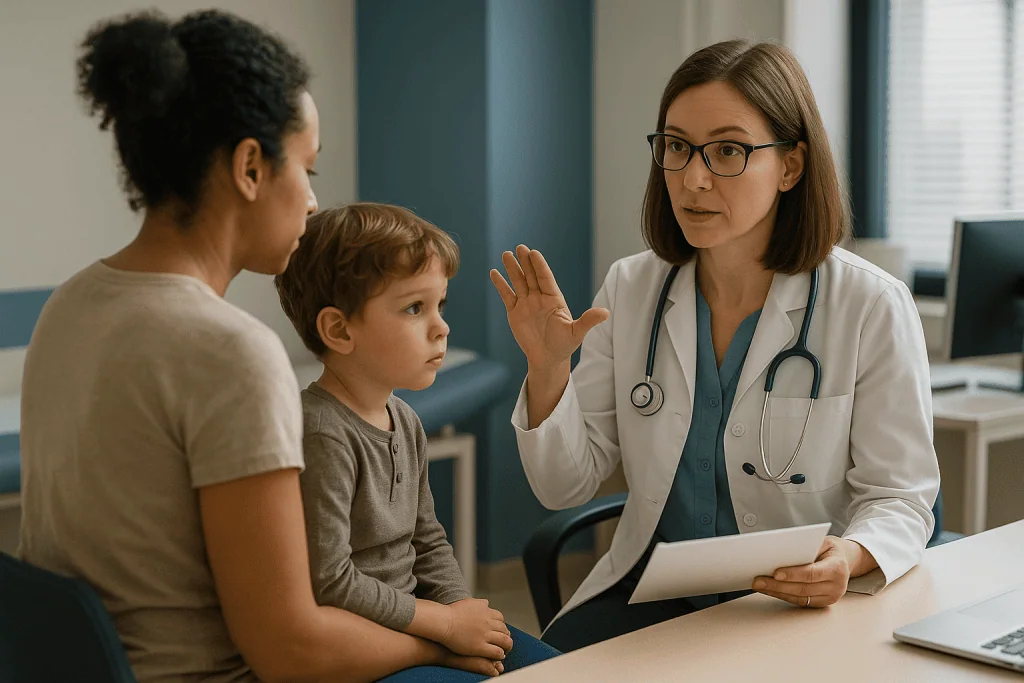
That figure is not abstract. The CDC puts it in human terms: if one person has measles, up to nine out of ten people close to them who are not immune will also become infected. Few pathogens come close.
Three features explain the number. First, measles is truly airborne, meaning it travels on tiny droplets that hang in the air rather than falling quickly to surfaces. The CDC states the virus can remain infectious in a room for up to two hours after an infected person has left. You do not have to share a conversation with a case. You can share only the air they breathed earlier that afternoon.
Second, the contagious period starts before anyone knows there is a problem. Someone with measles can spread it from four days before the rash to four days after, according to the CDC and NHS. During those first four days, the symptoms mimic a heavy cold, so people keep going to work, school, and daycare.
Third, the incubation period, the gap between exposure and the first symptoms, runs 7 to 14 days and occasionally up to 21. That lag means contact tracers are always working two to three weeks behind the virus, which is why a handful of cases can quietly become dozens before anyone connects them.
Put those pieces together and the vaccination threshold needed to stop spread becomes clear. The math of herd immunity says you need roughly 1 minus 1/R0 of a population immune. For measles, that works out to about 92 to 95 percent. Flu can be slowed with far less. Measles gives no such margin.
What changed recently: the 2025 surge and a lost elimination status
Three dated developments explain why this topic is trending rather than sitting quietly in a textbook.
In late January 2025, health officials in West Texas began reporting measles cases clustered in a rural county with low school vaccination rates. Over the following months the outbreak spread into neighboring states. Two school-age children in Texas and one adult in New Mexico died. Those were the first measles deaths recorded in the United States since 2015. By the end of 2025, according to CDC surveillance data, the country had logged well over 1,500 confirmed cases, the highest annual total since 1992 and more than the 1,274 recorded in 2019, which had itself been a 25-year high.
The second shift came in vaccination coverage. CDC school-entry data show national MMR coverage among kindergartners fell from 95.2 percent in the 2019-2020 school year to 92.7 percent in 2023-2024 and about 92.5 percent in 2024-2025. Exemptions rose to roughly 3.6 percent, a record. In plain numbers, that is on the order of 280,000 kindergartners in a single year without documented MMR protection, and the shortfall is not evenly spread. Some counties report coverage in the 70s and 80s.
The third development is international. In November 2025 the Pan American Health Organization confirmed that Canada had lost its measles elimination status after more than 12 months of continuous transmission, ending a status it had held since 1998. Because elimination is verified by region, the Americas as a whole lost the designation. The World Health Organization’s European region had already reported about 127,000 cases in 2024, the most since 1997 and double the 2023 figure.
What has not changed is the vaccine or the virus. Measles has not become more transmissible. MMR has not become less effective. The variable that moved is how many people carry immunity, and it moved in the wrong direction.
Why does a small dip in vaccination cause a big jump in cases?
The relationship between coverage and outbreaks is not a gentle slope. It behaves more like a cliff edge, and understanding why removes a lot of confusion about how a few percentage points can matter so much.

Imagine a classroom of 25 children. At 96 percent coverage, one child is unprotected. If a measles case enters, that child may get sick, but the virus finds no second host and stops. Now drop coverage to 88 percent. Three children are unprotected. The first infected child can now pass the virus to two more, and if those children have unvaccinated siblings, cousins, or playmates at another school, the chain leaves the building. Each link multiplies rather than adds.
The national average makes this worse, not better, because it flattens the picture. A state can report 93 percent coverage while a single town inside it sits at 80. Measles does not spread through a state average. It spreads through the actual people in the actual room.
Two other dynamics compound the problem. Unvaccinated families tend to cluster. Parents who decline vaccines often share schools, faith communities, or social networks with others who do, so the unprotected are not sprinkled randomly among the protected. They are concentrated, which is exactly the arrangement the virus needs.
And immunity gaps accumulate. A year of 92 percent coverage produces a cohort of children who remain unprotected as they grow. Add another year, and another, and the pool of susceptible people rises even if this year’s coverage ticks back up. Public health researchers call this the susceptibility build-up, and it is why outbreaks can appear years after coverage first slipped.
The WHO estimates that between 2000 and 2023, measles vaccination prevented about 60 million deaths worldwide. That figure is a reminder that the system works when coverage holds. The 2025 surge is what the system looks like when it does not.
Measles symptoms in children: what the illness actually looks like
Measles does not open with a rash, which is one reason it spreads so easily. According to the CDC and Mayo Clinic, the first stage, roughly days one through four after symptoms begin, resembles a bad respiratory infection. Children develop a fever that can climb above 104 degrees Fahrenheit, a hacking cough, a runny nose, and red, watery eyes. Sensitivity to light is common. Parents often describe a child who is miserable in a way that feels out of proportion to a cold.
Two to three days into that stage, some children develop tiny white spots inside the mouth, on the lining of the cheeks. Clinicians call these Koplik spots, and they are one of the few early findings that point specifically to measles. They are easy to miss and do not appear in every case.
The rash follows, typically three to five days after the first symptoms. It starts as flat red spots at the hairline and face, then spreads downward over the neck, trunk, arms, legs, and feet across about three days. Small raised bumps can appear on top of the flat spots, and the spots may merge as they travel. The fever often spikes again when the rash arrives. The rash usually fades in the same order it appeared, over roughly a week, sometimes leaving a brownish tint and fine peeling.
Total illness in an uncomplicated case runs about seven to ten days. Children are contagious throughout most of it.
A caution that matters: a rash with a fever has many causes, including other viral infections and drug reactions. This description is meant to help a family recognize when to call for advice, not to diagnose at home. The single most useful piece of information a clinic can receive alongside the symptoms is the child’s vaccination status and any recent travel or known exposure, so have those ready when you phone.
Why measles is not just a rash: complications and immune amnesia
The phrase heard most often in viral posts is that measles is a mild childhood illness everyone used to get. The first half is a misunderstanding of the second. Before the vaccine, the CDC estimates the United States saw 3 to 4 million cases each year, roughly 48,000 hospitalizations, about 1,000 cases of brain swelling, and 400 to 500 deaths. Everyone did get it. It was not mild for everyone.
The CDC’s current figures for people who catch measles are specific. About 1 in 5 unvaccinated people who get infected are hospitalized. As many as 1 in 20 children develop pneumonia, the most common cause of measles death in young children. About 1 in 1,000 develop encephalitis, an inflammation of the brain that can lead to seizures and permanent hearing loss or intellectual disability. Roughly 1 to 3 in every 1,000 children who get measles die, even with good hospital care. Ear infections occur in about 1 in 10 and can cause lasting hearing damage.
Two consequences are less widely known. The first is subacute sclerosing panencephalitis, or SSPE, a fatal degenerative brain disease that surfaces 7 to 10 years after apparent recovery. It is rare, on the order of 4 to 11 cases per 100,000 measles infections, with higher risk when infection occurs before age two.
The second is what researchers call immune amnesia. A 2019 study published in Science, indexed on PubMed, followed unvaccinated Dutch children before and after measles infection and found the virus erased between 11 and 73 percent of the antibodies they had built against other pathogens. In effect, the immune system partly forgot what it had learned, leaving children more vulnerable to unrelated infections for months to years afterward. Population data from several countries show elevated childhood mortality from other causes following measles epidemics, consistent with that mechanism.
Pregnant people face added risks, including miscarriage, preterm birth, and low birth weight, according to the CDC.
What the evidence actually says about measles vaccination, graded
Readers deserve to know not only what the evidence shows but how sturdy it is. Here is the honest grading.
MMR effectiveness: strong. The CDC reports that one dose of MMR is about 93 percent effective against measles and two doses about 97 percent. This rests on randomized trials from the vaccine’s development in the 1960s, decades of outbreak investigations comparing attack rates in vaccinated and unvaccinated groups, and a 2020 Cochrane systematic review pooling 138 studies covering some 23 million children. Effectiveness estimates are remarkably consistent across countries and decades.
Durability of protection: strong, with nuance. Immunity after two doses is considered lifelong for most people. Observational data show a small number of two-dose recipients can still get infected, usually a milder illness that is less contagious. Waning is measurable in antibody levels but rarely translates into clinical disease in populations with high coverage.
Safety: strong. The Cochrane review, large national cohort studies including one following 657,461 Danish children, and decades of post-licensure surveillance find no link between MMR and autism. Common side effects are sore arm, low fever, and a mild rash. Febrile seizures occur in roughly 1 in 3,000 to 4,000 doses and do not cause long-term harm. Serious allergic reactions are on the order of 1 per million.
Herd immunity threshold of about 95 percent: moderate to strong. This comes from mathematical modeling plus observational confirmation across many outbreaks. The exact threshold varies with population density and contact patterns, which is why some communities see spread at 93 percent while others hold.
Vitamin A as treatment: moderate, context-specific. Randomized trials in low-income settings with widespread deficiency show reduced mortality when vitamin A is given under medical supervision to children already sick with measles. There is no evidence it prevents infection, and this is a clinical decision for the treating team.
Immune amnesia: moderate. Laboratory and cohort data are compelling, but the long-term population effects continue to be studied.
MMR vaccine schedule: who is eligible and when, according to CDC guidance
MMR is a combined vaccine against measles, mumps, and rubella, made from weakened live viruses that cannot cause measles in healthy people. The CDC’s routine childhood schedule calls for a first dose at 12 through 15 months of age and a second at 4 through 6 years, before school entry. The second dose is not a booster in the usual sense; it exists mainly to protect the small share of children who did not respond to the first.
Several groups fall outside the routine timeline, and the CDC addresses each:
- Infants 6 through 11 months traveling internationally may receive an early dose, per CDC travel guidance. That early dose does not count toward the routine series, so the child still needs both scheduled doses later. Parents should discuss timing with their pediatrician before booking travel.
- Children during an outbreak may be advised by local health departments to receive the second dose earlier than age 4, as long as the minimum interval between doses is met. This is a public-health decision communicated through clinics and schools.
- Older children and teens who missed doses can catch up at any age. There is no upper age cutoff.
- Students entering college without documentation of two doses are generally advised to complete the series.
Who should not receive MMR is equally specific. The CDC lists pregnancy, severe immune suppression from disease or treatment, and a history of severe allergic reaction to a vaccine component. People with these conditions rely on the immunity of those around them, a point that appears again later in this piece.
The NHS follows a similar structure in the United Kingdom, with the first dose at 12 months and the second at 3 years 4 months, and it also offers catch-up at any age. WHO recommends two doses globally, with timing adjusted to local transmission.
None of this replaces a conversation with a clinician who can see the child’s record and history.
Measles vaccine for adults: how to know whether you are protected
Most adult anxiety about measles comes down to one question: was I vaccinated, and does it still count? The CDC’s guidance sorts adults into a few clear categories.
Born before 1957. You are generally presumed immune. Measles circulated so widely that nearly everyone in that generation was infected as a child, and infection produces lifelong immunity. Health care workers born before 1957 are the exception; the CDC advises they have documented immunity anyway because of occupational exposure.
Vaccinated between 1963 and 1967. A small share of people in these years received an inactivated, or killed-virus, measles vaccine that proved less effective and was withdrawn. The CDC advises anyone who received that version, or who does not know which type they received, to talk with a clinician about revaccination.
Vaccinated in 1968 or later with one dose. The CDC considers one documented dose acceptable evidence of immunity for most adults. Two doses are recommended for certain higher-risk groups: college students, health care personnel, international travelers, and household contacts of immunocompromised people.
Unsure. Two paths exist. A clinician can order a blood test that measures measles antibodies, called an IgG titer, to see whether your immune system already recognizes the virus. Or, because there is no harm in receiving MMR when already immune, a clinician may simply recommend vaccination without testing. The CDC notes both approaches are acceptable; the choice belongs to you and your clinician.
Where do old records live? Childhood pediatric offices, school health files, state immunization registries, and military records are the usual places. Many states now let adults request their own records online.
Adults who cannot receive a live vaccine, because of pregnancy or immune suppression, should know their status too, so they can act quickly if exposed. That conversation is worth having before an outbreak reaches your county rather than during one.
Measles versus flu and COVID: the numbers side by side
People often calibrate their worry about a new threat against familiar ones. That instinct is reasonable, so here is what the comparison actually shows, drawn from CDC and WHO figures. Definitions first: R0 is the average number of people one case infects in an unprotected population, and vaccine effectiveness is the percentage reduction in illness among vaccinated people compared with unvaccinated.
| Feature | Measles | Seasonal influenza | COVID-19 (early strains) | Chickenpox |
|---|---|---|---|---|
| R0 (estimated) | 12 to 18 | 1 to 3 | 2 to 3 | 10 to 12 |
| Airborne persistence | Up to 2 hours in a room | Minutes; mostly droplets | Variable; aerosols indoors | Airborne |
| Contagious before symptoms | Yes, about 4 days before rash | About 1 day | Yes, 1 to 2 days | 1 to 2 days before rash |
| Incubation | 7 to 14 days (up to 21) | 1 to 4 days | 2 to 14 days | 10 to 21 days |
| Hospitalization, unvaccinated | About 1 in 5 | Varies by season and age | Varies widely by age | Uncommon in healthy children |
| Vaccine effectiveness | 97% after two doses | 40 to 60% in a good year | Varies by variant and time | About 90% after two doses |
| Herd immunity threshold | About 95% | Not well defined | Not achieved | About 90% |
Two things stand out. Measles is the most transmissible disease in the table by a wide margin, and it also has the most effective vaccine. That combination is why the outcome swings so dramatically with coverage. A disease this contagious with a vaccine this good produces either near-zero cases or explosive outbreaks, with little middle ground.
The flu comparison cuts the other way. Flu vaccines are less effective, yet flu spreads slowly enough that partial coverage still blunts a season. Measles offers no such forgiveness. The margin for error is a few percentage points, which is roughly the margin the country lost between 2019 and 2025.
What happens after a measles exposure: the 72-hour window and quarantine
Suppose a daycare sends a notice: a child there has confirmed measles. What follows is a well-defined public health sequence, and knowing it in advance takes some of the panic out of the moment.
The first call is to the health department or your clinician, not the emergency room, unless someone is severely ill. Measles is so contagious that walking an exposed, possibly infected child into a crowded waiting room can create a second cluster. Clinics have protocols for this and will tell you where and when to come.
The health department then determines who was exposed and who is immune. Anyone with documented two-dose vaccination, laboratory evidence of immunity, or birth before 1957 is usually considered protected and can continue normal activities, though they may be asked to watch for symptoms.
For exposed people who are not immune, the CDC describes two possible medical interventions, both time-sensitive and both decided by the treating clinician. MMR given within 72 hours of exposure can prevent or soften the illness. For those who cannot receive MMR, such as infants under 6 months, pregnant people, or those with severe immune suppression, a preparation of donated antibodies called immune globulin may be given within six days of exposure. Eligibility, timing, and suitability are clinical judgments; this article describes that the options exist, not how they are used.
Exposed people who are not immune and do not receive timely post-exposure care are typically asked to stay home for 21 days after the last exposure, the full incubation period. That means no school, work, or public settings. Health departments issue this guidance, and following it is the single most effective way an exposed family can keep a cluster from becoming an outbreak.
Anyone who develops fever, cough, red eyes, or rash during the monitoring period should call ahead before seeking care so the facility can prepare.
Protecting babies, pregnant people, and the immunocompromised
Some of the people most vulnerable to measles are exactly the ones who cannot be vaccinated against it. That paradox is the strongest practical argument for community immunity, and it deserves specifics.
Infants under 12 months. Babies are born with some antibodies passed from the mother during pregnancy, but these fade over the first several months and are lower when the mother’s own immunity came from vaccination rather than infection. Because MMR is a live vaccine, routine vaccination waits until 12 months, when the infant immune system responds reliably. In the meantime, an infant’s protection is entirely borrowed from the immunity of the people around them. The CDC data on hospitalization and death show the youngest children are hit hardest.
Pregnant people. MMR is not given during pregnancy. Measles infection in pregnancy raises the risk of miscarriage, preterm birth, and low birth weight. The CDC advises confirming immunity before pregnancy when possible and, for those found non-immune, discussing vaccination after delivery.
People with weakened immune systems. Those receiving chemotherapy, high-dose steroids, certain biologic medicines, or living with advanced HIV or after organ or stem-cell transplant may not be able to receive live vaccines and may not respond to earlier ones. They face higher rates of severe pneumonia and encephalitis.
The protective strategy for all three groups is the same, and public health calls it cocooning. Every eligible person in the household, and ideally in the extended circle of caregivers and frequent visitors, confirms their own MMR status. Grandparents born before 1957 are likely immune; grandparents vaccinated in the mid-1960s may want to check. Siblings should be on schedule. Anyone unsure resolves the question with a clinician.
During an active local outbreak, families with a vulnerable member may reasonably limit time in crowded indoor settings and ask their clinician whether an early infant dose or other measures apply. Those are individualized decisions, but the general principle holds: the vulnerable person’s safety is a function of everyone else’s immunity.
Common myths about measles, corrected with evidence
Several claims recirculate every time cases rise. Here is what mainstream evidence says about each.
Myth: measles is a harmless childhood illness. Pre-vaccine data from the CDC show 400 to 500 US deaths a year and about 1,000 cases of brain inflammation. Current figures show 1 in 5 unvaccinated cases hospitalized. Most children recover, but a predictable fraction do not, and no one can identify in advance which child will develop pneumonia or encephalitis.
Myth: vitamin A prevents measles. No study shows this. WHO-supported trials show vitamin A, given under medical supervision to children already ill with measles, particularly where deficiency is common, reduces deaths. Prevention and treatment are different questions. High-dose vitamin A taken at home is not benign; clinicians in Texas reported children with signs of vitamin A toxicity during the 2025 outbreak. Any use is a decision for the treating clinician.
Myth: natural infection gives better immunity than the vaccine. Infection does produce lifelong immunity, and so does two-dose vaccination for the overwhelming majority. The difference is the price of admission. Infection carries the complication rates above plus immune amnesia. Vaccination carries a sore arm and, rarely, a febrile seizure.
Myth: MMR causes autism. The 1998 paper that launched this claim was retracted in 2010 for methodological and ethical failures. Since then, cohort studies covering millions of children in Denmark, the United States, and elsewhere, plus the 2020 Cochrane review, have found no association, including in children at higher genetic risk.
Myth: vaccinated people spread measles just like unvaccinated people. Two-dose recipients rarely get infected at all, and when they do, observational data show they are less likely to transmit. Outbreak chains overwhelmingly run through unvaccinated individuals.
Myth: measles is spreading because of immigrants. CDC case investigations consistently show that most US importations come from US residents returning from international travel, and that spread inside the country happens wherever local vaccination is low, regardless of who introduced it.
Travel and measles: what to check before an international trip
Nearly every US measles chain begins with travel, which makes the pre-trip checklist one of the highest-leverage prevention steps a family can take. It is also one of the most neglected. People research visas and weather and forget that measles is endemic in much of the world.
The WHO estimated 10.3 million measles cases globally in 2023 and about 107,500 deaths, most among children under five. Large outbreaks in recent years have occurred across parts of Europe, Central Asia, the Middle East, Africa, and South Asia. Popular destinations are not exempt; several Western European countries reported their highest case counts in decades in 2024.
The CDC’s travel guidance is specific. Adults and children traveling internationally should be fully protected against measles before departure. For children who have received their first dose at 12 months, that may mean receiving the second dose earlier than the routine age of 4, provided the minimum interval has passed. For infants 6 through 11 months, CDC guidance supports a single early dose before travel. Adults without documented immunity are advised to receive two doses separated by the minimum interval. In every case, the clinician reviewing the record makes the call.
Timing matters because the immune system needs roughly two weeks after vaccination to build protection. A visit to the pediatrician the day before a flight helps less than one a month before.
The return trip carries its own responsibility. Measles symptoms can begin up to three weeks after exposure, so a fever with cough and red eyes in the weeks after coming home warrants a phone call to a clinician, with travel history mentioned up front. Telling the clinic in advance lets staff arrange to see the patient without exposing a waiting room full of infants.
Families who travel to see relatives abroad, especially with young children, are exactly the group public health teams most want to reach before departure rather than after.
When to see a doctor about measles exposure or symptoms
Two situations call for a clinician’s involvement, and in both the first step is a phone call rather than a walk-in.
After a known or suspected exposure. Call the same day if anyone in your household who is not fully vaccinated, or whose status is unknown, has been near a confirmed case. This includes infants under 12 months, pregnant people, and anyone with a weakened immune system regardless of vaccination history. The post-exposure options described earlier are time-limited, so speed matters. Your health department will also want to know.
When symptoms appear. Call ahead if a family member develops fever with cough, runny nose, and red or light-sensitive eyes, particularly if a rash follows or if there has been recent travel or a local outbreak. Tell the clinic you are concerned about measles so they can arrange a separate entrance or a telehealth first step.
Seek urgent or emergency care, calling ahead if at all possible, for any of these red-flag signs:
- Difficulty breathing, fast breathing, or bluish lips or face
- Fever above 104 degrees Fahrenheit that does not respond to usual comfort measures, or any fever in an infant under 3 months
- Severe headache, stiff neck, confusion, unusual drowsiness, or difficulty waking
- Seizure
- Signs of dehydration: no urine for 8 hours or more, no tears, sunken eyes, dry mouth
- Ear pain with discharge, or a sudden change in hearing
- Persistent vomiting or inability to keep fluids down
- Any symptoms in someone who is pregnant or immunocompromised
There is no antiviral medicine that cures measles. Care in the hospital focuses on breathing support, fluids, and treating complications such as pneumonia. Clinicians may also consider vitamin A for children under medical supervision, a decision that belongs entirely to the treating team.
Decisions about vaccination, catch-up doses, antibody testing, post-exposure care, and quarantine all belong with your clinician and local health department. This article exists to help you ask better questions, not to replace those conversations.
Frequently asked questions
How contagious is measles really?
Extremely. The CDC states that up to nine out of ten unprotected people who are close to someone with measles will become infected. The virus spreads through the air, lingers in a room for up to two hours, and is contagious from about four days before the rash appears until four days after, so people spread it before they know they are sick.
What are the first measles symptoms in children?
The illness typically begins with high fever, cough, runny nose, and red, watery eyes that are sensitive to light, looking much like a severe cold for three to four days. Tiny white spots may appear inside the mouth. The characteristic rash starts at the hairline and face and spreads downward several days later. A clinician should evaluate any child with fever and rash, especially after travel or a known exposure.
What is the MMR vaccine schedule for children?
The CDC routine schedule calls for a first MMR dose at 12 through 15 months of age and a second at 4 through 6 years. Infants 6 through 11 months who will travel internationally may receive an early dose that does not count toward the routine series. During outbreaks, health departments may advise an earlier second dose. Timing decisions belong to the child’s clinician.
Do adults need a measles vaccine?
It depends on birth year and records. Adults born before 1957 are generally presumed immune. Those with one documented dose after 1967 are considered protected for most purposes, while two doses are recommended for health care workers, college students, and international travelers. Anyone unsure can ask a clinician about an antibody blood test or simply receiving MMR, since extra doses are not harmful.
Can you get measles if you are vaccinated?
Rarely. Two doses of MMR are about 97 percent effective, which means roughly 3 in 100 fully vaccinated people could still become infected if heavily exposed. When this happens the illness is usually milder and less likely to spread to others. Outbreak investigations consistently show that the large majority of cases occur in people who are unvaccinated or whose status is unknown.
Why did measles come back if it was eliminated?
Elimination meant the virus no longer spread continuously inside the country, not that it disappeared worldwide. Travelers still import cases every year. When vaccination coverage in a community slips below roughly 95 percent, an imported case can spread through unvaccinated pockets. US kindergarten MMR coverage fell about three percentage points between 2019 and 2025, and clustered exemptions created communities where outbreaks could take hold.
How long should someone exposed to measles stay home?
Health departments typically ask exposed people who are not immune, and who did not receive timely post-exposure care, to stay home for 21 days after their last exposure, the full incubation period. People with documented two-dose vaccination or other proof of immunity are usually not required to quarantine but may be asked to watch for symptoms. Follow the specific instructions your local health department provides.
Does vitamin A prevent or cure measles?
No evidence shows vitamin A prevents measles infection, and nothing cures it. Randomized trials, mainly in settings with widespread deficiency, show that vitamin A given under medical supervision to children already sick with measles can reduce deaths. Taking high amounts at home carries a real risk of toxicity, and cases of harm were reported during the 2025 outbreak. Any use should be directed by a treating clinician.
Is measles dangerous for pregnant women?
Yes. According to the CDC, measles during pregnancy raises the risk of miscarriage, preterm birth, and low birth weight, and pregnant people can become seriously ill themselves. Because MMR is a live vaccine, it is not given during pregnancy, so the CDC advises confirming immunity before conception when possible. A pregnant person exposed to measles should contact a clinician immediately to discuss options.
What complications can measles cause?
The CDC reports that about 1 in 5 unvaccinated people with measles are hospitalized, as many as 1 in 20 children develop pneumonia, about 1 in 1,000 develop brain swelling, and 1 to 3 in 1,000 children die. A rare fatal brain disease called SSPE can appear seven to ten years later. Measles also weakens immunity to other infections for months afterward through a process researchers call immune amnesia.
References
This article is for general information only and is not a substitute for professional medical advice. Please consult a qualified doctor about your individual situation.

More from the Blog

Nipah Virus: Why Outbreaks Alarm Scientists — Transmission, Symptoms and What Travelers Should Know
Nipah virus is a bat-borne infection found in parts of South and Southeast Asia that spreads through contaminated fruit or date palm sap, infected…
Cancer Screening Tests by Age: What Evidence-Based Guidelines Recommend
Evidence-based guidelines recommend cervical cancer screening starting at age 21, mammograms every one to two years beginning at 40, colorectal cancer screening from 45…

RSV Vaccine for Adults: Who Is Eligible, How It Works and What Side Effects Were Recorded
RSV vaccines for adults are given as a single dose and are recommended in the US for everyone aged 75 and older, and for…
Capsule Endoscopy: Swallowing the Camera — How the Pill Scan Works
Capsule endoscopy uses a vitamin-pill-sized wireless camera that you swallow with water. As it travels through the digestive tract, it captures thousands of images…
The PPD Skin Test: How TB Screening Works and How Results Are Read
A PPD test, also called a tuberculin skin test, screens for tuberculosis infection. A tiny amount of purified protein derivative is injected just under…

Virtual Colonoscopy: The CT Alternative and Its Honest Trade-offs
Virtual colonoscopy, also called CT colonography, screens for colorectal cancer using a low-dose CT scan instead of a scope. It requires the same bowel…