

Nipah Virus: Why Outbreaks Alarm Scientists: Transmission, Symptoms and What Travelers Should Know

Key Takeaways
- Nipah virus kills roughly 40 to 75 percent of people with confirmed infection, yet its reproduction number in real outbreaks has stayed below one, so transmission chains tend to die out rather than grow.
- The two documented bridges from bats to humans are raw date palm sap in Bangladesh and India and infected pigs in the 1998–99 Malaysian outbreak; washed, peeled market fruit has not been implicated.
- Incubation usually runs 4 to 14 days but has been documented at up to 45 days, which is why returning travelers should mention affected-area travel for six weeks after they come home.
- About one in five survivors of Nipah encephalitis is left with lasting neurological effects, and a smaller number develop relapsing brain inflammation months or years later.
- No Nipah virus infection has ever been reported in the United States, and the Pteropus fruit bats that carry it do not live in North America.
- No licensed human vaccine or approved antiviral exists; the first human vaccine trial began in January 2024 and tests safety and immune response, not protection against disease.
Nipah virus is a bat-borne infection found in parts of South and Southeast Asia that spreads through contaminated fruit or date palm sap, infected pigs, and close contact with a sick person's body fluids. It kills an estimated 40 to 75 percent of people it infects, often through brain inflammation. No licensed vaccine or proven antiviral exists yet, so early recognition and supportive hospital care matter most.
The photograph that keeps circulating shows a health worker in Kerala’s Palakkad district taping a hand-drawn contact list to a hospital wall: names, phone numbers, the date each person last sat beside the patient. It is a low-tech image for a high-stakes pathogen, and it explains why the nipah virus is trending again. As of September 2025, the state has confirmed fresh cases in Malappuram and Palakkad districts, Bangladesh logged its usual winter cluster, and the first human trial of a Nipah vaccine has moved through its early stages. Each headline revives the same anxious question: how worried should the rest of the world be?
The honest answer sits between the two extremes that dominate social feeds. Nipah is not “the next COVID,” and it is not a distant curiosity either. It is a virus with a frightening death rate, a limited reach, and a research community that has spent 25 years trying to stay ahead of it.
This piece walks through what is actually known, how strong that knowledge is, and what a traveler, a parent, or a simply curious reader should take from the latest cluster.
What changed recently with Nipah virus, and why is it in the news?
Nipah does not produce a single dramatic outbreak the way Ebola did in 2014. It produces a drumbeat. Almost every year since 2001, Bangladesh has reported a handful of cases between December and April, tied to the date palm sap harvest. Kerala, in southern India, joined the pattern in 2018 and has now recorded clusters or single cases in 2018, 2019, 2021, 2023, 2024 and 2025.
Three things made the current cycle louder than usual.
First, the 2023 Kerala cluster was formally documented by the World Health Organization in a Disease Outbreak News bulletin dated 3 October 2023: six laboratory-confirmed cases in Kozhikode district, two of them fatal, with a contact-tracing operation that tested more than 1,200 people. That report put hard numbers behind a story that had previously lived mostly in local media, and it is the baseline many journalists now quote.
Second, the CDC rebuilt and updated its Nipah pages in 2024, adding clearer language on transmission, symptoms and prevention. When a federal agency refreshes guidance, search interest follows.
Third, the science moved. In January 2024, researchers at the University of Oxford began the first-in-human trial of a Nipah vaccine candidate built on the same adenovirus platform used for one of the COVID-19 vaccines. Early-phase trials test safety and immune response, not whether the vaccine prevents disease, so this is a beginning rather than a finish line. Still, it marked the first time a Nipah vaccine had been given to a person in a formal study, and every subsequent Kerala case has been reported against that backdrop.
Layer onto this the 2025 cases in Malappuram and Palakkad, which Indian state health authorities confirmed between May and July, and the result is a virus that surfaces in search trends every few months without ever quite leaving. That rhythm, more than any single event, is what has kept Nipah on the public radar.
What is Nipah virus and where did it come from?
Nipah virus takes its name from Sungai Nipah, a village in Malaysia where it was first isolated in 1999. The outbreak that revealed it had begun the previous autumn among pig farmers, who developed a fever that progressed, in many cases, to severe brain inflammation. Doctors initially assumed Japanese encephalitis, a mosquito-borne infection common in the region. Vaccination against that disease did nothing. Only when a new virus was cultured from a patient’s spinal fluid did the picture change.

By the time the Malaysian and Singaporean outbreak ended, roughly 300 people had fallen ill and more than 100 had died, according to WHO. More than one million pigs were culled to stop the spread. Nipah has not returned to Malaysia since.
The virus belongs to the paramyxovirus family, the same broad group that includes measles and mumps, and to a smaller genus called Henipavirus, which it shares with Hendra virus, a related pathogen that occasionally infects horses and people in Australia. A zoonotic virus is one that normally lives in animals but can jump to humans; Nipah is a textbook example.
Its natural reservoir is the fruit bat of the genus Pteropus, often called flying foxes. These large bats carry the virus without becoming ill and shed it in saliva, urine and droppings. Their range stretches from Madagascar and South Asia through Southeast Asia to Australia, which is why scientists consider a broad band of the tropics to be at theoretical risk even though human cases have so far been confined to Malaysia, Singapore, Bangladesh, India and, in one 2014 outbreak, the Philippines.
Two genetic lineages are recognized. The Malaysian strain caused the 1998–99 outbreak and tended to produce pneumonia less often. The Bangladesh strain, which also circulates in India, is associated with higher death rates and more frequent respiratory symptoms, which matters for how easily it moves between people.
How does Nipah virus spread? Bats, sap, pigs and people
Nipah has three main routes into a human body, and understanding them explains almost everything about where and when outbreaks occur.
Animal to human. In Malaysia, the bridge was pigs. Bats roosting in fruit trees over pig pens dropped half-eaten fruit and urine into the enclosures; pigs became infected and amplified the virus; farm workers and slaughterhouse staff breathed it in or handled infected tissue. In Bangladesh and India, the bridge is usually raw date palm sap. Harvesters cut the tree bark and hang clay pots overnight to collect the sweet liquid. Bats visit the same pots, lick the sap and contaminate it. Drinking the sap fresh and unboiled the next morning is the single most consistently identified risk factor in Bangladeshi case investigations.
Food. Fruit that a bat has partially eaten, or that has fallen from a roosting tree, can carry the virus. This is why public health messages in outbreak zones stress washing and peeling fruit and discarding anything with bite marks.
Human to human. This is the route that most alarms epidemiologists, and it deserves a precise description. Nipah passes between people through close, unprotected contact with an infected person’s respiratory droplets, saliva, urine or blood. In Bangladesh and India, the majority of person-to-person cases have occurred in two settings: family members providing hands-on care at home, and hospital wards before the diagnosis was suspected. The 2001 Siliguri outbreak in West Bengal was almost entirely a hospital event, with dozens of health workers and visitors infected.
What Nipah does not appear to do is spread efficiently through casual contact. Studies of Bangladeshi clusters estimate that each infected person passes the virus, on average, to fewer than one other person; the reproduction number, a term for the average number of new infections one case generates, has been calculated at roughly 0.3 to 0.5. Sporadic cases can produce a short chain, and a few individuals have infected many contacts, but chains tend to burn out within a few generations once basic infection control begins.
Why do Nipah virus outbreaks keep happening in Kerala and Bangladesh?
A virus that has caused fewer than 800 recorded human cases in a quarter-century should, in theory, be a footnote. That it is not comes down to geography, ecology and calendar.
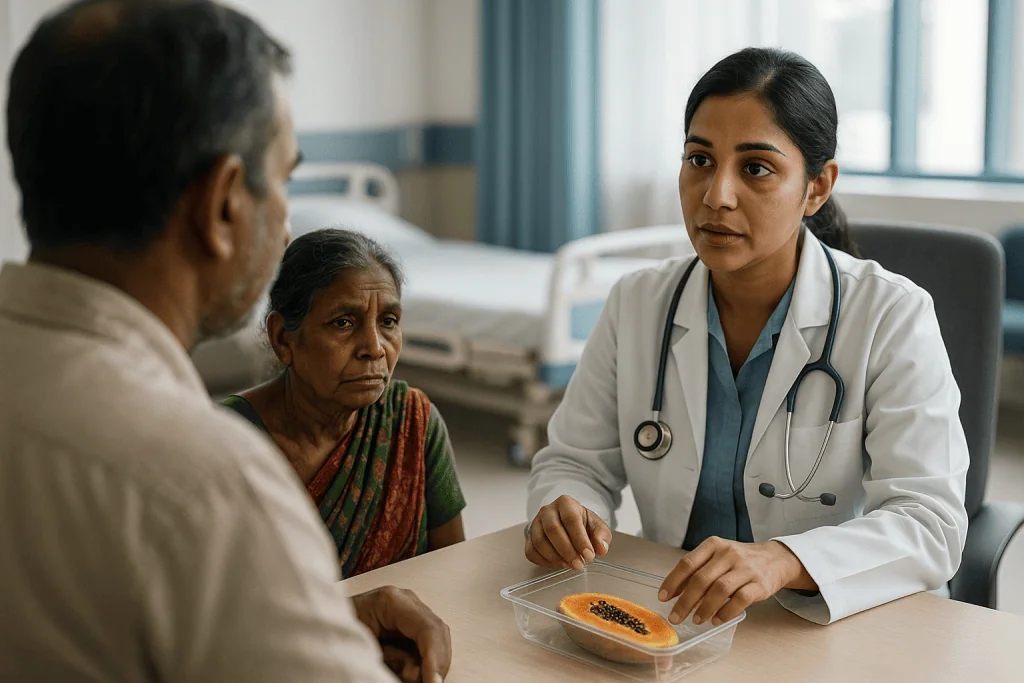
Bangladesh sits in what researchers have informally called the “Nipah belt,” a stretch of the country’s west and northwest where date palm cultivation, dense fruit bat populations and rural villages overlap. The sap season runs from roughly December to April. Cases cluster accordingly, with a lag of about one to two weeks for incubation. National surveillance began in 2006, and since then the country has averaged several cases each year, with occasional spikes above twenty. The case fatality rate in Bangladesh has consistently sat above 70 percent.
Kerala’s story is different and less fully explained. The state is not a date palm sap region. Investigators have found Nipah antibodies and viral RNA in local Pteropus bats, which confirms the reservoir is present, but the exact exposure event has been identified in only some cases. The first 2018 patient in Kozhikode had reportedly been near a well inhabited by bats; later index cases have been linked more loosely to fruit or bat-roosting areas. Kerala also has an unusually strong public health infrastructure by regional standards, which means that a single encephalitis death is more likely to be tested, confirmed and reported than it might be elsewhere. Some of what looks like a rising trend may partly be a detection effect.
Both regions share one feature: a warm, humid climate where fruit bats thrive year-round and increasingly share space with people as forests give way to orchards and settlements. Ecologists describe this as a spillover interface, the zone where wild animals and humans come into contact often enough for a rare event to become a recurring one.
None of this makes Nipah a regional problem alone. It does explain why, so far, the map of human cases has stayed stubbornly small even as the map of bat exposure is vast.
Nipah virus symptoms: how the illness unfolds
The first days of Nipah look like almost any tropical fever, which is part of what makes it dangerous. According to CDC and WHO, symptoms usually appear 4 to 14 days after exposure, though incubation periods as long as 45 days have been documented.
Early illness typically brings fever, headache, muscle aches, vomiting and a sore throat. Some patients, particularly those infected with the Bangladesh strain, develop a cough and shortness of breath as the virus attacks the lungs. This respiratory phase is clinically important because a coughing patient sheds more virus into the surrounding air and onto surfaces.
Within a few days, the picture can turn neurological. Encephalitis, meaning inflammation of the brain itself, announces itself with drowsiness, confusion, disorientation and sometimes seizures. Families often describe a person who was talking normally in the morning and could not recognize them by evening. In severe cases, patients slip into a coma within 24 to 48 hours of the first neurological signs.
Not everyone follows this arc. Serological surveys, which test blood for antibodies, have found people who were infected but recalled no illness at all, suggesting a spectrum from silent infection to fatal encephalitis. The proportion that stays asymptomatic is not well established.
Survivors face a second set of concerns. WHO estimates that around 20 percent of people who recover from Nipah encephalitis are left with lasting neurological effects, including persistent seizures and personality changes. A smaller group experiences relapse or late-onset encephalitis, in which the brain inflammation appears or reappears months or even years after the original infection. This phenomenon, first documented among Malaysian survivors, is one reason clinicians follow recovered patients for a long time.
Because the early symptoms overlap with dengue, influenza, malaria and dozens of other infections, no one can diagnose Nipah from symptoms alone. What raises suspicion is context: fever with confusion, in a person who has been in an outbreak area or in contact with a known case, during the right season.
What does the Nipah virus do to you inside the body?
Nipah’s lethality comes from where it goes rather than how fast it multiplies. The virus enters cells by locking onto two proteins, ephrin-B2 and ephrin-B3, that sit on the surface of cells lining blood vessels and, crucially, on neurons. These receptors are found across mammals, which explains why Nipah can infect such a wide range of species, from bats to pigs to horses to humans.
After entry, the virus targets the endothelium, the thin layer of cells that lines every blood vessel. Infected endothelial cells swell, fuse with their neighbors into large multinucleated clumps, and die. Small vessels become inflamed and clogged with tiny clots. This vasculitis, a term for inflammation of blood vessels, occurs throughout the body but does its worst damage in the brain, where blocked capillaries starve small regions of tissue and produce scattered micro-infarcts, essentially miniature strokes.
At the same time, Nipah crosses into the brain directly, infecting neurons and glial cells. Autopsy studies from the Malaysian outbreak showed viral antigen inside nerve cells alongside the vascular damage, so patients suffer from two overlapping insults: a brain deprived of blood flow and a brain under direct viral attack.
In the lungs, the same vascular injury leads to fluid leaking into air spaces, which is why the Bangladesh strain, with its stronger pulmonary tropism, often produces breathing difficulty and a pneumonia-like picture.
The immune response contributes to the damage. Inflammatory signaling molecules flood the affected tissue, and in some patients the resulting swelling raises pressure inside the skull, a common cause of death in encephalitis of any origin.
Late-onset and relapsing encephalitis appear to reflect a different process: virus that persists at low levels in the central nervous system and reactivates. Investigators have found viral material in the brains of patients who relapsed years after infection, without the vasculitis seen in acute disease. This persistence is poorly understood and is one of the areas researchers most want to clarify, because it shapes how long survivors need medical follow-up.
How serious is the Nipah virus now? The numbers in context
Two figures define Nipah’s threat profile, and they pull in opposite directions.
The first is the case fatality rate, the proportion of people with confirmed infection who die. WHO puts this between 40 and 75 percent, depending on the outbreak, the strain and the quality of intensive care available. For comparison, seasonal influenza kills well under 0.1 percent of those it infects, and even the deadliest Ebola outbreaks have ranged from about 25 to 90 percent. Nipah sits firmly among the most lethal human viruses known.
The second is reach. Across all recorded outbreaks since 1998, the global total of confirmed human cases is in the high hundreds. No year has produced more than a few hundred cases worldwide, and most years bring fewer than fifty. The 2023 Kerala cluster, which drew international headlines, involved six confirmed patients.
The table below places Nipah alongside pathogens the public knows better. Figures are approximate ranges drawn from WHO and CDC summaries.
| Pathogen | Main route to humans | Approximate reproduction number | Case fatality rate | Licensed human vaccine |
|---|---|---|---|---|
| Nipah virus | Bat-contaminated food, infected animals, close contact with body fluids | Below 1 (about 0.3–0.5 in Bangladesh) | 40–75% | None (candidates in early trials) |
| Ebola virus | Direct contact with body fluids | About 1.5–2.5 | 25–90% | Yes (for Zaire species) |
| Measles | Airborne | 12–18 | Roughly 0.1–0.2% in high-income settings; higher elsewhere | Yes |
| Seasonal influenza | Respiratory droplets | About 1.3 | Under 0.1% | Yes |
Read together, these numbers describe a virus that is devastating to the individual and, so far, self-limiting at the population level. That combination is exactly why WHO has placed Nipah on its R&D Blueprint list of priority pathogens, a roster of diseases judged to have epidemic potential and insufficient countermeasures. The listing is not a prediction that Nipah will spread widely; it is an acknowledgment that if the virus ever became more transmissible, the world would have almost nothing ready.
Will Nipah become a pandemic? What epidemiologists actually think
The pandemic question comes up in nearly every Nipah news cycle, and it deserves a careful rather than a reassuring answer.
For a virus to sweep the globe, it needs to spread efficiently between people, ideally before they feel very ill. Nipah currently fails both tests. Its reproduction number in real outbreaks has stayed below one, meaning transmission chains shrink rather than grow. Patients become infectious mainly when they are already severely ill, coughing and bed-bound, which limits how many strangers they encounter. Transmission has been concentrated among caregivers and health workers, groups that can be protected with gloves, masks and isolation once the diagnosis is suspected.
Against that, epidemiologists point to features that keep them watchful. The Bangladesh strain causes more respiratory disease than the Malaysian strain and has produced a handful of “superspreading” events in which one patient infected many others. Nipah’s receptors are shared across mammals, giving the virus a wide pool of potential intermediate hosts. Fruit bats live across an enormous swath of the tropics, so the spillover interface is not going away. And a 45-day maximum incubation period means an infected traveler could, in principle, fly anywhere before falling ill.
The scenario that most concerns researchers is not the virus as it exists today but a mutated version with improved person-to-person spread. Paramyxoviruses do evolve, and Nipah has been circulating in bats for a very long time, yet there is no evidence to date that any strain has acquired sustained human-to-human transmissibility. Decades of Bangladeshi surveillance show the same pattern year after year: short chains, quick extinction.
So the evidence-based position is this. A Nipah pandemic is considered unlikely with the virus in its current form. Its priority-pathogen status reflects the severity of the disease and the absence of tools, not an imminent threat of global spread. The appropriate response is sustained surveillance and countermeasure development, which is precisely what is happening, rather than public alarm.
Is there Nipah virus in the US?
No case of Nipah virus infection has ever been reported in the United States, according to the CDC. The virus has never been detected in North American wildlife, and the fruit bats that carry it do not live on the continent. Insect-eating bats native to the US carry other pathogens, most notably rabies, but not Nipah.
The practical risk to someone in Ohio or Oregon is therefore essentially confined to one pathway: a traveler who is infected abroad and becomes ill after returning home. Given the incubation window of up to 45 days, this is biologically possible. It has not happened. The only Nipah patients ever treated outside the affected region have been laboratory workers or people evacuated for care, and even those cases are rare.
The CDC classifies Nipah as a select agent, a designation for pathogens that require strict biosafety controls in laboratories, and research on live virus in the US is carried out only in the highest-containment facilities. This is relevant to the persistent online claim that Nipah is being “engineered” or “stored” somewhere in the country. High-containment research on dangerous viruses does exist; it is how vaccines and diagnostics get made. It is not evidence of domestic spread.
If an imported case did occur, US hospitals have a protocol shaped by the 2014 Ebola experience. A returning traveler with fever and altered consciousness, and a history of travel to Kerala or Bangladesh within the previous six weeks, would prompt isolation, consultation with state health officials and specialized testing through the CDC. Contact tracing would follow. Nipah’s low transmissibility means such an event would be a serious local incident, not the seed of an epidemic.
For most Americans, then, the honest summary is that Nipah is a virus to understand rather than to fear. The people who genuinely need to think about it are those with travel plans to affected regions, and for them the guidance is concrete and manageable.
How is Nipah virus diagnosed and treated?
Diagnosis rests on laboratory testing, because the symptoms are too generic to distinguish Nipah from other causes of fever and encephalitis. The workhorse test is real-time RT-PCR, a technique that detects the virus’s genetic material in throat swabs, urine, blood or cerebrospinal fluid. Antibody tests, which look for the immune system’s response, become useful later in the illness and for surveillance. Virus isolation in culture confirms the diagnosis but is done only in high-containment labs. In India, samples are typically sent to the National Institute of Virology in Pune; in Bangladesh, to the national reference laboratory.
Speed matters less for the individual patient than for the people around them. Once Nipah is confirmed, hospitals move the patient into isolation, staff wear full personal protective equipment, and health authorities begin listing every contact for 21 days of monitoring. The Kerala 2023 response tested more than 1,200 contacts and found no additional cases beyond the original six, which is exactly the outcome this system is designed to produce.
Treatment is where the honest news is hardest. There is no approved antiviral for Nipah. Care is supportive: fluids, breathing support including mechanical ventilation when the lungs fail, medicines to control seizures and reduce brain swelling, and close monitoring in an intensive care unit. Survival depends heavily on how quickly this level of care is available, which partly explains why fatality rates were lower in Malaysia’s better-resourced hospitals than in rural Bangladesh.
Several experimental approaches exist. Ribavirin, an older antiviral, was given to some Malaysian patients; the evidence for benefit is observational and inconsistent, and WHO describes its role as unclear. A monoclonal antibody known as m102.4 protected animals in laboratory studies and has completed an early safety trial in healthy volunteers; it has been offered on compassionate grounds to a small number of exposed people but is not an approved treatment. The antiviral remdesivir prevented disease in monkeys exposed to Nipah in one study, which is promising but a long way from human evidence. All of these remain investigational, are not available for purchase or self-use, and any decision about their use in a real case belongs to the treating clinicians and public health authorities.
Is there a Nipah virus vaccine? Where research stands
There is no licensed Nipah vaccine for humans anywhere in the world. That single sentence is the most important fact in this section, and it is worth stating plainly because vaccine misinformation tends to fill any gap it finds.
The closest thing to a licensed henipavirus vaccine is veterinary. Australia approved a Hendra virus vaccine for horses in 2012, and because Hendra and Nipah share the same key surface protein, that product demonstrated that the approach can work in a large mammal. Researchers have since built Nipah vaccine candidates on several platforms, including recombinant protein, vesicular stomatitis virus vectors, measles-vector designs and mRNA. Most have protected animals such as hamsters, ferrets and African green monkeys from lethal challenge.
Human testing began only recently. The Oxford candidate, ChAdOx1 NipahB, entered a phase 1 trial in the United Kingdom in January 2024. A phase 1 trial enrolls a small number of healthy volunteers and asks two questions: is the vaccine safe, and does it provoke an immune response? It cannot show whether the vaccine prevents illness. Later-phase trials in a country where Nipah actually circulates would be needed for that, and planning for such studies in Bangladesh has been discussed publicly. The Coalition for Epidemic Preparedness Innovations has funded several of these efforts.
Why has it taken 25 years to reach even this stage? Partly economics: a virus that causes a few dozen cases a year offers little commercial incentive. Partly logistics: with so few cases, proving efficacy in a conventional trial is extraordinarily difficult, and regulators may need to rely on animal data plus human immune-response data, a pathway sometimes used for rare but severe threats.
For readers, the practical implications are simple. No vaccine exists that a traveler could request. Anything sold online claiming to protect against Nipah is not a legitimate product. And the current trials, while genuinely encouraging, describe a timeline measured in years rather than months.
What the evidence actually says about Nipah, graded by strength
Not every statement about Nipah rests on the same footing. Sorting claims by the quality of evidence behind them is the fastest way to separate what scientists know from what they suspect.
Strong evidence (multiple outbreak investigations, laboratory confirmation, consistent over decades): Pteropus fruit bats are the natural reservoir. Raw date palm sap and infected pigs have served as bridges to humans. Person-to-person transmission occurs through close contact with body fluids. Case fatality rates fall between roughly 40 and 75 percent. Around one in five survivors of encephalitis has lasting neurological effects. These findings are documented by WHO and CDC and have been reproduced across Malaysia, Bangladesh, India and the Philippines.
Moderate evidence (observational data with some uncertainty): The Bangladesh strain is more likely than the Malaysian strain to cause respiratory disease and to spread between people. Reproduction numbers below one, calculated from Bangladeshi cluster data, describe the past accurately but cannot guarantee future behavior. The precise exposure route for most Kerala cases remains inferred rather than proven.
Limited or preliminary evidence (animal studies, small early-phase trials, case series): Monoclonal antibody m102.4 protects animals and appears safe in a small number of healthy humans; efficacy in infected people has not been tested in a trial. Remdesivir prevented disease in a single primate study. Vaccine candidates protect animals and have entered phase 1 human trials; no human efficacy data exist.
Weak or contradictory evidence: Ribavirin’s benefit in Nipah is based on non-randomized observations from the Malaysian outbreak and has not been confirmed. No randomized controlled trial of any Nipah treatment has ever been completed, largely because outbreaks are too small and sporadic to support one.
No evidence: Claims that Nipah spreads through the air over long distances, that it is present in North American bats, that it is a laboratory creation, or that any dietary supplement or home remedy prevents or treats it.
The through-line is clear. The epidemiology of Nipah is well characterized. Its treatment and prevention are not. That gap, not the virus’s reach, is what makes it a priority for research.
What travelers should know before visiting Kerala, Bangladesh or other affected areas
Neither the CDC nor WHO has advised against travel to India or Bangladesh because of Nipah. The risk to a typical tourist is low, and the precautions that reduce it are specific rather than sweeping.
Start with food and drink. Avoid raw date palm sap, sold in Bangladesh and parts of India as a seasonal delicacy, unless it has been boiled or the seller can confirm it was collected under protective covers. Skip fruit that has fallen from trees or shows bite marks. Wash and peel fruit you buy in markets, a habit that protects against many gastrointestinal infections regardless of Nipah. The CDC lists these among its core prevention steps.
Steer clear of animals. Do not handle bats, alive or dead, and give a wide berth to areas where they roost, such as certain tree canopies, caves, and abandoned buildings. Avoid contact with sick pigs or other livestock, and do not visit farms or slaughterhouses in an area with an active outbreak.
Think about people, too. Nipah spreads through close contact with the body fluids of someone who is ill. If you are visiting family and a relative has an unexplained fever with confusion, encourage them to seek hospital care and avoid providing hands-on care without gloves and a mask. Hospital visits in outbreak districts may be restricted; follow local instructions.
Timing and geography matter. Bangladesh’s risk season runs from December through April. Kerala’s cases have clustered in Kozhikode, Malappuram and Palakkad districts, mostly between May and September. Checking current outbreak reports from WHO or the local health department before departure is sensible.
Plan for the return, not just the trip. Because incubation can stretch to 45 days, anyone who develops fever, severe headache, or confusion within six weeks of visiting an affected district should seek medical care promptly and mention the travel history in the first sentence, not the last. That one detail can trigger appropriate testing and protect the people around you.
Standard travel medicine still applies: routine vaccinations, mosquito precautions, food safety. Nipah is one small addition to a familiar checklist rather than a reason to rewrite it.
Common myths about Nipah virus, corrected
Every Nipah headline generates a wave of confident claims that fall apart on inspection. Here are the most persistent, alongside what the evidence supports.
Myth: Nipah is airborne like measles. Nipah spreads through respiratory droplets and body fluids during close contact, mainly among caregivers and hospital staff. Its reproduction number below one is incompatible with true airborne spread. Measles, by contrast, infects 12 to 18 susceptible people per case.
Myth: A Nipah vaccine already exists and is being withheld. No human Nipah vaccine has been licensed anywhere. A horse vaccine for the related Hendra virus exists in Australia. Human candidates entered their first safety trial in 2024.
Myth: Nipah has spread to the United States. No case has ever been reported in the US, and the fruit bats that carry it are not found in North America.
Myth: Eating any fruit in India is dangerous. Risk comes from fruit contaminated by bats, typically fallen or partially eaten fruit, and from raw date palm sap. Washed, peeled market fruit is not a documented source of infection.
Myth: The death rate means almost everyone exposed dies. The 40 to 75 percent figure applies to confirmed, symptomatic cases. Antibody surveys have identified people who were infected without ever falling seriously ill, and the 2023 Kerala response tested more than 1,200 contacts and found no additional infections. Exposure is not the same as disease.
Myth: Nipah was created in a laboratory. The virus was first identified in pig farmers in Malaysia in 1999 and has since been found in wild fruit bats across South and Southeast Asia and in bat populations that have never been near a research facility. Its genetics place it squarely within a natural family of paramyxoviruses alongside Hendra virus.
Myth: Herbal remedies or high-dose vitamins can prevent or treat it. No supplement, food or traditional preparation has any evidence against Nipah. The only established protection is avoiding exposure, and the only established treatment is intensive supportive hospital care.
Skepticism cuts both ways. Dismissing Nipah as “just a few cases” ignores its lethality and its priority status; inflating it into a pandemic-in-waiting ignores 25 years of surveillance data. The evidence supports neither extreme.
How to protect yourself from Nipah virus: prevention that actually works
Because no vaccine or proven antiviral exists, prevention for Nipah is entirely behavioral, and the good news is that the behaviors are well defined. The CDC and WHO recommendations converge on four areas.
Food safety in affected regions. Do not drink raw date palm sap. If you want to try it, insist on sap that has been boiled or collected using bamboo skirts, protective covers that Bangladeshi researchers have shown keep bats away from collection pots. Wash fruit thoroughly, peel it where possible, and discard anything with evidence of bat bites or that has fallen to the ground.
Animal contact. Avoid handling bats and their droppings. Stay away from sick or dead pigs, horses and other livestock. In an active outbreak, do not visit farms or markets where live animals are sold. Farm workers in affected areas benefit from gloves, protective clothing and hand hygiene, and from keeping fruit trees away from animal enclosures, a lesson drawn directly from the Malaysian outbreak.
Caring for sick people. The largest share of human-to-human transmission has occurred among family members providing intimate care at home. Anyone caring for a person with suspected Nipah should wear gloves and a mask, avoid direct contact with saliva, urine, blood and vomit, and wash hands thoroughly with soap after any contact. Traditional funeral practices that involve washing or touching the body carry documented risk and were a factor in several Bangladeshi clusters; public health teams in outbreak areas provide guidance on safe burial.
Healthcare settings. Standard infection control, meaning gloves, gowns, masks, eye protection and isolation of suspected cases, has repeatedly stopped hospital transmission once a diagnosis is considered. The Siliguri outbreak in 2001, in which dozens of health workers were infected, occurred before Nipah was suspected; the 2023 Kerala cluster, managed with early isolation, produced no secondary hospital cases.
Individually, none of these steps is complicated. Collectively, they have kept a virus that kills more than half of its victims from ever reaching beyond a handful of districts. That record is itself the strongest argument for taking them seriously.
When to see a doctor about possible Nipah virus exposure
Nipah is rare enough that most fevers, even in Kerala or Bangladesh, will turn out to be something else. Certain combinations of symptoms and circumstances, though, call for immediate medical attention rather than watchful waiting.
Seek urgent care, ideally by calling ahead so the facility can prepare, if you develop any of the following within 45 days of visiting an area with reported Nipah cases, or after close contact with a person known or suspected to have the infection:
- Fever accompanied by confusion, unusual drowsiness, disorientation or difficulty staying awake
- A seizure in someone with no history of epilepsy
- Severe headache with a stiff neck or sensitivity to light
- Rapidly worsening shortness of breath or cough with fever
- Sudden personality change, slurred speech or weakness on one side of the body
Tell the clinician about your travel or contact history at the very start of the conversation. That single sentence is what turns a routine fever workup into an appropriate isolation-and-testing pathway, and it protects the health workers caring for you.
If you had a known exposure but feel well, contact your local health department or a travel medicine clinic. Public health teams typically monitor contacts for 21 days and may arrange testing; they will tell you what to watch for and whether any restrictions apply. Do not wait for symptoms to appear before making that call.
Survivors of Nipah encephalitis should remain under the care of a neurologist or infectious disease specialist for long-term follow-up, because relapsing and late-onset encephalitis can appear months or years after recovery. Any new neurological symptom in a survivor, even a subtle one, warrants prompt evaluation.
Finally, a word on what not to do. No experimental antibody, antiviral or supplement should be sought or taken on your own initiative. The investigational treatments described in this article are available only through clinicians and public health authorities in specific circumstances, and every decision about their use belongs to the treating medical team. Your job, if you are worried, is to get to a doctor quickly and describe your exposure clearly. Theirs is everything else.
Frequently asked questions
Is there a Nipah virus in the US?
No. The CDC has never recorded a Nipah case in the United States, and the fruit bats that carry the virus are not native to North America. The only realistic pathway would be a traveler infected in South or Southeast Asia who becomes ill after returning, which has not occurred. US hospitals have isolation and testing protocols ready for that scenario, and Nipah’s low person-to-person transmissibility means an imported case would be contained locally.
What does the Nipah virus do to you?
Nipah attacks the cells lining small blood vessels and infects neurons directly, producing widespread vascular inflammation that is most damaging in the brain and lungs. Early illness looks like a flu: fever, headache, muscle aches, sore throat, sometimes cough. Within days it can progress to encephalitis, with confusion, seizures and coma. Survivors may have lasting neurological effects, and a minority experience relapsing brain inflammation long after recovery.
How serious is the Nipah virus now?
For an infected individual, extremely serious: the case fatality rate is 40 to 75 percent and there is no approved treatment. For the wider public, the threat remains limited. Global case counts since 1998 total fewer than a thousand, outbreaks have stayed within a few districts of India, Bangladesh and historically Malaysia, and the virus does not spread efficiently between people. WHO lists it as a priority pathogen because of this severity-plus-no-tools combination.
Will Nipah become a pandemic?
Epidemiologists consider a pandemic unlikely with the virus as it currently exists. Nipah’s reproduction number has stayed below one across decades of outbreaks, and patients are most infectious when already severely ill and confined. The concern is a future mutation improving person-to-person spread; no such strain has been detected. Surveillance in Bangladesh and India, along with vaccine and antibody research, exists precisely to detect and prepare for that possibility.
What are the first nipah virus symptoms?
The earliest signs are nonspecific: fever, headache, muscle pain, vomiting and sore throat, appearing 4 to 14 days after exposure. Some people, especially with the Bangladesh strain, develop cough and breathing difficulty. The warning that raises suspicion of Nipah specifically is fever combined with confusion, drowsiness or seizures in someone who has been in an outbreak area or in contact with a known case. Symptoms alone cannot confirm the diagnosis; laboratory testing is required.
How does nipah virus spread from person to person?
Through close, unprotected contact with an infected person’s respiratory droplets, saliva, urine, blood or vomit. Most documented transmission has involved family members giving hands-on care at home or hospital staff treating a patient before Nipah was suspected. It does not spread through casual contact, shared public spaces or long-distance airborne routes. Gloves, masks and isolation of suspected cases have repeatedly stopped chains of transmission in hospital settings.
Is there a nipah virus vaccine I can get before traveling?
No. There is no licensed Nipah vaccine for humans anywhere in the world, and none is available to travelers. A vaccine candidate entered its first human safety trial in January 2024, but that stage does not test whether it prevents disease, and any approval would be years away. Anyone offering a Nipah vaccine for sale is not offering a legitimate product. Prevention for travelers relies on avoiding raw date palm sap, bat-contaminated fruit and contact with sick people and animals.
Why does the nipah virus outbreak in Kerala keep returning?
Kerala’s Pteropus fruit bats carry the virus, and the state’s warm climate, dense population and expanding orchards create frequent bat-human contact. Cases have appeared in Kozhikode, Malappuram and Palakkad districts in 2018, 2019, 2021, 2023, 2024 and 2025, usually as single spillovers or small clusters. Kerala’s strong disease surveillance also means encephalitis deaths are more likely to be tested and confirmed than in many other regions, so some of the apparent increase reflects better detection.
Can Nipah virus be treated?
There is no approved antiviral. Treatment is supportive intensive care: fluids, ventilation when the lungs fail, seizure control and management of brain swelling. Ribavirin has been used with unclear benefit based on observational data only. A monoclonal antibody called m102.4 has completed an early safety trial and has been offered on compassionate grounds to a small number of exposed people; remdesivir protected monkeys in one study. All remain investigational and are used only under clinician and public health direction.
Is it safe to eat fruit in India or Bangladesh because of Nipah?
Yes, with ordinary precautions. Documented food-related infections trace to raw date palm sap and to fruit that bats have partially eaten or that has fallen from roosting trees. Fruit bought at a market, washed thoroughly and peeled has not been linked to human cases. The CDC advises avoiding raw sap, discarding fruit with bite marks or ground contact, and washing and peeling produce, steps that also guard against many more common travel infections.
References
- CDC: About Nipah Virus
- WHO: Nipah virus fact sheet
- WHO: Disease Outbreak News: Nipah virus infection, India (3 October 2023)
This article is for general information only and is not a substitute for professional medical advice. Please consult a qualified doctor about your individual situation.

More from the Blog

Food Sensitivity Tests: Why IgG Kits Fail the Evidence Test
Food sensitivity tests that measure IgG antibodies to foods are not supported by current evidence. IgG against a food usually signals normal exposure and…

CRP and ESR: The Inflammation Blood Tests Explained
A CRP test measures C-reactive protein, a substance the liver releases within hours when the body is inflamed by infection, injury or inflammatory disease.…

Celiac Testing: The Blood Tests, the Biopsy, and Why You Must Not Go Gluten-Free First
Celiac disease is diagnosed in two steps: a blood test that looks for antibodies, most often tissue transglutaminase IgA (tTG-IgA), followed, for most adults,…

Calprotectin Stool Test: How It Separates IBS From Inflammatory Bowel Disease
Calprotectin is a protein released by white blood cells into the gut when the bowel lining is inflamed. A stool test measures it in…

FibroScan: The Liver Stiffness Test Explained
FibroScan is a painless, non-invasive scan that uses a brief vibration and ultrasound to measure how stiff the liver is, reported in kilopascals (kPa),…

The PSA Test: What Levels Mean by Age, and Why Context Is Everything
There is no single normal PSA. Commonly used age-referenced upper limits are roughly 2.5 ng/mL for men in their 40s, 3.5 in their 50s,…