

Endometriosis Surgery Recovery: Shoulder Pain, Bloating and the Return to Work and Exercise

Key Takeaways
- Shoulder pain after laparoscopy is referred pain from carbon dioxide gas irritating the diaphragm and usually passes within a day or two, according to the NHS.
- Post-surgical bloating has three sources, residual gas, a bowel slowed by anesthesia and opioid painkillers, and tissue swelling, and the last can take a week or two to settle.
- The NHS puts return to normal activity at about 5 days after diagnostic laparoscopy, roughly 3 weeks after laparoscopic treatment, and up to 12 weeks after major surgery.
- Small scars do not predict a small recovery; the extent of internal excision and the length of anesthesia are what shape the timeline.
- Endometriosis surgery leaves hormones unchanged unless the ovaries are removed, and the NHS notes the condition can return, so long-term management is discussed alongside the operation.
- Breathlessness, chest pain, a swollen calf, fever, or pain that worsens after initially improving are red flags that need same-day contact with the surgical team.
Endometriosis surgery recovery usually follows a laparoscopy done under general anesthesia. Shoulder pain and bloating in the first day or two come mainly from the carbon dioxide gas used to inflate the abdomen and typically settle within days. Desk work is often possible within one to three weeks and full recovery after extensive surgery can take up to twelve weeks, depending on what was done.
The first evening home, most people are surprised by the wrong thing. Not the three small dressings low on the belly, not the grogginess, but a deep ache under the right shoulder blade that has nothing to do with anything the surgeon touched. Then the trousers that fit yesterday do not fasten. The instinct is to reach for a phone and search “endometriosis surgery recovery” in the dark, wondering whether this is normal or the beginning of a complication.
It is almost always normal, and the reasons are surprisingly mechanical. Keyhole surgery borrows space inside the abdomen by pumping in gas, and the body takes a few days to reabsorb it. Anesthesia slows the bowel. Tissue that has been inflamed for years reacts to being cut away.
This explainer walks through what actually happens during laparoscopy, why the shoulder and the waistline complain, and what the return to work, exercise and ordinary life tends to look like week by week.
Is endometriosis surgery considered a major surgery?
The honest answer is that the incisions are minor and the operation often is not. Endometriosis surgery is almost always performed by laparoscopy, meaning the surgeon works through a few cuts roughly a centimeter long using a camera and slim instruments, rather than opening the abdomen. It is carried out under general anesthesia, so you are fully asleep. Many people go home the same day, which is where the “minor” label comes from.
What happens inside varies enormously. Removing a few superficial patches of endometriosis from the lining of the pelvis is a short procedure. Freeing an ovary that is stuck to the bowel, draining and removing an endometrioma (an ovarian cyst filled with old blood from endometriosis) or dissecting deep disease off the bladder or rectum can take several hours and carries the risks of any pelvic operation: bleeding, infection, injury to bowel or bladder, and blood clots.
The NHS frames recovery in three broad bands. After a laparoscopy done only to look and diagnose, most people return to normal activities within about 5 days. After laparoscopic treatment of a condition, around 3 weeks is typical. After major surgery, such as removing an ovary, recovery can stretch to 12 weeks. Endometriosis operations can sit anywhere along that spectrum, which is why two friends with “the same surgery” describe completely different recoveries.
So the useful reframing is this: small scars do not predict a small recovery. What predicts it is how widespread the disease was, how much dissection was needed, how long you were under anesthesia and how your body handles inflammation. Your surgeon can tell you which band you are likely to fall into, and that conversation is worth having before the operation rather than after.
What actually happens during laparoscopic endometriosis surgery
Once you are asleep, the surgeon makes a small cut at or near the navel and introduces carbon dioxide gas to lift the abdominal wall away from the organs, creating a working space. A laparoscope, a thin telescope with a light and camera, goes in through that port and projects a magnified view onto screens. One to three further small cuts, usually low on the abdomen, allow instruments to pass.
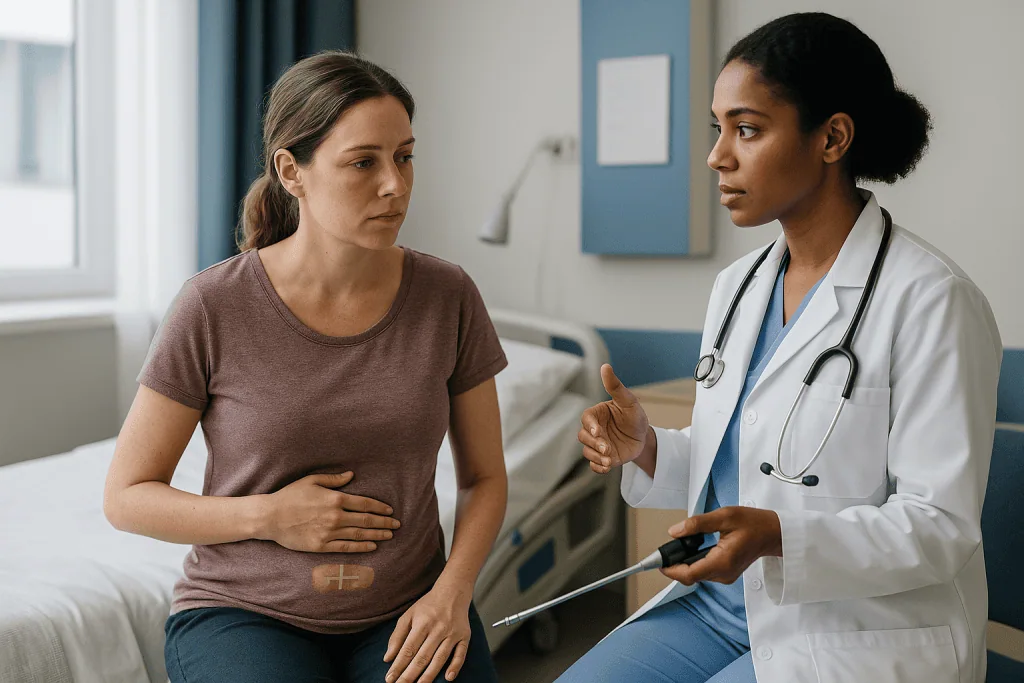
The pelvis is then inspected systematically: the surface lining called the peritoneum, both ovaries and fallopian tubes, the ligaments behind the uterus, the bladder surface and the bowel. Endometriosis shows up as dark, red, clear or white lesions, scarring, or cysts.
Two techniques are used to treat what is found. Excision means cutting the lesion out along with a margin of surrounding tissue. Ablation means destroying the lesion in place with heat or laser energy. Surgeons choose between them according to the depth and location of disease, and removed tissue is often sent for histology, laboratory examination under a microscope, to confirm the diagnosis. Adhesions, bands of scar tissue binding organs together, are divided so that organs can move freely again.
Some surgeons place a slim instrument through the vagina into the uterus, called a uterine manipulator, to tilt the uterus and improve the view; this is why light vaginal spotting afterward is common. At the end, as much gas as possible is released, the ports are removed and the cuts are closed with stitches, glue or small adhesive strips. Robotic-assisted laparoscopy uses the same principles with instruments controlled from a console; recovery expectations are broadly similar because the incisions and the gas are the same.
Who is usually offered surgery, and who is usually asked to wait
Surgery is one option among several, and guideline bodies including the NHS describe it for fairly specific situations. The most common is pain that has not responded adequately to hormonal treatments or ordinary painkillers, or where those treatments are unsuitable. A second is when imaging or examination suggests deep disease, an endometrioma, or involvement of the bowel, bladder or ureters, where knowing exactly what is there changes the plan. A third is fertility: some people are offered surgery because removing lesions and freeing the tubes and ovaries may improve the chance of conceiving, a point discussed in more detail later.
Diagnosis alone is a shifting reason. Laparoscopy remains the definitive way to confirm endometriosis, but many teams now start treatment on the basis of symptoms and ultrasound or MRI findings rather than operating purely to look.
People are often asked to wait, or offered something else first, when symptoms are reasonably controlled by medicines they tolerate well, when the diagnosis is uncertain and imaging has not yet been completed, when another condition such as irritable bowel syndrome or bladder pain syndrome might explain much of the pain, or when a recent operation means scar tissue is still maturing. Anesthetic safety also matters: an untreated chest infection, uncontrolled blood pressure or a very recent illness can lead to a postponement rather than a refusal.
None of this is a scoring system. The decision rests with the treating team, weighing how much the symptoms limit your life against the real, if uncommon, risks of operating. A second consultation to ask what surgery could realistically change, and what it could not, is a reasonable request.
Why does my shoulder hurt? Shoulder pain after laparoscopy explained
Shoulder pain after laparoscopy is one of the strangest sensations in surgery because it is real pain in a place nobody operated on. The culprit is the carbon dioxide used to inflate the abdomen. Some of it lingers after the operation and rises to the highest point inside the belly, which, when you sit or stand, is directly beneath the diaphragm, the dome-shaped breathing muscle separating the chest from the abdomen.
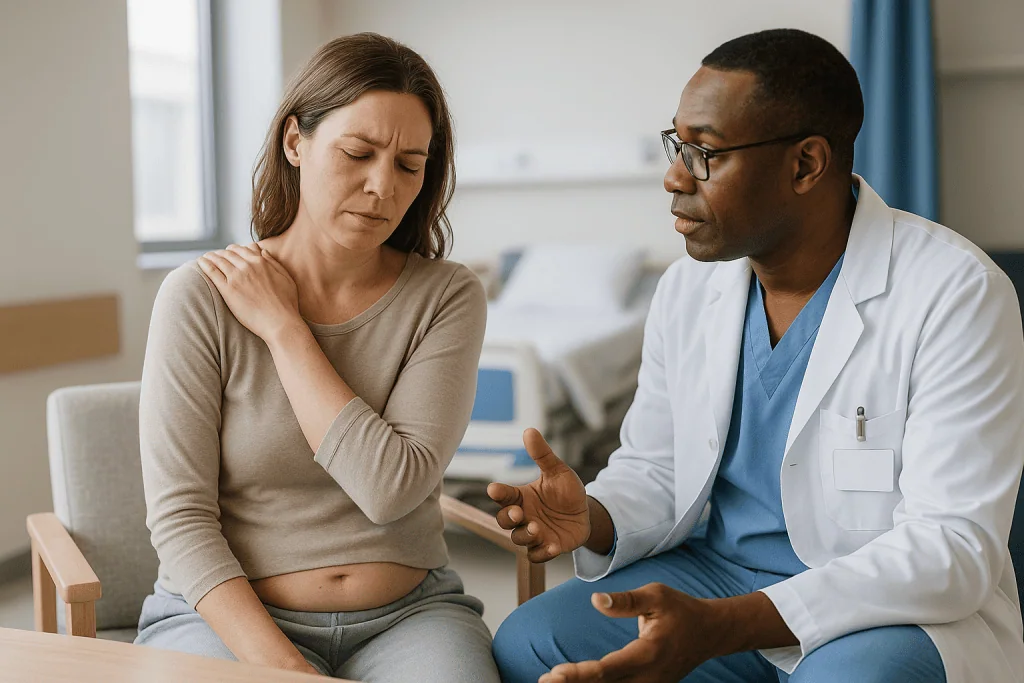
Gas and the mild acidity it creates irritate the underside of the diaphragm. That irritation travels along the phrenic nerve, which supplies the diaphragm and emerges from the neck at the same spinal levels as the nerves supplying the shoulder and collarbone region. The brain misreads the signal and assigns the discomfort to the shoulder. This is referred pain, the same phenomenon that makes a heart attack ache in the arm or a gallbladder attack hurt near the shoulder blade.
The pain is often worse on the right and often sharper when lying flat, standing up or taking a deep breath. The NHS notes that gas-related bloating, cramps and shoulder pain usually pass within a day or two as the gas is absorbed into the bloodstream and breathed out through the lungs.
What tends to help is unglamorous: gentle walking to move the gas around, changing position frequently, warmth over the shoulder, and the painkillers your team has recommended taken as directed. Lying with the hips higher than the chest for short periods lets gas move away from the diaphragm, and some people find that easier than sitting upright.
Shoulder pain accompanied by breathlessness, chest pain, a racing heart or coughing up blood is a different matter and needs urgent assessment, because those are features of a blood clot in the lung rather than trapped gas.
Bloating after laparoscopy: gas, sluggish bowel and the swollen belly
Bloating after laparoscopy has three overlapping causes, and separating them helps you judge what is normal. The first is leftover gas, which sits in the abdominal cavity, not inside the bowel, so it cannot be burped or passed; it simply has to be absorbed over a few days.
The second is a slow bowel. General anesthesia and opioid-type painkillers both reduce the rhythmic contractions that move food and gas along the gut, a state clinicians call ileus when it is pronounced. Handling the bowel during surgery adds to it. The result is genuine trapped intestinal gas, a tight, drum-like feeling, and often constipation. This usually eases as you eat, drink and move, which is why nurses encourage walking within hours of waking.
The third is swelling of the tissues themselves. Cutting and cauterizing inflamed tissue triggers a healing response that draws fluid into the area, and the intravenous fluids given during the operation add to it. Abdominal swelling from this source can take a week or two to fully settle, longer than the gas.
People with endometriosis often already live with cyclical abdominal distension, popularly called “endo belly,” driven by inflammation and bowel sensitivity. It does not disappear the day after surgery, and its return in the first weeks is not evidence the operation failed.
Practical measures are simple. Sip fluids regularly, eat small meals rather than large ones, favor fiber once you are eating normally, and walk short distances several times a day. Ask your team early whether a stool softener or laxative is appropriate, especially if you are taking opioid painkillers, and take any such medicine exactly as they direct.
A belly that becomes rigid and exquisitely tender, bloating with repeated vomiting, or no bowel movement combined with worsening pain are reasons to call rather than wait.
How painful is endometriosis surgery recovery, and how is the pain managed?
Pain after endometriosis surgery has several textures, and naming them is genuinely useful. There is incision pain, a sharp, bruised soreness at the port sites that flares when you cough, laugh or sit up. There is deep pelvic ache and cramping, the internal healing of tissue that was cut, burned or freed from adhesions. There is the gas-related shoulder and rib discomfort described above. And there is a general heaviness and fatigue from anesthesia and inflammation that many people find more limiting than the pain itself.
Most people find the incision and gas pain most intense in the first two or three days and easing over the first week, while the deep pelvic ache can grumble on for several weeks, particularly after extensive excision. That is not a promise, only the pattern hospital teams describe. Pain that gets steadily worse after initially improving breaks the pattern and should be reported.
Pain relief is usually layered. Acetaminophen (paracetamol) acts centrally on pain signaling. Nonsteroidal anti-inflammatory drugs reduce the chemical messengers of inflammation at the surgical site, which suits this kind of pain particularly well, though they are unsuitable for some people with kidney, stomach or bleeding concerns. Stronger opioid-type medicines may be supplied for the first days; they are effective but slow the bowel and cause drowsiness, which is why teams aim to step them down quickly. Local anesthetic is often injected into the port sites before you wake.
Which of these you use, in what pattern and for how long is decided by your prescribing clinician based on your history; the schedule they give you is the one to follow. Non-drug measures matter too: a small cushion pressed against the belly when coughing, warmth on the lower abdomen, and the rhythm of rest followed by short walks rather than hours of stillness.
Laparoscopy recovery time: what the first days and weeks usually look like
Laparoscopy recovery time depends on what was done inside, so the table below gives typical ranges drawn from NHS guidance rather than a fixed schedule. Your surgeon’s discharge letter overrides anything here.
| Stage | What is commonly felt | What is usually possible |
|---|---|---|
| Day of surgery to day 1 | Grogginess, sore incisions, shoulder pain, tight bloating, light vaginal spotting | Short walks around the room, sips and light food, home the same day or after one night |
| Days 2 to 7 | Gas pain fading, incision soreness easing, fatigue, constipation common | Showering, gentle walks outdoors, light household tasks, no driving until safe to perform an emergency stop |
| Weeks 2 to 3 | Deep pelvic ache with activity, energy returning in uneven steps | Desk-based work, longer walks, gradual return to routine; heavy lifting still avoided |
| Weeks 4 to 12 | Occasional twinges, scars settling from red to pale | Progressive return to exercise and physical work as cleared by the team |
The NHS places return to normal activity at about 5 days after a diagnostic laparoscopy, roughly 3 weeks after laparoscopic treatment, and up to 12 weeks after major surgery such as removal of an ovary. Deep excision for advanced endometriosis often behaves more like the upper end of that range even though the scars look identical to a simple procedure.
Two things surprise people. Energy returns in a sawtooth pattern, with a good day followed by a flat one, and that is ordinary tissue healing rather than a setback. And the first period after surgery is frequently heavier or more painful than usual as the pelvis is still inflamed; teams generally suggest judging the effect of surgery on symptoms over several cycles, not the first.
Incisions, bleeding and bathroom changes: what counts as normal
Port-site wounds are small but they are still wounds. Expect some bruising around them, a little clear or slightly blood-tinged ooze on the dressing in the first day, and firmness beneath the skin as scar tissue forms. The navel incision is often the most tender because the skin there is thin and the abdominal wall moves with every breath. Follow your team’s instructions on when dressings come off and whether stitches dissolve or need removal; showering is usually allowed within a day or two, while soaking in a bath or pool typically waits until the skin has sealed.
Vaginal spotting for a few days is common if a uterine manipulator was used, and can also follow any handling of the ovaries or uterus. It should be light and taper off. Bleeding that soaks a pad within an hour, contains large clots or carries an offensive smell is not expected.
The bladder may feel slightly irritable if a catheter was placed during the operation. Burning that worsens rather than settles, cloudy or bloody urine, or difficulty passing urine at all should be reported, since urinary infection and, rarely, bladder injury need prompt attention.
Bowels are the most frequent complaint. Constipation from anesthesia, reduced movement, and opioid painkillers is very common in the first week; straining pulls on the incisions and the pelvic floor, so ask your team about softeners rather than pushing through. Some people notice the opposite, with looser stools, particularly if disease was removed from the bowel surface.
Skin around a wound that becomes increasingly red, hot, swollen or leaks thick discharge suggests infection, and a fever alongside it moves the call from routine to same-day.
Return to work after laparoscopy: timing it by your job, not the calendar
Return to work after laparoscopy is one of the most searched questions and one of the least standardized answers, because it depends on two variables: what was done inside and what your work asks of your body.
Using the NHS ranges as anchors, a desk-based job after a straightforward operation is often possible within about a week or two, while more extensive excision pushes many people toward the 3-week mark. Work that involves lifting, prolonged standing, bending or driving for long stretches generally waits longer, and after major surgery the full 12-week band may apply before heavy duties resume. These are ranges, not targets to beat.
Fatigue, rather than pain, is usually what limits the early return. Concentration dips, afternoons drag, and a full commute can undo a good morning. A phased return, starting with shorter days or working from home where possible, is a reasonable request and is common in many occupational-health arrangements. Your surgical team can provide a fitness-for-work note stating restrictions rather than a blanket “unfit.”
Driving has its own rule. The NHS advises not driving for at least 24 hours after general anesthesia, and beyond that only when you can sit comfortably, turn to check mirrors and perform an emergency stop without hesitation from pain. Insurers may also have conditions, so it is worth checking your policy.
Before agreeing a date, ask yourself three practical questions. Can I sit or stand for as long as the job needs? Can I get there safely? If a bad afternoon hits, can I leave? If the answer to any is no, another week is not weakness; it is sensible planning that prevents the stop-start return people regret.
Exercise after endometriosis surgery: from the first walk to the gym
Movement is part of recovery from the first hours, and the aim is graded return rather than either bed rest or heroics. Walking is the foundation. It shifts residual gas, wakes the bowel, reduces the risk of blood clots in the legs, and rebuilds the confidence that it is safe to move. Start with a few minutes around the house several times a day and extend the distance as tolerated over the first two weeks.
What waits is anything that sharply raises pressure inside the abdomen or loads the healing incisions: heavy lifting, sit-ups and planks, running, cycling on rough ground, and contact sport. The NHS and hospital discharge advice generally use the recovery bands already described, roughly a few weeks after routine laparoscopic treatment and up to 12 weeks after major surgery, before returning to strenuous activity, and your team may give more specific limits depending on what was done.
Swimming usually waits until the wounds have fully sealed, to avoid infection. Pelvic floor and gentle breathing work can often begin early and may be particularly useful for people with long-standing pelvic pain, where muscles have learned to guard; a pelvic health physiotherapist can advise if your team refers you.
When you do return to structured exercise, the American Heart Association’s general target for adults of at least 150 minutes of moderate activity a week is a reasonable long-term direction, not a first-month goal. A sensible rule for each step up is that discomfort during activity should settle within a few hours; pain that lingers into the next day suggests the step was too big.
Bleeding that restarts, a wound that opens, or sharp pelvic pain during exercise should stop the session and prompt a call to your team.
What happens to your body after endometriosis is removed?
Removing endometriosis does not change your hormones. Unless the ovaries themselves were removed, they continue to cycle, periods continue, and any hormonal treatment you were using does the same job it did before. What changes is the amount of inflamed, misplaced tissue responding to those hormones each month, and the scar tissue that was tethering organs.
The immediate aftermath is inflammatory. Cut and cauterized tissue swells and then heals over weeks, which is why the first period after surgery is frequently heavier or more uncomfortable than usual. Most teams suggest judging the effect of the operation on symptoms over two or three cycles rather than the first.
Many people describe less pain, easier bowel or bladder function if disease was cleared from those areas, and improved comfort with intercourse when lesions behind the uterus were removed. The NHS is clear that surgery can relieve symptoms but that endometriosis can return, and it does not attach a fixed probability because recurrence depends on the extent of disease, the completeness of removal and individual factors. Because of that, some teams offer hormonal treatment after surgery with the aim of reducing recurrence; whether that suits you is a decision for you and your prescribing clinician, weighing fertility plans and side effects.
Scars mature over months, turning from red to pale, and internal healing can create new adhesions, which is one of the reasons repeat operations are approached cautiously. Fatigue and mood changes in the weeks after any operation are common and usually lift as sleep and activity normalize.
Body image is worth mentioning without euphemism: several years of pain and bloating leave habits of guarding and self-monitoring that do not vanish with the lesions. Giving yourself the same months your tissues need is not indulgence.
Is it possible to get pregnant after endometriosis surgery?
Yes, and for some people that is the main reason surgery is offered. The World Health Organization notes that endometriosis affects roughly 10% of women and girls of reproductive age globally and is associated with infertility in a proportion of them, through mechanisms that include distorted pelvic anatomy from adhesions, endometriomas affecting the ovary, and an inflammatory environment that may affect eggs, sperm and implantation.
Laparoscopic removal of lesions and division of adhesions may improve the chance of natural conception, and the NHS describes surgery as an option when endometriosis is affecting fertility. What it cannot do is guarantee a pregnancy, and no responsible source attaches a single success figure to it, because outcomes vary with age, disease stage, ovarian reserve (the remaining supply of eggs) and any partner factors.
Surgery on the ovaries carries a trade-off. Removing an endometrioma can relieve pain and improve access for fertility treatment, but the procedure can reduce the surrounding healthy ovarian tissue and with it the ovarian reserve. That is why teams weigh the size of a cyst, symptoms and fertility plans carefully before operating on an ovary, and why measuring ovarian reserve beforehand is sometimes suggested.
Timing is individual. Some surgeons suggest trying to conceive relatively soon after recovery, when the pelvis has been cleared; others recommend a period of hormonal treatment first. Assisted reproduction, such as in vitro fertilization, remains an option alongside or instead of surgery, and for some people it is the more direct route.
The practical step is a joint conversation between the gynecology and fertility teams before the operation, so the surgeon knows what matters to you and can tailor how conservatively the ovaries are handled.
What people often get wrong about endometriosis surgery recovery
“Keyhole means back to normal in a weekend.” The incisions heal quickly; the internal work does not. The NHS band of up to 12 weeks for major laparoscopic surgery exists for a reason, and deep excision belongs closer to it than the scars suggest.
“Shoulder pain means something went wrong.” Almost always it is referred pain from gas irritating the diaphragm, and the NHS expects it to pass within a day or two. The version to worry about comes with breathlessness or chest pain.
“Bloating means the surgery did not work.” Residual gas, a sluggish bowel and tissue swelling all cause a swollen belly for days to weeks, and the pre-existing cyclical distension of endometriosis does not disappear overnight.
“If I feel fine at two weeks, I can lift and run.” Feeling fine at rest does not mean the deeper layers have regained strength; graded return, cleared by the team, prevents the setbacks that lead people to say recovery took twice as long.
“Surgery ends endometriosis for good.” It removes what can be seen and reached at that moment. The NHS is explicit that the condition can come back, which is why long-term management, sometimes including hormonal treatment, is part of the conversation.
“Rest means staying in bed.” Prolonged lying still increases the risk of blood clots and slows the bowel. Rest in this context means short walks punctuating genuine rest, not immobility.
“No pain means everything was removed.” Symptom relief and complete removal are related but not identical; some microscopic disease is invisible during surgery, and some pain has other contributors such as pelvic floor muscle tension that surgery does not address.
Questions to ask your care team before and after endometriosis surgery
Consultations are short and the questions that matter tend to arrive in the car park afterward. Writing them down changes that. Before the operation, the most useful ones are about scope and expectation.
- What did imaging suggest about the extent of the disease, and what do you expect to do: excision, ablation, or both?
- If you find disease on the bowel, bladder or ureter, will you treat it during this operation, or will a second procedure or another specialist be needed?
- If an endometrioma is found, how will you protect the healthy part of the ovary, and should my ovarian reserve be checked first?
- Which recovery band do you expect me to fall into, and what would make it longer?
- Do you recommend hormonal treatment after surgery, and how would that interact with my plans for pregnancy?
Afterward, the focus shifts to the practical.
- Exactly what was found and removed, and was tissue sent for histology?
- Which painkillers am I taking, in what pattern, and when should I be stepping them down?
- When can I shower, bathe, drive, have sex, lift my child and return to my specific job?
- What signs should make me call the ward, and what number do I call out of hours?
- When is my follow-up, and how many cycles should pass before we judge whether symptoms have improved?
One further question is worth asking plainly: what will this operation not fix? A team that answers that candidly is giving you the best possible foundation for the months that follow, and every decision that comes from these conversations sits with them and with you together.
When to call your doctor after endometriosis surgery
Most discomfort after laparoscopy is expected and fades. A short list of signs is not, and knowing them in advance means you act rather than second-guess. Contact your surgical team the same day, or emergency services if severe, for any of the following.
- Fever, chills or shaking, which can indicate infection inside the pelvis or at a wound.
- Pain that becomes steadily worse rather than better, or a belly that is rigid and exquisitely tender to touch.
- Repeated vomiting, inability to keep fluids down, or no bowel movement combined with worsening pain and distension.
- Heavy vaginal bleeding soaking a pad within an hour, large clots, or discharge with an offensive smell.
- Burning or difficulty passing urine that worsens, blood in the urine, or being unable to pass urine at all.
- A wound that is increasingly red, hot, swollen, opening, or leaking thick discharge.
- A swollen, painful or warm calf, which can signal a blood clot in the leg.
- Breathlessness, chest pain, coughing up blood or a racing heart, especially alongside shoulder pain; these need emergency care because they can indicate a clot in the lung.
- Fainting, dizziness on standing, or a rapid heartbeat with pallor, which can accompany internal bleeding.
Trust the pattern more than any single moment. Recovery that is broadly improving with bad hours mixed in is normal; recovery that has reversed direction over a day or two is the signal. Your discharge paperwork should list a direct number for the ward or surgical team; use it. Nurses would far rather reassure ten people than miss one, and no question about a new symptom in the first weeks after surgery is too small to ask.
Frequently asked questions
How painful is endometriosis surgery recovery?
Most people describe moderate pain that peaks in the first two or three days and eases over the first week, with a deeper pelvic ache lingering for several weeks after extensive excision. Incision soreness, gas-related shoulder pain and cramping each behave differently. Pain relief is layered under your clinician’s direction, and pain that worsens after improving should be reported.
How long is laparoscopy recovery time for endometriosis?
It depends on what was done inside. NHS guidance places return to normal activity around 5 days after a purely diagnostic laparoscopy, roughly 3 weeks after laparoscopic treatment of a condition, and up to 12 weeks after major surgery such as removing an ovary. Deep excision for advanced disease often sits toward the longer end despite identical-looking scars.
Why do I have shoulder pain after laparoscopy?
Leftover carbon dioxide gas rises under the diaphragm and irritates it. The phrenic nerve that supplies the diaphragm shares spinal roots with nerves to the shoulder, so the brain misplaces the signal. This referred pain usually settles within a day or two; shoulder pain with breathlessness or chest pain is different and needs urgent assessment.
Is bloating after laparoscopy normal, and how long does it last?
Yes. Gas-related bloating typically fades over a few days, while swelling of the operated tissue and a bowel slowed by anesthesia and opioid painkillers can keep the abdomen distended for a week or two. Walking, small meals and fluids help. A rigid, very tender belly with vomiting is not normal bloating and should prompt a call.
When can I return to work after laparoscopy for endometriosis?
Desk-based roles are often manageable within one to three weeks depending on how extensive the surgery was, while physical jobs involving lifting or long standing generally wait longer, up to the 12-week band after major surgery. Fatigue usually limits the return more than pain, so a phased start is worth requesting from your employer.
Is endometriosis surgery considered a major surgery?
The incisions are minor but the operation frequently is not. It is performed under general anesthesia and can involve hours of dissection around the bowel, bladder and ovaries, with risks including bleeding, infection and organ injury. Whether your recovery resembles a minor or major operation depends on the extent of disease your surgeon finds.
Is it possible to get pregnant after endometriosis surgery?
Yes. Removing lesions and freeing adhesions may improve the chance of natural conception, and the NHS lists surgery as an option when endometriosis affects fertility. No guaranteed figure applies, because age, disease stage and ovarian reserve vary. Surgery on the ovaries can reduce egg reserve, so discuss fertility plans with your team beforehand.
What happens to your body after endometriosis is removed?
Hormones and periods continue unless the ovaries are removed. Inflamed tissue heals over weeks, the first period afterward is often heavier, and symptoms are usually judged over two or three cycles. The NHS notes endometriosis can return, which is why long-term management, sometimes hormonal treatment, is discussed with the treating team.
When can I exercise after endometriosis surgery?
Walking begins within hours and builds over the first two weeks. Lifting, core work, running and contact sport wait until your team clears them, typically a few weeks after routine laparoscopic treatment and up to 12 weeks after major surgery. Swimming waits for fully sealed wounds. Discomfort that lasts into the next day means the step was too big.
Will my first period after endometriosis surgery be worse?
It often is. The pelvis is still inflamed and healing, so the first one or two periods can be heavier or more painful than usual, and this does not mean the surgery failed. Bleeding that soaks a pad within an hour, large clots or an offensive smell, however, are not expected and should be reported to your team.
References
- NHS – Laparoscopy (keyhole surgery): what happens and recovery
- NHS – Endometriosis: treatment
- MedlinePlus – Pelvic laparoscopy
- World Health Organization – Endometriosis fact sheet
This article is for general information only and is not a substitute for professional medical advice. Please consult a qualified doctor about your individual situation.

More from the Blog

Can You Prevent Gestational Diabetes, and Does It Go Away?
You cannot guarantee prevention, but you can meaningfully lower your risk of gestational diabetes by entering pregnancy near a healthy weight, staying physically active…
The Placenta: When It Forms, When It Takes Over and What It Does
The placenta starts forming at implantation, roughly a week after fertilization, and gradually takes over the pregnancy-sustaining hormone work of the corpus luteum by…
Does Endometriosis Go Away? What Happens Over Time, After Menopause and with Treatment
Endometriosis rarely goes away on its own. It is a long-term condition driven largely by estrogen, so symptoms often settle after menopause, when estrogen…
Why Mammogram Results Can Take Two Weeks: What Happens Between the Scan and the Letter
Mammogram results often take up to two weeks because screening images are interpreted after your visit by a radiologist — sometimes two, working independently…
Fibroids, Weight Gain and Bloating: Why It Happens and What Treatment Can Change
Fibroids can add weight directly, but usually only when they are large. Most fibroids are small and add very little, while a very large…
Can You Choose the Baby’s Sex with IVF? The Law in the UK, EU and Turkey
Technically, yes: embryo testing during IVF can reveal whether an embryo carries XX or XY chromosomes. Legally, in the UK, across the EU and…