

Does Professional Teeth Whitening Hurt? Zings, Gum Irritation and Managing Discomfort
Key Takeaways
- Whitening zingers are caused by peroxide diffusing through enamel and shifting fluid in dentin tubules, which mechanically stimulates the tooth's nerve; they signal irritation, not injury.
- The NHS describes whitening sensitivity and gum irritation as usually temporary side effects that should disappear within a few days of treatment finishing.
- White patches on the gums during whitening are superficial peroxide irritation and typically fade within a day or two; in the office they are prevented by a light-hardened protective barrier.
- Untreated cavities, cracked teeth, leaking fillings and exposed roots are the main reasons whitening causes real, lasting pain, which is why a dental exam comes first.
- Fillings, crowns and veneers do not bleach, so the Mayo Clinic notes they may look darker next to newly lightened natural teeth and may need attention afterward.
- The NHS puts the durability of whitening results at a few months to around three years, shorter for people who smoke or regularly drink coffee, tea or red wine.
Professional teeth whitening is not usually painful, but many people feel temporary tooth sensitivity: brief, sharp jolts often called zingers, plus mild gum soreness where gel touches soft tissue. These effects come from peroxide reaching the tooth's inner layers and are typically short-lived, easing within days once treatment stops. A dentist can adjust strength, timing and protective measures for people prone to sensitivity.
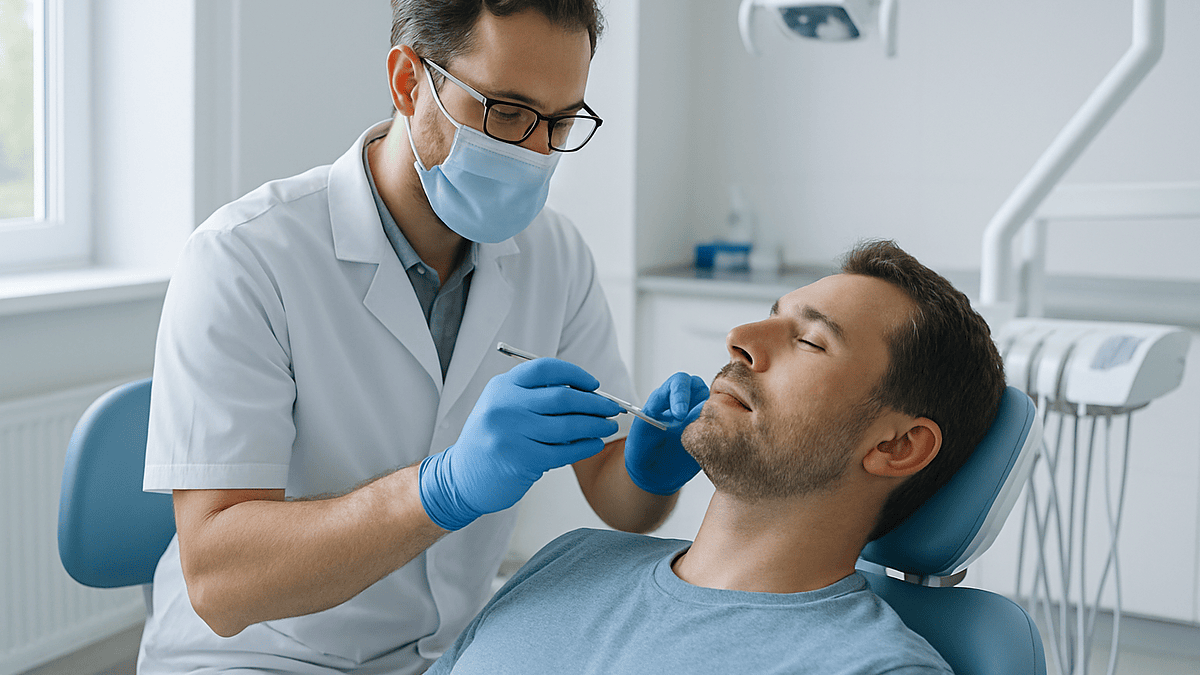
The chair tilts back, the cheek retractor goes in, and about twelve minutes into the session a bright, electric flick shoots through one front tooth and vanishes as fast as it came. Nobody warned her about that. She spends the rest of the appointment bracing for the next one, wondering whether something has gone wrong.
That small jolt is the reason so many people type the same question before booking: does teeth whitening hurt? Ask ten friends and you will get ten different answers, from nothing at all to two miserable days of avoiding cold water. Both stories are true, and the difference is not luck. It is anatomy, gel chemistry, contact time and a few habits you control.
This explainer walks through what actually happens inside a tooth during bleaching, why gums sometimes turn briefly white, how long discomfort tends to last, and what the evidence says about easing it, so the decision you make with your dental team is an informed one rather than a hopeful one.
Does teeth whitening hurt? What the discomfort actually feels like
Start with a distinction that matters: whitening is not a surgical procedure, nothing is drilled, and no injections are involved. Teeth are not removed or reshaped. The discomfort people describe belongs to two different categories, and knowing which one you are feeling changes what it means.
The first is tooth sensitivity. Some people notice a dull, generalized ache, as if the teeth had been clenched too long. Others get the classic zinger, a sudden, sharp, one-second stab in a single tooth that arrives without warning and leaves just as abruptly. Cold air, a sip of water or even breathing through the mouth can set one off. The NHS describes sensitivity to cold as one of the most common side effects of whitening, alongside gum irritation and a sore throat from swallowed traces of gel, and notes these are usually temporary.
The second category is gum or soft-tissue irritation. This feels more like a chemical sting or a mild burn along the gumline, sometimes with a chalky white patch where the gel sat against the tissue for a while. It is superficial, and it typically fades within a day or so once the gel is cleaned away.
What whitening should not feel like is throbbing pain that keeps you awake, pain that lingers for weeks, or discomfort that worsens day by day. Those patterns point to something other than ordinary bleaching sensitivity, most often an undiagnosed cavity, a cracked tooth, a leaking filling or exposed root surface, and they deserve a dental exam rather than more gel.
Most people land somewhere in the mild zone: a handful of zingers during or after a session, a preference for lukewarm drinks for a day, then nothing. A minority feel more. Almost nobody feels nothing at all, which is why honest pre-treatment counseling matters.
How professional whitening works, and why it can reach the nerve
A tooth is built in layers. Enamel is the hard, translucent outer shell. Beneath it sits dentin, a softer, yellowish tissue shot through with thousands of microscopic tubules, tiny fluid-filled channels running from the enamel border toward the center. At the core is the pulp, the soft tissue that houses the tooth’s nerve and blood supply.
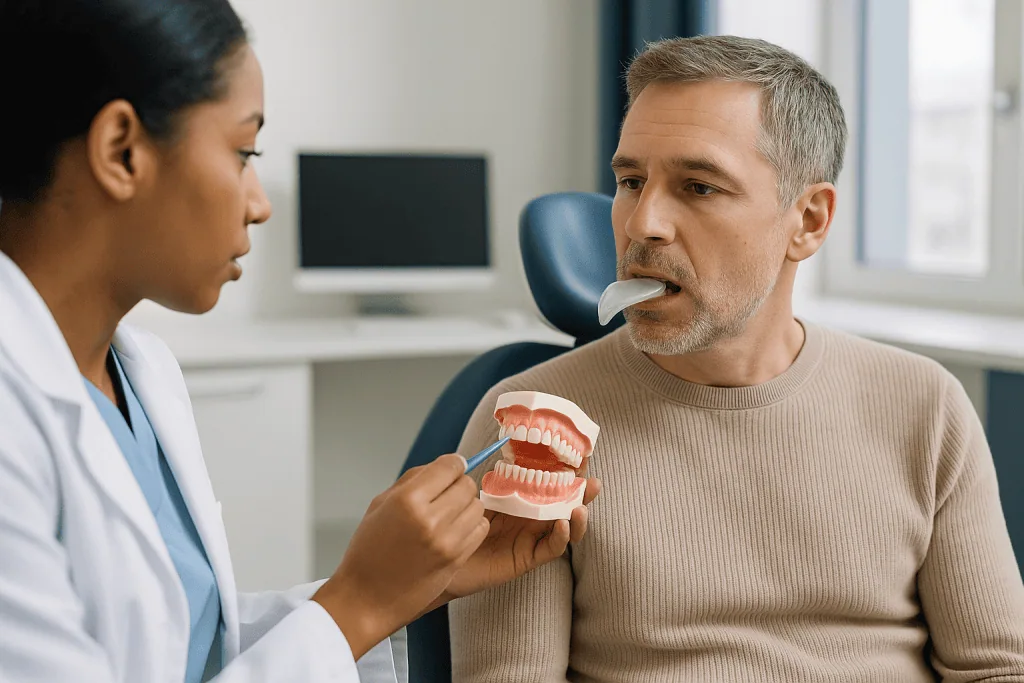
Whitening gels rely on peroxide, either hydrogen peroxide or carbamide peroxide, a compound that breaks down into hydrogen peroxide once it meets saliva. Peroxide releases highly reactive oxygen molecules that attack chromogens, the large pigmented molecules lodged in enamel and dentin that make teeth look yellow or brown. Oxidation splits those pigments into smaller, colorless fragments. The Cleveland Clinic describes this as bleaching the color from inside the tooth structure rather than scrubbing stain off the surface.
Here is the catch. Enamel is porous enough that peroxide does not stop at the surface. It diffuses through enamel, into dentin, and in measurable amounts into the pulp chamber itself. That is exactly what allows deep, intrinsic discoloration to lighten. It is also why the nerve can react.
The most widely accepted explanation for sensitivity is the hydrodynamic theory: when peroxide and its byproducts move through dentin tubules, they shift the fluid inside them. That fluid movement mechanically stimulates nerve endings at the pulp border, which the brain registers as a sharp, cold-like pain. Peroxide can also produce a mild, reversible inflammatory response in the pulp, which explains the duller, lingering ache some people report for a day or two.
Professional protocols use higher-strength gels for shorter, supervised contact, or lower-strength gels in custom trays for longer periods. Either way, the trade-off is the same: the chemistry that whitens deeply is the chemistry that can, briefly, wake up the nerve.
What causes zingers after teeth whitening?
The zinger has a physiology worth understanding, because it is the single most alarming part of whitening for people who were not expecting it.
Think of each dentin tubule as a straw filled with fluid, capped by enamel at one end and touching the nerve at the other. Peroxide diffusing inward, along with the osmotic changes and small temperature shifts it creates, jostles that fluid. The nerve fibers at the pulp end are exquisitely tuned to detect movement, and they fire. The sensation is a lightning bolt precisely because these are fast-conducting fibers designed to signal sharp stimuli, the same type responsible for the jolt when ice cream hits a sensitive tooth.
Why one tooth and not its neighbor? Enamel thickness varies from tooth to tooth and from person to person. Front teeth, especially the lower incisors, have relatively thin enamel and small pulp chambers, so peroxide has a shorter journey. Teeth with old white fillings, tiny enamel cracks, worn edges or areas of erosion from acidic drinks have shortcuts through the enamel layer. Exposed root surfaces near receded gums have no enamel at all, only a thin cementum coating over dentin, which is why zingers often cluster at the gumline.
Zingers can strike during the session, most often in the later minutes as peroxide accumulates in dentin, or in the hours afterward. The Mayo Clinic notes that whitening can cause temporary tooth sensitivity and that people who already have sensitive teeth are more likely to notice it.
The reassuring part: zingers are a sign the nerve is irritated, not injured. Because peroxide byproducts clear from dentin quickly, and because pulp inflammation from bleaching is mild and reversible in healthy teeth, the jolts fade as the chemistry settles. Persistent zingers weeks later are unusual and should be examined.
Gum irritation after whitening: the white patches explained
The gums have a different complaint. Soft tissue does not have dentin tubules, so it does not zing. Instead it stings, and occasionally it blanches.
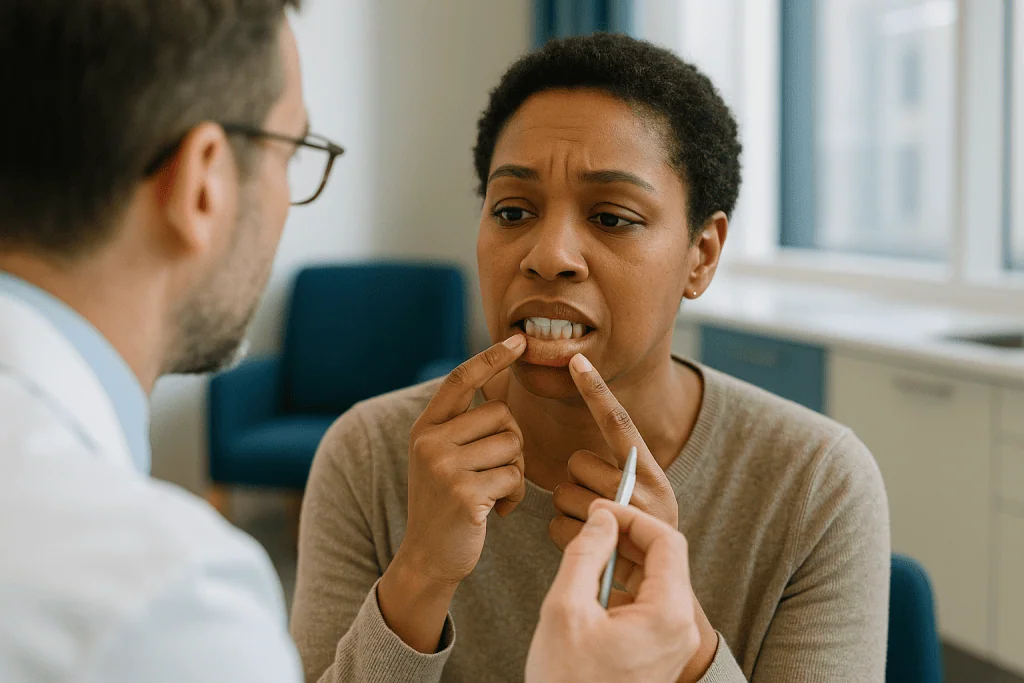
Peroxide is an oxidizer, and at whitening strengths it can produce a superficial chemical irritation wherever it lingers on mucosa. The visible sign is a white or pale patch along the gum margin or on the inner lip, typically appearing within minutes of contact. That whiteness is the surface layer of tissue reacting to the oxygen release; it looks dramatic but is shallow. The area may feel raw, tingly or mildly burning for several hours.
In a dental office, this is exactly what the elaborate setup is designed to prevent. Before applying gel, the clinician places a cheek retractor, isolates the teeth, and paints a rubbery liquid barrier over the gums that is then hardened with a light. Cotton rolls and gauze protect the lips. When a patch appears despite this, the team wipes the area, rinses it, and often applies a soothing gel. The NHS lists gum irritation among the recognized side effects of professional whitening and emphasizes that a properly fitted mouthguard or tray matters for take-home treatment because a poorly fitted one lets gel leak onto gums.
With take-home trays, gum irritation most often comes from overfilling the tray, so excess gel squeezes over the edge, or from a tray that does not seal well at the gumline. Wiping away visible excess after seating the tray and telling the dentist about any persistent sore spots so the tray can be trimmed usually solves it.
Recovery is quick. Superficial peroxide irritation typically resolves within a day or two without scarring. Gum tissue that remains white, ulcerated or painful beyond that, or that bleeds spontaneously, is a reason to stop treatment and call the dental office.
Teeth whitening sensitivity: who feels it most and why
Two people can sit through identical sessions with identical gel and walk out with opposite stories. Several well-recognized factors explain the gap.
Pre-existing sensitivity tops the list. If cold water or a spoonful of ice cream already makes you wince, your dentin is likely already exposed somewhere, and whitening amplifies a signal that is already being sent. The Mayo Clinic advises that people with sensitive teeth may want to talk with a dentist before whitening for exactly this reason.
Gum recession exposes root surfaces that lack enamel entirely. Enamel wear from grinding, acidic diets or aggressive brushing thins the protective shell. Small enamel cracks, chipped edges and leaking margins around older fillings all create low-resistance paths for peroxide. Untreated cavities are the most important of these, because bleaching gel reaching decayed dentin can produce genuine, sustained pain rather than a passing zinger. This is why a thorough exam and, when needed, X-rays come before gel.
Gel strength and contact time matter in a straightforward way: more peroxide for longer means more diffusion into dentin. In-office sessions use stronger gel for a shorter, supervised period; take-home trays use gentler gel for longer wear. Neither approach is sensitivity-free, and the right choice depends on the individual mouth.
Younger adults often report more sensitivity than older adults. Pulp chambers shrink with age as secondary dentin is laid down, and older dentin tubules are narrower and partly mineralized, so the nerve sits farther from the action and the fluid moves less.
Habits count too. Very cold or very hot drinks, acidic foods and whitening toothpastes with abrasive particles used in the same window all tend to heighten what people feel. None of these predictors guarantees discomfort. They simply tell your dental team where to be cautious.
Who whitening is usually for, and who is usually asked to wait
Professional whitening is aimed at healthy adult teeth with discoloration that lives in the tooth structure or on its surface. The typical candidate has stable gums, no active decay, fillings that seal well, and realistic expectations about how light natural teeth can get.
Several groups are commonly asked to postpone or reconsider, not because whitening is dangerous for them in a dramatic sense, but because the outcome or the comfort is likely to disappoint.
- People with untreated cavities, cracked teeth or leaking restorations, since gel reaching the inner tooth can cause real pain and the problem needs treating first.
- People with active gum disease, where inflamed tissue is more vulnerable to chemical irritation.
- Anyone with many visible crowns, veneers or tooth-colored fillings at the front, because these materials do not bleach; the Mayo Clinic notes that whitening does not change the color of restorations, so natural teeth may lighten while restorations stay put and suddenly look darker.
- People who are pregnant or breastfeeding, who are generally advised to defer elective whitening because the safety data are limited, not because harm has been shown.
- Children and adolescents, whose pulp chambers are large and enamel is still maturing, which increases the chance of sensitivity.
- People with severe, long-standing sensitivity, who may be steered toward a desensitizing program before any bleaching.
Some kinds of discoloration respond poorly. Gray tones from certain childhood antibiotic exposures, dark banding from developmental defects and a single dead, darkened tooth often need different approaches, such as internal bleaching of a root-treated tooth or a restorative option, which a dentist can explain.
The screening conversation is not a gatekeeping exercise. It is the step that separates a comfortable, predictable result from an expensive lesson in dentin physiology. The decision, in every case, rests with the person and the clinician examining their mouth.
In-office whitening vs. dentist-supervised take-home trays: how discomfort compares
Professional whitening arrives in two main formats, and people often assume one is painless and the other is not. The evidence is more balanced: they distribute discomfort differently rather than eliminating it.
| Feature | In-office session | Custom take-home trays |
|---|---|---|
| What happens | Higher-strength peroxide applied by the clinician under gum protection, sometimes with a light; the NHS and Cleveland Clinic describe a visit lasting roughly an hour | Lower-strength gel worn in custom-fitted trays at home over a period the NHS puts at a few weeks |
| Typical sensitivity pattern | Zingers during and in the first day or two after; can be more intense but brief | Milder, more diffuse sensitivity that comes and goes across the wearing period |
| Gum irritation | Protective barrier reduces contact; occasional white patches where barrier gaps | Depends on tray fit and gel amount; easy to correct by trimming the tray |
| Control over discomfort | Clinician can stop, shorten or pause on the spot | You can skip a day or shorten wear, with the dentist guiding adjustments |
| Speed of visible change | Fastest | Gradual |
Some practices combine both: a session in the chair followed by trays to maintain or deepen the result. Others start with trays for sensitive patients because the slower diffusion of a gentler gel tends to provoke fewer sharp episodes, then decide together whether an in-office session adds value.
Neither route promises a particular shade, and neither eliminates the possibility of a zinger. What the professional setting adds, in both formats, is an exam beforehand, protection of the gums, a gel and schedule matched to your teeth, and someone to call when something feels off.
How long does whitening pain last? The typical timeline
The honest answer is short, with caveats. Discomfort from professional whitening is a reaction to peroxide in the tooth; when the peroxide is gone, the reaction winds down.
During the session. Zingers, if they come, tend to appear later in an in-office appointment as peroxide accumulates in dentin. A clinician who sees you flinch can shorten the final application or pause it.
The first day. This is the peak window for most people. Teeth may feel tender to cold air and drinks; a few unprovoked zingers can arrive while you are doing nothing at all. Gums that were touched by gel may sting and show pale patches that begin fading within hours.
Days two and three. Sensitivity usually softens noticeably. The NHS states that whitening side effects such as sensitivity and gum irritation are usually temporary and should disappear within a few days of treatment finishing. The Cleveland Clinic likewise describes post-whitening sensitivity as generally short-lived.
With take-home trays. Because the gel is used repeatedly over a few weeks, mild sensitivity may recur with each wear and settle between uses. Many dentists suggest a pause of a day or more if it builds, or alternating with a desensitizing product, and they can advise on that pattern.
Beyond a week. Lingering sensitivity that outlasts the first week after your final application is uncommon in healthy teeth. It does not automatically mean damage, but it does mean an exam is worthwhile, because the usual culprits are a hidden cavity, an exposed root or a tooth that was already inflamed before gel was applied.
Timeframes here are typical ranges drawn from the sources cited, not guarantees. Individual recovery depends on enamel thickness, gum health and gel exposure, which is precisely why a professional assessment beforehand is worth the extra appointment.
Managing discomfort before, during and after whitening
Most of the tools for easing whitening sensitivity work on the same principle: block or calm the dentin tubules so fluid moves less and the nerve fires less.
Before. Dentists often ask patients to switch to a desensitizing toothpaste in the weeks leading up to treatment. These products usually contain potassium nitrate, which reduces the excitability of the nerve endings, or agents that plug tubule openings. Fluoride varnish applied in the office helps remineralize enamel and narrow tubules. A cleaning to remove surface tartar means gel meets tooth rather than debris. Having any cavities or worn fillings treated first removes the biggest source of true pain.
During. In the chair, gum protection is the main defense against soft-tissue stings. Speaking up at the first zinger allows the clinician to shorten applications or wipe and re-isolate. With trays, using only the amount of gel your dentist demonstrated, wiping overflow from the gums and not extending wear beyond what was advised are the everyday safeguards.
After. Lukewarm drinks, room-temperature foods and breathing through the nose reduce cold triggers on the first day. Desensitizing toothpaste continues to help; some dentists place a desensitizing gel in the same trays for a short period after bleaching. Avoiding highly acidic drinks for a day or so protects freshly bleached enamel while it rehydrates.
If discomfort is enough to interfere with eating or sleep, ask your dental team what is appropriate. Over-the-counter pain relievers are sometimes discussed, but which class suits you, and whether any is suitable alongside your other medicines or health conditions, is a decision for the clinician who knows your history. Do not start, stop or adjust any prescription because of whitening without that conversation.
Above all, pause. Discomfort that is building is a signal to stop applying gel and check in, not to push through.
Can yellow teeth actually be whitened?
Yes, and yellow is, in fact, the color that responds most reliably. Understanding why explains a lot about outcomes and about who ends up frustrated.
Tooth color has two layers of contribution. Enamel is nearly translucent, so a good deal of what you see is dentin showing through, and dentin is naturally yellow. Over the years, dentin thickens and darkens while enamel thins with wear, so teeth drift warmer even in people with immaculate hygiene. MedlinePlus lists aging among the ordinary causes of tooth color change, alongside foods, drinks, tobacco, certain medicines taken in childhood, excess fluoride exposure during development, and trauma.
Extrinsic stains sit on or just within the enamel surface: coffee, tea, red wine, dark sauces and tobacco tar. A professional cleaning removes some of this outright, and peroxide breaks down the rest. Intrinsic yellowing lives deeper, in dentin, and this is where bleaching earns its name, because peroxide diffuses into dentin and oxidizes pigment molecules there.
Yellow and light brown chromogens are chemically the most responsive to oxidation. Gray and blue-gray discoloration, often from certain antibiotics taken while teeth were forming, or from a tooth that lost its nerve after injury, responds slowly and unevenly. White spots from fluorosis or early enamel defects do not bleach away; sometimes they become more visible as surrounding enamel lightens, which is a common surprise worth discussing beforehand.
Restorations complicate the picture. Fillings, crowns and veneers are colored at the time they are made and stay that shade. The Mayo Clinic points out that whitening will not lighten them, so matching may need attention afterward.
How far a yellow tooth will lighten cannot be promised in advance. Dentists use shade guides to record the starting point and a realistic range. What the evidence supports is that natural yellowing is the discoloration bleaching was designed for, and it generally responds.
Do teeth turn yellow again after whitening?
Gradually, yes. Whitening changes pigment inside the tooth, but it does not change the biology that produced the pigment or the habits that stain the surface. The result is real, and it is also temporary in the way a haircut is temporary.
Two processes work against you. The first is immediate and cosmetic: teeth dehydrate slightly during bleaching, and dehydrated enamel looks chalkier and whiter. Over the first days, enamel rehydrates and the shade settles to its true post-treatment color, usually a little darker than what you saw in the mirror at the end of the appointment. Dentists sometimes call this rebound, and it is not the whitening failing; it is the tooth returning to normal moisture.
The second process is the slow return of chromogens. Coffee, tea, red wine, cola, curries, berries and tobacco deposit pigment on enamel daily. Dentin continues to mature and yellow with age. The NHS advises that whitening effects can last from a few months up to around three years, with variation that depends heavily on lifestyle, and notes that the effect is less likely to last if you smoke or drink staining beverages regularly.
Slowing the fade is mostly ordinary oral care. Brushing twice daily with a fluoride toothpaste, cleaning between teeth, rinsing with water after coffee or wine, drinking staining beverages through a straw when practical, avoiding tobacco, and keeping regular professional cleanings all help. Many dentists provide a maintenance plan using the same custom trays for brief top-ups when the shade starts to drift, spaced according to how the teeth tolerated the original course.
What matters for comfort is that each top-up is another peroxide exposure. Someone who found the first course uncomfortable should plan maintenance with their dentist rather than improvising, so gel strength and frequency stay within what their teeth tolerate.
Is it worth it to get teeth whitened at the dentist? Comfort, control and alternatives
People asking this are usually weighing a supervised course against the shelf of strips, pens and rinses at the pharmacy. The question deserves a neutral answer rather than a sales pitch.
Both routes rely on peroxide. Over-the-counter products use lower strengths and generic, one-size trays or strips; professional care uses gel matched to your teeth and, for take-home use, trays molded to your mouth. The Mayo Clinic notes that whitening products from a dentist tend to be more effective than store-bought versions largely because of stronger formulas and better fit, while acknowledging that over-the-counter products can lighten teeth modestly.
Where comfort is the priority, the professional setting offers three things that are hard to replicate at home. The first is the exam: cavities, cracks, recession and leaking fillings are identified and addressed before peroxide meets them, which removes the biggest source of true pain. The second is gum protection and tray fit, which is the main lever against soft-tissue irritation. The third is adjustability: someone can dial the gel down, shorten wear or add desensitizing steps based on how your teeth respond, instead of you guessing.
Alternatives exist for discoloration that bleaching handles poorly. A professional cleaning alone can shift surface stain considerably. Bonding, veneers and crowns change color by covering the tooth rather than bleaching it, at the cost of altering tooth structure. Internal bleaching is used for a single darkened, root-treated tooth. Each carries its own risks and trade-offs that a dentist can walk through.
The NHS is clear that whitening is a dental procedure and that having it carried out by a dental professional matters for safety. Whether the extra structure is worth it to you depends on how discolored the teeth are, how sensitive they already feel, and how much you value having someone accountable when a zinger arrives.
What people often get wrong about whitening pain
Whitening attracts folklore, and several myths make the experience worse than it needs to be.
Myth: pain means the whitening is working. Sensitivity signals that peroxide has reached dentin and stirred the nerve, not that more pigment is being oxidized. Plenty of people lighten several shades with no zingers at all, and plenty feel zingers with modest change. Discomfort is a side effect to manage, never a progress bar.
Myth: whitening strips away enamel. Peroxide bleaching at professional strengths, used as directed, does not remove enamel. The chalky feel afterward is dehydration, which reverses. Enamel erosion comes from acid and abrasion, which is a separate reason to go easy on citrus and hard scrubbing around treatment.
Myth: zingers mean nerve damage. A zinger is a nerve doing its job, responding to fluid movement in dentin. Bleaching-related pulp inflammation in healthy teeth is mild and reversible. Persistent pain weeks later is a reason to be examined, but the sharp flick in the chair is not evidence of harm.
Myth: longer wear or more gel gets you whiter, faster. Beyond the advised time, added peroxide mostly adds sensitivity and gum irritation; pigment oxidation plateaus. Overfilling trays is the leading cause of blanched gums at home.
Myth: the light does the whitening. Lights used in some in-office systems warm and activate the gel; the peroxide does the chemistry. The Mayo Clinic notes that evidence for added benefit from lights is limited.
Myth: a bright smile at the end of the appointment is the final result. Rehydration darkens the shade slightly over the first days. Judging the outcome a week later is fairer.
Myth: baking soda, charcoal or lemon juice are gentler. Abrasives scratch enamel and acids dissolve it, exposing more dentin and making future whitening more uncomfortable, not less.
Questions to ask your care team before whitening
A ten-minute conversation before the first drop of gel prevents most unpleasant surprises. Bring these to the consultation.
- Do I have any cavities, cracks, worn fillings or exposed roots that should be treated or protected before whitening?
- Given my history of sensitivity, would you start with in-office treatment, take-home trays or a desensitizing program first?
- What strength of gel and what wearing schedule do you recommend for my teeth, and how will we adjust if I get zingers?
- How will my gums be protected during the session, and what should I do if I notice white patches at home?
- Which of my visible teeth have fillings, crowns or veneers that will not change color, and how might that affect the final match?
- What kind of discoloration do I have, and how much lightening is realistic for it?
- What is the typical timeline for sensitivity to settle after my course, based on what you see in my mouth?
- Should I use a desensitizing toothpaste before, during or after, and for how long?
- If discomfort interferes with eating or sleep, what do you want me to do, and is any pain relief appropriate alongside my current medicines and health conditions?
- What signs would make you want to see me before my next scheduled visit?
- How should maintenance be spaced so the result lasts without repeated sensitivity?
- Are there habits, foods or products I should avoid in the days around treatment?
Write the answers down. The most useful ones are specific to your mouth rather than general reassurance: which tooth has the receded gum, which filling is due for replacement, which shade range is realistic. A team that answers these plainly is giving you the information you need to decide, and the decision stays yours.
When to call your doctor or dentist: red-flag signs after whitening
Ordinary whitening discomfort is mild, cold-triggered, and fading within days. The signs below fall outside that pattern and warrant a call to your dental office rather than another application of gel.
- Severe, throbbing or constant tooth pain, especially pain that wakes you at night or does not ease as the days pass.
- Sensitivity or zingers that persist beyond about a week after your final treatment, or that are getting worse instead of better.
- Pain concentrated in a single tooth that lingers after a cold or hot trigger is removed, which can point to a cavity, a crack or pulp inflammation unrelated to bleaching.
- Gum tissue that stays white, ulcerated, raw or painful beyond a day or two, or that bleeds on its own.
- Swelling of the gum, face or jaw, or a bad taste or discharge near a tooth, which suggests infection needing prompt assessment.
- Burning, blistering or swelling of the lips, tongue, throat or inner cheeks, particularly after swallowing gel, which the NHS lists as a possible side effect that should be reported.
- Any sign of an allergic reaction such as rash, hives, facial swelling or difficulty breathing, which requires emergency care immediately.
- Loosening of a filling or crown, or a chipped edge you notice after treatment.
Trouble breathing or swelling of the throat is a medical emergency; call emergency services. For everything else, stop using any home gel, avoid temperature extremes, and describe exactly what you feel, where and since when. The dental team can distinguish a nerve that is settling from a tooth that needs treatment, and they may want to see you the same day. Every decision about pausing, restarting or abandoning whitening rests with them and with you.
Frequently asked questions
Does teeth whitening hurt during the actual appointment?
For most people the session is comfortable, with occasional sharp zingers rather than sustained pain. These brief jolts tend to appear in the later minutes as peroxide accumulates in dentin. Gums are protected with a barrier, so stinging is uncommon. Tell the clinician at the first zinger; applications can be shortened or paused on the spot.
How long will my teeth hurt after whitening them?
Typically a day or two, fading over the first few days. The NHS describes whitening sensitivity as usually temporary and resolving within a few days of treatment finishing. With take-home trays, mild sensitivity may recur with each wear and settle between sessions. Sensitivity persisting beyond about a week after the final application is unusual and deserves a dental exam.
What are zingers after teeth whitening, and are they dangerous?
Zingers are sudden, one-second stabs of sharp pain in a single tooth caused by peroxide moving fluid within dentin tubules and firing nerve endings at the pulp. They are not a sign of nerve damage; bleaching-related pulp inflammation in healthy teeth is mild and reversible. Persistent zingers weeks later, or throbbing pain, should be evaluated.
Why did my gums turn white after whitening?
White patches are superficial chemical irritation where peroxide gel sat against gum tissue. The oxygen release temporarily blanches the surface layer. It usually stings for a few hours and fades within a day or two without scarring. At home it most often comes from overfilling trays or a poor tray seal, which your dentist can trim or adjust.
Can yellow teeth actually be whitened?
Yes. Yellow and light brown discoloration, whether from surface staining or the natural yellowing of dentin with age, responds best to peroxide bleaching because those pigments oxidize readily. Gray tones from childhood antibiotic exposure or a dead tooth respond less predictably, and white spots and restorations do not change. A dentist can identify which type you have.
Do teeth turn yellow again after whitening?
Gradually. The shade darkens slightly in the first days as dehydrated enamel rehydrates, then drifts over months to years as staining foods, drinks, tobacco and natural dentin aging reintroduce pigment. The NHS estimates results last from a few months up to around three years, shorter for smokers and regular coffee, tea or red wine drinkers. Maintenance top-ups can be planned with your dentist.
Is it worth it to get teeth whitened at the dentist?
That depends on your goals and your teeth. The Mayo Clinic notes dentist-provided whitening tends to be more effective than store-bought products because of stronger gel and better fit. For comfort specifically, professional care adds a pre-treatment exam that catches cavities and exposed roots, gum protection, and someone who can adjust strength and timing if zingers appear.
How can I reduce teeth whitening sensitivity beforehand?
Dentists commonly suggest a desensitizing toothpaste containing potassium nitrate for a few weeks before treatment, an in-office fluoride varnish, and having any cavities or worn fillings treated first. Starting with gentler take-home gel rather than an in-office session is another option for sensitive mouths. Your dentist can tailor this sequence to your teeth.
Can I take painkillers for whitening pain?
Ask your dental team first. Over-the-counter pain relievers are sometimes discussed for short-term discomfort, but whether any class is suitable depends on your other medicines and health conditions, which only the clinician who knows your history can judge. Lukewarm drinks, nasal breathing and desensitizing toothpaste ease most mild sensitivity without medication.
Does whitening damage enamel or the nerve?
Peroxide bleaching used as directed does not remove enamel; the chalky feel afterward is temporary dehydration. Pulp irritation from bleaching in healthy teeth is mild and reversible. Damage risk rises with untreated decay, cracks or exposed roots, and with abrasive or acidic home remedies like charcoal or lemon juice, which is why a dental exam before whitening matters.
This article is for general information only and is not a substitute for professional medical advice. Please consult a qualified doctor about your individual situation.

More from the Blog

White Marks on Teeth: Fluorosis, Demineralisation and What Helps
White marks on teeth are usually dental fluorosis, early enamel demineralization, or a developmental enamel defect — not true scars. Early demineralization can fade…
Tooth Nerve Pain: What Helps Until You See a Dentist
No home remedy switches off tooth nerve pain instantly, but several steps can ease it within minutes: hold a cold compress against the outside…
Are Clear Aligners as Effective as Braces? Bite Problems Each Handles and Daily Upkeep
Clear aligners and braces move teeth using the same biology, and for mild to moderate crowding or spacing, published comparisons find them broadly similar…
Why Do We Have Wisdom Teeth? A Leftover From an Older Menu
Wisdom teeth are third molars inherited from human ancestors whose coarse, uncooked diets demanded extra grinding power and larger jaws. As cooking and softer…

Can You Eat After a Filling, and How Long Do Fillings Last?
Yes, you can usually eat after a dental filling, though timing depends on the material. Tooth-colored composite fillings harden instantly under a curing light,…
Why Do My Teeth Hurt? Decoding Tooth Pain by Type
Tooth pain usually traces to a handful of mechanisms: exposed dentin causing sensitivity, decay or a cracked tooth, inflammation or infection inside the tooth,…