

Neck Pain Rehabilitation: Posture, Mobility, and Strength Exercises

Most neck rehabilitation programs include education, posture changes, mobility work, and gradual strengthening. Exercises should feel controlled and tolerable; sharp, spreading, or worsening pain should be assessed by a healthcare professional.
Key Takeaways
- Most neck rehabilitation programs include education, posture changes, mobility work, and gradual strengthening.
- Exercises should feel controlled and tolerable; sharp, spreading, or worsening pain should be assessed by a healthcare professional.
- Posture is not about holding one perfect position, but about changing positions often and supporting the neck during daily tasks.
- Strengthening the deep neck muscles, shoulders, and upper back helps reduce overload on the cervical spine.
- Urgent medical care is needed for neck pain with neurological symptoms, fever, major trauma, or sudden severe headache.
Neck pain rehabilitation combines posture habits, gentle mobility, and progressive strength exercises to reduce strain and support long-term function. A structured plan guided by a qualified clinician can help people move more confidently and return to daily activities safely.
Overview
Neck pain rehabilitation is a structured approach to improving comfort, movement, strength, and daily function in people with neck pain. It may be used for common mechanical neck pain, muscle strain, posture-related discomfort, whiplash-associated symptoms, or ongoing stiffness after an injury. The goal is not only to reduce pain, but also to help the person understand what aggravates symptoms and how to move with confidence.
The neck, or cervical spine, supports the head while allowing a wide range of motion. Because it works closely with the shoulders, upper back, jaw, and nervous system, neck pain can be influenced by many factors. Long periods at a desk, stress-related muscle tension, poor sleep position, reduced physical activity, or previous injury may all contribute.
Rehabilitation usually combines several elements: education, posture and workstation changes, gentle mobility exercises, strengthening, and a gradual return to activity. A physiotherapist, rehabilitation physician, orthopedic specialist, neurologist, or other qualified clinician may tailor the plan after assessing the cause and severity of symptoms.
Common Symptoms and Functional Problems
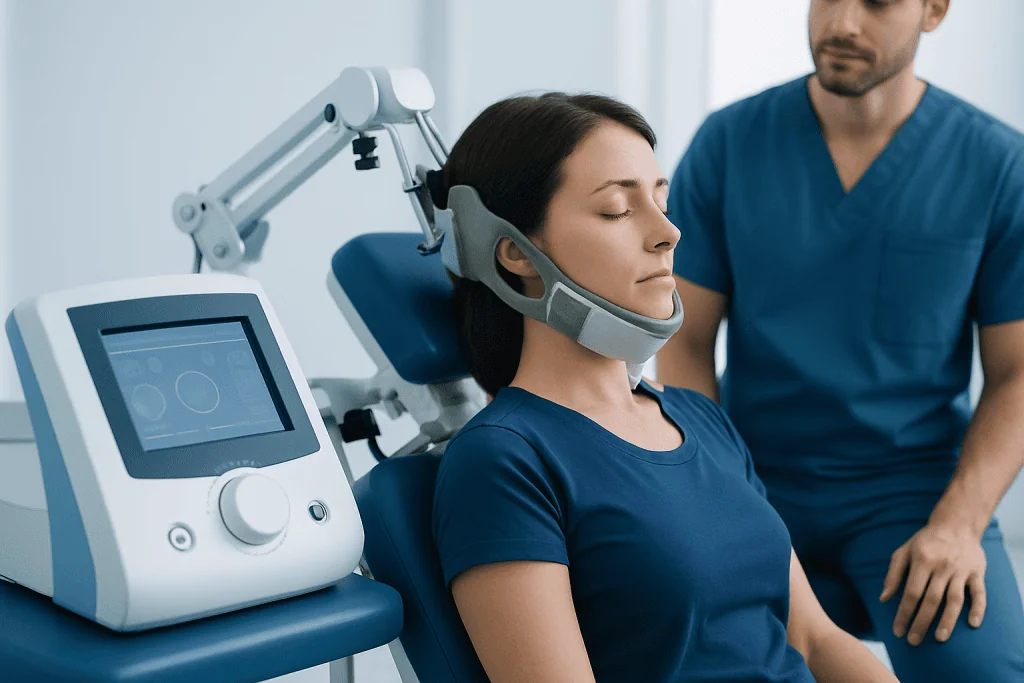
Neck pain can feel different from one person to another. Some people describe a dull ache or tightness, while others notice sharp pain with certain movements. Stiffness, reduced ability to turn the head, headaches starting from the neck, and tenderness in the upper shoulders are also common.
Neck symptoms may affect everyday activities such as driving, reading, computer work, sleeping, exercise, and household tasks. A person may avoid movement because of discomfort, but complete rest for long periods can sometimes increase stiffness and sensitivity. Rehabilitation helps find a safe middle ground between protection and gradual movement.
Symptoms that travel into the arm may suggest irritation of a cervical nerve root, especially if there is tingling, numbness, burning pain, or weakness. These symptoms do not always mean a serious problem, but they should be evaluated, particularly if they are new, worsening, or affecting hand function.
Causes and Risk Factors
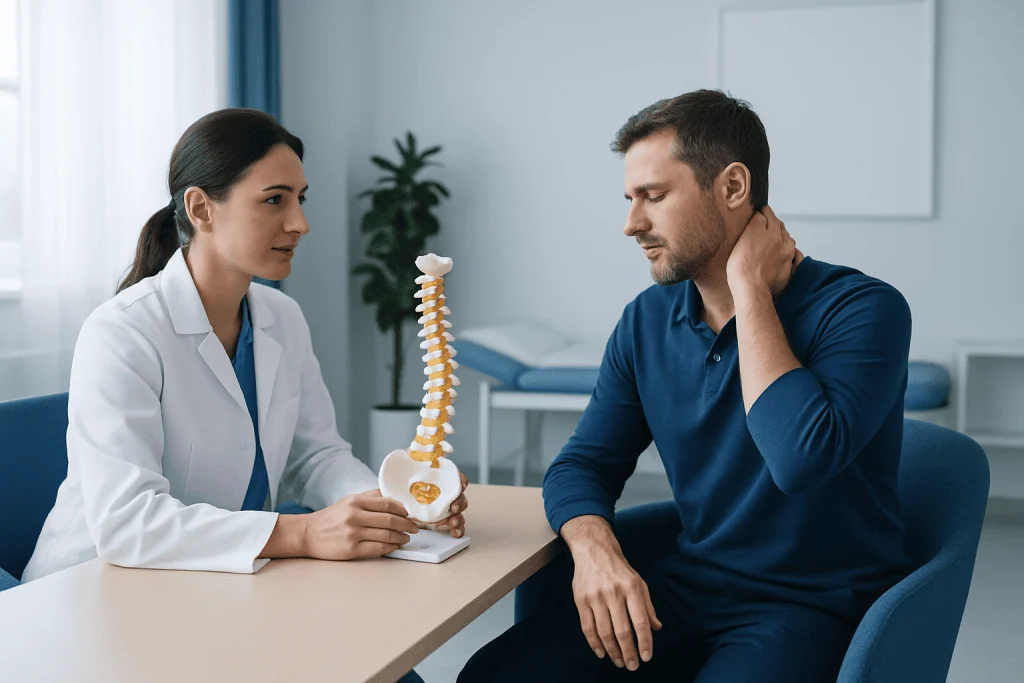
Many cases of neck pain are mechanical, meaning they are related to muscles, joints, ligaments, discs, or movement patterns rather than a serious disease. Muscle strain, joint irritation, and prolonged static posture are frequent contributors. Degenerative changes in the cervical spine can also play a role, especially with age, although imaging findings do not always match the level of pain.
Risk factors may include long hours using a computer or phone, limited physical activity, poor sleep quality, heavy lifting with awkward posture, previous neck injury, stress, and reduced shoulder or upper back strength. Emotional stress can increase muscle tension and make pain feel more persistent, which is why rehabilitation often includes relaxation and pacing strategies.
In some situations, neck pain is related to inflammatory conditions, infection, fracture, tumor, or neurological disease. These causes are less common, but clinicians screen for them through history, physical examination, and appropriate tests when needed. A personalized diagnosis is important before starting more intensive exercise.
Diagnosis and Rehabilitation Assessment
A neck rehabilitation plan begins with a careful assessment. The clinician usually asks about when the pain started, what makes it better or worse, previous injuries, work and activity habits, sleep, medical history, and any symptoms in the arms or hands. This helps determine whether the problem is likely mechanical or whether further medical evaluation is needed.
The physical examination may include checking neck range of motion, posture, shoulder and upper back movement, muscle strength, reflexes, sensation, and functional tasks. The clinician may also observe breathing patterns, jaw tension, and how the person sits, stands, or lifts. These details guide the choice of exercises and the pace of progression.
Imaging such as X-ray, MRI, or CT is not always necessary for uncomplicated neck pain. It may be recommended after significant trauma, when neurological signs are present, when symptoms do not improve as expected, or when a clinician suspects a specific condition. Test results are most useful when interpreted together with symptoms and examination findings.
Posture and Ergonomic Strategies
Posture correction in neck pain rehabilitation does not mean forcing the body into one rigid position all day. Healthy posture is dynamic. The neck usually feels better when positions are varied, the shoulders are relaxed, and the head is not held forward for long periods.
For desk work, the screen should be close to eye level, the chair should support the lower back, and the keyboard and mouse should allow the elbows to stay relaxed near the body. A phone or tablet can be raised closer to eye level to reduce sustained bending of the neck. Short movement breaks every 30 to 60 minutes are often more helpful than trying to maintain perfect posture.
- Chin awareness: Gently lengthen the back of the neck as if making a small double chin, without forcing the head backward.
- Shoulder reset: Roll the shoulders up, back, and down, then let them rest naturally.
- Microbreaks: Stand, walk, or perform a few gentle neck and shoulder movements during long sitting periods.
- Sleep support: Use a pillow that keeps the neck in a neutral position rather than bent sharply up or down.
Ergonomic changes should feel comfortable and practical. If a workstation adjustment increases pain, it should be modified. A rehabilitation professional can help identify small changes that fit the person’s body size, job demands, and daily routine.
Mobility and Stretching Exercises
Mobility exercises are used to reduce stiffness and restore comfortable movement. They should be performed slowly and within a tolerable range. Mild stretching or pulling can be normal, but sharp pain, dizziness, visual changes, or symptoms spreading down the arm are reasons to stop and seek professional advice.
Common early exercises include gentle neck rotations, side bends, nodding movements, and upper back mobility. A person may turn the head slowly to the right and left, tilt the ear toward the shoulder without lifting the shoulder, or nod as if saying “yes” in a small controlled range. Movements are usually repeated several times rather than held forcefully.
- Neck rotation: Turn the head slowly to one side, pause briefly, then return to center and repeat on the other side.
- Side bend stretch: Tilt the ear toward the shoulder until a gentle stretch is felt on the opposite side.
- Thoracic extension: Sit tall and gently extend the upper back over the top of a chair or with hands supporting the head.
- Levator scapulae stretch: Turn the head slightly and look toward the armpit, keeping the stretch mild.
Stretching is most effective when combined with strength and posture habits. Overstretching painful tissues can sometimes irritate symptoms, so the aim is regular, comfortable movement rather than aggressive flexibility.
Strengthening and Motor Control Exercises
Strengthening helps the neck tolerate daily loads such as looking at screens, carrying bags, driving, or exercising. Rehabilitation often starts with low-load control exercises for the deep neck flexor muscles, then progresses to shoulder blade, upper back, and whole-body strengthening. This approach reduces the burden on overworked superficial neck muscles.
A common exercise is a gentle chin tuck performed while lying on the back or sitting upright. The person draws the chin slightly inward, keeping the jaw relaxed and avoiding a forceful push. Other exercises may include scapular retractions, wall angels, resistance band rows, and light isometric neck contractions where the head presses gently into the hand without visible movement.
- Deep neck flexor activation: A small, controlled nod that lengthens the back of the neck without lifting the head.
- Scapular retraction: Gently draw the shoulder blades back and down, avoiding shrugging.
- Band rows: Pull a resistance band toward the body while keeping the neck relaxed and chest open.
- Isometric neck holds: Apply gentle pressure with the hand to the forehead, side, or back of the head while resisting movement.
Progression should be gradual. More repetitions, longer holds, or added resistance may be introduced only when exercises remain comfortable and symptoms do not flare afterward. People with nerve symptoms, significant dizziness, recent trauma, or complex medical conditions should perform strengthening under professional guidance.
Prevention, Self-care, and When to See a Doctor
Self-care for neck pain includes staying gently active, taking movement breaks, managing stress, sleeping with adequate support, and avoiding long periods in positions that increase symptoms. Heat may help relax tight muscles, while cold packs may feel better after a recent strain; either should be used safely with a cloth barrier and limited exposure. Over-the-counter medicines should be used only as directed and may not be suitable for everyone.
A clinician should be consulted if neck pain follows a fall, vehicle accident, or sports injury; if it persists or repeatedly returns; or if it interferes with sleep, work, or daily activities. Medical advice is also important when pain travels down the arm, or when there is numbness, tingling, weakness, balance difficulty, or loss of coordination.
Urgent care is needed for neck pain with fever, unexplained weight loss, severe sudden headache, chest pain, shortness of breath, confusion, fainting, new bladder or bowel problems, or weakness affecting walking or hand control. These symptoms are uncommon, but timely assessment helps identify conditions that need prompt treatment.
For international patients, Acibadem International provides access to multidisciplinary specialists in JCI-accredited hospitals who can assess neck pain and guide rehabilitation or further treatment when appropriate. Care decisions should always be individualized after an in-person medical evaluation.
Frequently asked questions
What is the best exercise for neck pain rehabilitation?
There is no single best exercise for every person with neck pain. Many rehabilitation plans include gentle range-of-motion exercises, chin tucks, shoulder blade strengthening, and upper back mobility. The best program depends on the cause of symptoms, physical examination findings, and the person’s daily activities.
Should neck exercises be done if they cause pain?
Exercises should generally feel controlled and tolerable. Mild discomfort or stretching may occur, but sharp pain, worsening pain, dizziness, or symptoms spreading into the arm are reasons to stop. A qualified clinician can adjust the exercise type, range, or intensity.
How long does neck pain rehabilitation take?
Recovery time varies depending on the cause, symptom duration, general health, and consistency with the plan. Some people improve within days or weeks, while persistent or recurrent neck pain may require a longer rehabilitation approach. Progress is usually measured by improved movement, strength, sleep, and daily function, not pain level alone.
Can poor posture cause neck pain?
Sustained positions, such as looking down at a phone or sitting at a computer for long periods, can contribute to neck strain. However, posture is only one factor, and pain can also be influenced by stress, sleep, strength, injury, and general activity level. Frequent position changes are often more helpful than trying to hold one perfect posture.
Is massage enough to treat neck pain?
Massage may provide short-term relief for muscle tightness in some people. However, lasting improvement often requires movement, strengthening, ergonomic changes, and education about symptom management. Massage is usually most useful as part of a broader rehabilitation plan.
When is imaging needed for neck pain?
Imaging is not always required for uncomplicated neck pain. A doctor may recommend X-ray, MRI, or CT after significant trauma, if neurological symptoms are present, if serious disease is suspected, or if symptoms do not improve as expected. Imaging results should be interpreted together with the medical history and physical examination.
References
- World Health Organization
- American Physical Therapy Association
- National Institute for Health and Care Excellence
- North American Spine Society
- Mayo Clinic
This article is for general information only and is not a substitute for professional medical advice. Please consult a qualified doctor about your individual situation.
Joint and spine care in Turkey — expert assessment & treatment
JCI-accredited · board-certified surgeons · reply within 24h
Add us as a Preferred Source to see more of our trusted health content across Google Search, AI Overviews and Discover.

More from the Health Library



Related Specialists

Dr. Nuri Soysal
Aesthetic Plastic & Reconstructive Surgery
Asst. Prof. Dr. Sibel Yıldırım Moral
Otorhinolaryngology
Prof. Dr. İbrahim Bildirici
Gynecology & Obstetrics
Dr. Zuhal Başkan
Medical Oncology