Pediatric EEG: Preparing Children for Brain Wave Testing

A pediatric EEG is noninvasive and painless; it records brain activity but does not send electricity into the brain. Doctors may recommend an EEG when a child has seizures, unusual spells, unexplained episodes of staring, or changes in awareness.
Key Takeaways
- A pediatric EEG is noninvasive and painless; it records brain activity but does not send electricity into the brain.
- Doctors may recommend an EEG when a child has seizures, unusual spells, unexplained episodes of staring, or changes in awareness.
- Preparation may include clean hair, comfortable clothing, medication instructions, and sometimes sleep changes before the test.
- Parents can help by explaining the test in calm, simple words and bringing comfort items, snacks, or quiet activities.
- EEG results must be interpreted together with the child's symptoms, medical history, and examination.
A pediatric EEG records a child's brain wave activity to help doctors evaluate seizures, fainting episodes, sleep-related concerns, and other neurological symptoms. With simple preparation and child-friendly explanations, most children complete the test comfortably.
Overview
A pediatric EEG, or electroencephalogram, is a test that records the brain’s electrical activity through small sensors placed on the scalp. These sensors, called electrodes, detect natural brain wave patterns and send the information to a computer. The test is commonly used in children because it is painless, noninvasive, and does not involve radiation.
Parents sometimes worry that an EEG may stimulate the brain or read a child’s thoughts. It does neither. The electrodes only listen to signals that the brain already produces. They do not deliver electricity, and they do not cause pain. Some children may feel the cool gel or paste used to attach the electrodes, but the test itself is usually comfortable.
Pediatric EEG testing is often performed to help evaluate seizures or seizure-like events, but it can also provide information in certain sleep, developmental, or neurological concerns. The goal is not simply to label a child with a diagnosis. Instead, the EEG is one piece of a larger clinical picture that includes the child’s symptoms, medical history, physical examination, and sometimes other tests.
Why a Pediatric EEG May Be Recommended
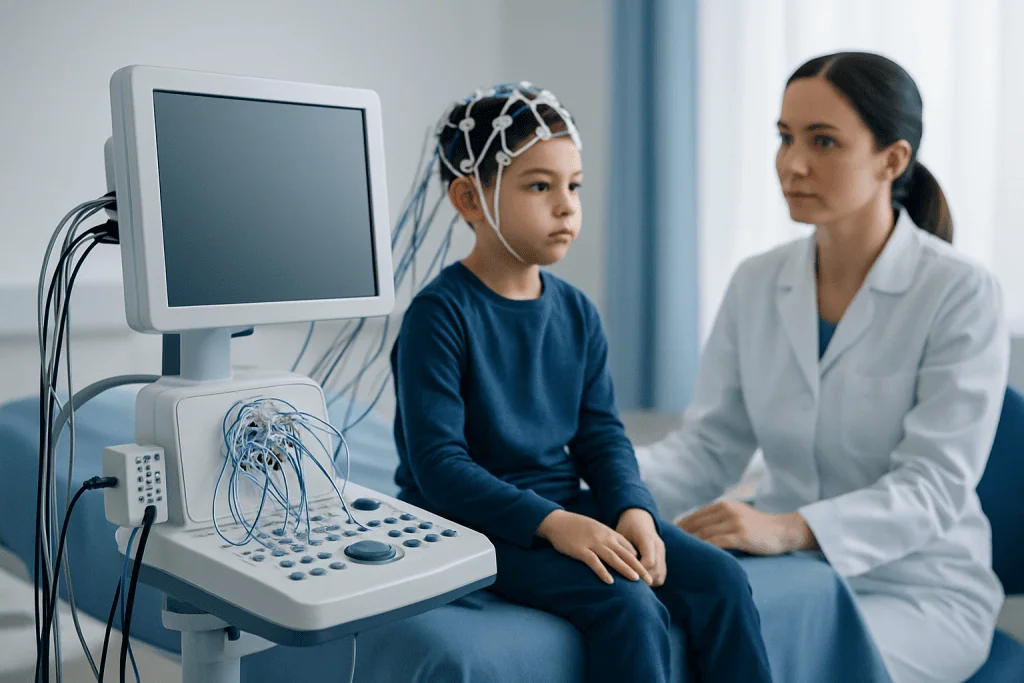
A doctor may recommend a pediatric EEG when a child has episodes that could be related to changes in brain activity. These may include shaking movements, staring spells, sudden confusion, loss of awareness, unexplained falls, unusual sensations, or events that occur during sleep. In some cases, teachers or caregivers may notice brief pauses in attention that raise questions about absence seizures or other neurological causes.
An EEG can help identify patterns that are seen in some types of epilepsy. It may also help doctors classify seizure types, guide treatment decisions, or assess whether medication is working. For children already diagnosed with epilepsy, repeat EEGs may be used at certain points to support ongoing care, although treatment decisions are rarely based on the EEG alone.
EEG testing may also be considered when symptoms mimic seizures. Fainting, migraines, sleep disorders, movement disorders, panic episodes, and some heart rhythm problems can look similar to seizures in everyday life. A carefully interpreted EEG can help narrow the possibilities, but it does not replace a full medical evaluation.
It is important for families to know that a normal EEG does not always rule out epilepsy, especially if no event occurs during the recording. Likewise, an abnormal EEG does not automatically mean a child has epilepsy. Pediatric neurologists interpret the findings in context so that the child receives an appropriate and balanced assessment.
Types of Pediatric EEG and What Happens During the Test
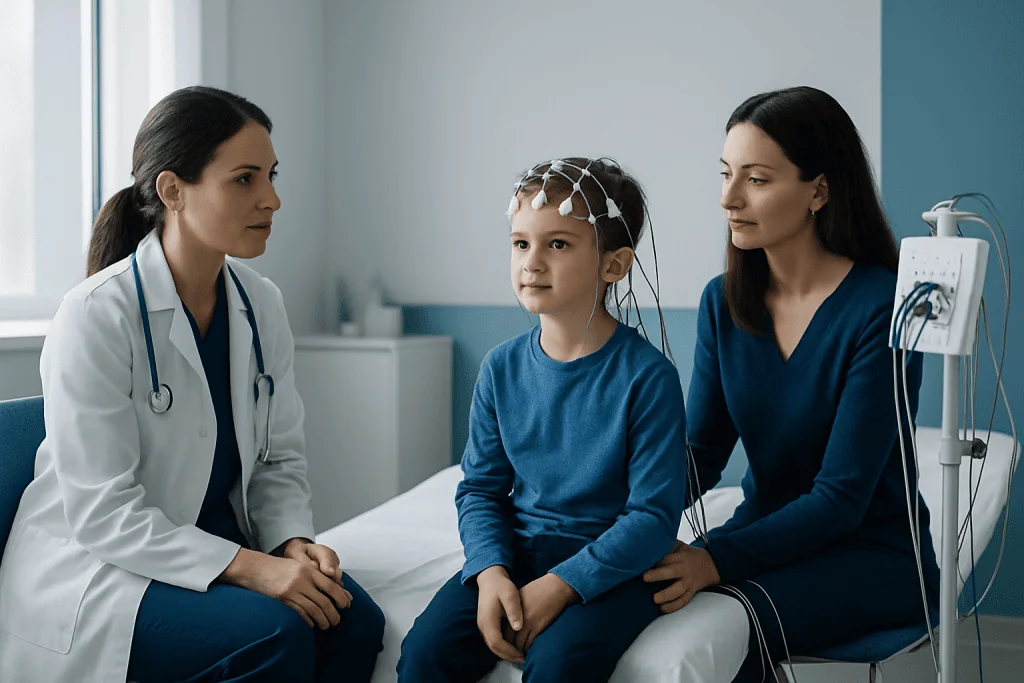
The most common type is a routine EEG, which often takes about an hour including preparation time. The recording portion may be shorter, but placing the electrodes carefully takes time. A technologist measures the child’s head and applies electrodes with a removable paste or adhesive. The child may sit in a chair, lie on a bed, or rest in a caregiver’s lap depending on age and comfort.
During the recording, the child is usually asked to stay as still and relaxed as possible. Movement, chewing, talking, or touching the electrodes can create signals that make the recording harder to read. For young children, the team may use toys, videos, music, or quiet reassurance to help them remain calm. Babies may be tested while feeding or sleeping.
Some EEGs include activation procedures that can make certain brain wave patterns easier to see. These may include deep breathing for a few minutes, looking at flashing lights, or trying to fall asleep. These steps are selected based on the child’s age, medical condition, and the reason for the test. If a step is not suitable, the team can adjust the plan.
In some situations, a doctor may order a sleep-deprived EEG, ambulatory EEG, or video EEG monitoring. A sleep-deprived EEG is designed to increase the chance that the child will sleep during the test. Ambulatory EEG records brain activity at home over a longer period. Video EEG monitoring records both brain waves and video, which can be especially helpful when events need to be matched with EEG changes.
Preparing a Child Before the Appointment
Good preparation can make the test smoother for both the child and the family. Parents should follow the instructions provided by the hospital or clinic, because recommendations may vary depending on the type of EEG. In general, the child’s hair should be clean and dry, without oils, sprays, gels, or heavy conditioners. This helps the electrodes attach securely and improves recording quality.
Medication instructions are especially important. Families should not stop or change anti-seizure medicines, sleep medicines, or other prescribed treatments unless the child’s doctor specifically says to do so. It is helpful to bring an up-to-date list of all medications, supplements, allergies, and recent illnesses. If the child has had a recent fever, head injury, or change in symptoms, the care team should be informed.
For a sleep EEG or sleep-deprived EEG, the child may be asked to wake earlier than usual, go to bed later, or skip a nap. These instructions should be followed carefully and safely. Parents should plan transportation accordingly, because a tired child may be less alert after the appointment. For infants, the team may suggest timing a feeding close to the test so the baby is more likely to sleep.
- Choose comfortable clothing that is easy to put on and remove.
- Bring a favorite blanket, soft toy, pacifier, book, or quiet activity.
- Pack a snack or drink for after the test, if allowed by the facility.
- Tell the team in advance if the child has sensory sensitivities, anxiety, autism, developmental delays, or difficulty tolerating touch near the head.
Helping Children Feel Calm and Cooperative
Children often cope better when they know what to expect in simple, honest language. For a preschool child, a parent might say that the technician will put small stickers on the head to listen to brain waves, and that the child can rest while the machine records them. For older children, it may help to explain that the EEG is similar to using sensors to record a heartbeat, except the sensors are placed on the scalp.
Parents should avoid describing the test as scary, painful, or something the child must be brave for. Calm wording helps set a calm expectation. A useful message is: The test does not hurt, but the paste may feel cold and it is important to keep still. If the child asks whether the electrodes will shock them, the answer is no; the electrodes only record.
Role play can be helpful before the appointment. A parent can place small stickers on a doll or on the child’s arm and practice lying still for a short time. Some children like to choose a comfort item or a quiet video in advance. Others do best with a reward plan, such as choosing a snack or activity after the test is finished.
For children with anxiety or sensory needs, the family can ask whether the center offers pediatric-trained technologists, extra preparation time, or child life support. The team may be able to explain each step slowly, allow breaks when possible, or use distraction techniques. Clear communication before the visit helps the staff adapt the environment to the child’s needs.
After the EEG and Understanding Results
After the recording is complete, the electrodes are removed and the paste or gel is wiped away. Some residue may remain in the hair, so washing the hair at home is often needed. Most children can return to usual activities right away unless they were sleep-deprived or the doctor gives different instructions. If the child is very tired, a quiet rest period may be sensible.
The EEG is usually reviewed by a specialist trained in interpreting brain wave patterns, such as a neurologist or clinical neurophysiologist. Results may not be available immediately because the recording must be carefully examined. The report may describe normal background activity, sleep patterns, slowing, epileptiform discharges, or other findings, depending on what is seen.
Families should ask the ordering doctor to explain what the results mean for their child’s specific situation. A normal result may be reassuring, but it may not fully explain symptoms if episodes continue. An abnormal result may support a diagnosis, but it still needs to be matched with the child’s events and clinical history. Sometimes the next step is observation, a repeat EEG, video EEG monitoring, imaging, blood tests, or treatment planning.
For international families seeking coordinated evaluation, Acibadem International provides care through multidisciplinary specialists and JCI-accredited hospitals, including pediatric neurology services for children who need diagnosis and treatment of neurological conditions. Families should bring previous test results, videos of events if available, medication lists, and translated medical documents when possible.
Safety, Self-care, and When to See a Doctor
A pediatric EEG is considered a safe test. The main challenges are usually practical, such as helping a young child stay still, managing tiredness after sleep deprivation, or washing paste from the hair afterward. Rarely, activation procedures such as flashing lights or deep breathing may bring on symptoms in children who are prone to seizures. This is one reason the test is performed by trained staff in a controlled setting.
Parents can support their child after the appointment by offering food, fluids, rest, and a return to normal routine as appropriate. If the child was sleep-deprived, close supervision is wise until they are fully alert. Children with known seizures should continue the safety plan recommended by their doctor, including medication use and seizure first-aid instructions.
Families should contact the child’s doctor if the child has new or worsening episodes, prolonged confusion after an event, repeated unexplained falls, developmental regression, or symptoms that interfere with school, sleep, or daily activities. Urgent medical care is needed for a seizure lasting longer than the emergency plan allows, breathing difficulty, injury, or a first seizure when no plan has been established.
Parents are encouraged to record details of concerning events, including time of day, duration, movements, awareness, triggers, recovery, and any fever or illness. A video taken safely can be very useful for the medical team. With careful preparation and clear communication, pediatric EEG testing can be a manageable and informative step in understanding a child’s neurological health.
Frequently asked questions
Does a pediatric EEG hurt?
No. A pediatric EEG is painless and noninvasive. The electrodes are placed on the scalp with paste or adhesive and only record the brain's natural electrical activity. Some children may dislike the cool paste or the time needed to sit still, but the test itself should not hurt.
Can an EEG cause a seizure?
An EEG does not send electricity into the brain and does not cause seizures by itself. Certain parts of the test, such as flashing lights or deep breathing, may trigger seizure-like activity in some children who are already prone to seizures. The test is supervised by trained staff who can respond appropriately if symptoms occur.
Should a child take regular medication before an EEG?
Parents should follow the specific instructions given by the child's doctor or EEG center. Medications, especially anti-seizure medicines, should not be stopped or changed unless the doctor clearly instructs the family to do so. Bringing a current medication list helps the team interpret the results accurately.
What if the child cannot stay still during the EEG?
Movement can affect the recording, but pediatric EEG teams are used to working with children. They may use distraction, comfort items, caregiver support, or short breaks when possible. If the recording is limited, the doctor will decide whether enough information was obtained or whether another type of EEG is needed.
How long does it take to get EEG results?
Timing varies by hospital or clinic. The recording must be reviewed by a qualified specialist, so results are often not given immediately at the appointment. The ordering doctor should explain the findings and how they relate to the child's symptoms.
Can a normal EEG rule out epilepsy?
A normal EEG does not always rule out epilepsy. Some children with epilepsy have normal brain wave activity between seizures, especially during a short routine EEG. Doctors interpret the EEG together with the child's history, event descriptions, examination, and other tests if needed.
References
- American Clinical Neurophysiology Society
- International League Against Epilepsy
- American Academy of Neurology
- Epilepsy Foundation
- National Institute of Neurological Disorders and Stroke
This article is for general information only and is not a substitute for professional medical advice. Please consult a qualified doctor about your individual situation.
Hair transplant in Turkey — costs, graft counts & a free assessment
JCI-accredited · board-certified surgeons · reply within 24h
Add us as a Preferred Source to see more of our trusted health content across Google Search, AI Overviews and Discover.

Pediatrics
Complete healthcare for infants, children and adolescents across all sub-specialties.
232 specialists in this unit