Early Signs of Developmental Delay in Children

Developmental delay means a child is not reaching expected milestones in one or more areas such as language, motor, social, or cognitive skills. Early warning signs can include limited eye contact, delayed speech, difficulty sitting or walking, or trouble interacting with others.
Key Takeaways
- Developmental delay means a child is not reaching expected milestones in one or more areas such as language, motor, social, or cognitive skills.
- Early warning signs can include limited eye contact, delayed speech, difficulty sitting or walking, or trouble interacting with others.
- A developmental delay does not always mean a lifelong condition, but it should be evaluated promptly.
- Diagnosis usually involves developmental screening, physical examination, hearing and vision checks, and sometimes specialist assessment.
- Early intervention, therapy, and family support can make a meaningful difference in a child's progress.
Early signs of developmental delay in children may appear in movement, speech, learning, behavior, or social interaction. Recognizing these signs early can help families seek timely assessment and support that may improve a child's development and daily functioning.
Overview
Developmental delay describes a slower-than-expected pace in reaching milestones that are typical for a child’s age. These milestones may involve speech and language, movement, learning, play, behavior, or social skills. Every child develops at an individual pace, but clear and ongoing delays in one or more areas deserve medical attention.
Parents and caregivers are often the first to notice that a child seems different from siblings, peers, or expected milestone charts. A baby may not roll over or sit when expected, a toddler may use very few words, or a preschool child may struggle to follow simple instructions or interact with others. These observations are important and should not be dismissed.
Developmental delay can be mild, moderate, or more significant. Some children catch up with support, while others may have an underlying condition that needs ongoing care. Early assessment helps identify whether the child needs monitoring, therapy, or further medical evaluation.
What early signs may look like
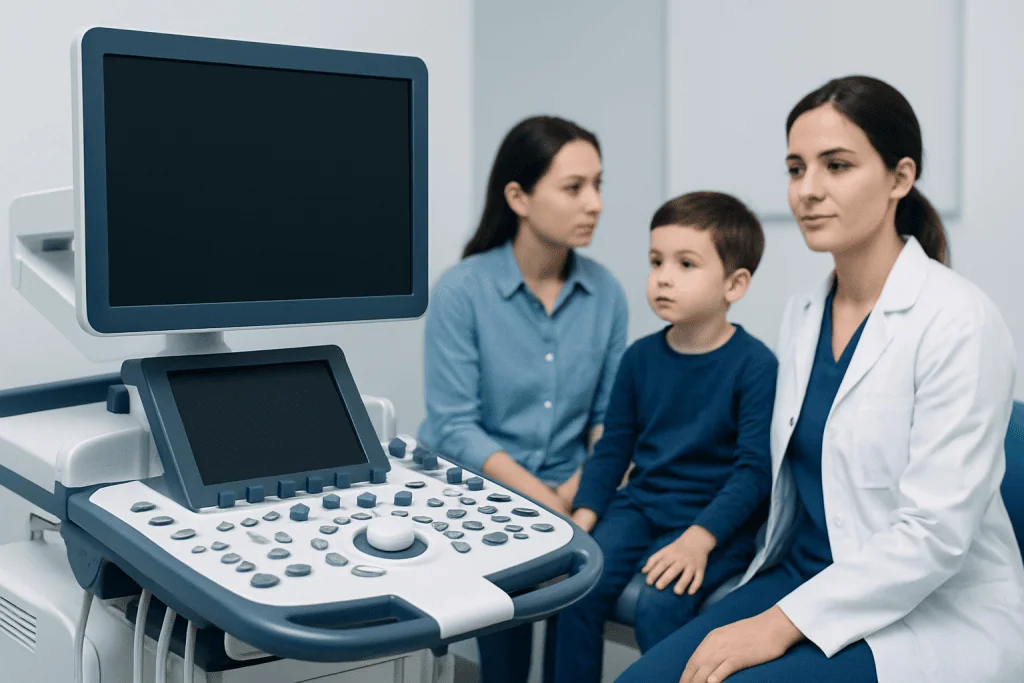
The early signs of developmental delay in children depend on the area of development involved. Some children show delays in only one domain, such as speech, while others may have difficulties across several areas. Signs may become noticeable in infancy or may emerge more clearly in toddlerhood and the preschool years.
Parents may notice that a baby seems unusually floppy or stiff, has difficulty feeding, rarely smiles, or does not make eye contact. Later, a child may not babble, point, wave, imitate sounds, or respond to their name. Delays in walking, speaking, understanding language, problem-solving, and playing with others can also be clues.
- Motor signs: poor head control, delayed rolling, sitting, crawling, or walking, unusual hand preference before 18 months, or difficulty using hands for play and feeding
- Language signs: limited babbling, few or no words by expected ages, difficulty understanding simple directions, or loss of previously learned words
- Social and behavioral signs: limited eye contact, little interest in interaction, not pointing to share interest, repetitive behaviors, or difficulty with change
- Cognitive signs: trouble learning simple concepts, limited pretend play, poor attention for age, or difficulty following routines
Regression is especially important. If a child loses skills they previously had, such as words, gestures, or social engagement, this should be discussed with a doctor as soon as possible.
Causes and risk factors
Developmental delay has many possible causes, and sometimes no single cause is found. Some delays are related to premature birth, low birth weight, hearing or vision problems, or limited opportunities to practice certain skills. Others may be linked to genetic conditions, neurological disorders, metabolic disorders, or complications during pregnancy or birth.
Environmental and social factors can also affect development. Chronic stress, poor nutrition, repeated infections, lack of stimulation, or exposure to toxins such as lead may contribute to delayed progress. In many cases, developmental delay results from a combination of biological and environmental influences rather than one clear reason.
Some children with developmental delay are later diagnosed with a specific condition such as autism, cerebral palsy, hearing impairment, or an intellectual disability. A delay can also occur alongside attention, behavioral, or learning differences. Identifying the underlying reason helps guide support, therapy, and long-term planning.
How doctors assess developmental delay
Assessment usually begins with a detailed conversation about the child’s development, pregnancy and birth history, health problems, family history, and day-to-day behavior. The doctor will ask when milestones were reached and whether any skills were lost. Parents may be asked to complete standardized developmental screening questionnaires.
A physical and neurological examination helps the doctor look for differences in muscle tone, coordination, reflexes, growth, and behavior. Hearing and vision testing are important because difficulties in these areas can affect speech, learning, and social development. Depending on the findings, the child may be referred to a pediatric neurologist, developmental pediatrician, speech-language therapist, physiotherapist, occupational therapist, psychologist, or audiologist.
Some children need further tests, while others do not. These may include blood tests, genetic testing, brain imaging, or more formal developmental and educational assessments. The goal is not simply to label a child, but to understand strengths, challenges, and the best next steps for care.
Treatment and early intervention
Treatment depends on the child’s needs and the reason for the delay. In many cases, early intervention services are the most important step. These services may include speech and language therapy, physical therapy, occupational therapy, developmental therapy, behavioral support, and parent coaching. Starting support early can improve communication, movement, independence, and school readiness.
If there is an underlying medical problem, treatment may also address that condition. For example, hearing loss may require audiology care, recurrent seizures may need neurological treatment, and muscle weakness may need rehabilitation planning. Some children benefit from structured support plans at nursery or school so they can learn in ways that suit their developmental stage.
Families play a central role in progress. Therapists often teach parents simple activities that can be practiced at home through play, reading, movement, and daily routines. Near the end of the care journey, some families may seek coordinated evaluation and therapy services through centers such as Acibadem International, where multidisciplinary specialists in JCI-accredited hospitals support international patients with developmental concerns.
What parents can do at home
Parents do not cause most developmental delays, and noticing a concern early is a positive step. At home, everyday interaction can support development. Talking, singing, reading, turn-taking games, floor play, and predictable routines all help children build language, attention, movement, and social connection.
It can be useful to keep notes about milestones, behaviors, and any concerns. Short videos of a child walking, playing, speaking, or interacting may help doctors understand what parents are seeing. Limiting passive screen time and encouraging active play, face-to-face interaction, and regular sleep can also support healthy development.
If a child is already receiving therapy, families can ask for home activities that match therapy goals. Simple repetition, patience, and praise often help more than pressure. Children usually learn best when practice feels playful, safe, and part of normal family life.
When to see a doctor
It is a good idea to speak with a doctor any time parents feel a child is not developing as expected. Families do not need to wait until a problem becomes severe. Concern about speech, movement, play, learning, or social interaction is enough reason to ask for an assessment.
Certain signs need more prompt attention. These include loss of previously learned skills, poor feeding, very low or very high muscle tone, no response to sound, no eye contact, no babbling, inability to sit or walk by expected ages, seizures, or a major change in behavior. A doctor can decide whether monitoring, therapy, or urgent specialist review is needed.
Regular well-child visits are also important because developmental screening can identify concerns that are easy to miss in day-to-day life. Early recognition does not mean assuming the worst. It means giving the child the best chance to receive timely support and reach their potential.
Frequently asked questions
What is considered a developmental delay?
A developmental delay means a child is slower than expected in reaching milestones in areas such as speech, movement, learning, or social skills. Doctors look at the child's overall pattern of development rather than a single milestone in isolation.
Do all children with delayed milestones have a serious problem?
No. Some children develop a little later than others and catch up over time, especially with support. However, persistent or clear delays should still be assessed so that any underlying issue or need for therapy is not missed.
At what age can developmental delay be noticed?
Some signs can be noticed in infancy, such as poor eye contact, feeding difficulties, low muscle tone, or limited babbling. Other concerns become clearer in toddler or preschool years when speech, play, and social interaction are expected to grow quickly.
Can speech delay be the only sign?
Yes. Some children mainly have speech and language delay, while other areas of development are age appropriate. Even then, hearing, understanding, social communication, and overall development should still be checked.
How is developmental delay diagnosed?
Doctors diagnose developmental delay through history-taking, observation, physical examination, and developmental screening tools. Depending on the child's symptoms, they may also recommend hearing and vision tests, specialist evaluations, or other medical tests.
Can early intervention really help?
In many cases, yes. Early intervention can support brain development, improve functional skills, and help families learn practical ways to encourage progress at home. The type and amount of improvement varies from child to child.
References
- World Health Organization
- American Academy of Pediatrics
- Centers for Disease Control and Prevention
- National Institute of Child Health and Human Development
This article is for general information only and is not a substitute for professional medical advice. Please consult a qualified doctor about your individual situation.
Developmental Delay in Turkey — costs, top hospitals & a free quote
JCI-accredited · board-certified surgeons · reply within 24h
Add us as a Preferred Source to see more of our trusted health content across Google Search, AI Overviews and Discover.

Physical Medicine & Rehabilitation
Restoring movement and function after injury, surgery or neurological conditions.
150 specialists in this unit